 Whale Wise
Written by Tereza Typoltová
In today’s post, I’d like to share a special whale-watching experience with you that took place on July 31, 2025. To tell this story, I’ll start a little further back in time.
It was April 2023, and I had just moved to a small town called Hólmavík, located in the Westfjords of Iceland. It is surrounded by a beautiful, peaceful fjord called Steingrímsfjörður, which lies in the Greenland Sea. At the time, it was a big change for me, as it was the first time I had ever lived by the sea.

Life here seemed very calm until I found out there were whales in the fjord! It was an amazing experience for me, as it was the first time I’d ever seen a whale. I was fascinated by the feeling you get when you see such a majestic animal that evolved over millions of years from a land-dwelling mammal into a marine mammal.
What an incredible history they carry with them, and how much suffering they have had to endure and continue to endure – from whaling to noise pollution, plastic waste, entanglement in fishing nets, habitat destruction, collisions with vessels, and more.
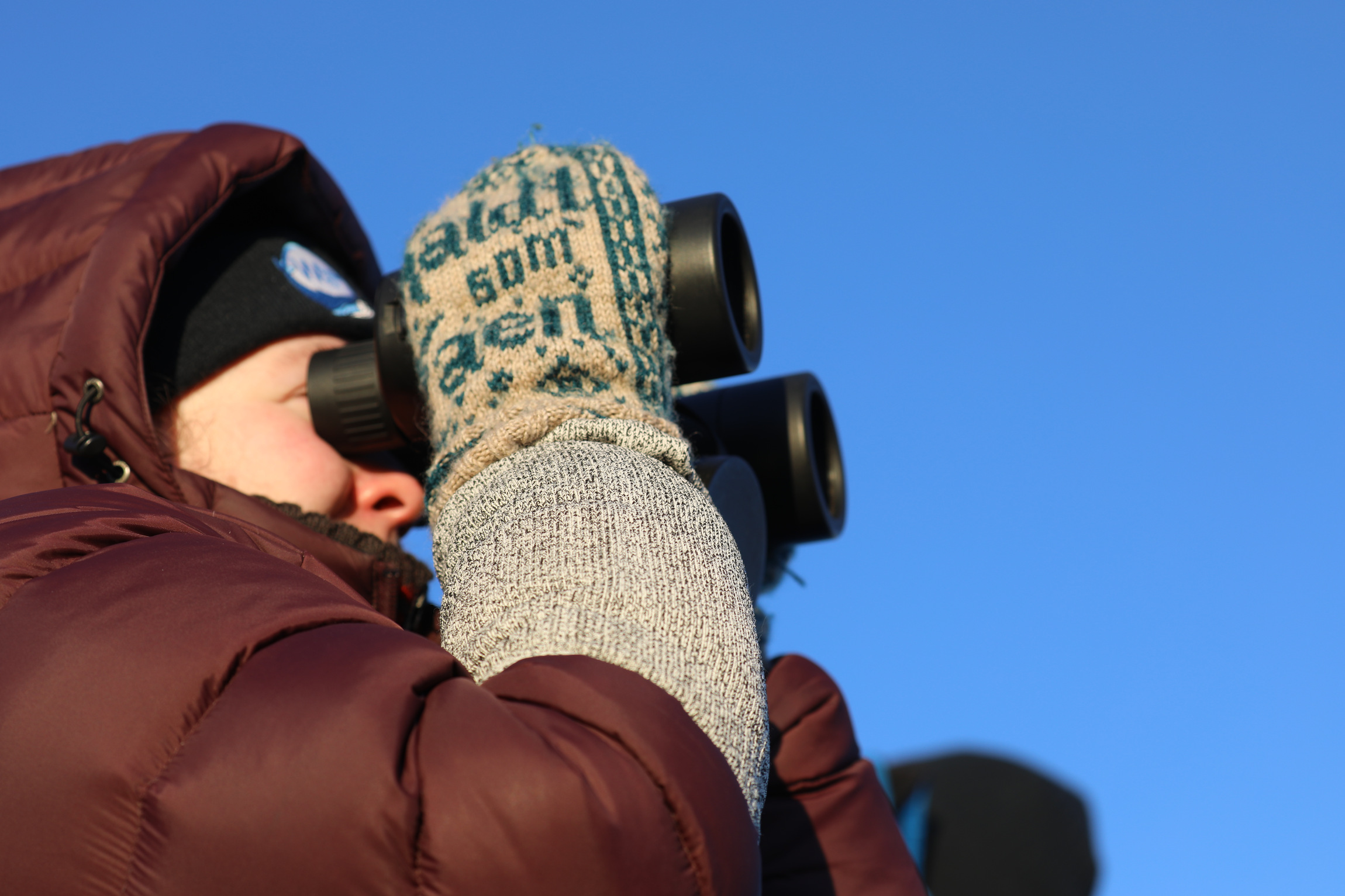
So, I spent my next days sitting in the grass with my binoculars, waiting to see what would happen. I enjoyed the silence, listening to the humpback whales and their blows and observing their various behaviors. Sometimes, I want to tell everyone that I’ve always been in the right place at the right time. Or maybe I just waited long enough! Who knows?
I felt like the luckiest person in the world when I saw a humpback whale breaching 20 times in a row. It was a whole new world for me, which I had only known from documentaries. And since then, everything in my life has slowly started to change.

What started observing whales from the coast with my binoculars, slowly grew into something much bigger for me. In my second year, I began assisting on whale-watching tours, and in my third year, I joined the Whale Wise team as a volunteer. And sometimes, I feel incredibly thankful for what life brings me.
Life in such a small fjord can be challenging. A lot of people ask me what it’s like to live in such a small town with a population of 300. I have to admit, I’ve been asked this question more than 100 times. And I’m never quite sure how to answer it.
Sometimes, as an immigrant, I feel that I don’t really have the right to speak for Icelanders who have lived here their whole lives and definitely have a different experience than I do after just three years. I believe that everyone experiences and feels life in the “countryside” differently. Some people give up after a few months, while others stay forever. It really depends on the individual.
Personally, I feel like I’m addicted to the nature around me. I’ve never been surrounded by such raw nature before, nor had I ever been surrounded by the sea, fjords, and all the wildlife around me – sheep included, of course.

Life here may seem very simple and uncomplicated, but we live in a modern world. The postal service delivers packages at a speed you wouldn’t expect, you can find everything you need to survive at the local store, you can drive wherever you need to go, and you can also visit the doctor or the pharmacy. So, despite all the raw nature around us, everyday life here is not really that wild – except when it comes to whales!

Whale watching from the Coast
You have probably already heard from other members of Whale Wise team that whale watching from the coast can be just as exciting as a guided whale-watching tour. After three years of watching whales from the coast, I can say with absolute certainty that it’s not only about luck. Although luck is certainly still a factor, it is not as important as having the patience to search for whales!
Patience is the key: knowing how to be silent, observing the landscape around you, and listening to nature and the ocean. To be completely honest, Steingrímsfjörður is the place I feel most connected to. It is where I spend most of my time watching whales, and over time, I have slowly learned how things work here. And this fjord has something to offer almost all year round!
Locals share their experiences with each other, and tourists leave with new information and knowledge about the place they are visiting.
And if I had to choose the most memorable experience from Steingrímsfjörður among all my observations from the shore, it would be the one I’m going to tell you about now.
It was an ordinary summer day like any other. The weather was excellent by Icelandic standards – almost completely windless and a little cloudy. At this time of year, the days are still long, with the sun rising at 4 a.m. and setting around 11 p.m. I remember that day very well because it was the day I ate my dinner on a local hill next to the church and watched humpback whales blowing in the distance.
After dinner, I walked home, but I was still quietly hoping the whales would come closer. After 10 p.m., I noticed a small group of people standing on the pier in the harbor, watching something. And this doesn’t happen very often! The harbor is usually empty for most of the day. So, my whale radar was on high alert. I opened the door, ready to go and see what was going on, when I heard a whale blow.
Yes! They’re here!
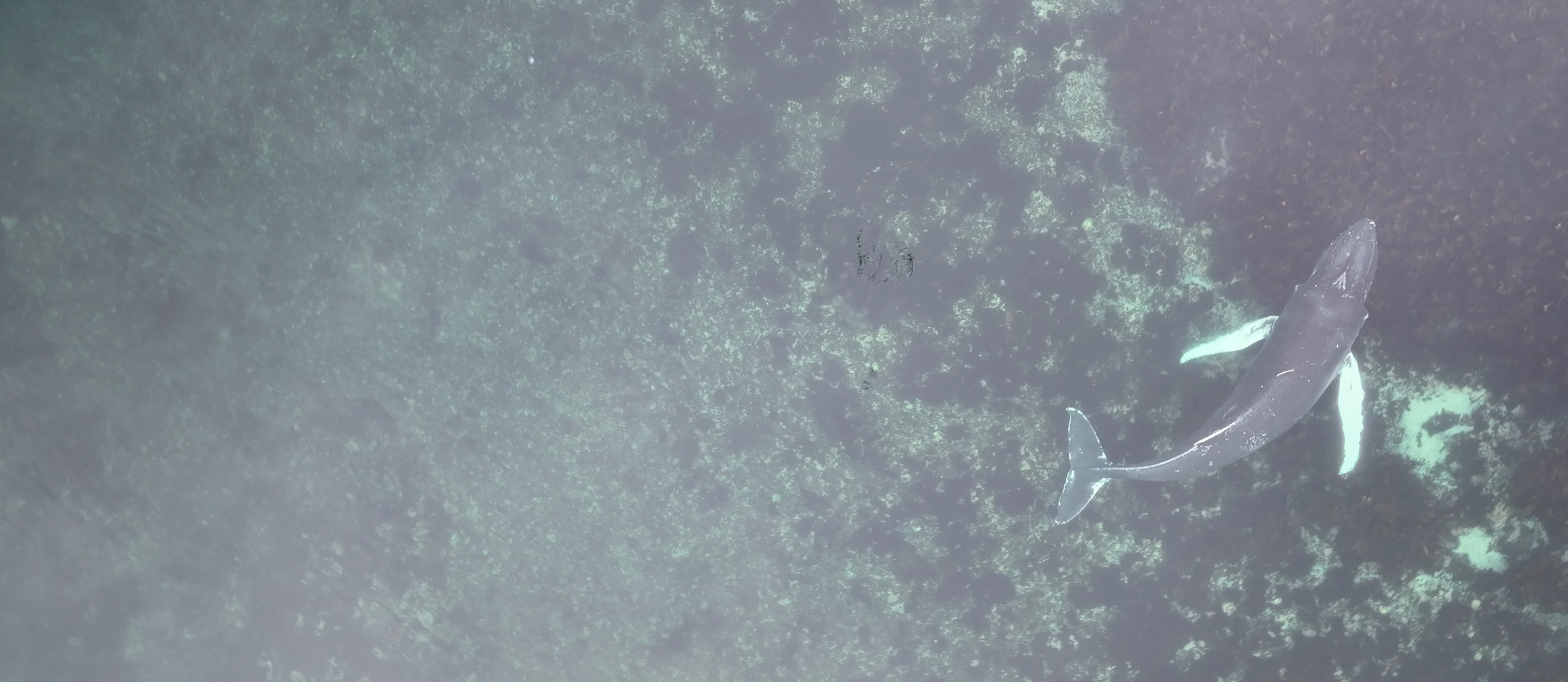
They had swum right into the harbor! The humpback whales stayed in this area (map) for several hours, literally just a few meters from the shore. Sometimes, they were almost close enough to touch, swimming in water only around 6-10 meters deep the entire time.

Humpback whales can dive to depths of more than 600 meters, but it’s worth mentioning that they can also swim very well in shallow waters.
At first, they circled in the same direction for a while, round and round. One of them suddenly made a loud trumpet sound that seemed to vibrate through whole town. I had never heard that sound before, and it completely captivated me.
You may be curious, just like I was, about what that sound means, especially if you have never heard it before. Humpback whales use a wide variety of sounds and movements to communicate and express themselves. There is some speculation that the trumpet blow may express tension, anxiety, or irritation. It is also often associated with sudden disturbances, such as nearby vessels. In this case, we could say that the irritation may have been caused by other whales close by.
After a while, they all moved closer to the pier in the harbour, where we watched the whales for some time. Once we were there, it became clear why they were so close. The harbour was literally teeming with schooling fish. They covered the entire surface, and the water seemed to be constantly moving. You could almost catch the fish in the palm of your hand.
Schooling fish often stay in shoals, and when they sense danger, they may form a bait ball. This is a protective formation against predators, in which the schooling fish gather into a dense, tight, rotating ball. This reduces the risk of an individual fish being caught, but at the same time, it can also attract other predators.
In certain situations, prey may be chased into shallow waters near the coast. In this case, it could have been the humpback whales that pushed the fish closer to shore. What followed was one of the most intense humpback whale feeding events I have ever witnessed. They were using a method called lunge feeding, in which they use their strength and speed to launch themselves forward with their mouths open, taking in as much food as possible at once.
I really enjoy sharing my experiences, photos, and videos of everything that happens in nature. That’s why I decided to write about this experience here on the blog and make it available to other nature enthusiasts. At the same time, it will remain a personal memento and a reminder of just how incredible nature is and how much we can learn from it!
Learn more about land-based whale watching in Iceland
To help you watch whales responsibly from land and discover the best land-based spots for whale watching in Iceland, we’ve produced an extensive guide with tips and hidden gems. For a small donation, you can have the most incredible whale encounters as you travel along the beautiful Icelandic coastline.
Support science for conservation
Our mission depends on your donations and advocacy. Here’s how you can uplift whale conservation efforts.
You can also follow us on social media and sign up to our newsletter. Thank you for supporting our mission.

Support science for conservation
Our mission depends on your donations and advocacy. Here’s how you can uplift whale conservation efforts.
You can also follow us on social media and sign up to our newsletter. Thank you for supporting our mission.

Written by Tom Grove
In the previous blog post, I outlined our spring plans to study the whales of Finnafjörður and the wider bay of Bakkaflói. In this post, I’m thrilled to share that we had an incredible and productive two weeks in the field. We were fortunate with both weather and whales, and were able to make the most of this opportunity.


20 humpbacks in the far northeast
In April 2025, we encountered large numbers of humpbacks (25+) in the large bay of Bakkaflói, including the small fjord of Finnafjörður. Local knowledge suggested that the numbers of whales were unusual, but it wasn’t unusual to see whales at that time of year.
Our fieldwork in April 2026 provided scientific evidence to support this local knowledge. On every day that the weather was good, we saw humpback whales. Numbers were lower than last April, with 5-10 whales each day, but they were very consistent and in total we observed 20 individual humpbacks, which is an awesome result. We also saw minke whales, white-beaked dolphins and harbour porpoises, albeit less frequently.
The bubble-netting continues
The most shocking part of our April 2025 sightings was the use of bubble-netting as a foraging tactic by every humpback we observed in the area. As a rarely-documented behaviour in Icelandic waters, this was a mind-boggling observation. Again, we were curious to see if this behaviour continued in 2026.
When Alyssa and I first made our way across Iceland to our accommodation, we drove along a foggy Bakkaflói, hoping that these conditions wouldn’t plague the season (the northeast can be very foggy). About five minutes from the village of Bakkafjörður, there was a small break in the fog and we couldn’t believe our eyes – two humpbacks, close to shore, creating the most incredible bubble-nets.
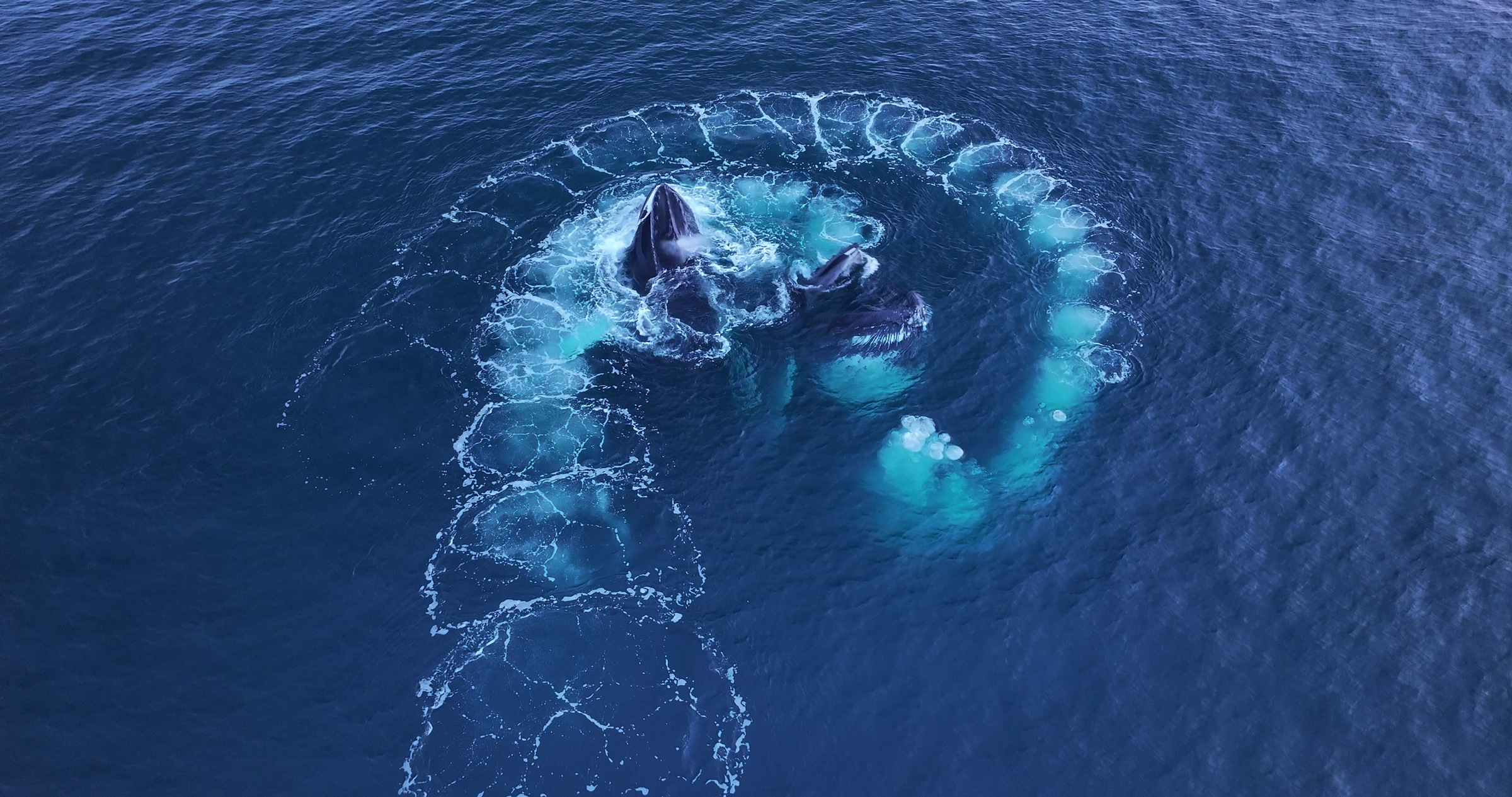
That really set the tone for the next two weeks, as we observed whales bubble-netting almost every day. Not all the whales produced bubble-nets, and mostly large whales were involved, but this was still far more frequent than we’ve observed in other parts of Iceland. We’re yet to discover why bubble-nets are used so much more in the far northeast but it’s likely determined by prey type and population connectivity. In other words, bubble-netting might be a more useful tactic for the types of prey that humpbacks are eating in the northeast, and they may have learned this behaviour from a distinct segment of the population.
Different sizes, different sighting histories
We observed humpbacks of a huge range of different sizes, from small juveniles up to some of the biggest humpbacks we’ve ever seen. We even observed a mother-calf pair, which is very rarely seen in Iceland.
Interestingly, these whales had a wide variety of sighting histories on Happywhale.com, which is an amazing global data base of individual humpbacks – I highly recommend you check out their website. Some whales had been seen for several years around different parts of Iceland, especially Skjálfandi Bay. However, plenty of whales had never been seen before, including big adults. This likely means they spend time in very remote areas with limited survey effort. And most of these whales weren’t present in April 2025, suggesting that the total number of whales that visit the area could be very high.
Stars of the season
We were ecstatic to see each and every humpback in Bakkaflói, but a few really stood out to us.
Loreleï
To us, it was clear that Loreleï was the ruler of Bakkaflói. This big humpback interacted with several other whales throughout the two weeks and was the main bubble-netter, employing this amazing feeding tactic most of the time. They LOVED to fluke in a really slow and dramatic way – even watching from 4 km away, you always knew it was Loreleï. This whale also moved A LOT, often circling the entire bay within a single day.
Björn
Björn means bear in Icelandic, and we named this whale after large scars that resembled claw marks on their fluke. Björn is a BIG whale and was very skinny in April, which likely means they had just returned from their long winter migration to tropical breeding grounds. I have never seen a whale take so long to fluke, which likely reflects their huge size. On one day, Björn seemed annoyed with a small whale which honestly looked like Björn’s calf due to the size difference. We later found out that the other whale was at least 6-7 years old – that tells you just how huge Björn is.

LeftX
One of my favourite parts of this field season was encountering an old friend, LeftX. This whale is a regular in the Westfjords, spending time in both Steingrímsfjörður and Ísafjarðardjúp. To see LeftX on the other side of Iceland was incredible and resulted in some very loud screams.
LeftX hung around for a few days before likely moving on. During this time, they were always with another whale and often fed close to shore, beneath dramatic bird cliffs.
Why do these findings matter?
We are providing the first baseline for whale occurrence, distribution, behaviour and identity in Bakkaflói . In order to understand this habitat and its importance for whales, we need to collect data over several years. Every year of fieldwork builds our understanding of whale populations in the area, and we will continue to monitor the region in future years.
In Finnafjörður, a large port may be built in the coming years, with potential negative impacts for whales that use this habitat. By building a robust data set on whales in the area, we can inform sustainable development that minimizes any impacts on local cetaceans. Without this data set, whales would remain invisible in the face of industrial development.
Wash Over Me
Over the past two months, we’ve been involved in an incredible project. Composer Hughie Gavin has produced an incredible charity single called Wash Over Me. Featuring the words and voices of the 140 members of the Social Singing Choir, this song is all about ocean connection.
I’m so excited to share that Wash Over Me will feature singing humpback whales from Finnafjörður in the depths of winter. We captured these song recordings during a year-long deployment of a hydrophone to listen for whales. Now, whales and humans will sing together in Wash Over Me. After a premiere in Margate on May 22nd, the single will be released on June 8th, World Ocean Day, with all proceeds being kindly donated to Whale Wise.
Pre-order Wash Over Me now and receive Drifting Ocean, a bonus track, mixing human voices and humpback whale song into an expansive soundscape. You’ll receive the single the moment it releases on World Ocean Day.
To support this project, our president Rebecca Douglas joined us for a week to visually document our fieldwork, the local area and the whales. During this time, Rebecca was even interviewed by the BBC about Wash Over Me – we’re really excited to see this beautiful song get so much attention. Rebecca is making a music video to accompany the single, also to be released on June 8th.
Thanks as always for following our journey – stay tuned for more exciting whale updates!
Support science for conservation
Our mission depends on your donations and advocacy. Here’s how you can uplift whale conservation efforts.
You can also follow us on social media and sign up to our newsletter. Thank you for supporting our mission.
Support science for conservation
Our mission depends on your donations and advocacy. Here’s how you can uplift whale conservation efforts.
You can also follow us on social media and sign up to our newsletter. Thank you for supporting our mission.
Written by Tom Grove
For the past years, we have studied the whales of Bakkaflói and particularly the small fjord of Finnafjörður, in the far northeast of Iceland. This April we’re back in the east, conducting drone and photo-ID surveys to build upon our existing research.
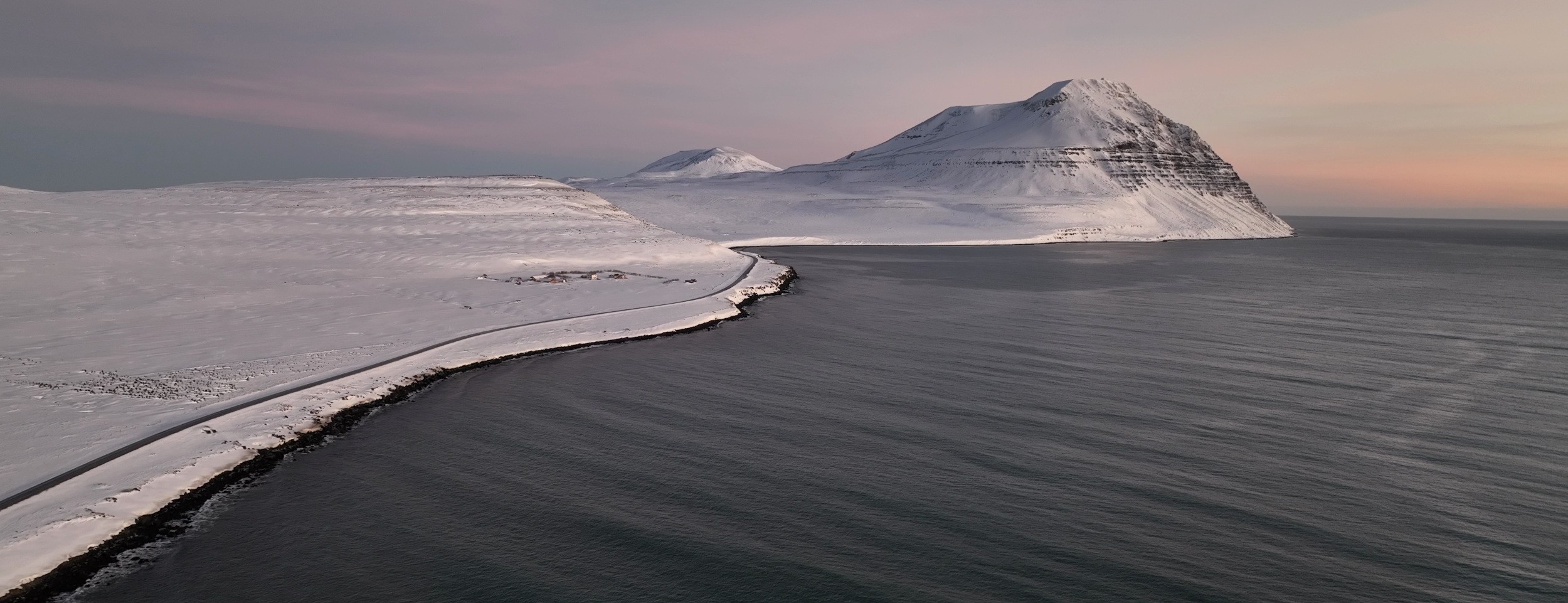
Finnafjörður is one of the most remote parts of Iceland, a near-pristine fjord with limited human activity other than small-scale fisheries. Local communities were aware of long-term whale occurrence, but the area’s habitat importance had not been scientifically confirmed.
Since 2021, we have conducted targeted research to better understand whale occurrence, diversity, movement and behaviour in this area. And the results so far have been astounding:
- Long-term hydrophone deployments confirmed that consistent winter presence of humpback whales in the area, revealed by some incredible winter singing
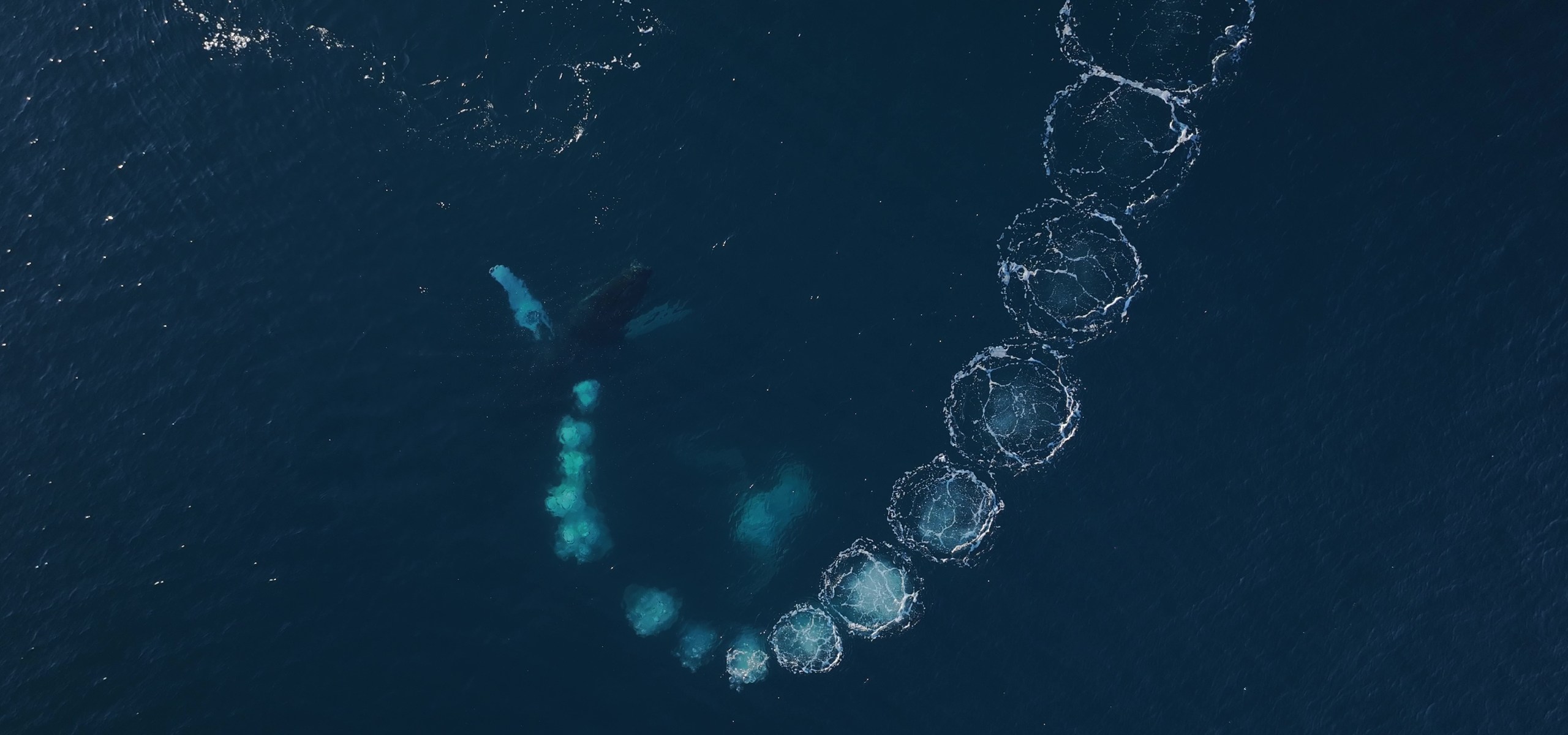
- In Spring 2025, we documented large numbers of humpback whales bubble-net feeding – a rarely observed behaviour in Iceland in which whales create a ring of bubbles to corral their prey
- White-beaked dolphins, minke whales and harbour porpoises also documented in the fjord
In other words, we have evidence that this area might be an important foraging habitat for whales. However, we want to explore the long-term significance of this area. Did we get lucky with our sightings and recordings so far, or do they represent stable habitat use across many years? The only way to find this out is to extend our monitoring, so that’s what we’re doing!


Spring 2026 fieldwork plans
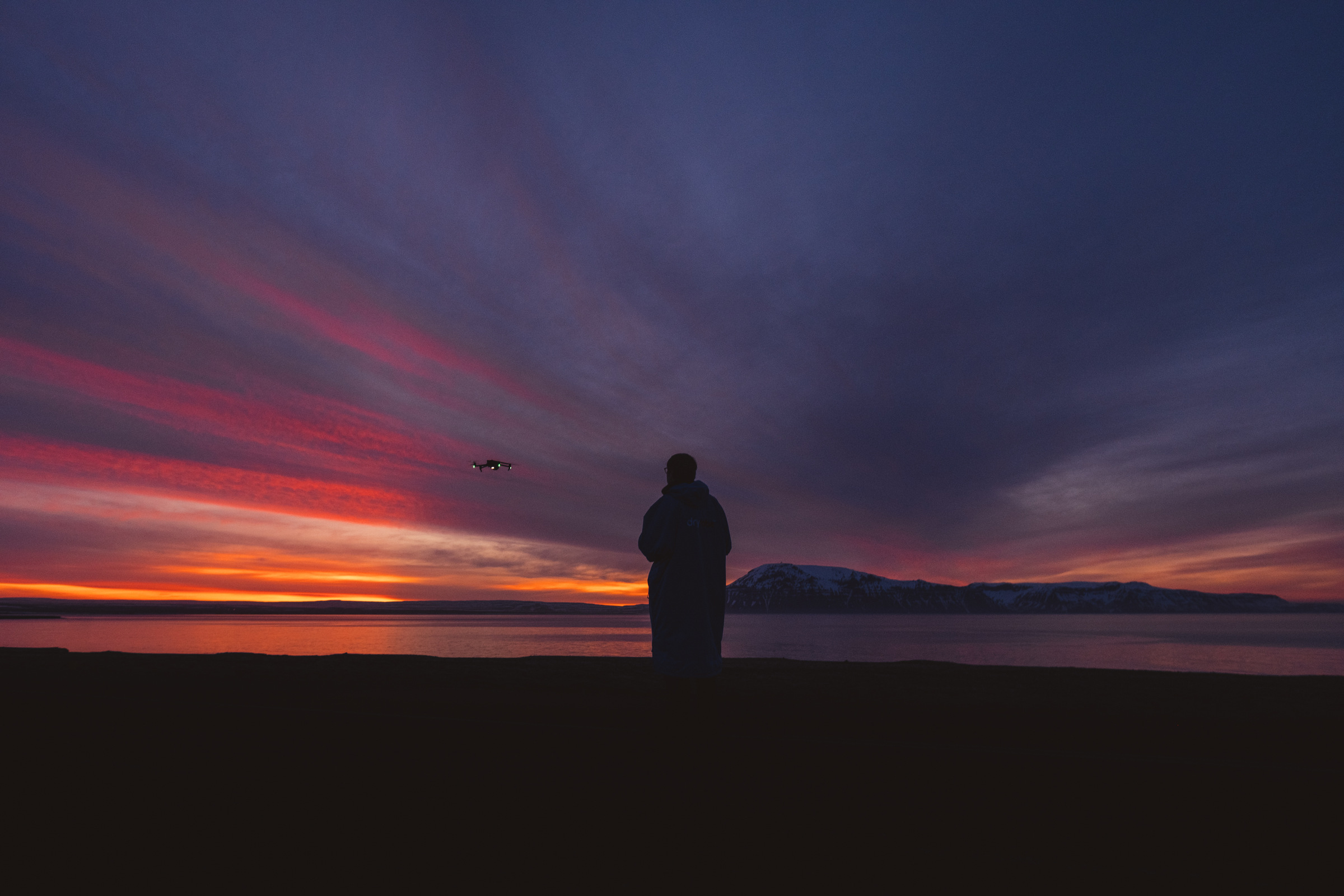
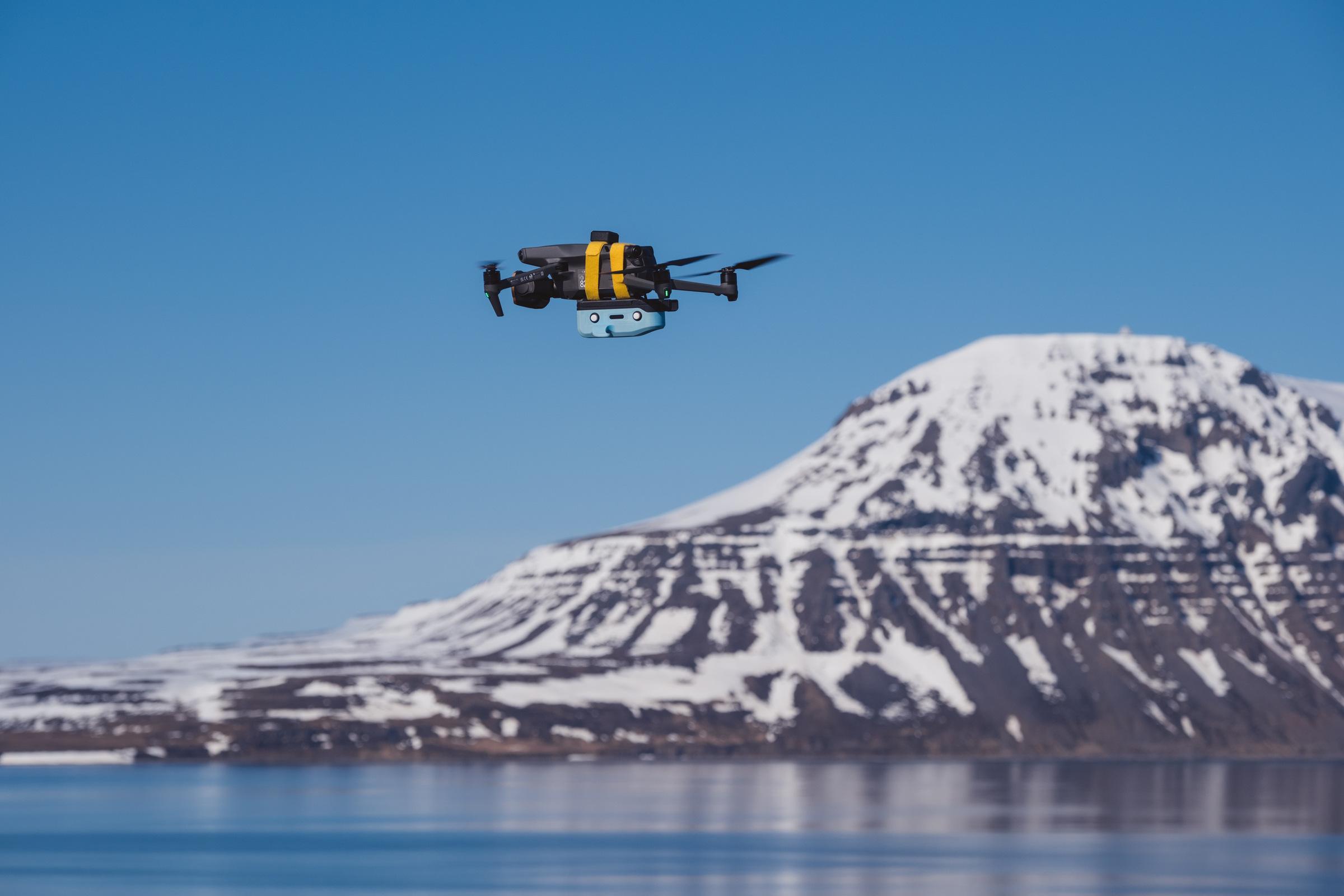
In April 2025 we found large numbers of humpbacks during an opportunistic three days of fieldwork, thanks to observations from our friends in the area. This year, we’re more prepared – we are spending two weeks in the area, searching for whales around the coastline. We will use drones to identify individual humpbacks, record sighting locations and measure length and body condition. If conditions and sightings allow, we will also deploy a short-term hydrophone so we can match visible behaviours to whale vocalisations.
Using these methods, we want to answer the following questions:
- Were the incredible whale sightings from Spring 2025 a fluke (pun intended), or did they represent an annual occurrence?
- Do the same humpback whales return to the area each year?
- Over the two weeks, how consistently do we sight different whale species in the area?
- Is there still clear evidence of feeding? This could include bubble-netting or surface feeding.
- How big are these whales? Initial observations suggest that some of these whales could be fully grown adults, which is somewhat unusual in coastal Iceland
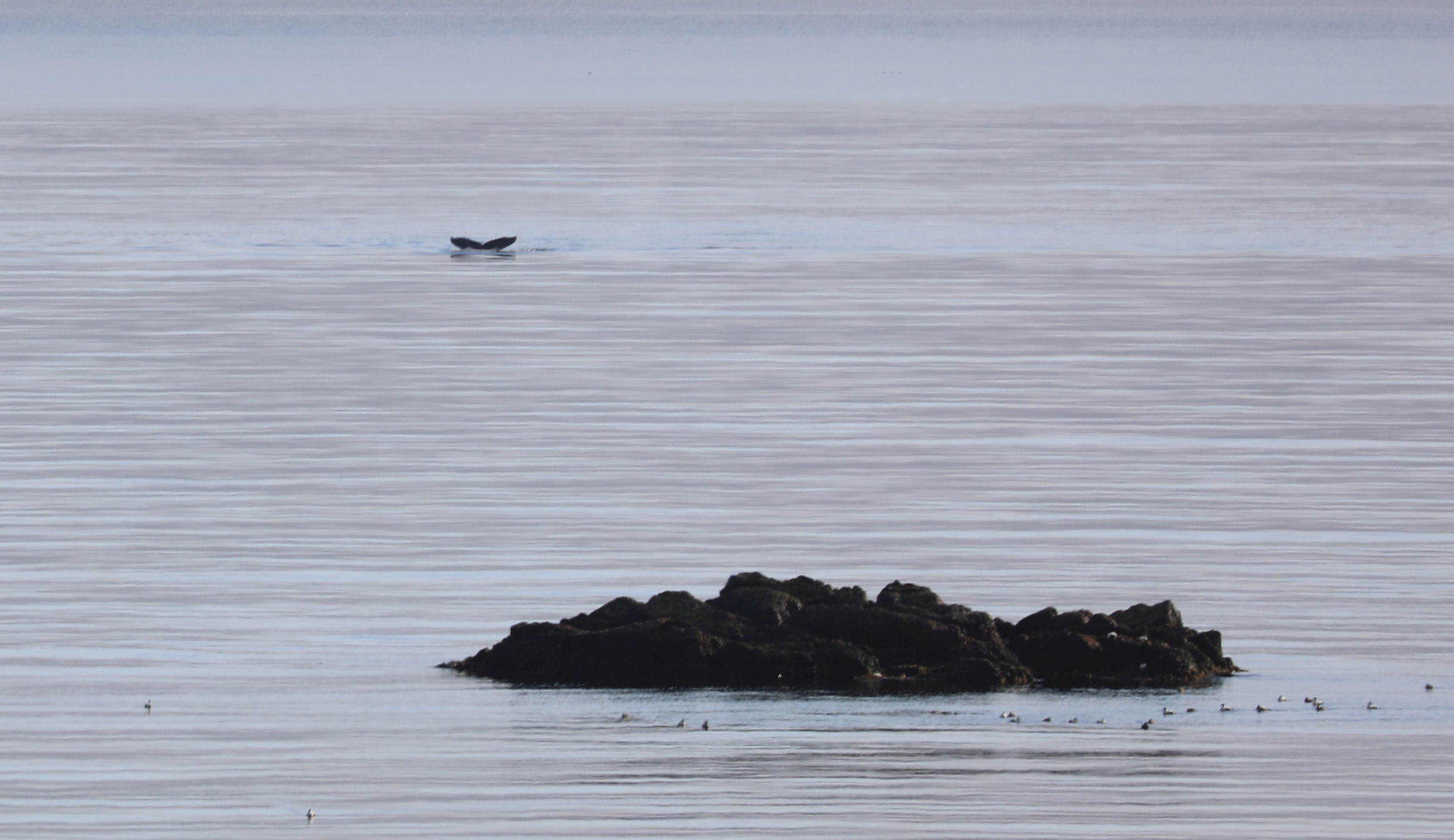
We are so grateful to our friends in Finnafjörður and the village of Bakkafjörður for making the project possible. Your sightings and local knowledge have deeply shaped this project and facilitated our scientific research. People have called us with whale sightings, taken videos and shared their insights into regional whale ecology. This research wouldn’t and shouldn’t happen without this local input.
Why does this matter?
Until our research started in 2021, the whales of Finnafjörður hadn’t been studied at all – in fact, from a scientific perspective, we knew very little about whales in this entire region (the far northeast of Iceland). This region is also very remote, with limited human activity, and can be considered near-pristine in some ways. Therefore, we have a fantastic opportunity to study the occurrence, diversity and behaviour of cetaceans in this region before any potential industrialization in the area. This allows us to assess potential impacts before they take place and inform responsible development. In particular, the planned construction of a large port in Finnafjörður would bring increases in vessel traffic, underwater noise and major habitat modifications. We hope that our research will be used to minimise its impacts on seasonal populations of humpback whales, white-beaked dolphins and other cetaceans that use the area.

Thank you to everyone who has supported this research project to help give whales a voice through scientific research.
by Malena Mogwitz
In today’s blog I want to share a story from data analysis with you, which I came across while assessing drone videos for the project Scars from Above (https://whalewise.org/scars-from-above/). It truly touched me, and reminded me once more of this incredible power and the emotions that whales are able to provoke in us. It also made me reflect once more about our human approaches towards them, the challenges they experience because of us, but also the potential power and magic of encountering them in their wild element.
When thinking about whale research and conservation, the first thing which comes to mind might be fieldwork and whale encounters. Ever since I got the opportunity to do this a few years ago, during an internship, the whales have deeply touched me in my heart and became a part of my life. I was lucky to join the Whale Wise team thanks to my master thesis, for which I started to participate in Scars from Above. Eventually I got into a more “invisible” part of research, spending time in front of my laptop screen for data analysis while spending the winter in North-East Iceland. While it was snowing outside, the sky colours changing from black to a lighter blue and pink, I was equipped with coffee and my laptop and assessed tons of drone videos, watching humpback whales float across my screen, while their relatives were just out in the bay.
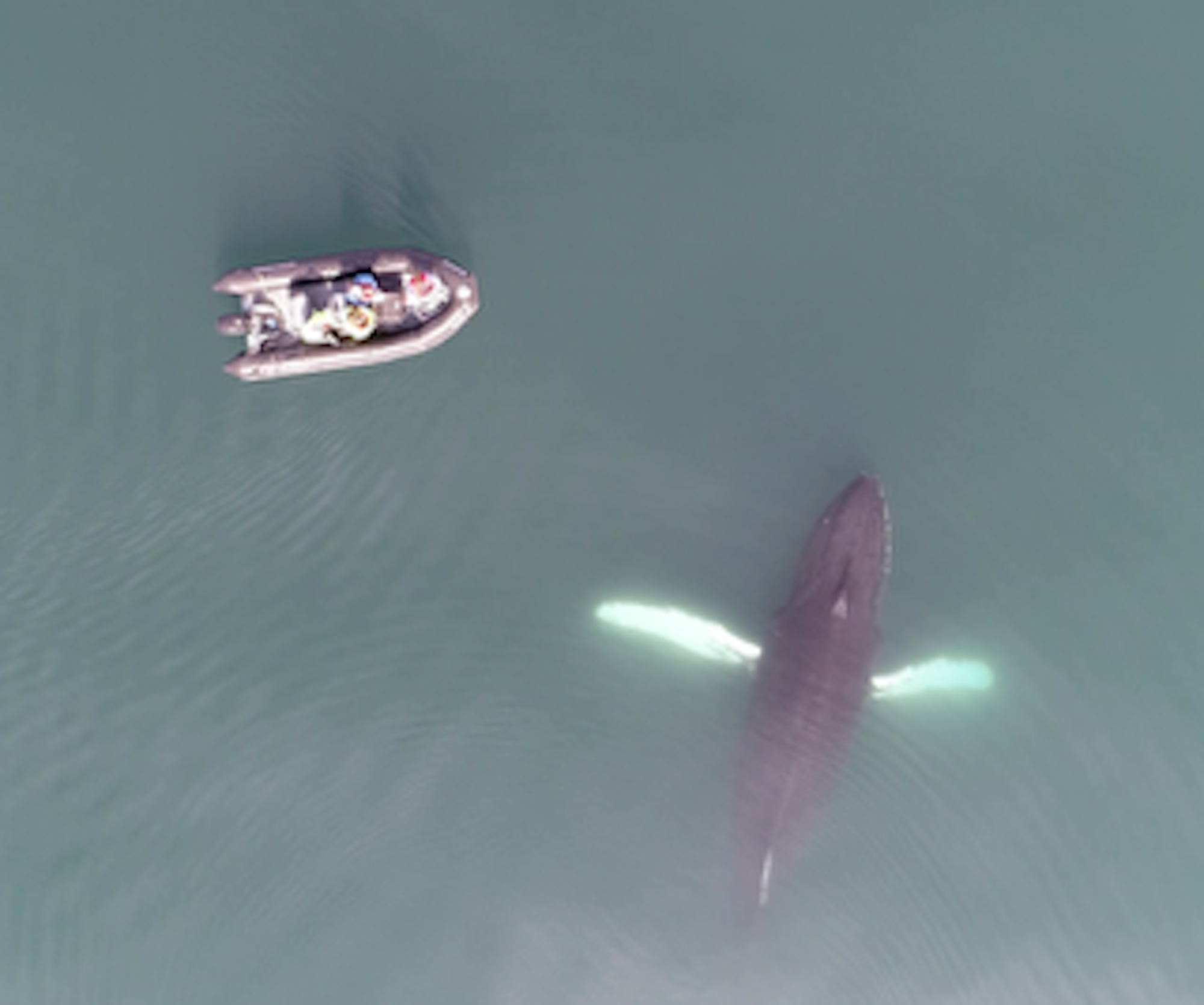
The story that I would like to share here is about a humpback whale, known as HRC-Mn232, or unofficially White Cap (likely because of two white patches on the underside of his fluke). He has been encountered in several places across Iceland, beneath them in Steingrimsfjördur, the base for field work of Whale Wise. On this particular day in July 2023, Skjálfandi Bay, White Cap got captured on drone footage by the researcher Maria Glarou from the Húsavík Research Centre (University of Iceland, thanks Maria for letting me share your footage! :)). The video shows him approaching a whale watching vessel, coming incredibly close.
Now, I have to say that I feel very torn when thinking about whale watching. In the past I have seen individuals being approached, and even chased, when they showed clear signs of avoidance (change of direction, less time spent at the surface, shorter breath cycles, and higher swimming speed). Just like anything, whale watching has several sides: Being a platform for research and environmental education, allowing people to experience animals in real life which are usually difficult to have access to otherwise, generating sources of income for local economies, and stressing the value of living whales as an alternative to whaling. On the other hand, we know that whale watching, similar to other forms of wildlife tourism, can have negative consequences for these animals. Being acoustic animals, underwater noise from vessels can have negative impact on whales and even change their communication behaviour. Getting too close and chasing individuals for a close view can also lead to changes in diving, swimming, breathing and feeding patterns, meaning potential higher expenses of energy and stress, of which the long-term impacts have not yet been fully understood.
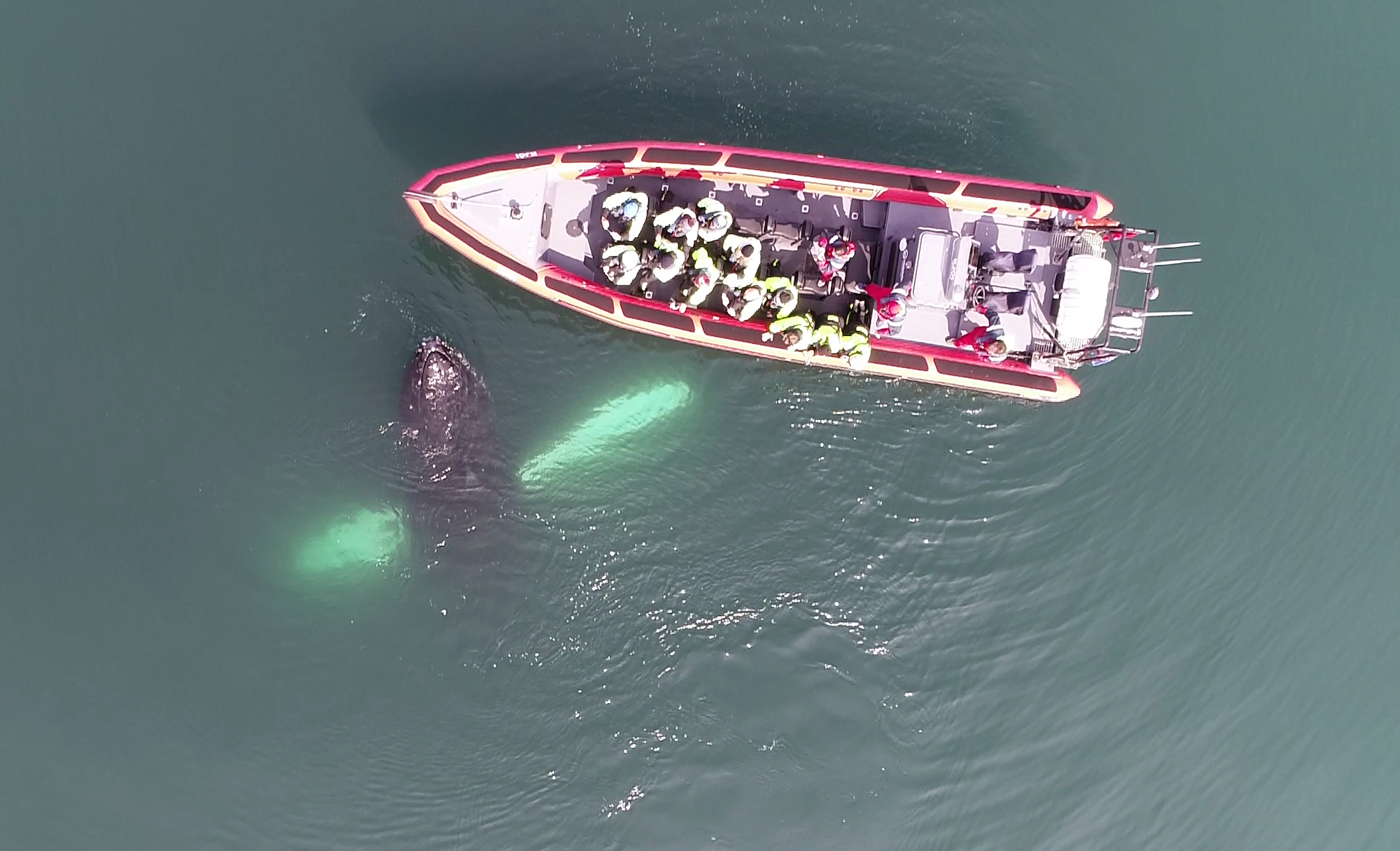
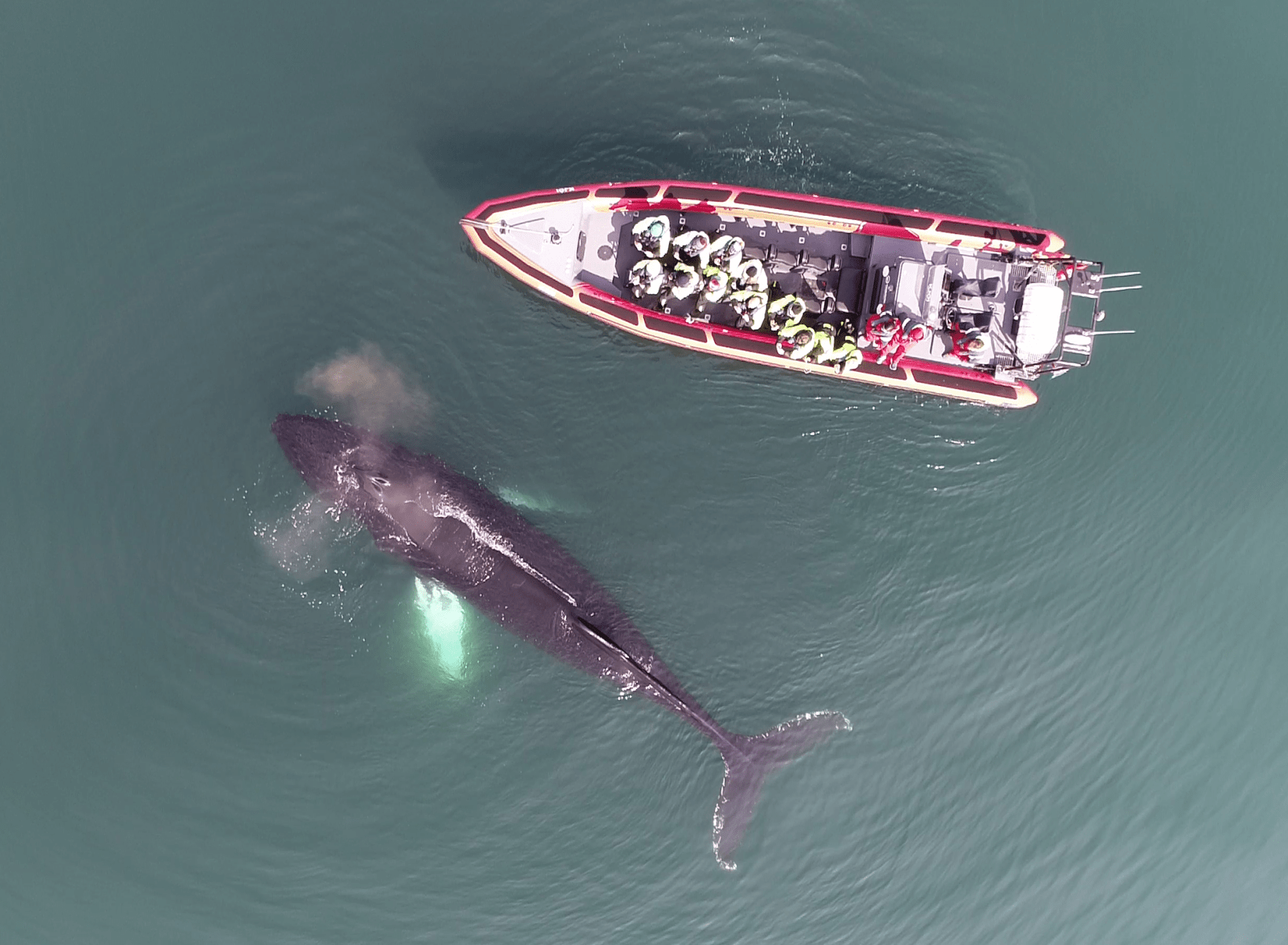
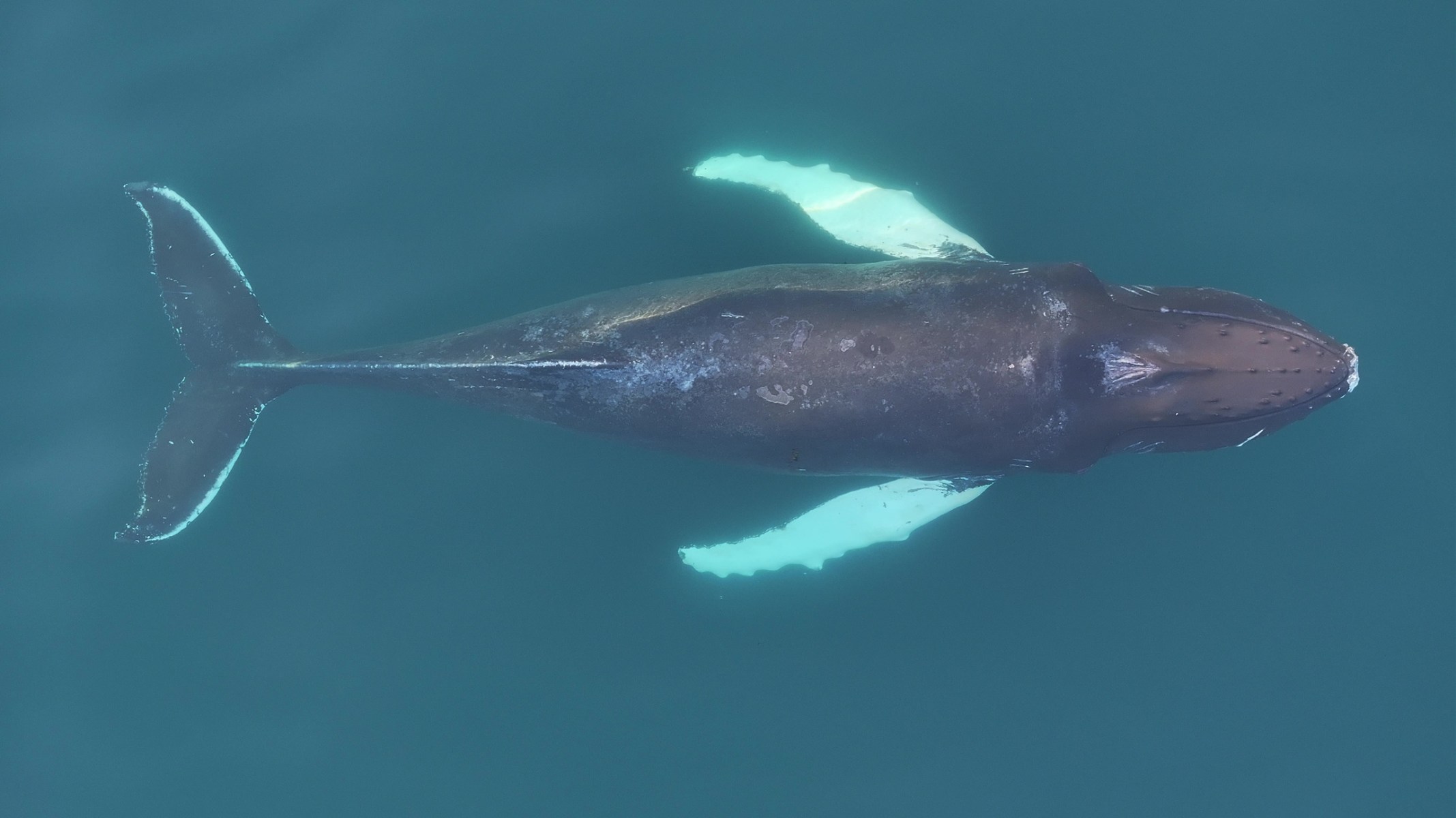
However, in the case of White Cap here, the situation is a different one: The humpback whale clearly chooses to approach the boat himself, which is not moving at all. At first, he is breathing close to the boat, which measures about his own size. Then, little by little, he cautiously manoeuvres closer to the boat by gently moving his pectoral fins and fluke, sticking his nose out of the water (known as a spy hop, a sign of curiosity) nearly in reach of the boat. Just look at how huge his body is compared to the RIB boat and humans. Especially drone images allow us to become aware of the real size of these animals (around 15 meters for adult humpbacks), as well as their overall body condition, making them important for research.
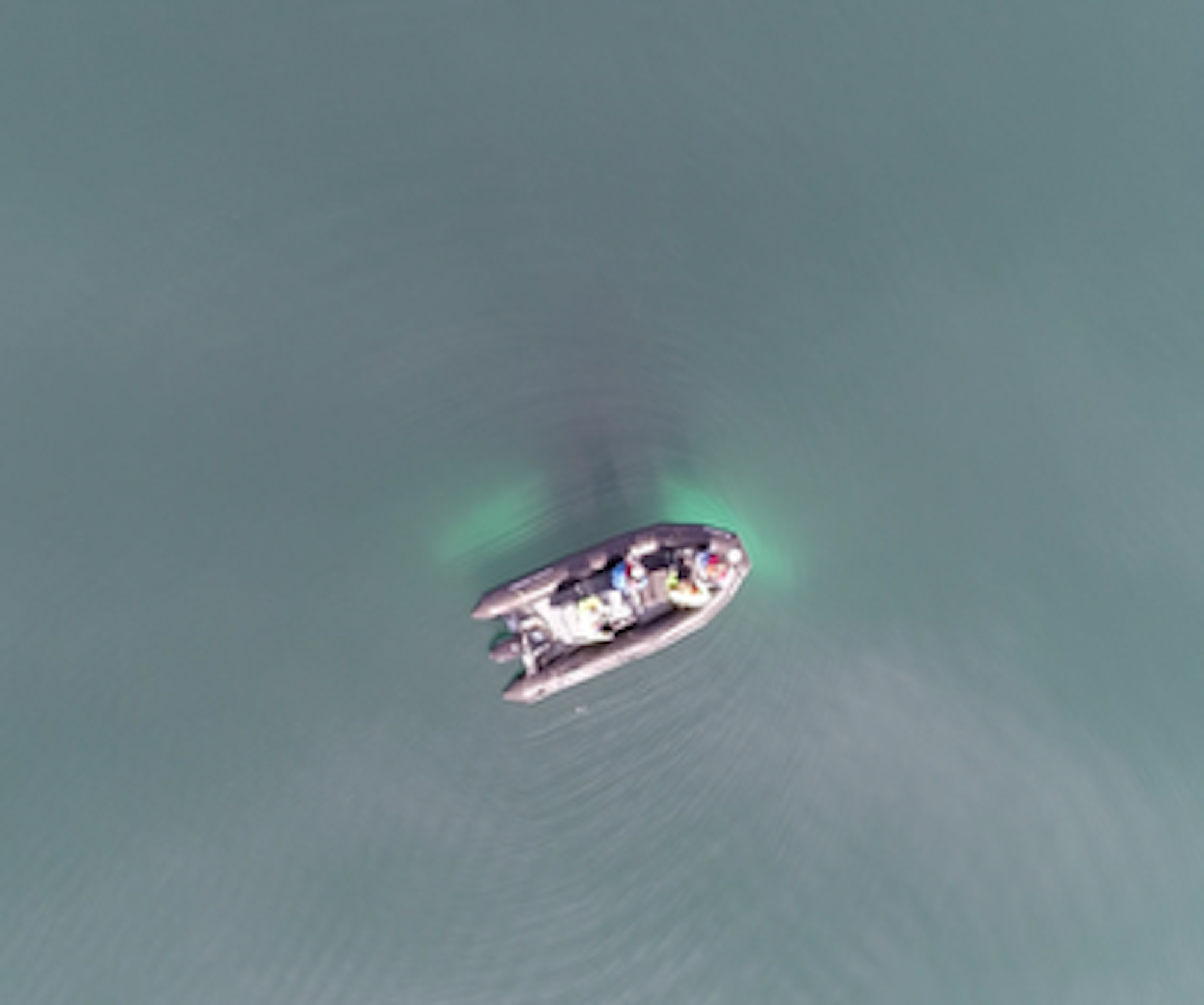
There is something very powerful in grasping the size of these animals when being very close to them, the power of their breath when they surface. White Cap starts to dive beneath the boat. Not too deep, you can still see his white pectoral fins and fluke. Lingering just below, maybe even slightly touching the boat, it becomes even clearer that this approach is intentional. While the drone follows the whale, the passengers of the boat change from side to side as he reappears on the other side of the boat, and then disappearing out of their view again, being completely hidden under the vessel.
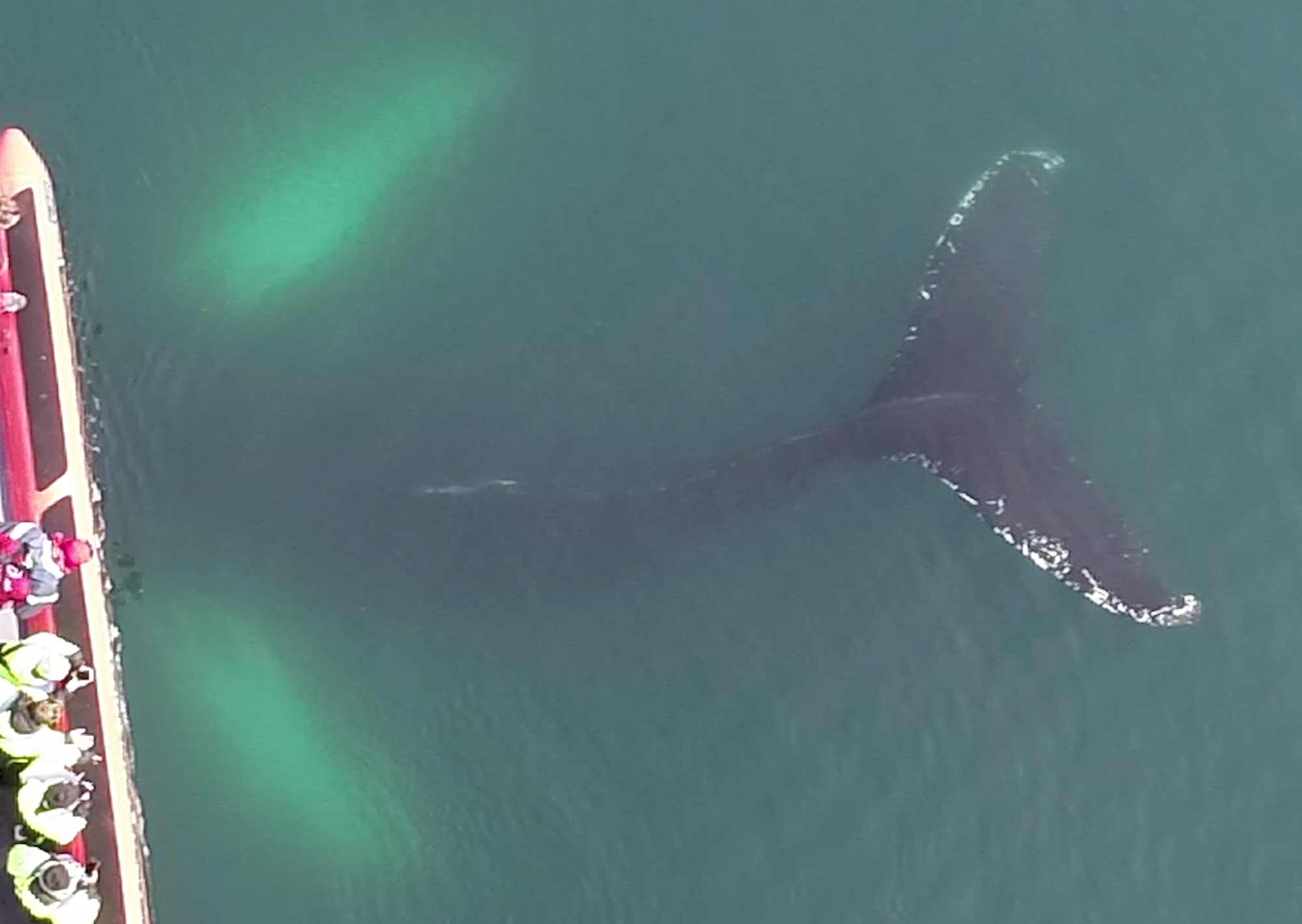
This image, of a whale as long as the boat itself, lingering underneath, changing sides, surprising the humans and sending them from one side to the other, the boat tilting under every step, has something extremely humbling to me. Imagine the force of this one animal, and the impact it could have on the boat, if it wanted to. Yet, he knows exactly how close he can get, and his behaviour displays perfectly why humpbacks are sometimes called gentle giants. Personally this is what especially touches me in humpback whales: their size and power, combined with moments of curiosity, gentleness, and awareness. Humpbacks are known to approach boats, as well as to interact with other species through playful behaviour. Have a look at Maria’s image of this humpback whale playing with white-beaked dolphins in Skjálfandi.
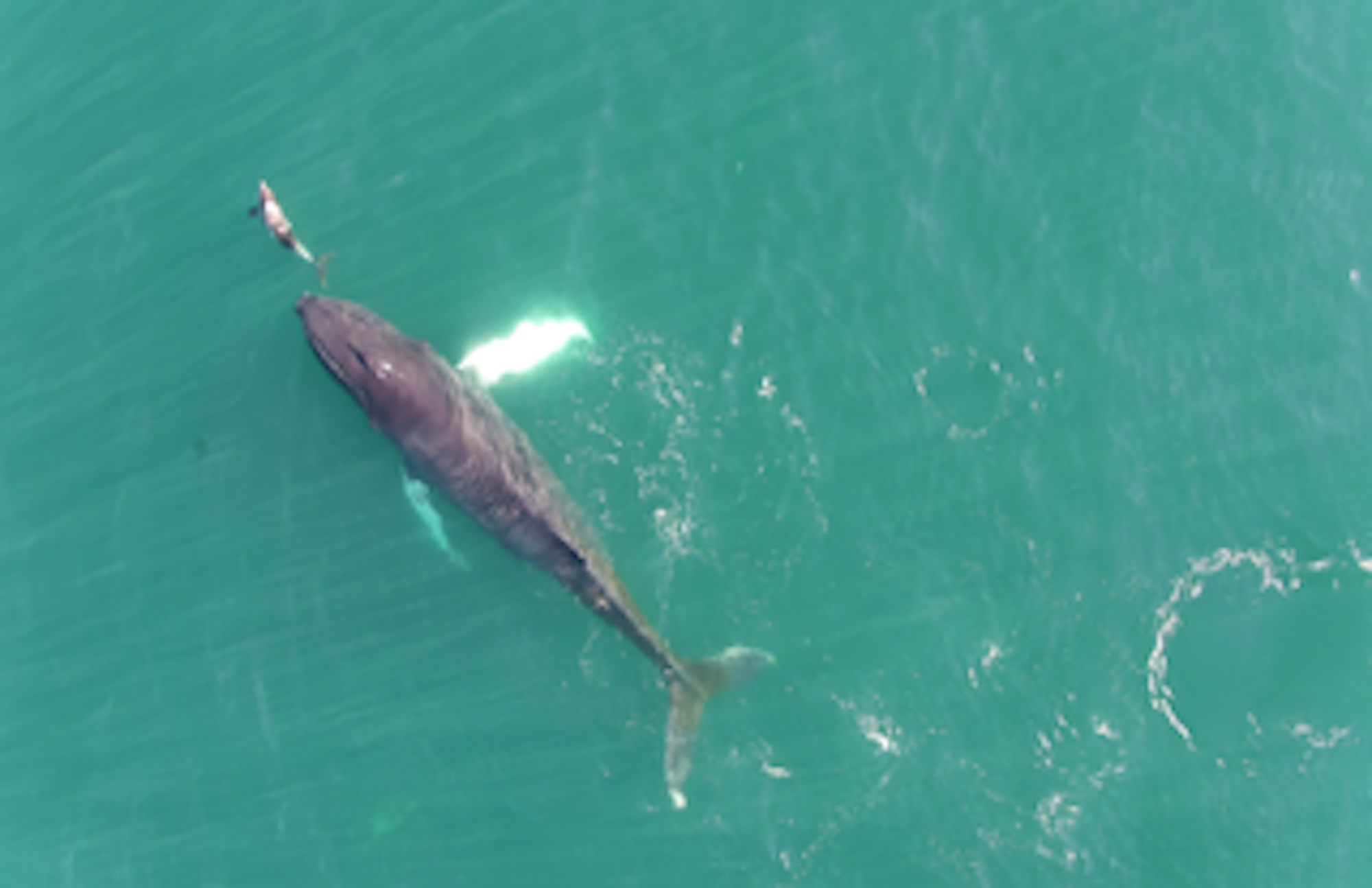
This explains why I tend to feel angry and sad when observing disrespectful behaviour of us humans towards these beings. There appears to exist a huge dilemma in whale watching: if experiencing whales from close, encountering them, made me love them, want to protect them and contribute to research, how could I want to deny anyone else having this experience? Our human way of functioning seems to make us care about what we directly experience or feel close to. For most of us humans, whale watching is the only way to experience a whale encounter, if at all. Many non-profits, including Whale Wise, collaborate directly with whale watching operators and get access to data thanks to them. But then, how can we possibly respect whales and have no impact on them, if whale watching is tied to a economic system like the one we live in currently, which pressures you to make a living and keep happy clients. Clients who get the expected close-up encounter are crucial to secure income.
As I am rewatching the footage for this blog, I feel such a deep love for this whale who is checking out the boats. Checking out the humans, who sometimes also mean harm to their species and others. And this also gives me hope, hope that a balance between watching whales and protecting, respecting them, can exist. This example of White Cap shows that whales can choose to approach and encounter us, which I have also experienced numerous times personally. How we approach them in return then might be crucial for respecting them. After all, WE are the ones who come into THEIR living rooms. Picture some kind of band (a music genre which is not your favourite!) setting up their stage right in front of your house, peeking into your windows while being extremely loud. Most of them even taking photos. What would we think if they would say: “Well, if the inhabitants really feel disturbed, they could just leave”?
Maybe whale watching, which already implies an act of consumption (picture watching animals in a zoo, a movie,…do you meet up with friends to WATCH them?), could be reframed and named into a sort of Interspecies Meet & Greet, relieving this activity from expectation and pressure. Just like you take off your shoes when visiting someone else’s house, we could let the whales choose whether they want to be approached – and leave them alone if they signal a no. In my experience, a whale-encounter feels so much more precious and valuable when the whale chooses to come closer, an encounter on a voluntary basis.
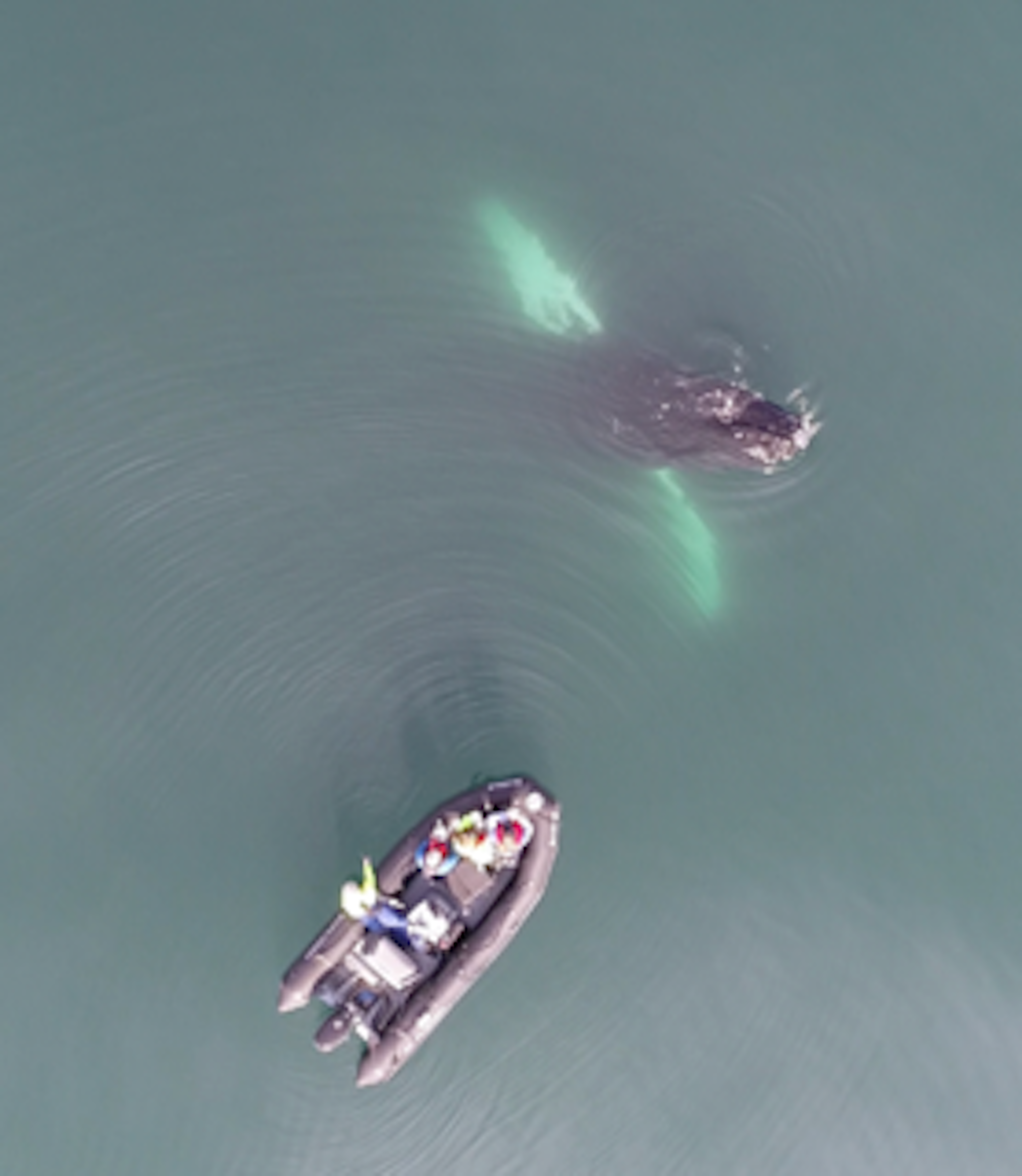
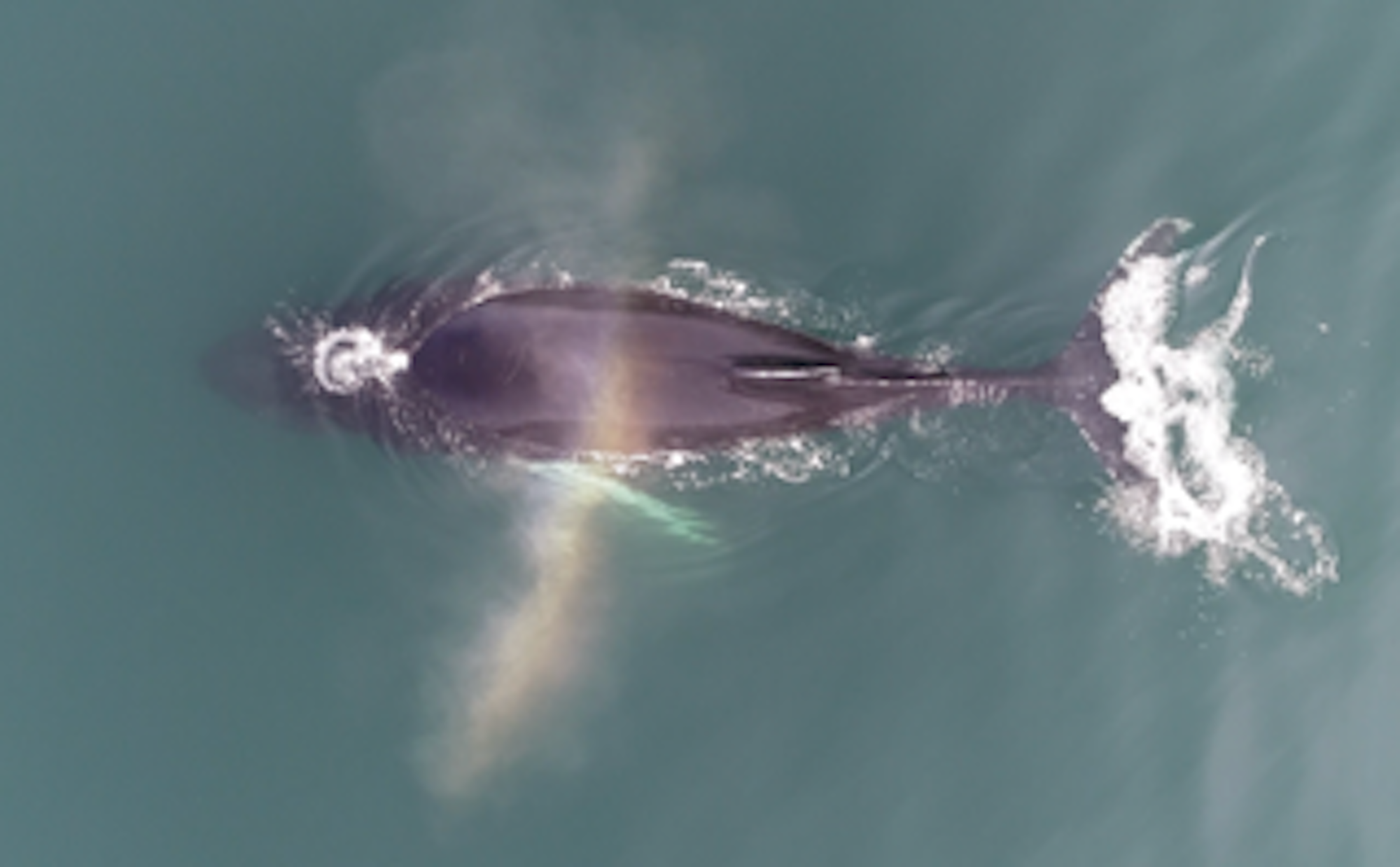
Eventually, White Cap surfaces again and then is off to approach the next vessel – a smaller zodiac, the research boat from which Maria is capturing these images. Same procedure, surrounding the boat, diving underneath, while gently moving his pectorals, slightly turning onto his side. And then White Cap goes for a deep dive, lifting his fluke out of the water, disappears, to do his whale stuff. You couldn’t even tell that he has just been there before, but the people who just encountered him will remember for sure. And maybe, hopefully, this memory makes them want to protect White Cap, his relatives, and other creatures, where ever they go on this planet.
Written by Tom Grove
I want to tell you about one of the most magical experiences of my life –
finding whales upon whales in a frozen Westfjords winter.
As I write from a cosy house in South Wales (where I’m spending Christmas), the words above almost feel imaginary. Did I actually spend the first half of winter driving along the icy roads of the Icelandic Westfjords, finding translucent landscapes of whale breaths I could only dream of? Upon reviewing our photos and drone videos, I’m happy to report that these memories are indeed real. This November and December, we documented extensive humpback whale occurrence throughout the Westfjords, with incredible numbers, fascinating behaviours and a growing understanding of this community of giants. This follows an amazing research trip on October 6th with our collaborator Sjóferðir.
Alongside masses of data, we were fortunate to witness countless whale stories. These won’t all fit in one blog – and we’re excited to share more in the coming months – but I’ll start by giving an account of (nearly) every day of fieldwork during this period. I’ll focus on Ísafjarðardjúp, the largest fjord system, and I’ll share my impressions and highlights from each day. Through these reports, I want to convey three things:
- Whales are awesome.
- We are only beginning to understand the intricate, fascinating society of Westfjords humpbacks.
- The Westfjords are off-the-charts incredible for land-based whale-watching, even when it’s difficult to stand due to gale-force winds.
(PS if you want more information on land-based whale watching you can become a Friend of Whale Wise)

Icelandic winter doesn’t make fieldwork easy
Let’s start by setting the scene. To study whales, you want calm winds, no waves, sunshine and accessible coastline. In winter, the Westfjords does an excellent job of destroying these criteria and leaving them in an icy-muddy-snowy-lightless-windblown mess.
Winter is dark – really dark. In December, the sun doesn’t rise until midday – that is, if the sun isn’t blocked by the mountains, which it is in most of the fjords. You might be greeted with an incredible pink sunrise – turns out this is also the sunset. Three hours later, you’re back in darkness.
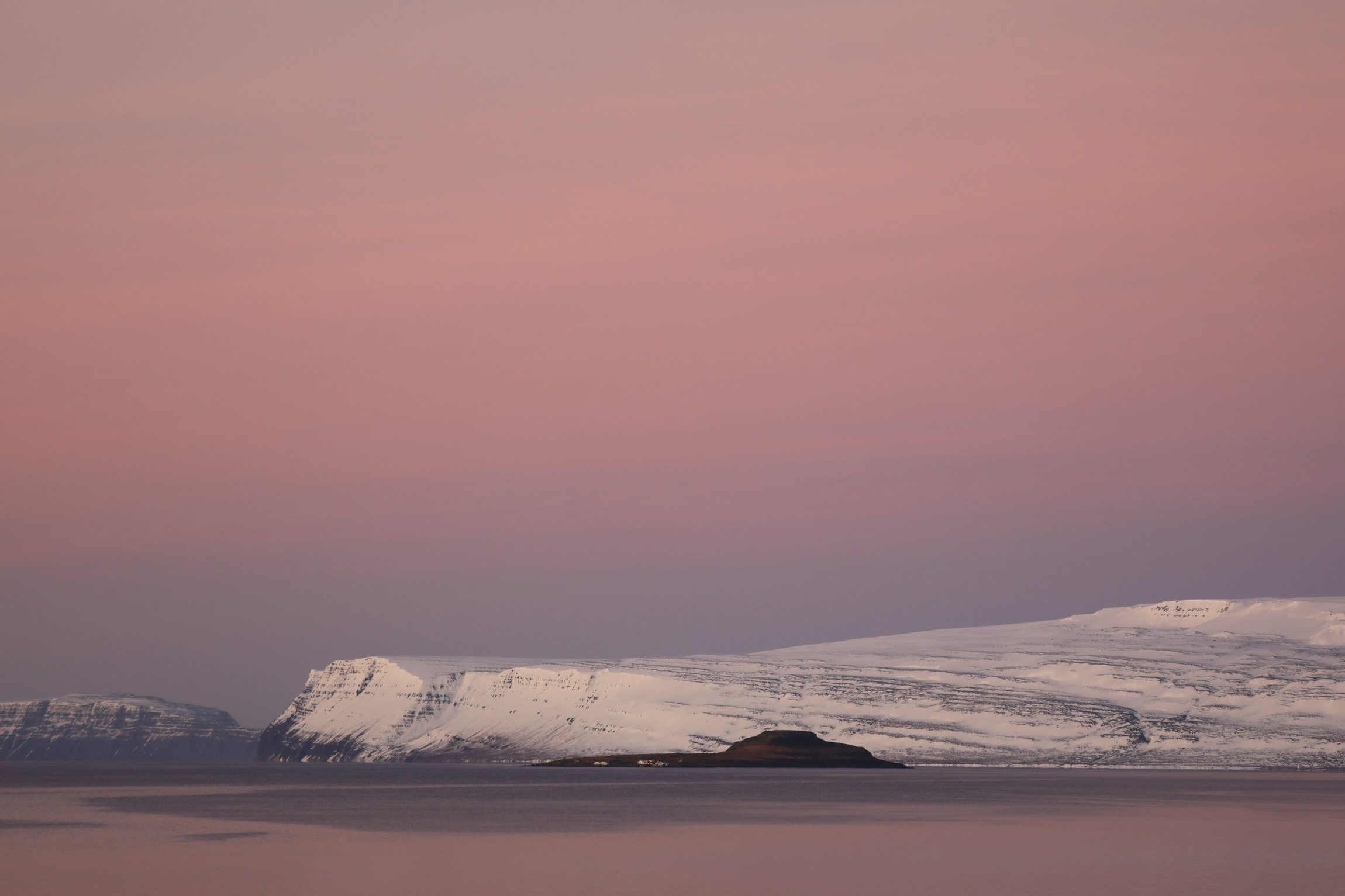
This darkness is compounded by grey skies and frequent rain or, more often, snow and ice. In fact, the Westfjords specialises in producing snow showers when the forecast shows complete blue skies. Perfect for planning fieldwork. The mixture of rain and snow, freezing and thawing, also produced roads that resemble glistening ice rinks – not ideal for driving. And when they melt? Gravel roads turn into literal mud baths.
We knew this already but Iceland is WINDY. We were based in a small cabin in Drangsnes, on the edge of a cliff, and it was unusual when the whole cabin wasn’t shaking with constant storm-driven gusts. Drones don’t like the wind and neither do cameras when they’re being pelted by salt spray (even on land).
So Iceland isn’t the easiest place to study whales in winter. But when you get lucky, the results can be incredible.
October 23rd
This October, we ran three weeks of intense fieldwork with a team of four – Alyssa, Tom, Josie and Rebekka. The weather was very challenging … until the day we needed to drive down south to Reykjavík (is anybody surprised?). So, on that final morning, we left early, driving over the mountain pass to Ísafjarðardjúp, and we were greeted by more whales than I have ever seen from land.
Even in the dark, you could hear and see the blows of humpbacks – it clearly wasn’t going to be a normal droning session. As the sun rose, we saw groups foraging all throughout the fjord system, mostly between the islands of Vigur and Borgarey. After droning whale after whale, we identified 52 individuals – smashing our previous record of 35 whales for land-based droning. We saw some new individuals but the vast majority were regulars from earlier in the season. You’ll notice this theme – large numbers of whales spend long periods of time in this fjord. It’s their seasonal home, one that they return to year after year.
After a frantic few hours of research, we sadly had to drive south, saying goodbye to a whale paradise. We dropped off Josie and Rebekka at Keflavík airport and there ended an amazing October field season.

The highlight: A blurry image of Ashes, a cherished humpback we haven’t seen in years, hanging out with Starlight, one of our adopted whales. I actually named Ashes as an intern at Húsavík Research Centre in 2017 and hadn’t personally seen this whale, so it was a pretty special day.
November 12th
From the end of October, it was just Alyssa and I in the cabin in Drangsnes, our current home. After that magical late-October day, the weather descended once again. Two frustrating weeks later and the mirage of a good weather forecast finally led to a calm day.
We thought we had seen the peak in late October but, my goodness, were we wrong. Starting with several whales in and around Skötufjörður (close to Vigur Island), we then headed farther into the fjord. Earlier in the day, while it was still too dark to do anything, we actually heard a few blows close to Borgarey, really far inside Ísafjarðardjúp, so we decided to look for them. I was completely unprepared for what we found.
The sea around Borgarey was alive with the blows and backs and tails of humpback whales. The whales we had watched all summer much farther out were now pushing in, likely taking advantage of late-season krill. It was surreal seeing so many of our favourites – such as Octopus, Osprey and Olive – using such a different part of the fjord system and so close to land. Even crazier that we were the only ones watching these whales – world-class whale watching all to ourselves. This was the case every day from mid-October onwards.
We ‘only’ droned 35 whales on this day, but there were far more in the area – they were farther from shore and darkness descended rapidly. Seeing so many whales in November – most of whom were familiar tails – reshaped our understanding of humpbacks in the fjord.
The highlight: a foraging trio of Osprey, Bisous and Olive – big, badass humpbacks fluking in synchronicity, framed by desolate snowy mountains.
Osprey is also one six humpback whales that you can adopt to support Whale Wise!
November 15th & 16th
After November 12th, we were more prepared and targeted the North gravel road around Ísafjarðardjúp, between Borgarey and Æðey, since most whales were hanging close to the North side. I’m happy to say that this paid off. Cold, dry conditions allowed us to drive along these isolated roads in time for the most incredible sunrises, with pinks and purples yielding to shocking black-and-white landscapes. And the whales continued to gather and feed.
The numbers were staggering, with about 50 IDs per day (we’re still processing data). Gathering in large aggregations, there was clearly a huge amount of food available. Before the sun rose, you couldn’t see so many whales. But once the sun struggled above the mountains, whale blows illuminated like fiery beacons as far as the eye could see. These views are tattooed into my brain and I hope our drone videos convey even a small fraction of their beauty.
As with previous days, most of the whales were regulars. But on these days, we started to see whales we hadn’t seen for several months, or years, or ever! We saw a mother-calf pair, groups of young whales and some big adults.
The highlight: seeing Snowflake, an old friend. Snowflake was one of the most regular whales in Ísafjarðardjúp since 2019 but hadn’t been seen in 2025 … until now! Hanging out with other long-time regulars such as Lucky Logan and Tadpole. We can report that Snowflake was still in the fjord as of December 6th.
November 22nd & 24th
A bad week of weather kept us stuck in the cabin, but another break in the weather allowed to search for our beloved whales once more. And we weren’t disappointed.


We weren’t sure when the whales started to leave the fjord. We know that some hang around in December thanks to reports from fishers, but how long would this incredible peak in sightings last? At least, it seems, until the end of November. Numbers were similar, or maybe even higher, than our previous research days. November 24th yielded 63 humpback IDs from land, another big record for Whale Wise. This is even more remarkable because new animals continued to join the fray, including Frodo, Airbender and Bottle. In other words, since November 12th we had seen far more than 63 whales, indicating just how many were in the fjord.
On these days the whales were a bit more spread out and not so far into the fjord. Many whales were foraging alone but there were also some larger groups, such as a posse of small whales led by Jamal and including Zephyr, Mold and Zebra.
The highlight: the lighting was actually unbelievable, the pink eastern sunrise battling with pewter-grey clouds to the west. At one point, a large rainbow descended onto the horizon while whale blows were also forming their own mini-rainbows everywhere.
December 4th and 6th
As November closed, the weather grew into an uncontrollable beast, with a constant onslaught of strong winds. The problem is, we knew there were many whales and that we could photograph some of them from land. When you have a whale addiction, this is dangerous information. So, on two days, we drove over the pass to Ísafjarðardjúp in gale-force winds in case we could obtain any more information before heading to Wales for Christmas.
My take-home message? It’s surprising how much whale research you can do in a storm.
On both days, winds were nowhere near calm enough to drone – we could barely stand, let alone control a small flying object. On both days, the roads were a pleasant mixture of ice and mud. And on both days, we collected vital data.
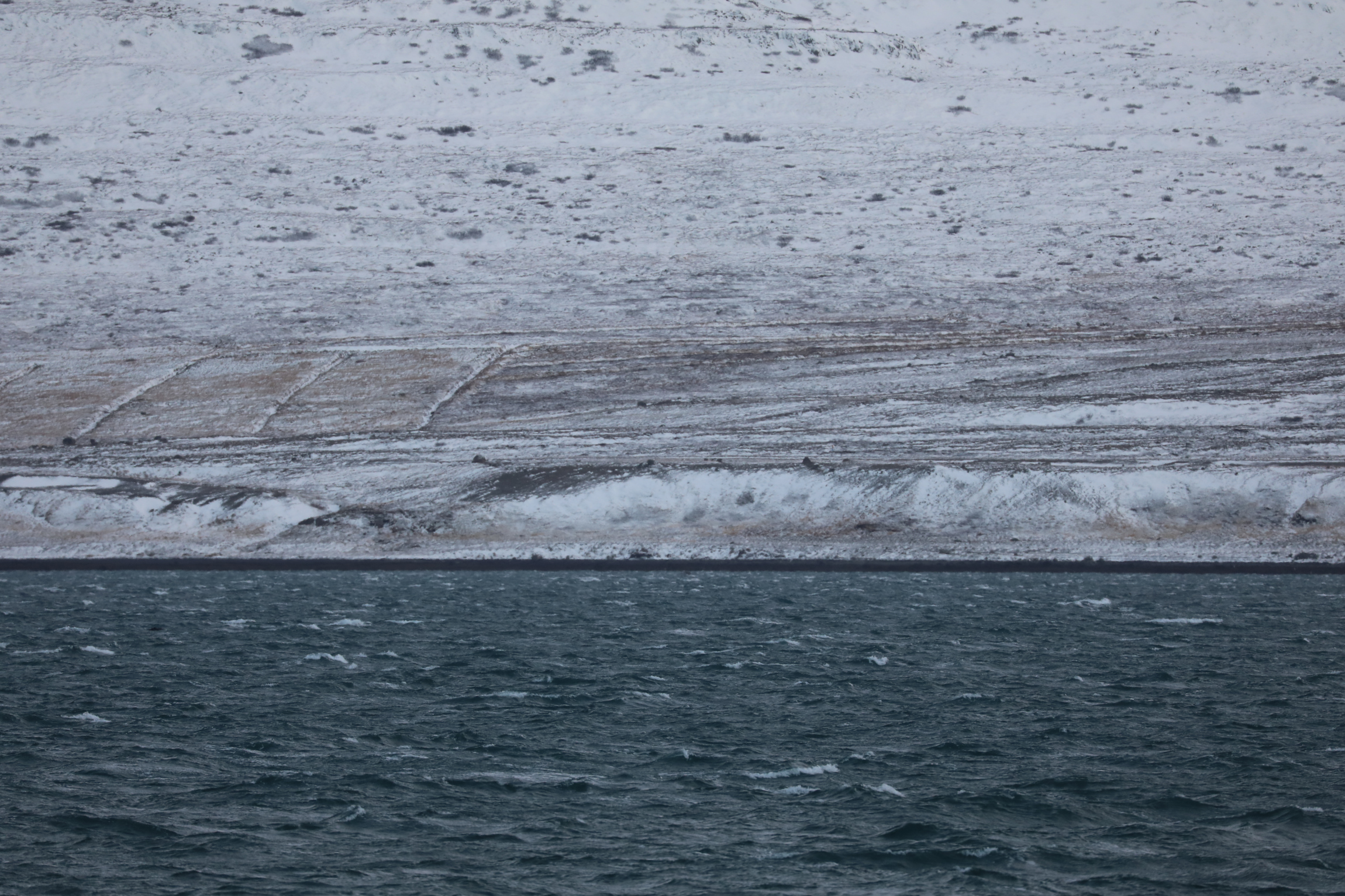
The second day, in particular, was remarkable. After photographing a few whales in Skötufjörður, we headed farther in again, close to Borgarey. By the end of November, nearly all the whales were farther out than Borgarey, but in early December they really pushed back in. As flying ice-mud pummelled our coats (which were shielding our precious camera), we watched whales cresting the waves, just a few hundred metres from shore. Naturally, we couldn’t collect as many IDs (although 20 is still a very good number!) but regulars such as Comb and Snowflake were interspersed with a few newcomers. Interestingly, we saw Osprey (an adopted whale) on both days but in very different parts of the fjord, showing how much they move around. Difficult conditions but critical winter data.
The highlight: at one point, two whales started breaching together! One was Shark, and the other remains a mystery. Humpbacks often breach more in stormy weather.
A note on ecosystem productivity
It’s no secret that whales eat a lot of food – an adult humpback can consume one ton of fish or krill per day. So with such big numbers in the fjord, they were clearly eating a lot of food (we think mostly krill). You might think that they would simply eat all the food and then leave – something that can spark controversial discussion in Iceland. But we’ve had large numbers of whales in the fjord since July (and consistent whales since April). To sustain these numbers, which increase in autumn, there might be huge amounts of food. And if whales simply ate all the food, they wouldn’t stay for many months and keep coming back year after year. Productive ecosystems that can provide for humans (and an amazing array of other marine predators) are not incompatible with thriving whale populations.
In fact, there’s a good chance that these humpback aggregations are increasing regional productivity. As they eat at depth and defecate at the surface, they are re-introducing nutrients into these icy waters. When spring arrives with longer days, these vital nutrients will help fuel vast phytoplankton blooms that form the basis for marine life. In other words, these whales could be fertilising these coastal waters in preparation for next year’s bloom, possibly leading to more fish and krill.
Anyway, that’s it from me and the most incredible time of my life. Thank you as always for supporting our work and our mission to protect whales. Have a wonderful festive period and we can’t wait to share more stories in 2026.
Support science for conservation
Our mission depends on your donations and advocacy. Here’s how you can uplift whale conservation efforts.
You can also follow us on social media and sign up to our newsletter. Thank you for supporting our mission.
Support science for conservation
Our mission depends on your donations and advocacy. Here’s how you can uplift whale conservation efforts.
You can also follow us on social media and sign up to our newsletter. Thank you for supporting our mission.

Tom shares insights into a full dedicated whale survey of the largest fjord system in the Icelandic Westfjords.
A calm autumn day in the Westfjords. A chill in the air signals impending winter. And in my eyes and ears, the breath of humpback whales – blows everywhere, leviathans gasping for air after foraging in the frigid depths. Winter may be on the way, but this fjord is literally full of life.
Around the world, most humpback whales feed in high-latitude foraging grounds in summer and migrate to tropical breeding grounds in winter. However, in some foraging areas, humpback whales hang around late into the season, stretching into autumn and even winter.
The Westfjords is one of those places. We see whales throughout summer, but the real peak seems to be autumn – October and possibly November. However, sighting effort remains limited during this period – the whale-watching season has ended, light is fading and the weather is often pretty awful. Therefore, documenting this peak in occurrence is challenging and possibly hasn’t been achieved before.

Why recording the autumn peak of humpback whales in the Westfjords matters for conservation
In science, we often talk in terms of averages – looking for trends in data and paying less attention to outliers. However, applied to wildlife, it’s also really important to capture peak occurrence in an area. If we can identify the time that most humpbacks visit the Westfjords, and estimate the number of whales present, then we can pinpoint the most critical time for habitat protection. For example, let’s say the population was declining and vessel traffic was identified as a potential threat – the peak season for humpback occurrence might be the best time to enforce stricter vessel traffic regulations. This prioritisation of management is critical – it maximises the benefit for wildlife, but also limits disruption of coastal human activities upon which Westfjords communities depend.
A motley autumn crew
To capture this peak in whale occurrence, we wanted to document the number of humpback whales present in a single day. We focused on the largest fjord system, Ísafjarðardjúp. This area has some of the largest numbers of autumn whales and is subject to rapidly expanding industries. Since we couldn’t survey the entire Westfjords at once, focusing on this area made the most sense.
To achieve this, we set out on October 6th with Sjóferðir, a whale-watching company based in Ísafjörður. Captain and owner Stígur took us out on the vessel Ingólfur, kindly donating these resources to the survey. Having worked alongside Sjóferðir throughout summer, we knew firsthand that they prioritise responsible whale-watching that limits disturbance to all cetaceans.
Alyssa, Tom, Josie and Rebekka from the Whale Wise team led the survey. Our aim was to photograph as many whales as possible and record sightings distribution. We were also joined by Rebecca Douglas, our board president, who took photos and videos throughout the trip for both research and media purposes. Finally, Judith Scott, an experienced whale-watching guide in Iceland, boarded to offer her photographic expertise.


When we returned from the trip, we immediately started processing images, matching fluke photos to our local catalogue of whales sighted since 2018. We used the incredible Happywhale – an online, global database of humpback whales – to facilitate this process and gather extra information about each whale, including international matches. If you ever take fluke photos, I strongly encourage you to upload them to Happywhale to support science and follow your whales’ epic journeys.
Success in numbers: 60 humpbacks in a single day!
Our trip was a huge success. The weather was mostly calm(ish) and sunny, allowing us to make the most of daylight hours surveying the fjord. Ísafjarðardjúp consists of a larger central fjord, with smaller fjords branching off – we weren’t able to cover those small fjords, but we surveyed a large portion of the area, confident that we covered the primary whale areas.
In total, we identified 60 humpback whales based on their fluke pattern – SIXTY! We knew there were plenty of whales but we were truly shocked by the final number. This number should be treated as a minimum – at least two whales didn’t fluke (show their tail) and I’m sure we missed a few others.

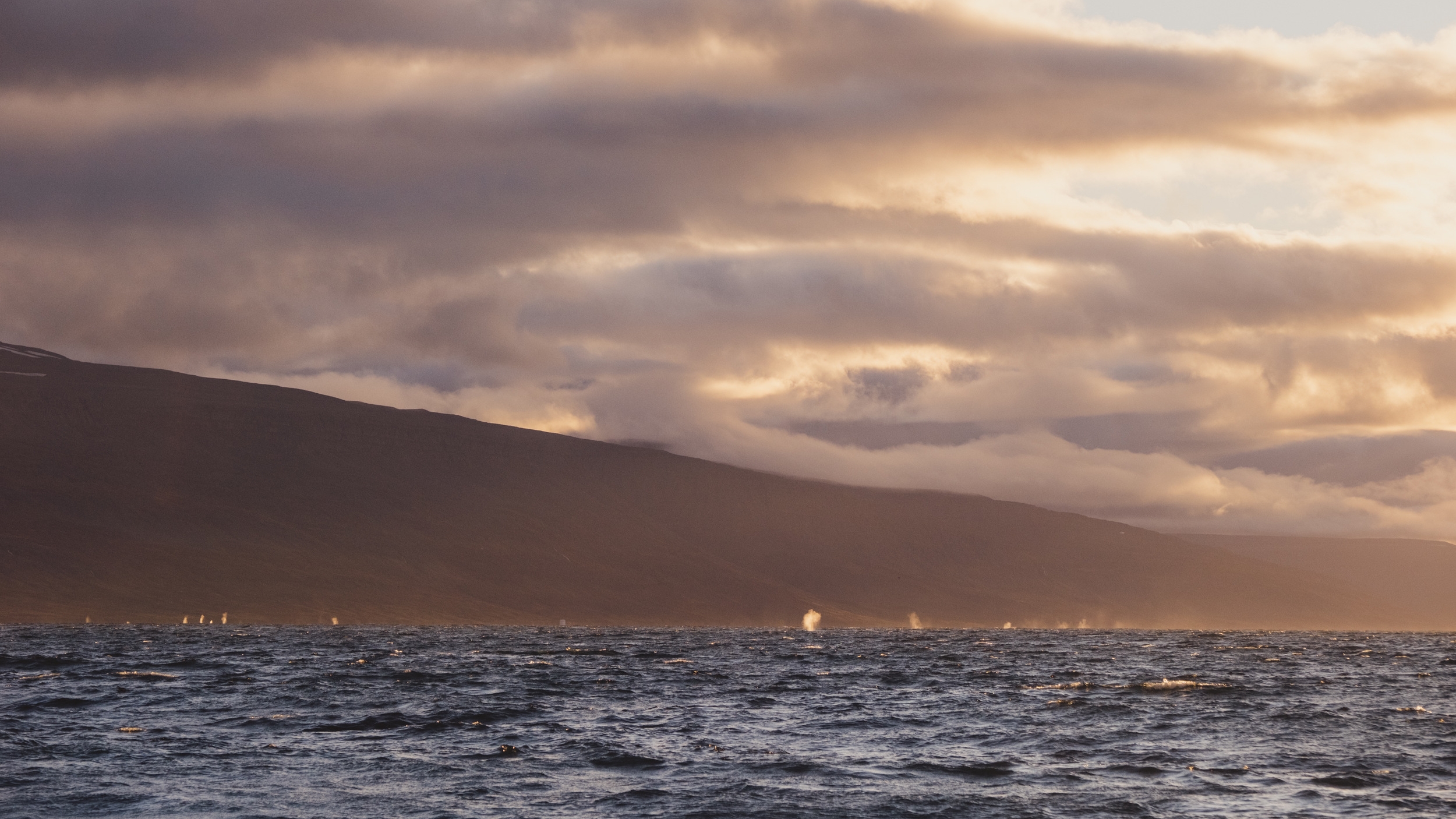
This number included some new tails for the season (11 to be exact), but also many familiar ones – Starlight, Shadow, Octopus and Osprey, to name a few. Most whales were spotted in the main large fjord, in water deeper than 120 metres (400 feet) – we think they were feeding on krill, which accumulates in huge densities in these deep channels. Group size ranged from 1 to 5 animals – when animals came to the surface together, they were likely foraging cooperatively, possibly helping each other to corral swarms of krill into smaller areas.
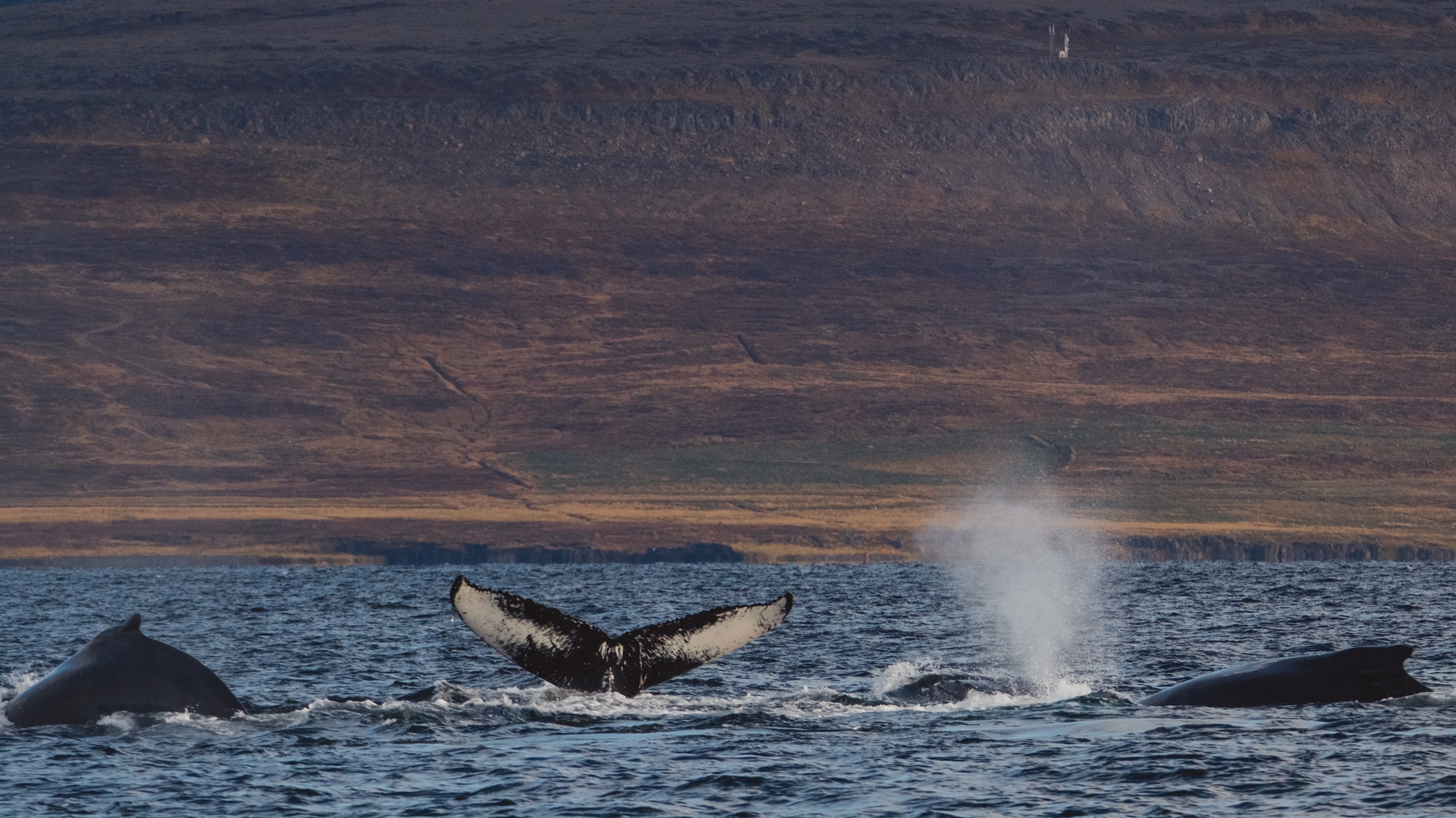
Whales in Ísafjarðardjúp exhibit very high inter-annual resighting rates: in other words, most individuals come back year after year. Out of the 60 whales that we saw on October 6th, 40 had been seen in the fjord in three or more years (and 26 whales for 4+ years). One whale – Butterfly – has been seen for at least 7 years! In contrast, to our knowledge, 7 whales seen in our snapshot survey had not previously been documented in the fjord.
International connections: long-distance migrations across the North Atlantic
Humpbacks are known for their long-distance migrations spanning entire ocean basins. For Icelandic humpbacks, we know that their breeding grounds include the Caribbean and Cape Verde (off West Africa) but only a very small proportion of whales have been photographically matched to these areas. However, amongst the 60 whales we surveyed in a single day, the connections are amazing – most whales had been seen elsewhere in Iceland, but plenty matched to areas farther afield. Locations include (with whale names):
- Dominican Republic (Starlight, Vivi)
- Guadeloupe (Lobster)
- British Virgin Islands (Zephyr)
- Ireland (Jasper)
- West Greenland (2Lines)
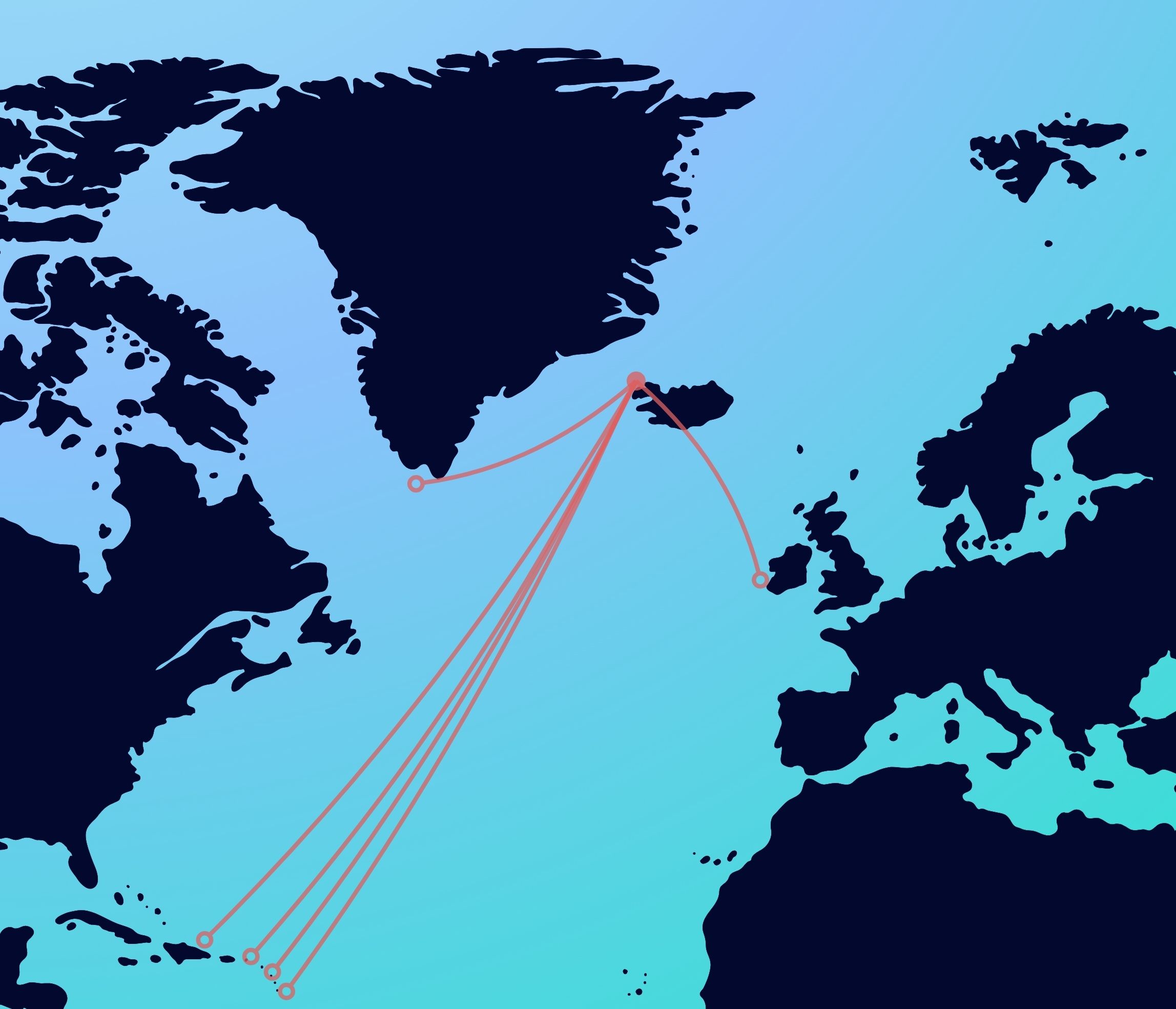
One whale deserves special mention. Duo was first spotted in Ísafjarðardjúp in 2018. Several years later, in 2022, this whale was spotted with a calf in Barbados – incredibly, the first humpback match between Iceland and Barbados! We then spotted Duo and her calf in Ísafjarðardjúp in September 2022, confirming a huge northward migration. These observations were included in a publication led by collaborator Dr Charla Basran. That same year, we also spotted Osprey with a calf, confirming her sex and reproductive status. We were excited to spot these two known mothers on October 6th.

It’s not just one day: the importance of long-term monitoring
We wanted to dedicate an entire day to capturing this snapshot of Ísafjarðardjúp, but we’ve also been consistently monitoring this area since the end of May, and more sporadically since February. Many of the 60 whales have been seen throughout summer, including 19 since July and 3 since April. One small whale – Valentine – has been seen every month since February! In other words, October might be the peak, but these individuals rely on Ísafjarðardjúp for far longer periods. This year’s observations are in line with data from 2024 (our first year of consistent monitoring) – as part of her master’s thesis, team member Laura found that visiting humpbacks spent nearly 3 months in the fjord system, on average, before moving on.
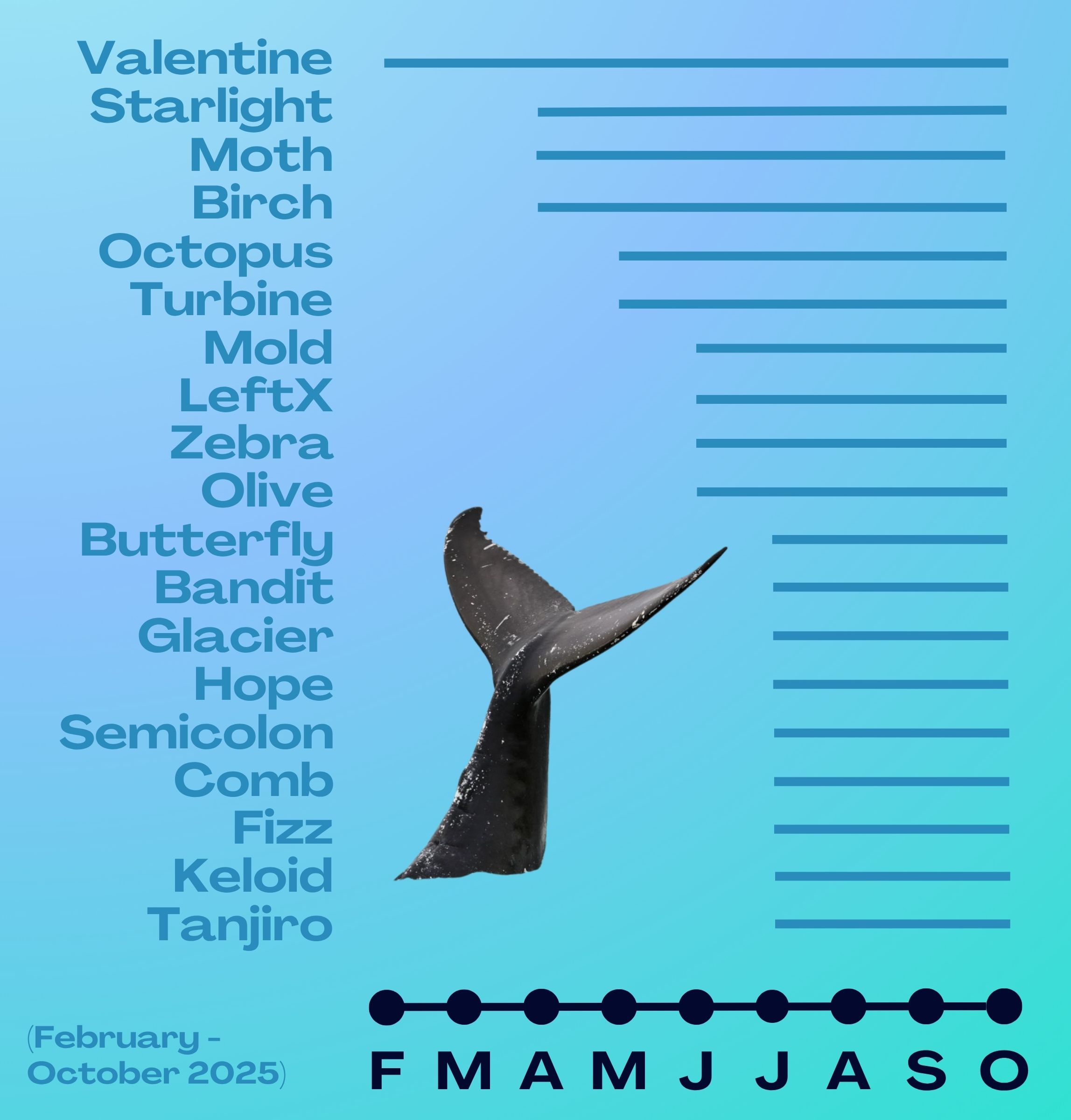
Combined with consistent re-sightings across years, these high residency times highlight the incredible productivity of the region. Failure to protect this habitat could compromise the health and fitness of individual whales that consistently rely on it.
Mixed news: fresh injuries highlight population threats
We were very happy to see so many familiar faces, but some had clearly faced recent challenges. Comb and Glacier, two of our most regular whales, had been recently entangled in fishing gear, evidenced by fresh injuries and pieces of flesh hanging off. This highlights that, despite the area’s importance, these whales are still threatened by human activity locally. Entanglement in fishing gear remains one of the largest threats to humpback whales globally and, in Iceland, at least 25% of individuals have been entangled.
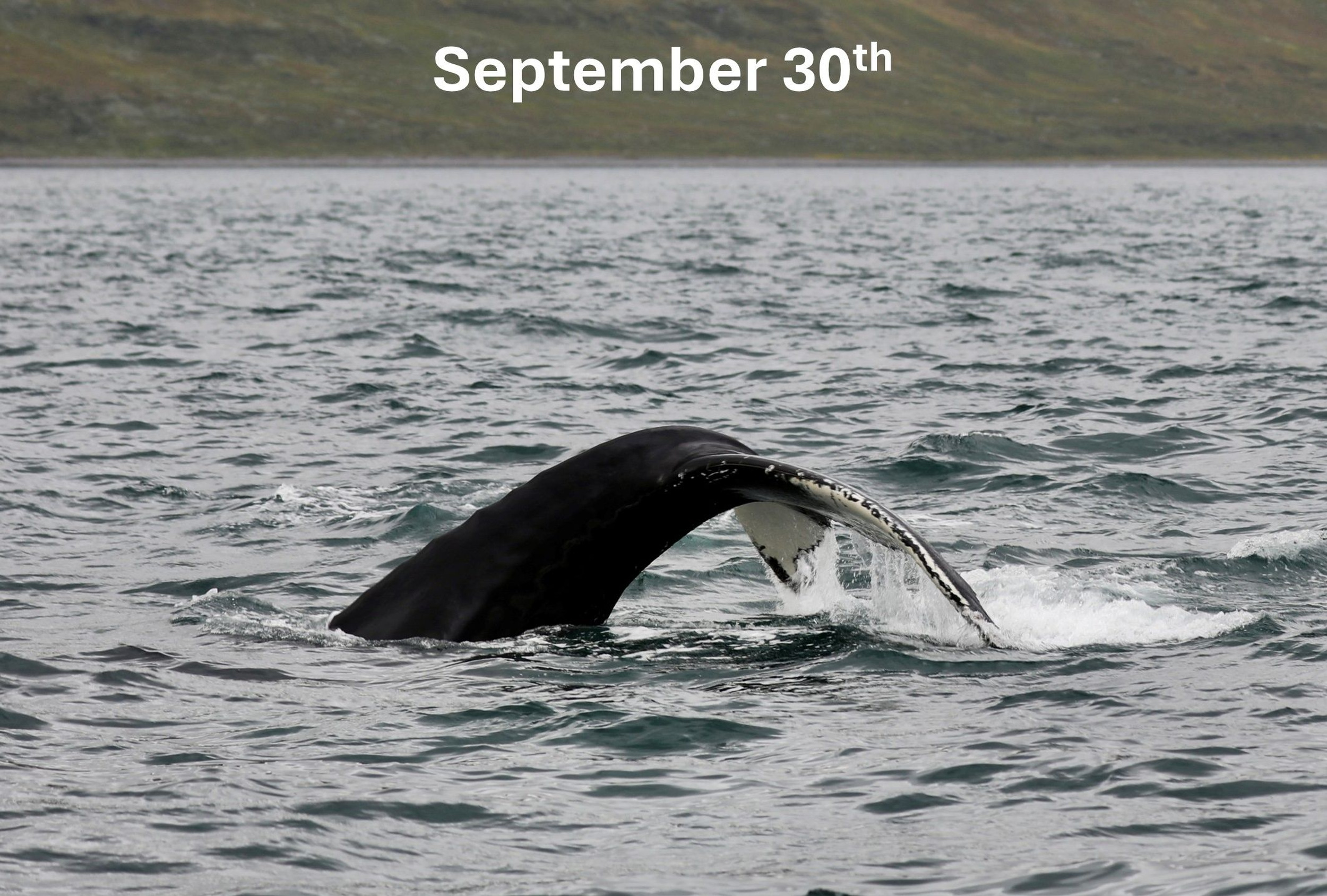
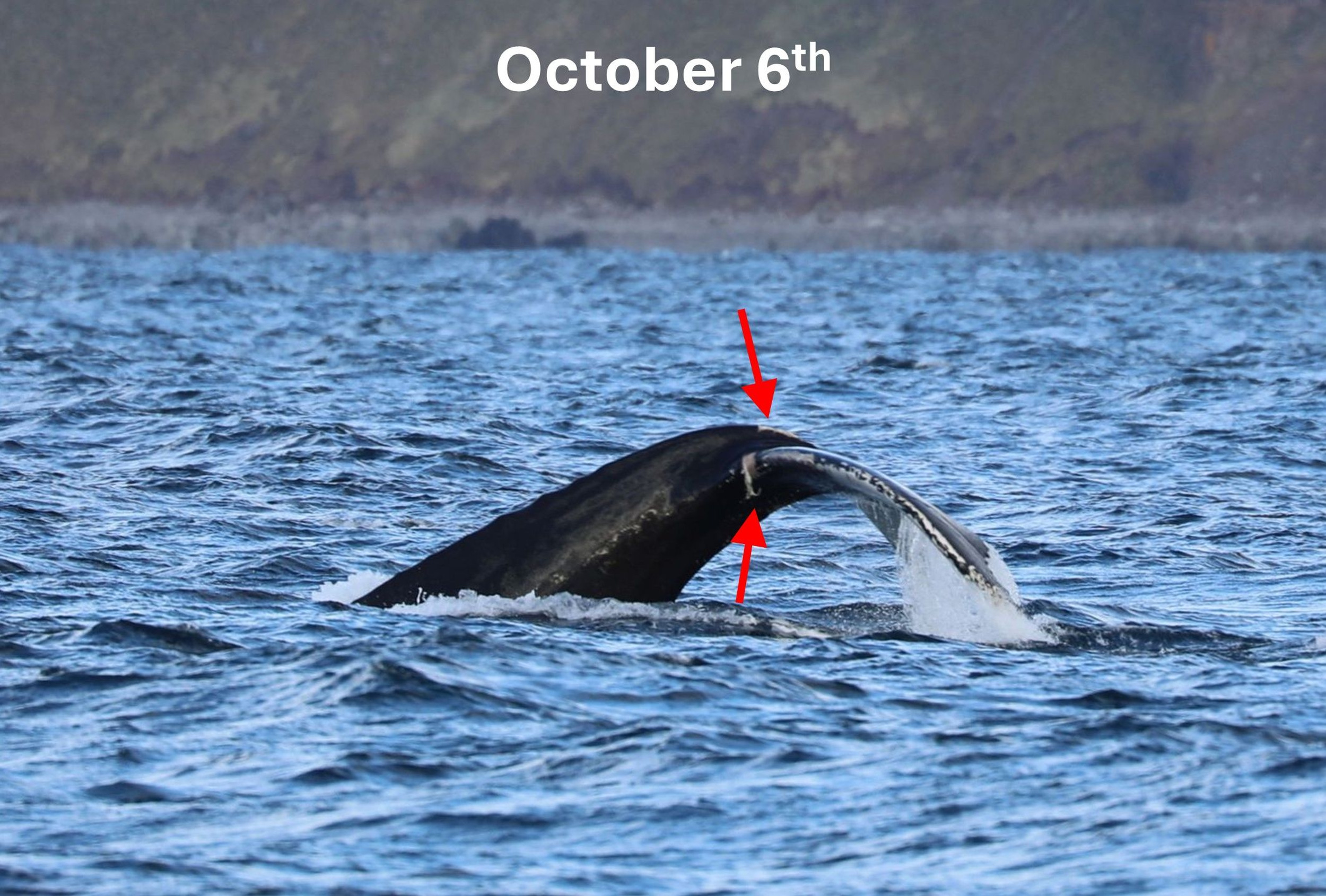
To better understand the impact of entanglement on Icelandic humpbacks, our Scars from Above project is using whale images from drone and vessel surveys to assess the prevalence of entanglement injuries and potential health and welfare implications.
The West at its best
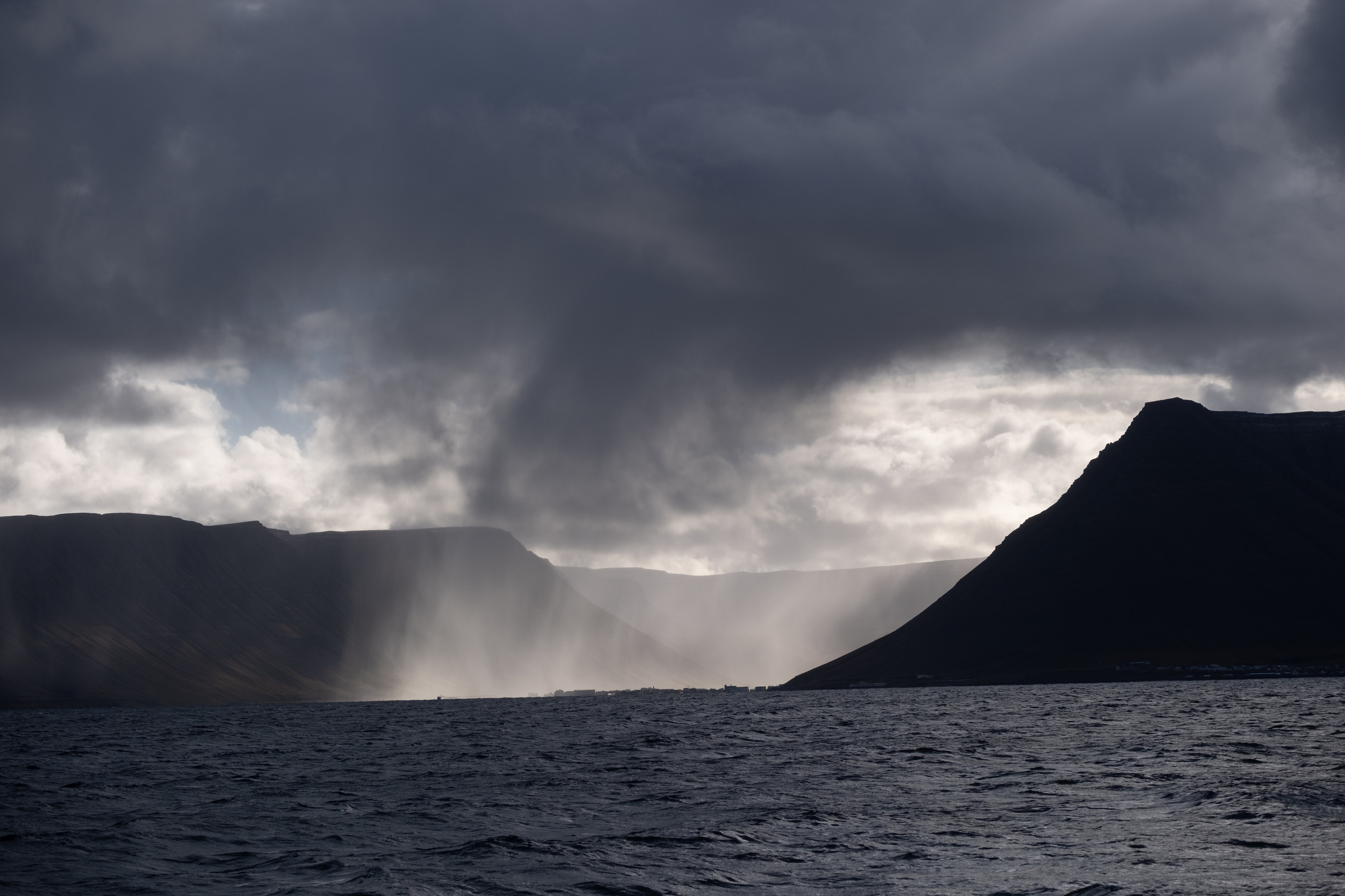
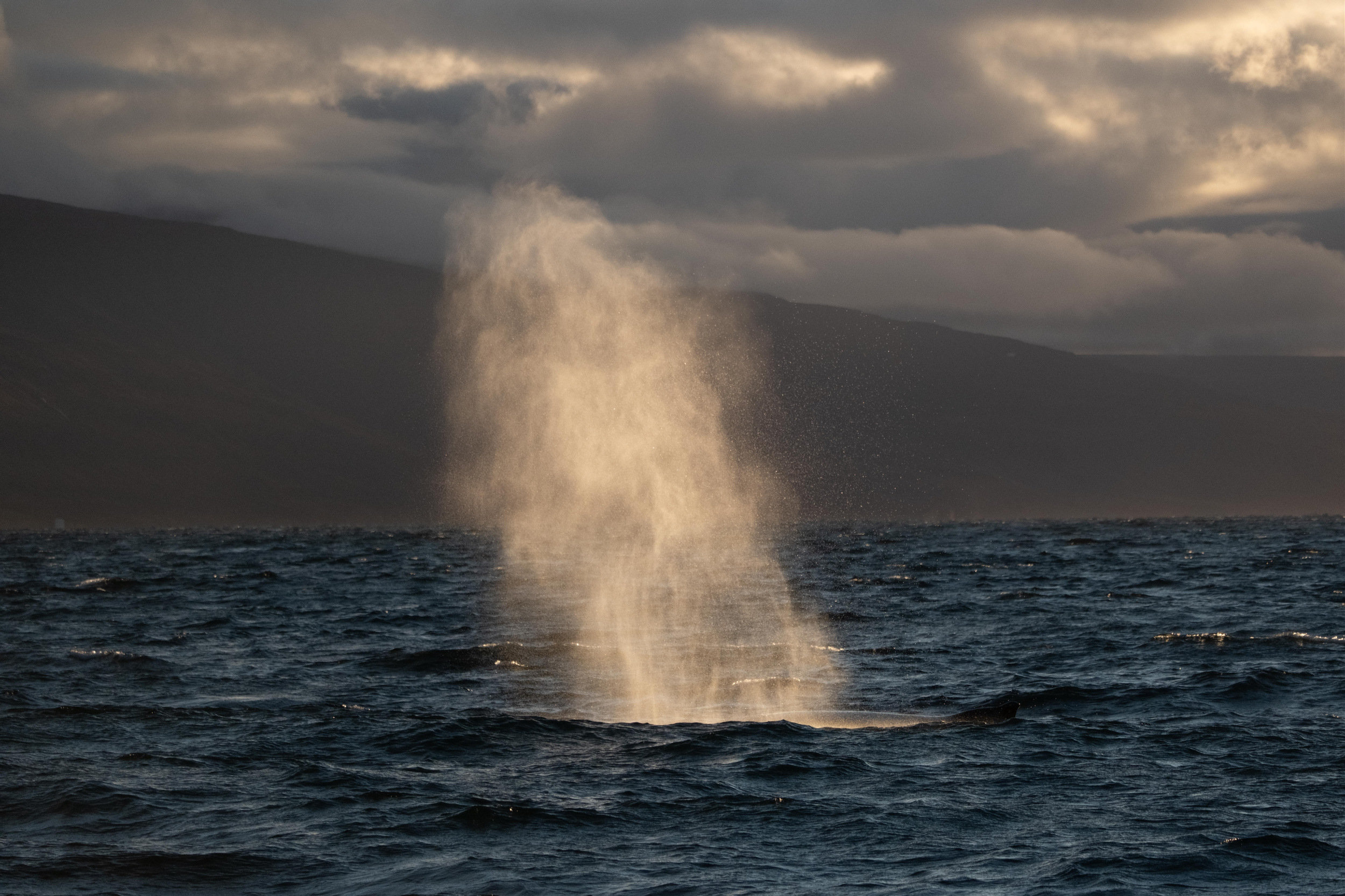
The aim of this survey was scientific, but we also wanted to capture the beauty of this area and the life it holds. As the low wintering sun set whale blows alight, the beauty was breathtaking. Conveying this natural wonder and the immaterial value is holds for people is just as important as scientific data to inform its protection. Thank you for following this snapshot of Ísafjarðardjúp and joining us in our mission to protect whales.


Support science for conservation
Our mission depends on your donations and advocacy. Here’s how you can uplift whale conservation efforts.
You can also follow us on social media and sign up to our newsletter. Thank you for supporting our mission.
Support science for conservation
Our mission depends on your donations and advocacy. Here’s how you can uplift whale conservation efforts.
You can also follow us on social media and sign up to our newsletter. Thank you for supporting our mission.

by Jessica Antonisse: “A field note from one of my favourite days as an assistant whale researcher“.
I love the ocean in all her states and forms, lovely and wild. I can call up the turquoise waves of the Indian Ocean clearly in my mind, but love the grey waves of the North Sea just as much. The calm after a storm, but also sailing on rough seas has weirdly proven to be one of my favourite things. I have my reasons. The story I am about to tell you might be one of my favourite field notes during my two months as an assistant whale researcher.
I set out to help collect data on humpback whale presence in Ísafjarðardjúp (meaning deep icy fjord) as a volunteer with the NGO Whale Wise. Humpback whales return to Iceland each year to feed in the coastal waters. They can appear year round in the fjord, but on average most start to appear around May, increasing in numbers until they leave likely in December. Humpback whales are amazing animals. Not only because of their impressive size, but also because they make one of the longest migrations in the ocean. These humpback whales spend the summers around Iceland but are spotted along the West African coast as well as in the Caribbean in winter.
How do we know it’s the same whale we spotted in the Westfjords and in Cape Verde? That’s where this research comes in. Whales have unique patterns on the underside of their tail, their fluke. These black and white patterns make it possible for us to identify them. The method we use is photo identification — we simply take a picture of the underside of the fluke and compare these pictures. The whales gracefully provide us with this view each time they go for a dive. They need the propulsion to get themselves down into the water. So, that is how I ended up on multiple boat trips each day with a huge camera and a huge smile every time we encountered the giants.
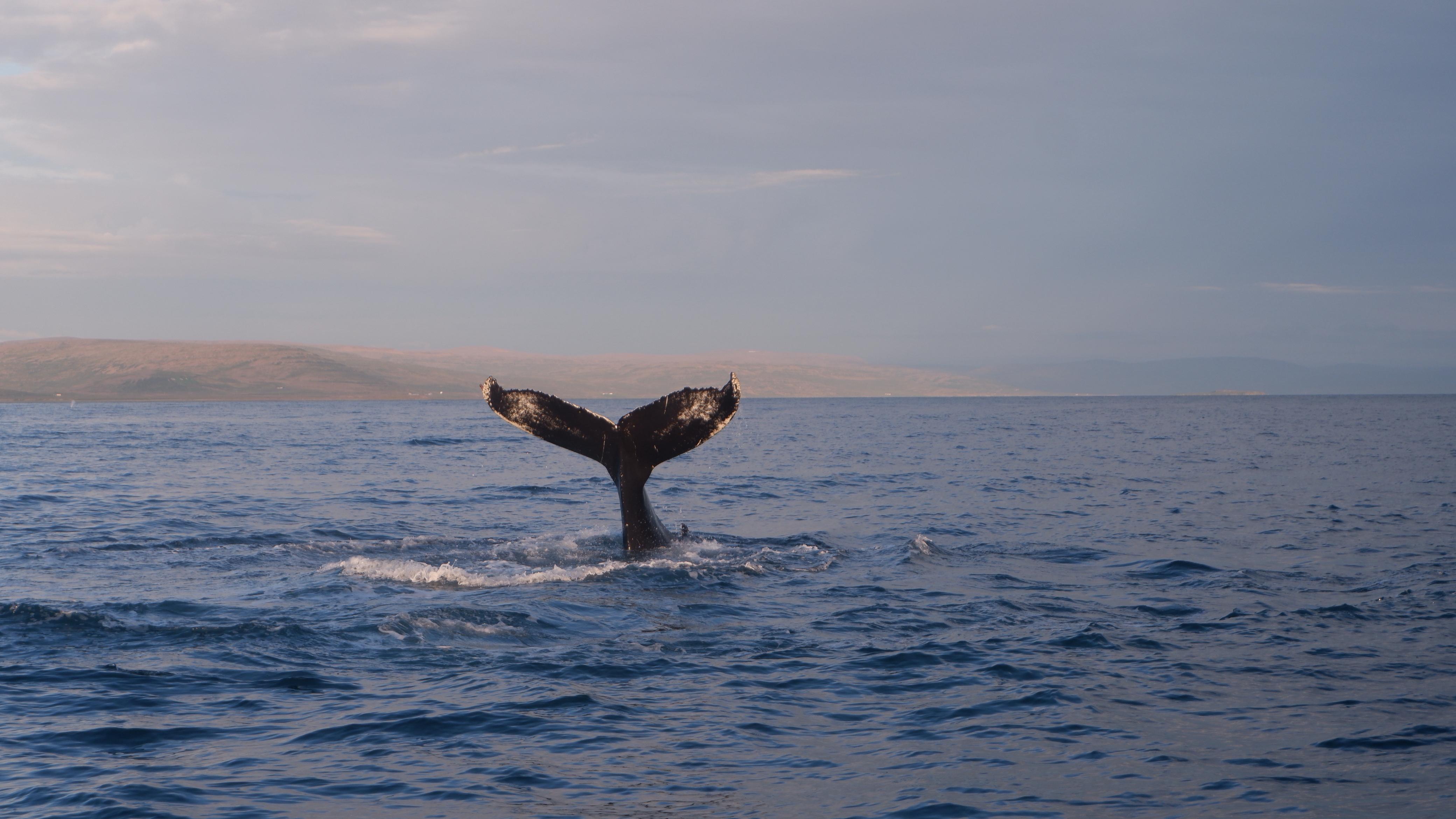
Most days, the water was quite calm as we filled up the boat with short-term visitors to Ísafjörður who joined the trip to see the whales. We would leave the town behind quickly, setting out into the fjord system, and often return to the point where we’d seen our friends last. For a while, three individuals stuck around in the fjord next to us. The mountains surrounding it provided even more shelter, and we got to spend quality time with Vibis, Orb and Ibis before returning to shore. It is not uncommon for whales to stick around a favourite spot for a while — probably it just meant there was plenty of food. That is what they are here for, after all, to eat, all summer. A lot of the individuals are seen returning each year, suggesting they have some place attachment: they like it here. After a few weeks though, the whales slowly moved on. First, we found only Orb and Ibis in the fjord, and soon it was empty again.
On this particular day though, the ocean was not calm, but quite rough. We took out one of the smaller vessels and had about fifteen good-spirited guests with us. This was around the time we still encountered the two friends one fjord over, and that is where we headed. As quick as possible over the big waves, we sailed out of the bay and into the next, back in the shelter of the mountains. As usual, the trip was guided by Tom and Alyssa, founders of Whale Wise and brilliant whale researchers. Next to being great humans they are excellent whale spotters — they can spot a blow or a dorsal fin from impossible distances, often already able to identify the individual whales by the time I finally lay my eyes on them. Today though, their usual calls of “blow!”, “at two o’clock!” or “fluking!” were not coming. Was this going to be my first trip without any whales? I was starting to feel bad for my fifteen fellow travellers, who had taken a chance in this bad weather to come aboard and hopefully spot these creatures.
We set out back into open ocean. On a regular trip people often stand outside, but now everyone was seated inside as the captain expertly navigated us through the big waves. This was definitely the wildest sea I’d been sailing on. It had also started to rain. But the captain had heard from another boat that a whale had been spotted further out, so we took our chances. As we got thrown around by the ocean, we also got closer, and finally, there was Tom calling out — loudly — a call I had not yet heard: “breach!!”. Further ahead of us, a whale was throwing itself out of the water and coming back down with a huge splash. We were still far off, and there is no telling whether the whale will breach only one time or repeat it. Soon, we were crowding the captain trying to get a good look through the front window. The whale kept on breaching, Tom pointing in its direction and telling the guests to watch for the “sausage in the distance” that came up every now and then, while we slowly got closer.
We got as close as we dared without disturbing the whale. This was the moment I looked at the captain with no small amount of hope and asked: can we go outside? The answer was “sure” and if there was more, I did not listen. Getting to the front deck was a challenge in itself. The boat was being thrown around in the rain, the waves splashing on deck. But I found my way to the seats in front, sat down, held on, and watched the most incredible show. I think the whale breached forty, maybe fifty times. It just kept coming back up, arching through the sky and crashing back down. I was now close enough to hear the huge sound of the splash. Underwater, this sound travels kilometres far. Sitting on the front deck, getting soaked by the waves with one arm wrapped around the railing to stay in place, I felt a connection to nature in a way that made me emotional. It’s so cool to see the entire animal, whereas you often only get to see the dorsal fin or fluke. But more than that — the behaviour made me think about the inner motivations of the whale. There is often a warning against humanizing animals — anthropomorphizing them — as if only humans have inner lives. But the scene felt full of quiet joy, despite the loud display. As if the whale also enjoyed being out there in the storm, perhaps communicating with the giant crashes, playing around, showing off.

Since that trip, each time the ocean showed signs of swell or less than ideal weather, I got my hopes up. But the truth is, every encounter before and after had filled me with awe too. There were calm days with lazy whales, coming up for air and showing their fluke. There were misty days surrounded by so many I was not even sure where to look. There were days with multiple trips from shore to the whales and back, and none of it ever got boring. I could tell you loads more about the whales and all I learned in my short time volunteering with Whale Wise, and I probably will at some point. But for now, I will leave you out on the front deck in the rain, holding on for dear life and wishing the boat did not need to return to shore at all.
Be sure to read more from Jess:
by Johanna Behrisch

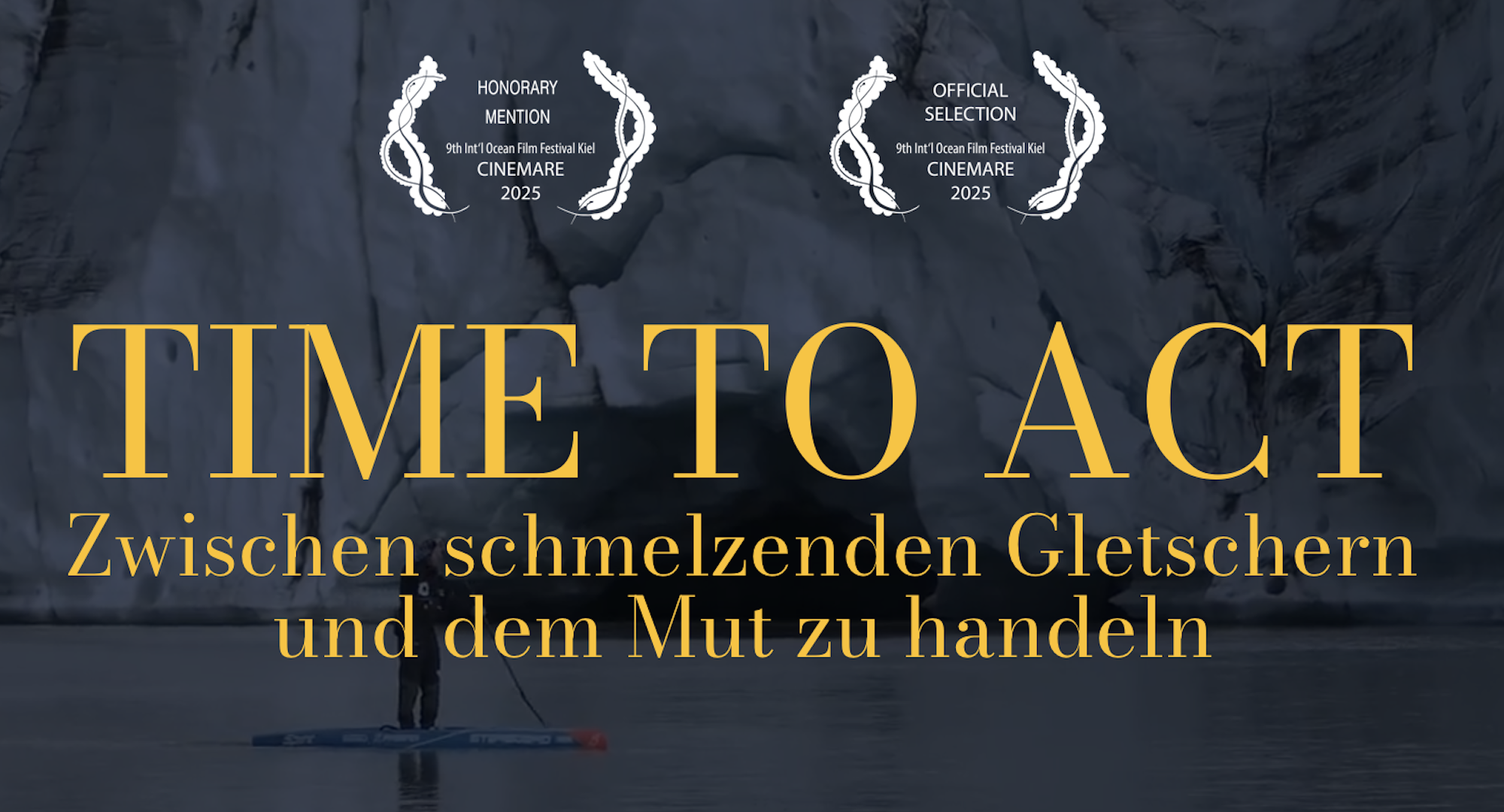
Last October we had the privilege of welcoming Phil, Till and Michael, the filmmakers behind the documentary “Time to Act”, to the little village of Drangsnes in Iceland where we have carried out a part of our fieldwork since 2021. They visited us to learn more about our work and to hear our story: how protecting whales is also protecting the climate.
The film highlights individuals and organizations across Iceland who are standing up for our planet. It shows that meaningful action is not only possible but already happening. What makes the film so powerful is that it shows how everyone can contribute, no matter their background. Architects, designers, artists, authors, teachers, economists, scientists and many others all have the ability to make choices that protect the climate and inspire others to act. Change is not limited to one field or profession. It grows stronger the more people who take part. We were proud to contribute to this message by showing how protecting whales is also safeguarding their vital role in the fight against climate change.
Why Protecting Whales Means Protecting our Climate
Whales play an outsized role in ocean health and climate regulation, through the whale carbon pump. The pump refers to when whales feed at depth and then release nutrient-rich waste near the surface, they stimulate the growth of phytoplankton. These tiny plants absorb large amounts of carbon dioxide from the atmosphere through photosynthesis. In this way, whales indirectly support one of the most important natural processes for reducing greenhouse gases.
In addition, when whales die, their bodies sink to the seafloor in what is known as whale fall. These carcasses contain a huge amount of carbon that the whale stored during its lifetime. By sinking to great depths, they transfer this carbon away from the surface ocean and atmosphere. In the deep sea, circulation is extremely slow. This means that when the whale’s biomass is broken down and remineralised by microbes, much of the carbon remains trapped in deep waters for hundreds to thousands of years before it can return to the surface. Some of the carbon also becomes buried in sediments, providing an even longer-term storage. In this way, whale falls act as a natural form of carbon sequestration and help mitigate climate change. Whale falls are also vital for deep-sea ecosystems. The deep ocean is usually very low in food, but a single whale carcass creates an oasis of life. Scavengers such as sharks and fish feed on the soft tissue first. Then smaller organisms and microbes colonise the bones, supporting entire communities of species that often exist nowhere else. Some whale falls can sustain life for decades, making them biodiversity hotspots in one of the most food-limited environments on Earth.
Our research is driven by a commitment to protect whales and the crucial roles they play in the marine ecosystem. We investigate how human activities such as ship traffic, noise pollution, and exposure to plastics and chemicals impact their health and behaviour. By identifying and mitigating these threats, we aim to create conditions in which whale populations can flourish. Healthy whales not only strengthen marine ecosystems but also provide important climate benefits, making their protection essential on multiple levels.
From Iceland to Kiel
This summer, “Time to Act” premiered in Kiel, Germany, where Johanna from our team had the opportunity to meet Phil, Till, and Michael. At a following screening, she participated in an on stage interview to share more about our work, answer audience questions, and join Phil, Till, and Michael in discussing why the time to act is now. The conversation emphasized that everyone, regardless of their background, can contribute to positive change. This idea is at the heart of our Whale Wise team, where the diverse experiences, skills, and perspectives of each member are what make our work possible.
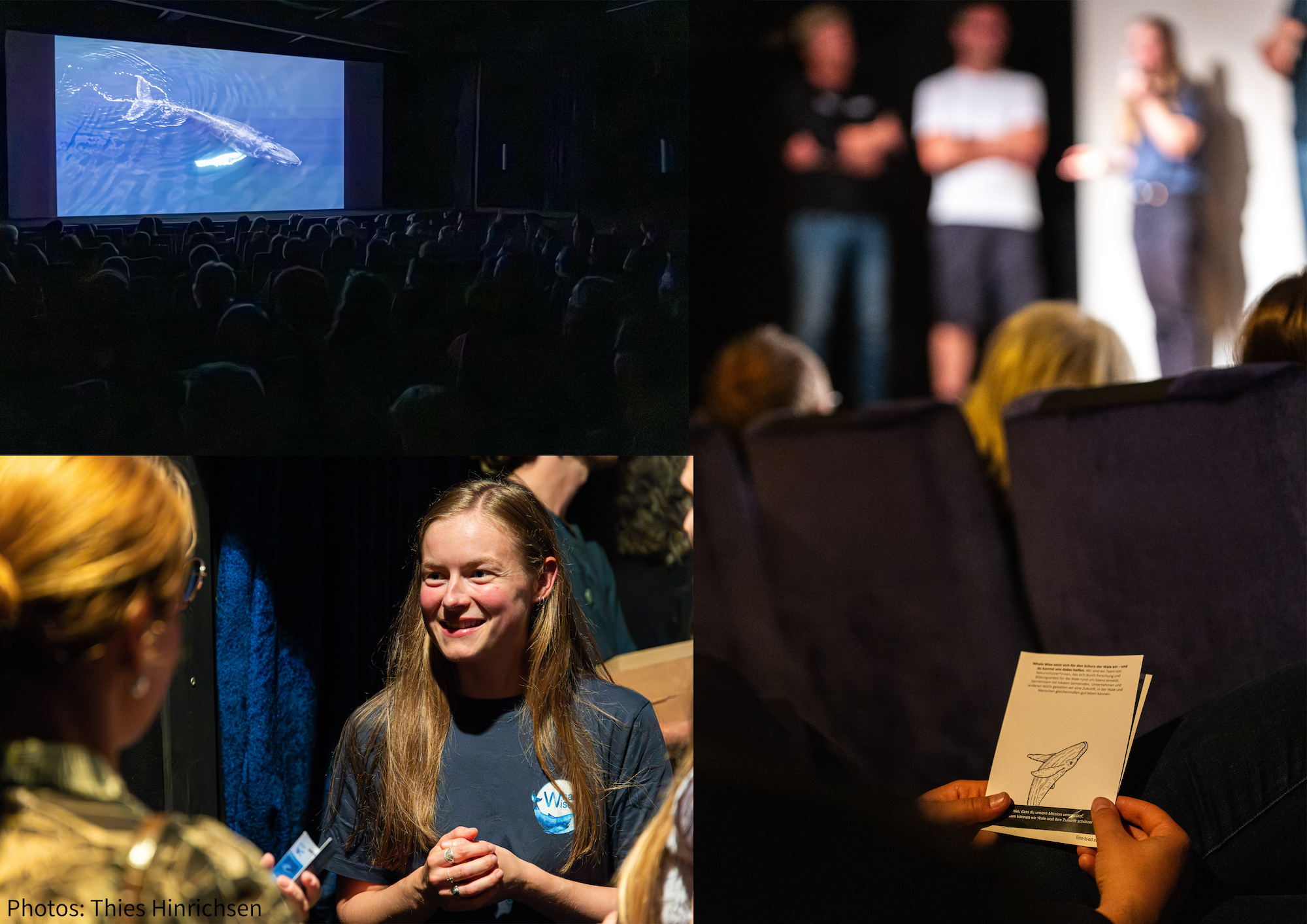

It was an inspiring evening. Meeting so many people eager to learn and to help was a powerful reminder that change happens when we connect, share knowledge and take action together. We are deeply grateful to Phil, Till and Michael for including Whale Wise in this important project. Their film shines a light on stories of hope and action, and we are proud to be part of that message.
👉 You can learn more about the film and its protagonists here: Time to Act

by Rebecca Douglas
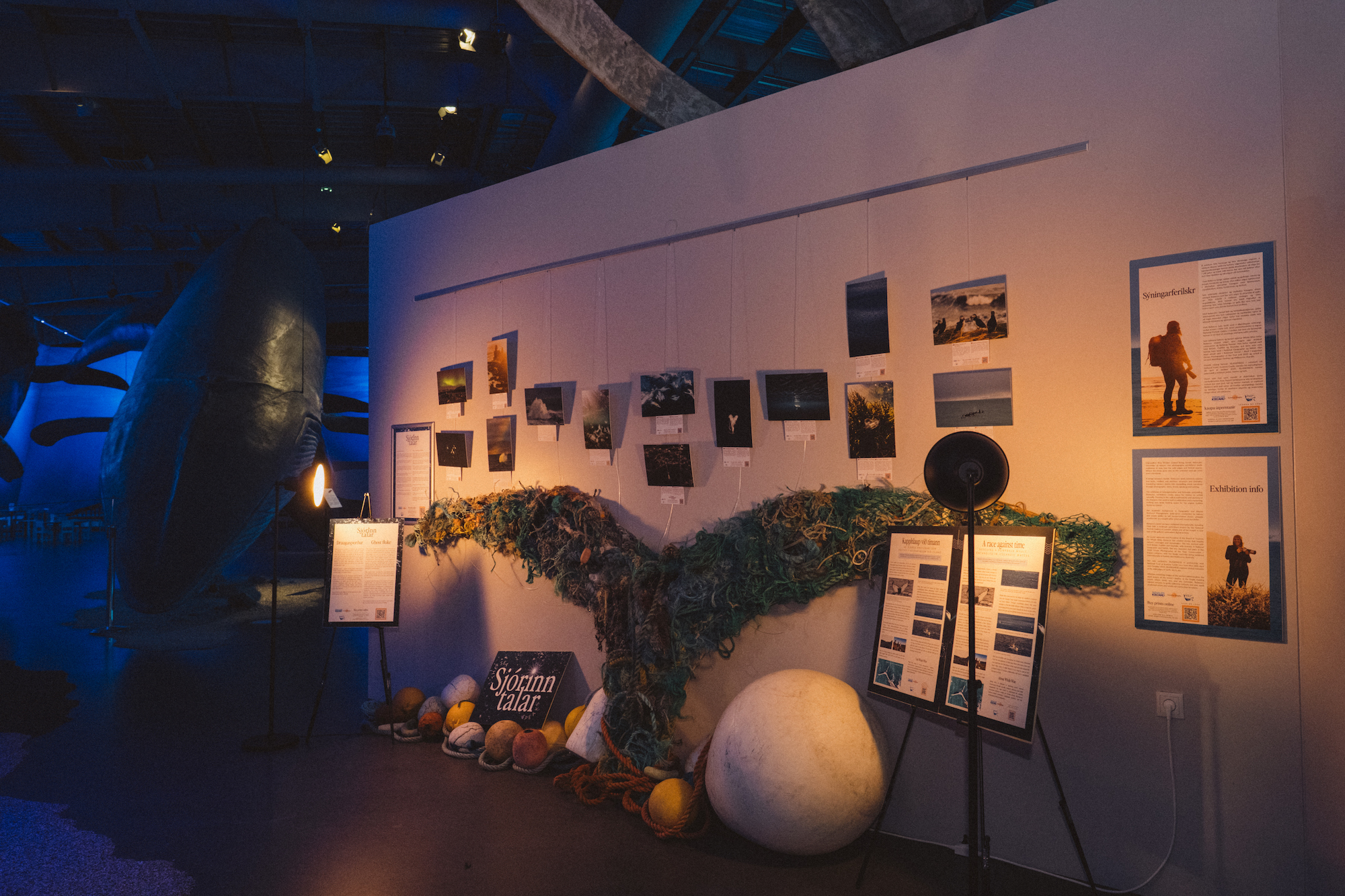
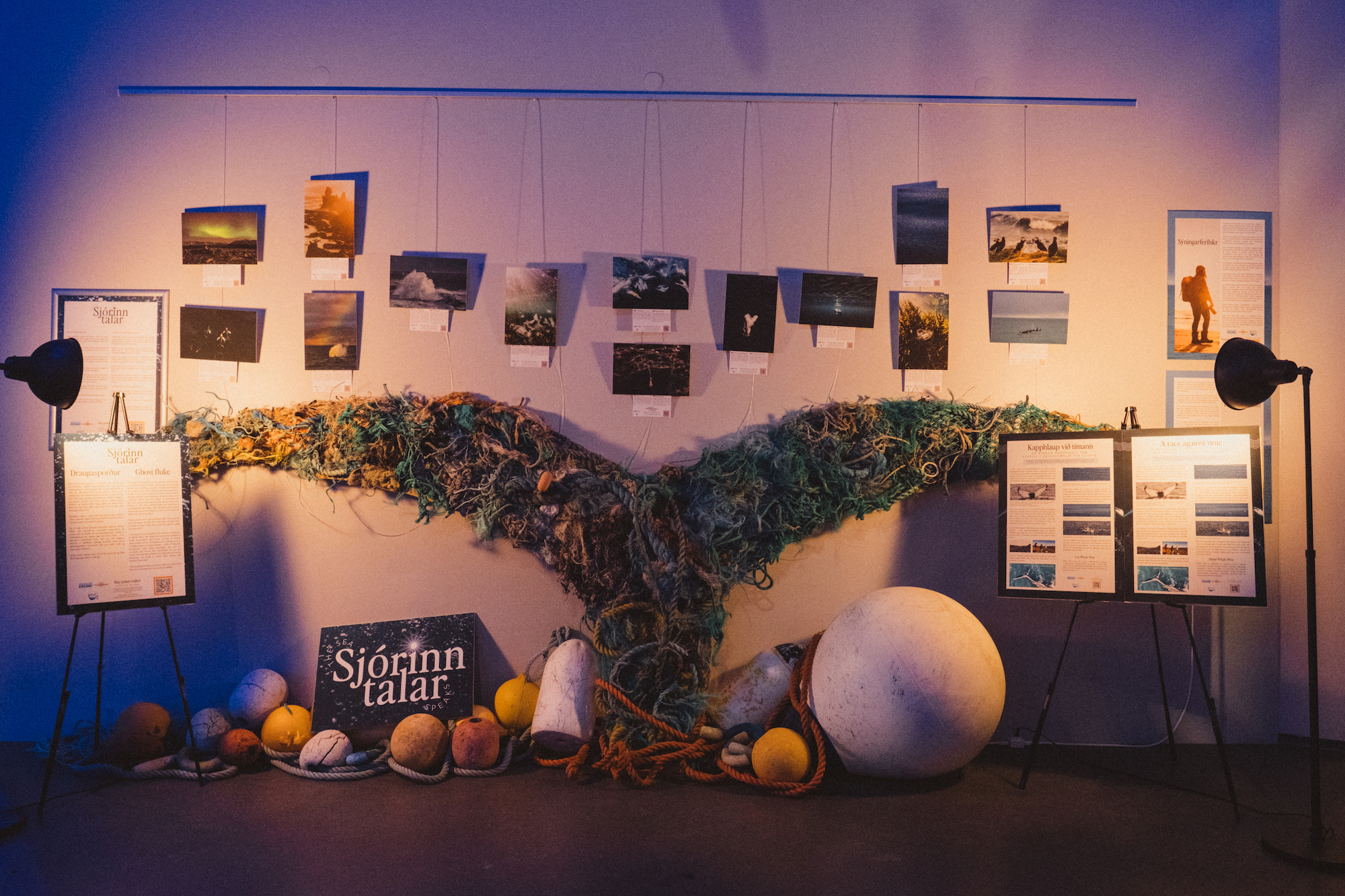
From 8th July to 30th September 2025, Sjórinn Talar – The Sea Speaks is on display at Whales of Iceland, the largest whale museum in Europe. This solo photography exhibition invites visitors to explore the wild edges and unseen worlds beneath the ocean’s surface, where science meets story, igniting curiosity and sparking wonder.
Photographs made in deep connection with the sea, shaped by years of returning to Iceland’s coastlines, and more recently, by my work with Whale Wise.
Beneath the surface
An entire world reveals itself. Whales carve migration routes across oceans. Jellyfish and plankton blooms drift with the currents. Seals move effortlessly between shore and sea. From the deepest depths to the birds soaring above, all life on earth is sustained by the sea.
Whales are architects of the ocean, cycling nutrients that fuel entire ecosystems. They are vital in regulating the planet’s carbon balance. Seabirds like gannets and puffins dive from the air for food, their survival intricately tied to the abundance below.
Yet beneath this beauty, the ocean is in peril. Climate change, pollution and human impact threaten these delicate ecosystems, placing the species that depend on them at risk. To witness the sea in this way is to deepen our connection to it. To understand its messages is to awaken to its urgency, to answer the call and stand as guardians of the ocean and all that it sustains.
Creative residency and the Ghost Fluke
This exhibition was installed during a creative residency at Arctic Canvas, a remote artist retreat on the Snæfellsnes peninsula in West Iceland. Surrounded by lava fields, glaciers and wild coastline, I gathered ghost gear from the surrounding beaches and built a sculptural whale fluke at the museum.
This 4-metre-wide, life-size fluke, made from marine debris and driftwood, is the centrepiece of the exhibition. It illuminates what is often hidden from view and the peril that impacts on all life, as the ocean sustains the whole planet. More directly, whales, seals, dolphins, seabirds and ocean creatures suffer from the impact of entanglement but they also end up ingesting the plastic, which can impact on the their overall health, life expectancy and reproduction, filling their stomachs with plastic, releasing toxins and taking up space that should be filled with nutritious food.
It invites people to take a closer look – see how thick rope breaks down into individual threads, see how these threads start to flake as they break down into tiny pieces called microplastics.
A personal and shared journey
This exhibition is rooted in years of work and devotion to the sea. In 2024, I became President of the Board of Trustees at Whale Wise, a charity dedicated to advancing marine mammal conservation through scientific research, advocacy and public engagement. Our team works to understand the complex interactions between whales and human activity, focusing on evidence-based protection, sustainable practices and collaboration with local communities.
One of the most profound moments in my time with Whale Wise was helping to rescue a whale named Bird, entangled in fishing gear off the coast of Iceland. It’s impossible to do that kind of work and not be changed. This exhibition holds that story too.
Why visual storytelling matters
I believe storytelling can rewild our connection to nature. Through awe and wonder, people are empowered to protect the things they love. Every image I create is shaped by this mission: to awaken curiosity, to evoke feeling and to offer new ways of seeing. My work always aims to strike the balance between beauty and urgency, between enchantment and truth.
10% of all profits from Sjórinn Talar print sales are donated directly to Whale Wise.
Explore the print shop: shop.rebeccadouglas.co.uk/sjorinn-talar-the-sea-speaks
About the museum
Whales of Iceland is located in Reykjavík’s Grandi harbour district. The museum features life-sized models of 23 whale species found in Icelandic waters, paired with interactive exhibits and a strong focus on ocean conservation. It’s a place to learn, connect and be inspired by the incredible lives of whales and their role in the ocean’s delicate balance.
Whales of Iceland
Fiskislóð 23-25
101 Reykjavík, Iceland
About the Visual Storyteller
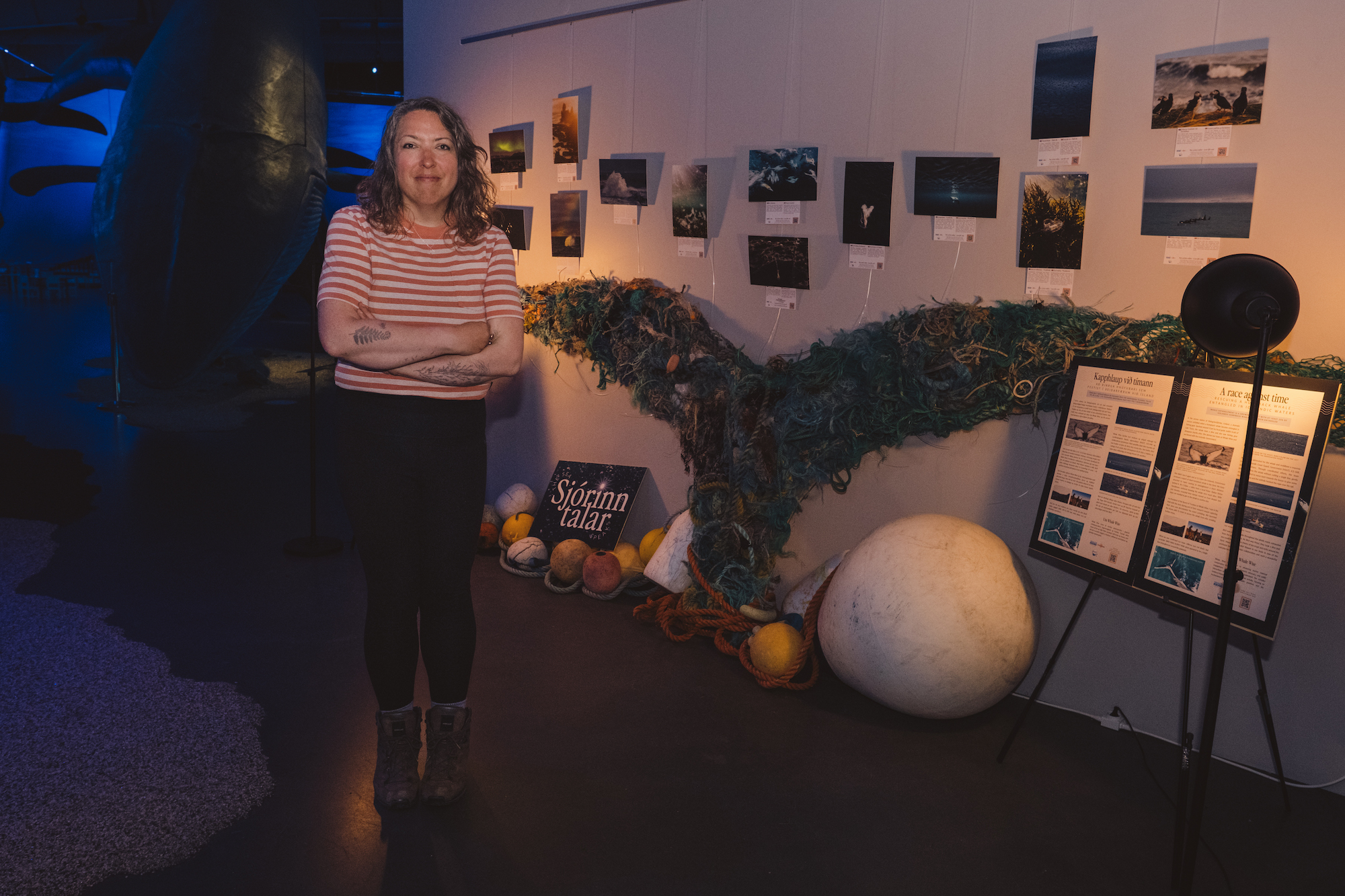
Rebecca Douglas is an Edgewalker, Way Shower, Liminal Being, Ocean Advocate and Storyteller of Nature. Her exhibitions invite audiences to step into the wild edges and liminal spaces – where the known gives way to the unknown and we cross over a threshold.
Her work connects science and myth, intellect and intuition, structure and liminality, translating nature’s stories into compelling visual narratives through photography, video, drone, speaking and writing. Rebecca’s exhibitions create space for stories to unfold naturally, trusting in the radical authenticity and alchemy of the moment. Her work is both a celebration and a reckoning, evoking awe while holding space for the urgent realities facing our planet.
With an academic background in Geography and Marine Resource Management, Rebecca brings a rare blend of analytical depth and sixth-sense connection to nature. Her images are held in collections including the National Portrait Gallery and have been exhibited internationally. In 2024, she was awarded second place in the Ocean Photographer of the Year, Conservation / Impact category.
Her solo exhibition ISLANDNESS with the National Trust is on display at Scotney Castle until October 2025.
Whether photographing aurora or underwater ecosystems, her purpose remains:
To ignite collective curiosity, spark awakened action and rewild our relationship with the natural world.
Learn more and support the work
Whale Wise is building a future where humans and whales can thrive.
Support our conservation work here: whalewise.org


by Benedek Regoczi
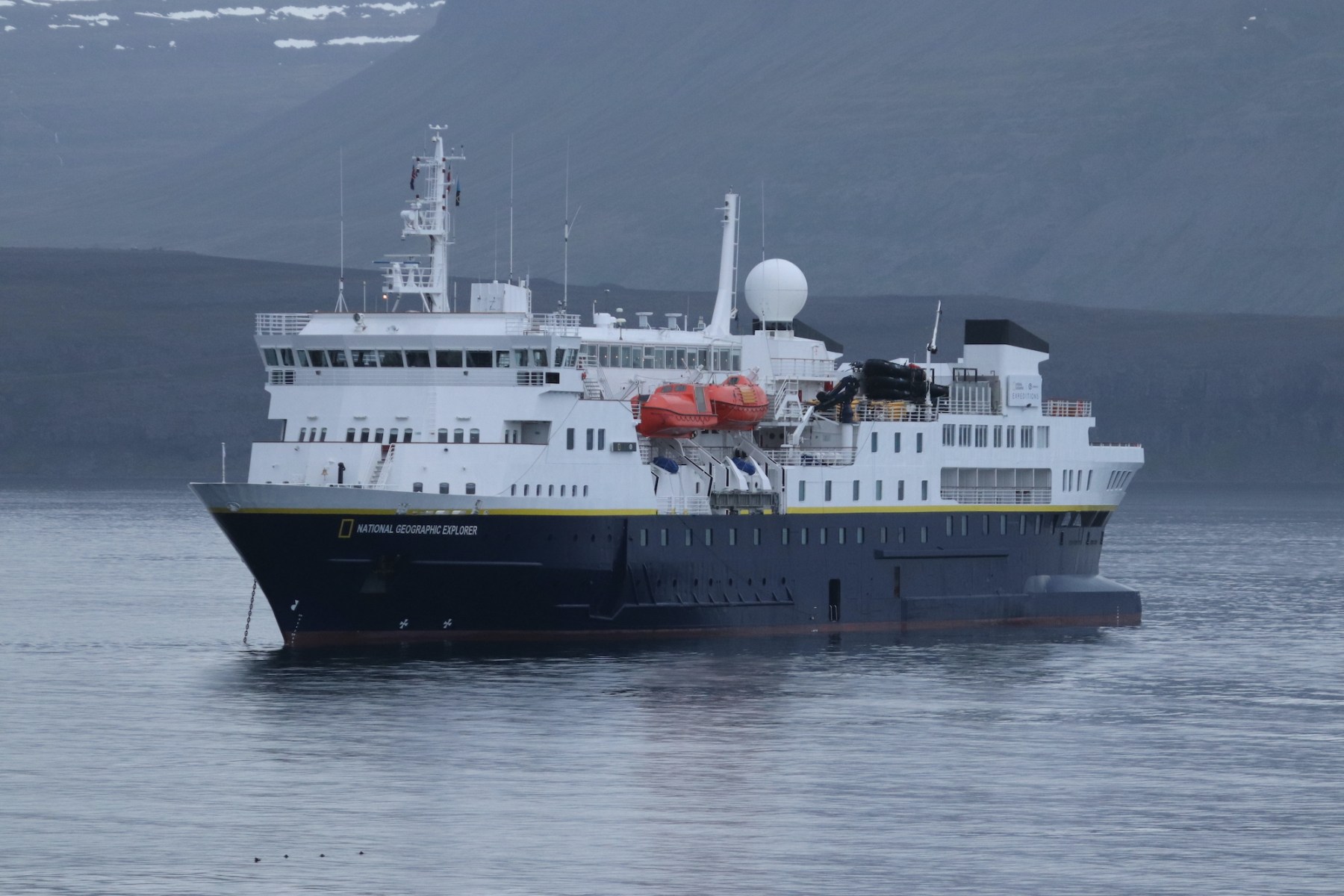
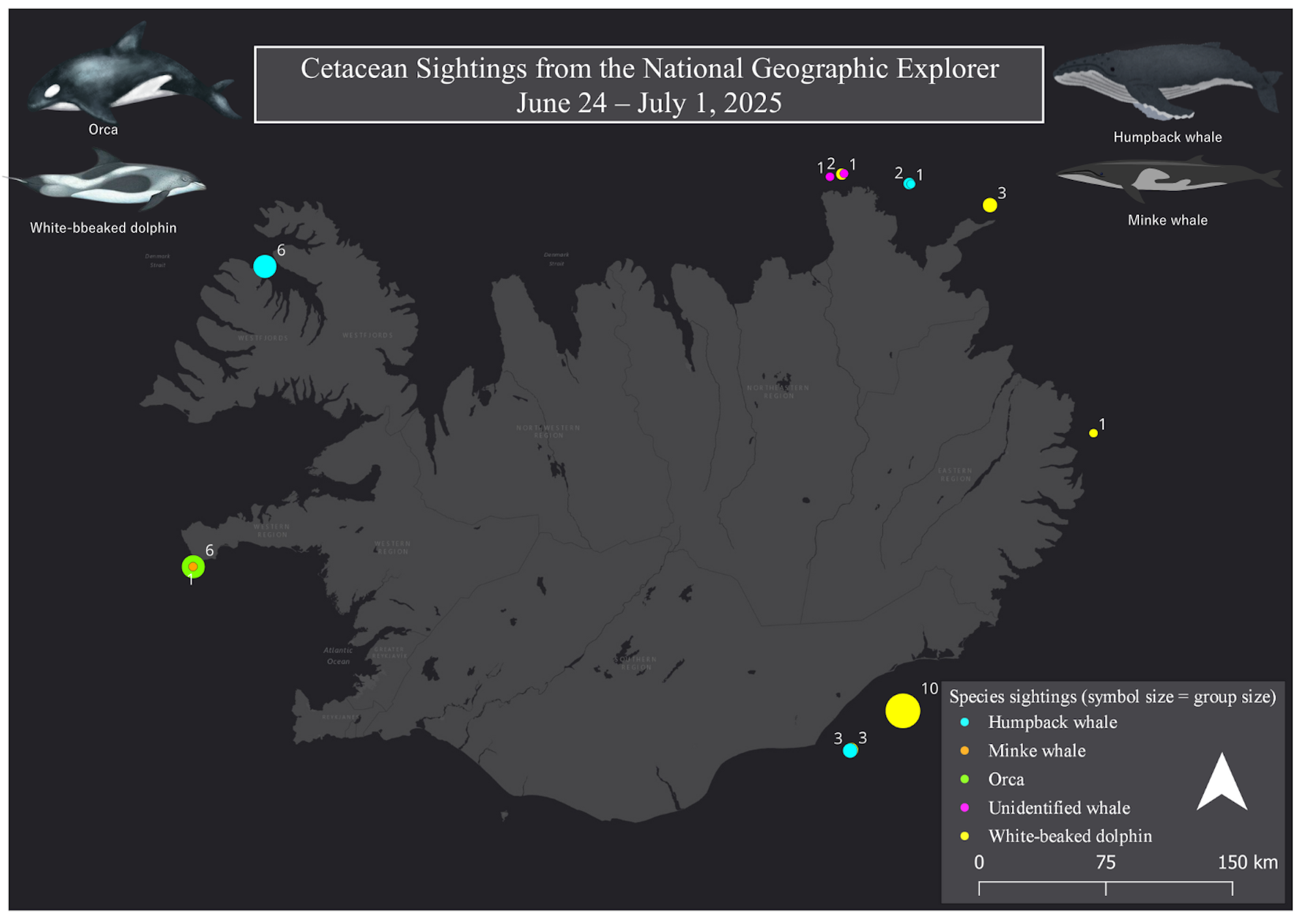
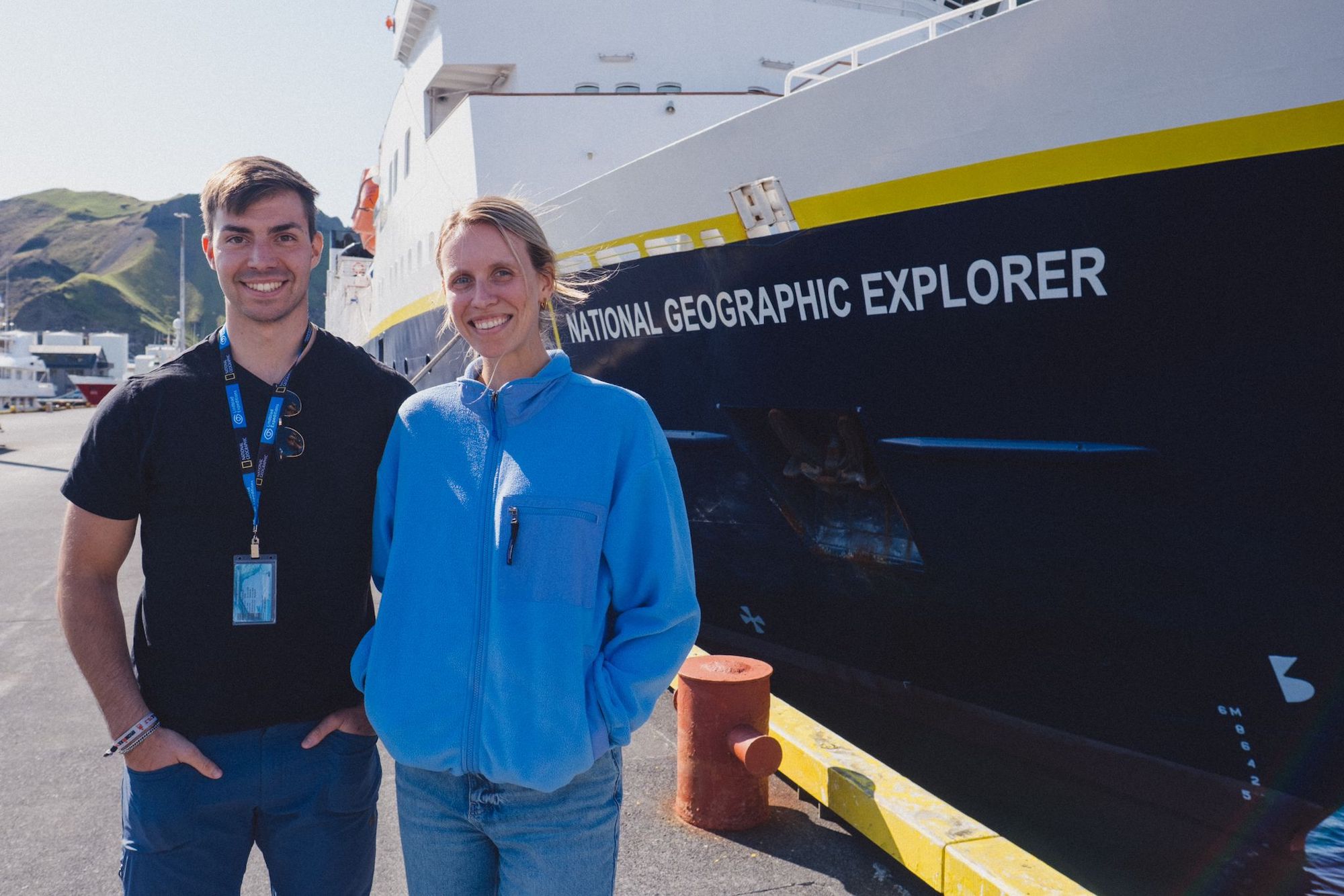
From June 24 to July 1, Katharine Hall and myself joined the National Geographic Explorer as visiting scientists on an 8-day expedition around Iceland, representing Whale Wise. During the voyage, we used the ship as an opportunistic platform for data collection, contributing to a larger research project focused on whales in northeast Iceland. Our focus during the voyage was the northeast, especially Finnafjörður, a remote and under-studied region where plans for a large port and mineral processing facility are moving forward. Until recently, this area lacked any baseline data on whale presence. With the data collected by Whale Wise over the past years, including on this trip, we are starting to build a clearer picture of how whales use this space.
As with any fieldwork, nature writes the script. One night, we began our shift full of anticipation. We had just reached the northeast coast, the area we were most eager to survey. But as we started data collection at 23:05, thick fog began rolling in. Visibility dropped to 100 meters, and it stayed that way for hours. Until 04:13, we stood on the bridge, peering into the grey, searching for signs of life. Despite the conditions, we managed to spot five white-beaked dolphins and three humpback whales. This moment captured the reality of research at sea. It is not always glamorous or full of photo opportunities. It is about patience, persistence, and showing up, even when the horizon disappears.
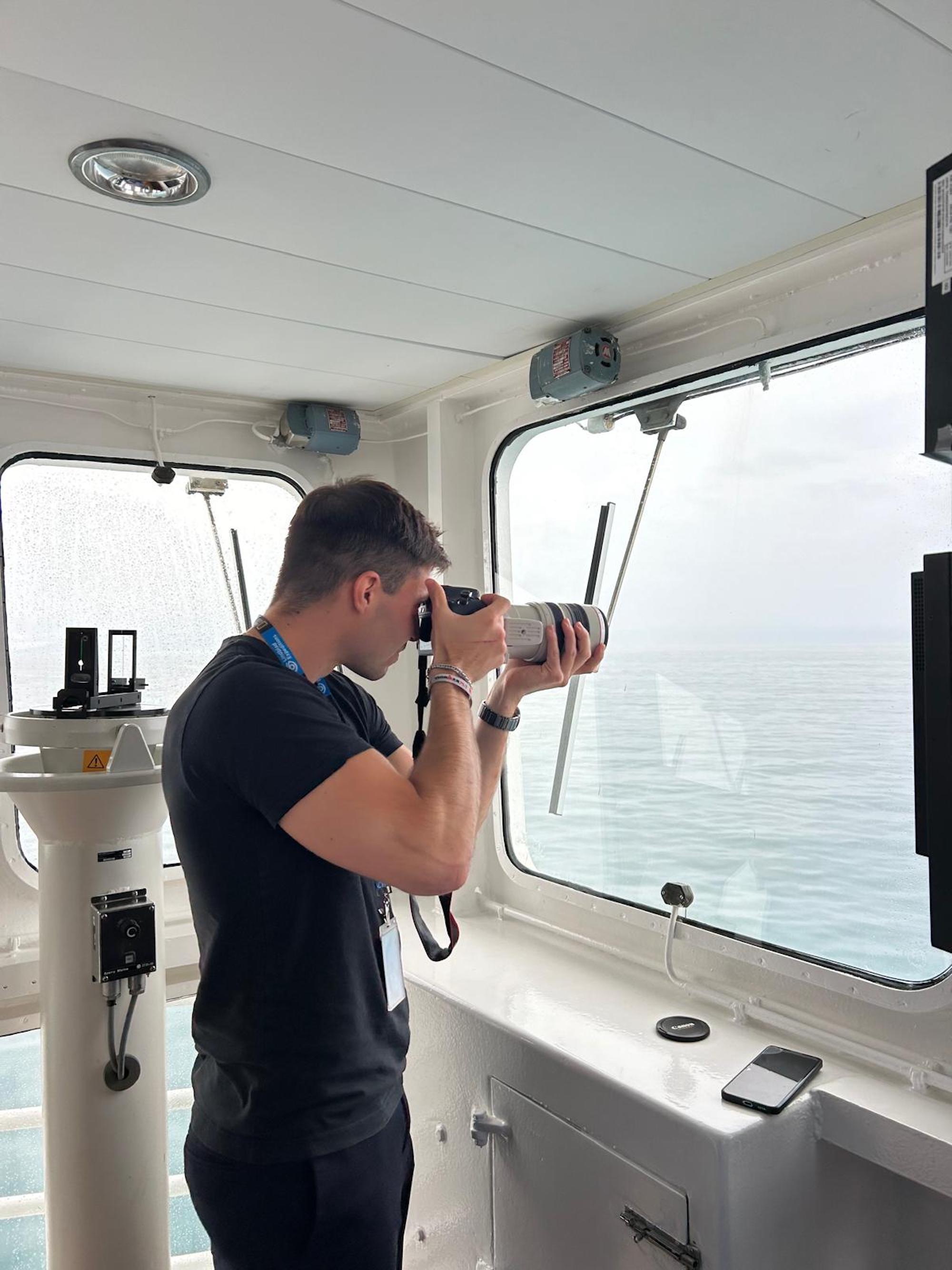
Over the course of the trip, we documented 40 cetacean sightings, including humpback whales, minke whales, white-beaked dolphins, and even a pod of killer whales. These observations are more than just sightings. They are a piece of a much larger puzzle: understanding where whales spend their time and how they might be affected by rapidly emerging anthropogenic activities.
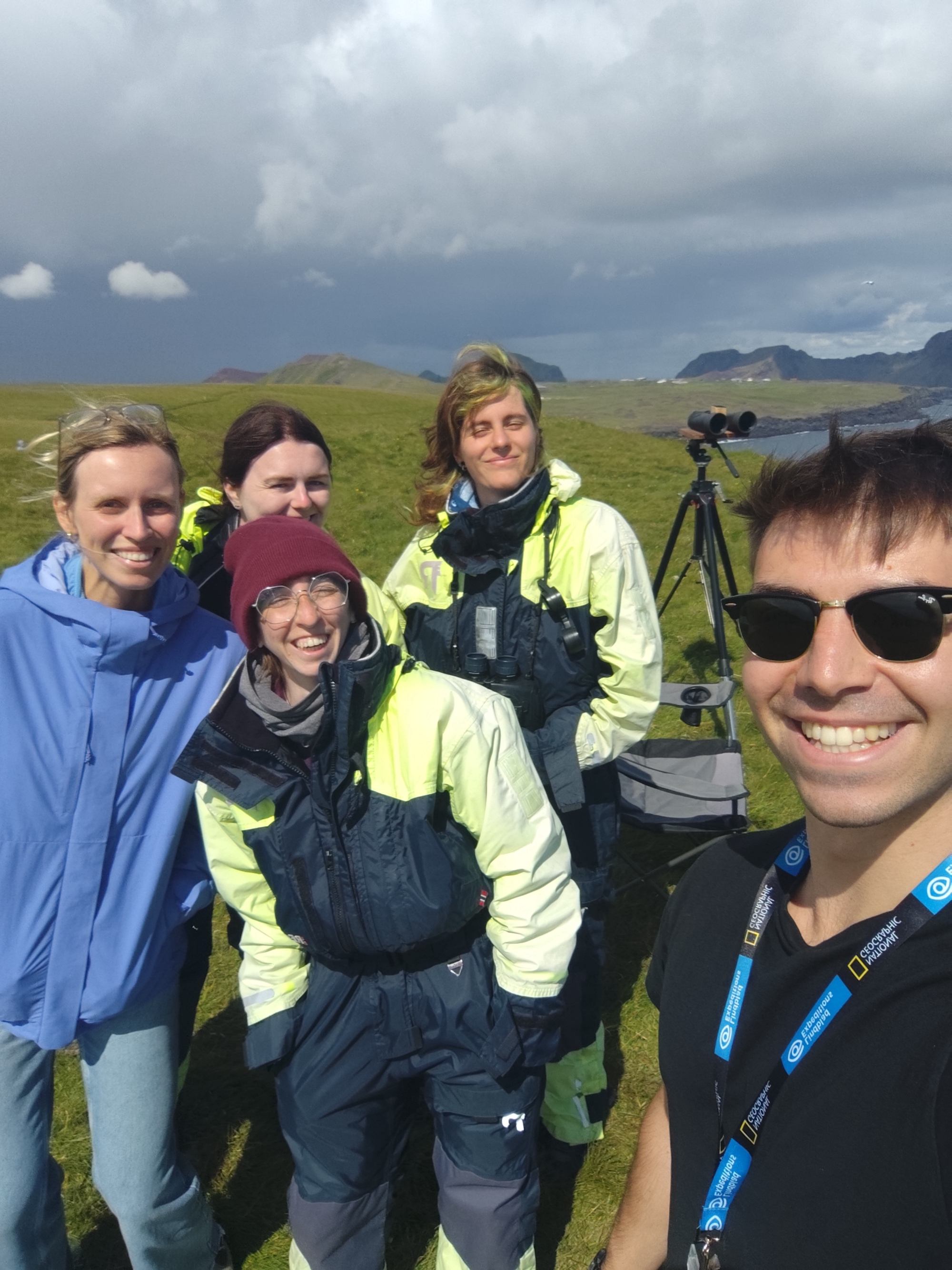
Being a researcher at sea is not just about data. Katie and I also shared our work through presentations for the explorers onboard and led a playful, hands-on session for the kids. We talked about the whales of Iceland, the challenges they face, and why our research matters. Engaging others is a vital part of conservation. After all, people protect what they understand and love.
Along the way, we met members of the Icelandic Orca Project and Whale Wise president Rebecca Douglas, who joined us for part of the voyage. We also crossed paths with Ross Edgley and his team, who are attempting a world-first 1,000-mile swim around Iceland while collecting eDNA samples for marine research. Encounters like this remind us that we are part of a much bigger community, all working in different ways to protect the ocean. It reinforced the small but well-connected network of whale researchers in Iceland.
For me, being a researcher at sea means turning observation into understanding, understanding into connection, and connection into impact. It is foggy bridges at 4 AM. It is the joy of spotting dolphins through the mist. It is sharing science with curious strangers. And it is believing that even the smallest sightings can contribute to something bigger.
Written by Alyssa Stoller
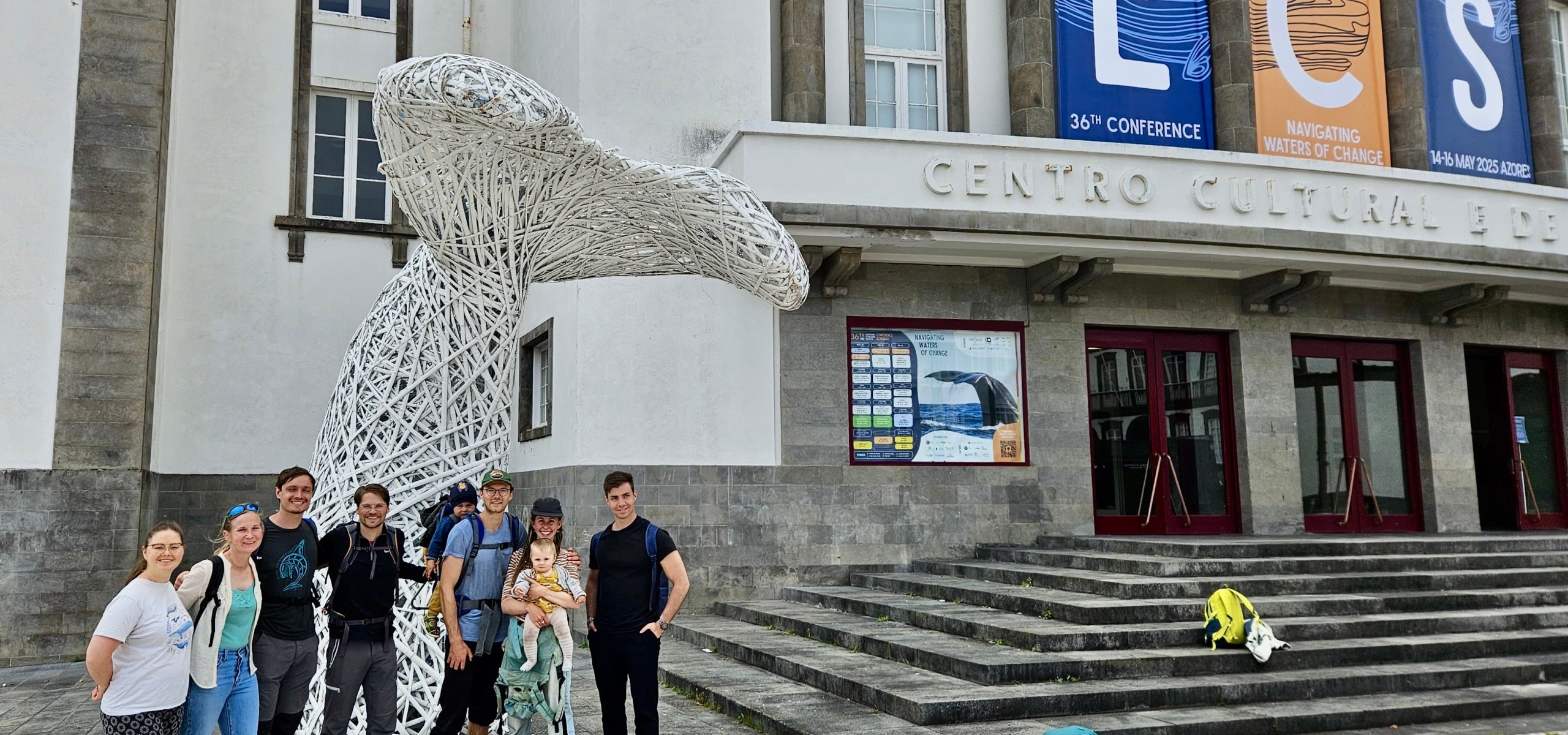
This past week, our team had the privilege of attending the European Cetacean Society Conference (ECS 2025) held in the stunning Azores. It was a week filled with inspiration, collaboration, and celebration — a chance to both share our latest research and learn from others who are equally passionate about the conservation of cetaceans and their ecosystems.
Scientific conferences like ECS are more than just platforms for presenting data; they are vital for the health and progress of research communities. They provide the rare and invaluable opportunity to connect in person with colleagues from around the world — including many we often only correspond with remotely. For our team, reconnecting with collaborators from Iceland was a particular highlight. Despite working closely with these partners year-round, face-to-face conversations and informal exchanges can spark new ideas, strengthen existing partnerships, and open the door to future projects.
Throughout the conference, our team presented a range of exciting and innovative projects. These contributions reflect the diversity of methods we use to study whales and their environments — from land-based drones to acoustic monitoring, community science, and behavioral analysis. We’re thrilled to share the highlights from our presentations:

Short Talk:
Tom – Assessing the behavioural response of humpback whales to variable vessel practices in Skjálfandi Bay, Iceland.
Workshop Talk:
Alyssa – Iceland Whale Sightings: leveraging a Facebook group to guide targeted research and establish community connections
Posters:
Flo – Low-impact cetacean monitoring: advancing land-based drone methods for cetacean research in Iceland
Petr – Temporal variability in the acoustic presence of cetaceans outside Isfjorden, Svalbard, in relation to maritime traffic
Ben – Mapping humpback whale distribution and spatial overlap with anthropogenic activities in Ísafjarðardjúp, Iceland
[Winner: Best MSc Poster]
Amelie – Humpback whale song and odontocete whistles at the site of a proposed port in northeast Iceland
Film Night Feature
Alyssa – Waves of Ink: A short film exploring the Whales and Sounds of Finnafjörður project
[Winner: Best Film]
We are incredibly proud of our team’s achievements, including recognition for Best Film and Ben’s award for Best MSc Poster.
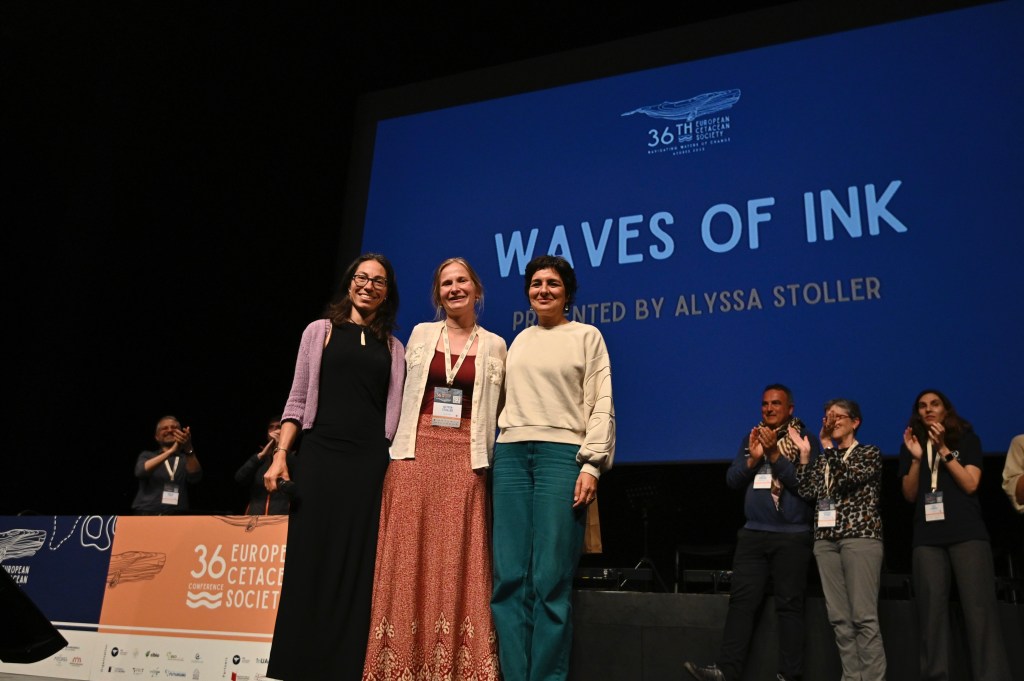
Photo by anxocao_photographer
Finally, a huge thank you to the ECS organizers for hosting such a dynamic and welcoming event. The beautiful Azores provided the perfect setting to dive deep into marine ecology while renewing connections with old friends and meeting new ones. We’re returning home energized, inspired, and more committed than ever to protecting the whales and ecosystems we care so deeply about.
Until next time!

Written by Benedek Regoczi
Have you ever leaned over the side of a boat, wondering what is beneath the surface and what creatures we share the waters with?
In a fjord system in northwest Iceland called Ísafjarðardjúp, the answer could be humpback whales. However, since these waters are shared with anthropogenic activities, humpback whales face risks such as ship strikes, noise pollution, and entanglement in fishing gear and aquaculture infrastructure. In Ísafjarðardjúp, aquaculture, fisheries, and cruise tourism are expanding. In fact, cruise ship tourism alone has grown from 42,300 passengers in 2013 to nearly 380,000 projected in 2025. One way to minimize human-whale conflicts is by studying their distribution, which can help inform adaptive conservation efforts.
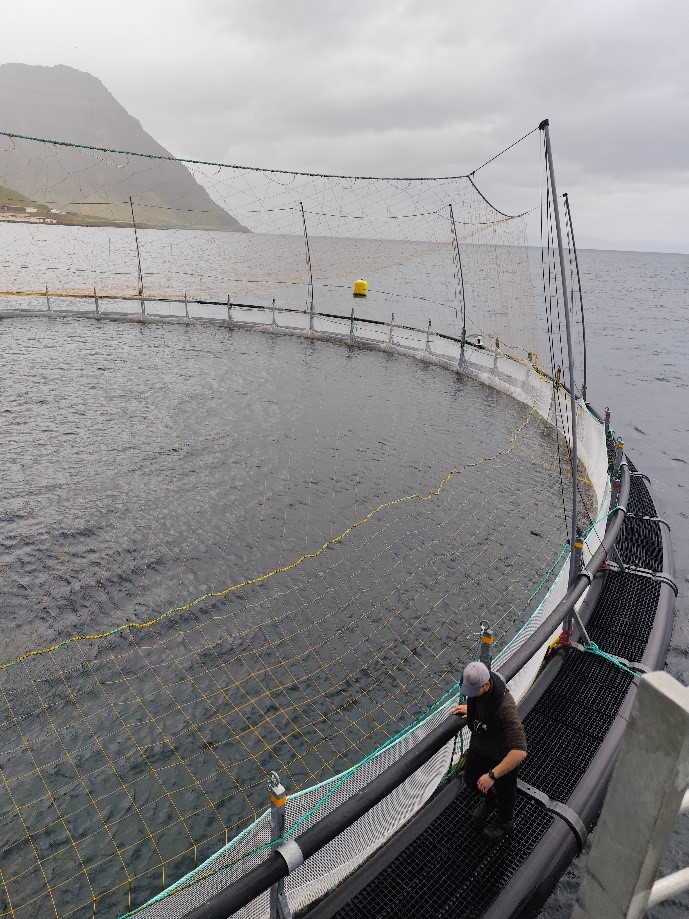
Understanding where whales go and why is key to minimizing human-wildlife conflicts. This is where my research comes in. During the summer of 2024, Laura Lyall and I spent 91 hours conducting shipboard surveys, using whale-watching vessels as opportunistic platforms to collect data on humpback whale distribution. My study provided the first effort-corrected maps of humpback whale distribution and statistically identified the environmental drivers influencing their presence in Ísafjarðardjúp. I also mapped the overlap between anthropogenic activities and humpback whale distribution.
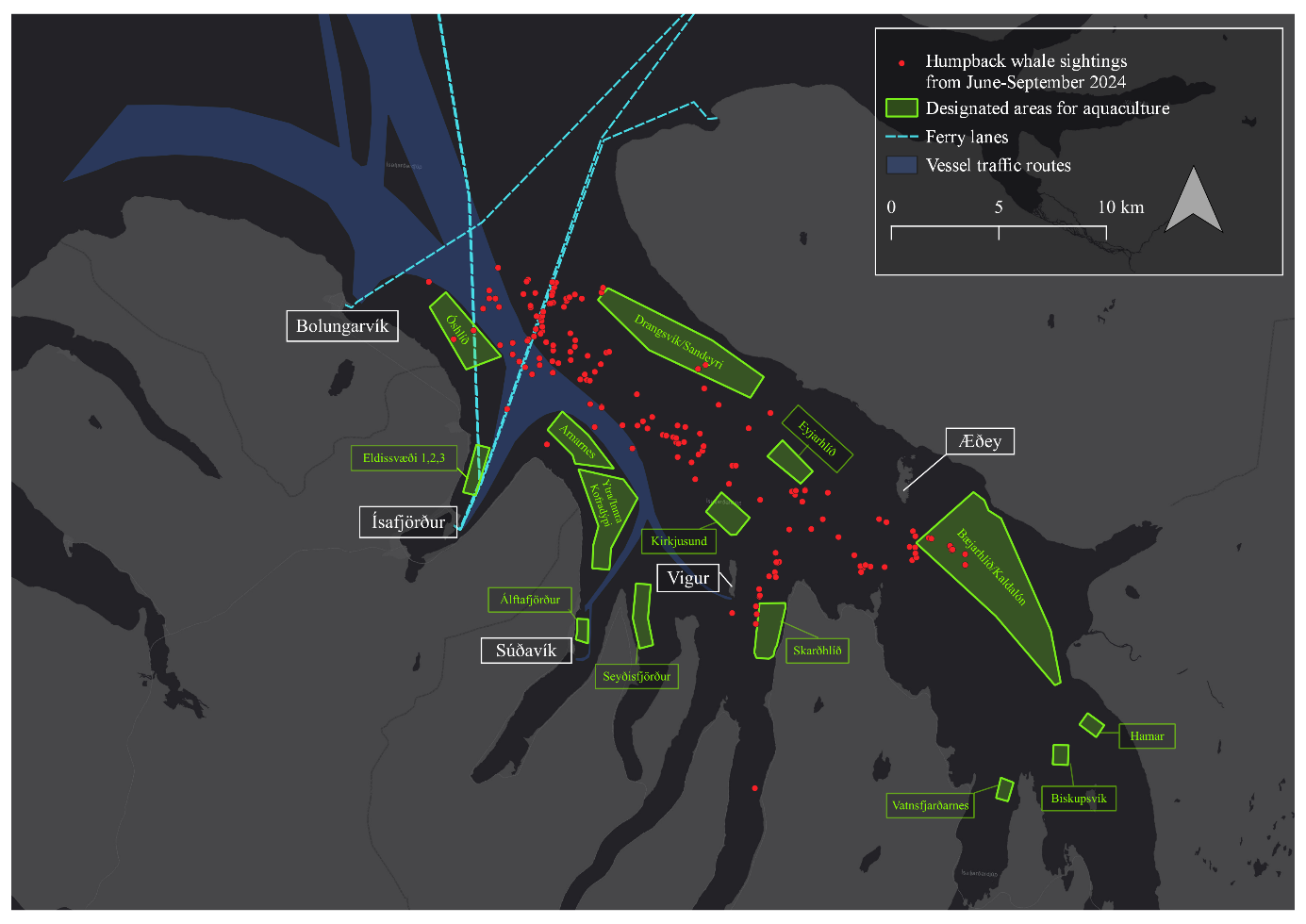
Throughout the past year, while collecting data for my research, I was concerned by how often humpback whales surfaced right next to the boats and how many individuals bore scars of human impact. Witnessing this first-hand has only reinforced the importance of better understanding humpback whale spatial and temporal distribution so that we can develop measures to protect these animals.
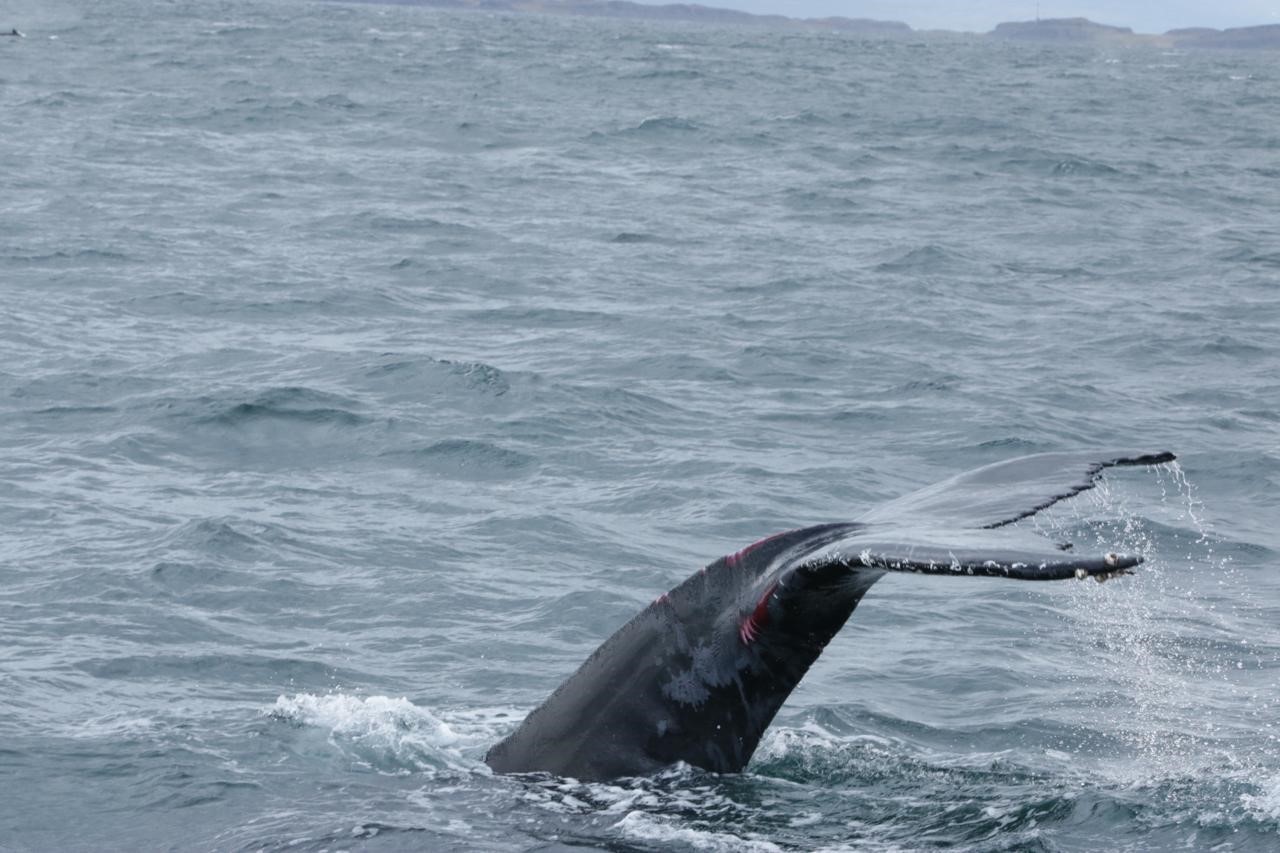
While I believe the subject of my research is essential, what truly makes it unforgettable for me is the experience of collecting the data itself. Being out on the water, surrounded by these majestic animals, is a privilege that never loses its magic. Every single tour is different, unpredictable, humbling, and inspiring. That unpredictability is exactly what has always drawn me to nature. There is something deeply mysterious and powerful about being close to wild animals, especially whales. Even after countless trips, when I’m certain I know which species we’ll encounter, nature always finds a way to surprise me and remind me how little control we truly have.
One of the most magical moments of my 2024 field season happened on July 7th, 2024. We set off on a 2.5-hour whale-watching trip to collect data. The ocean was calm, wrapped in a thick fog. There were no waves, just the soft sound of the boat’s bow slicing through the water. Suddenly, two humpback whales appeared, one on each side of the boat. I managed to convince the captain to turn off the engine to minimize any disturbance. It felt like nature rewarded us for that small act of respect. One of the whales turned toward us, gliding closer until it stopped just beside the boat. Then, the whale lifted its head out of the water and looked directly at us, right into our eyes. Fifty tourists stood frozen by the presence of this giantof the sea. The whale dived under the boat and emerged upside down, waving its tail and rocking our 20-meter vessel. The whale was playing with us. In our human world, we’re taught to seek control over our lives, our surroundings, even our futures. But in nature, control is an illusion. You never know what’s going to happen. And that’s exactly what makes it so beautiful.
So the next time you lean over the side of a boat, wondering what’s below, remember: you’re looking into the world of humpback whales. The question is, how will we share it responsibly?
