 Whale Wise
The shared waters of Ísafjarðardjúp
Written by Benedek Regoczi
Have you ever leaned over the side of a boat, wondering what is beneath the surface and what creatures we share the waters with?
In a fjord system in northwest Iceland called Ísafjarðardjúp, the answer could be humpback whales. However, since these waters are shared with anthropogenic activities, humpback whales face risks such as ship strikes, noise pollution, and entanglement in fishing gear and aquaculture infrastructure. In Ísafjarðardjúp, aquaculture, fisheries, and cruise tourism are expanding. In fact, cruise ship tourism alone has grown from 42,300 passengers in 2013 to nearly 380,000 projected in 2025. One way to minimize human-whale conflicts is by studying their distribution, which can help inform adaptive conservation efforts.
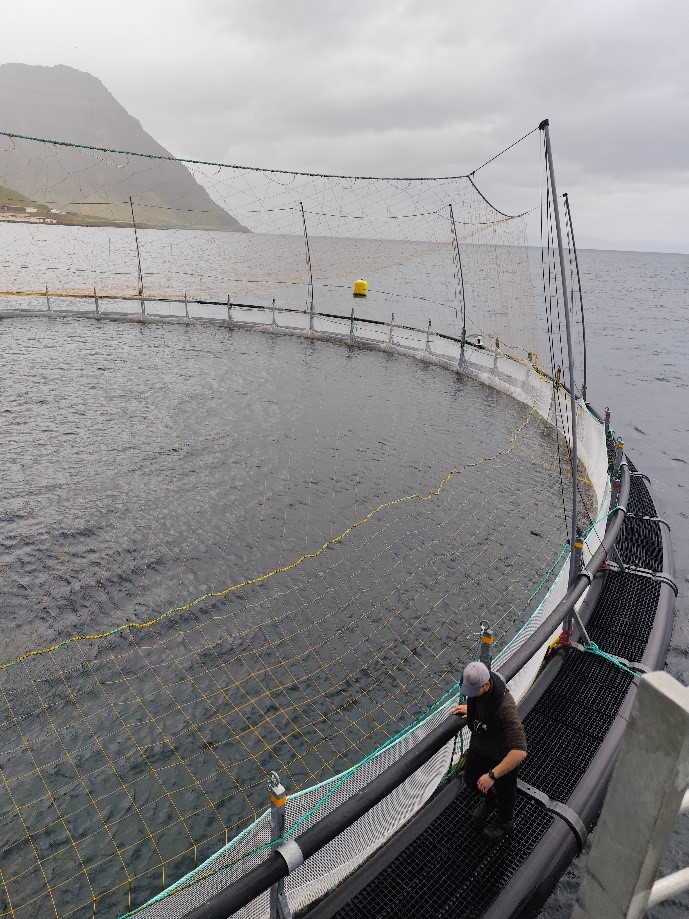
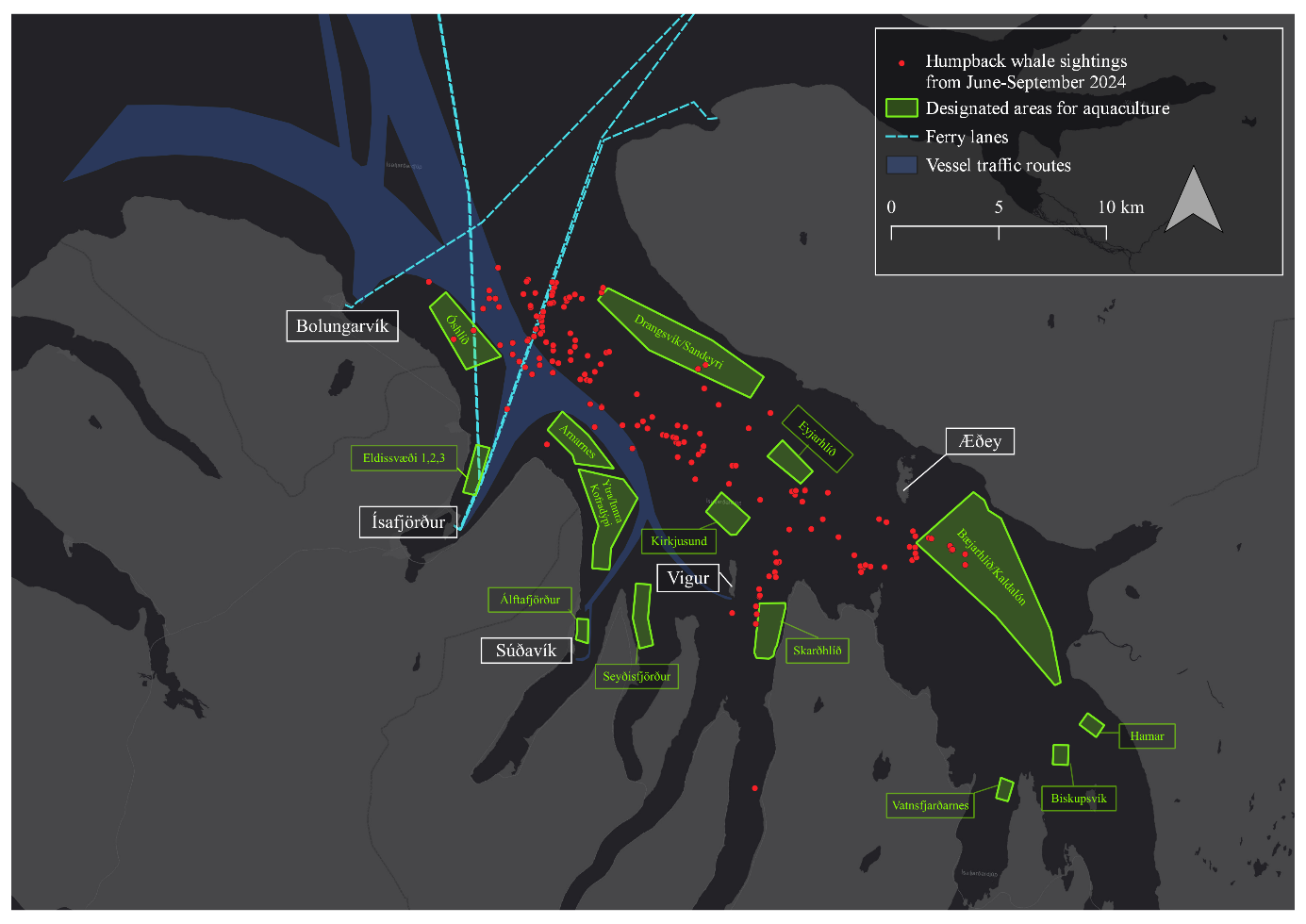
Understanding where whales go and why is key to minimizing human-wildlife conflicts. This is where my research comes in. During the summer of 2024, Laura Lyall and I spent 91 hours conducting shipboard surveys, using whale-watching vessels as opportunistic platforms to collect data on humpback whale distribution. My study provided the first effort-corrected maps of humpback whale distribution and statistically identified the environmental drivers influencing their presence in Ísafjarðardjúp. I also mapped the overlap between anthropogenic activities and humpback whale distribution.
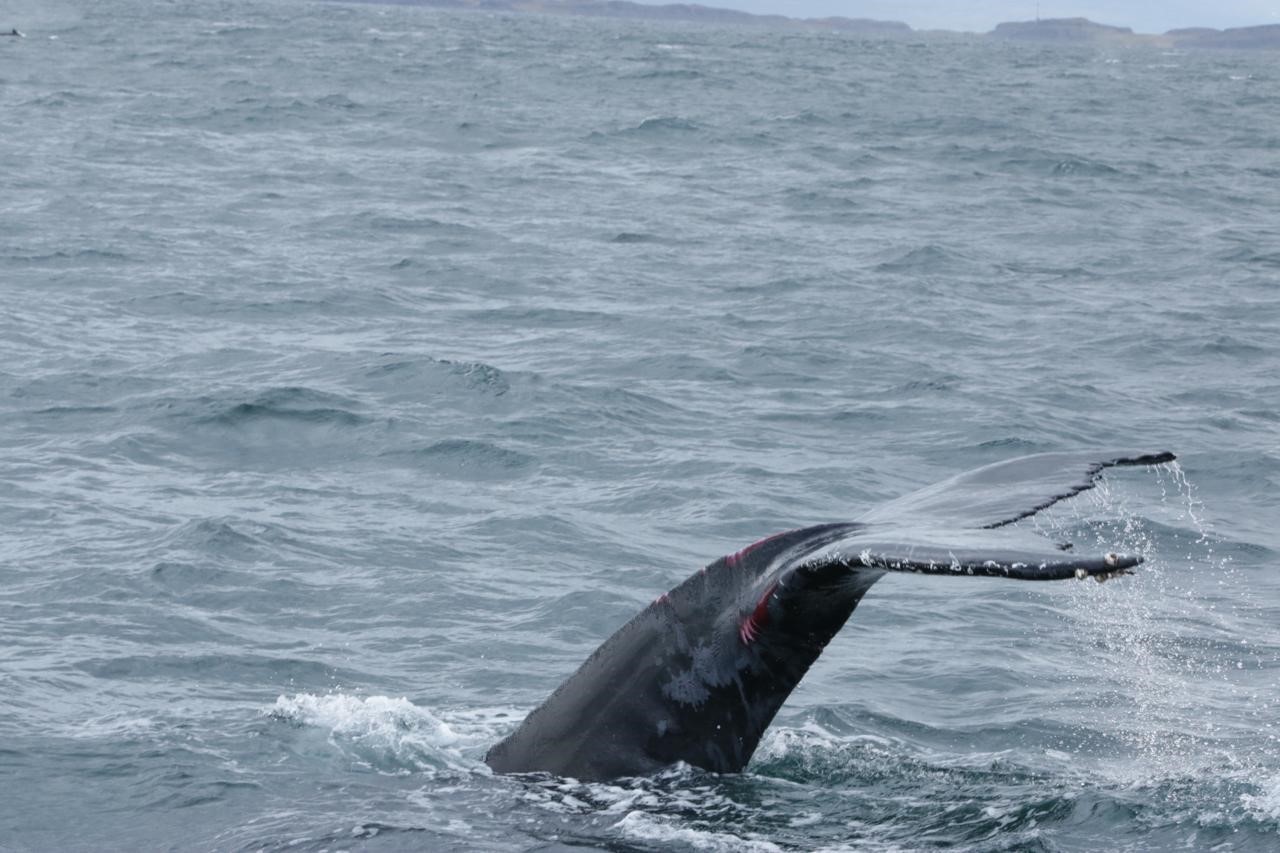
Throughout the past year, while collecting data for my research, I was concerned by how often humpback whales surfaced right next to the boats and how many individuals bore scars of human impact. Witnessing this first-hand has only reinforced the importance of better understanding humpback whale spatial and temporal distribution so that we can develop measures to protect these animals.
While I believe the subject of my research is essential, what truly makes it unforgettable for me is the experience of collecting the data itself. Being out on the water, surrounded by these majestic animals, is a privilege that never loses its magic. Every single tour is different, unpredictable, humbling, and inspiring. That unpredictability is exactly what has always drawn me to nature. There is something deeply mysterious and powerful about being close to wild animals, especially whales. Even after countless trips, when I’m certain I know which species we’ll encounter, nature always finds a way to surprise me and remind me how little control we truly have.
One of the most magical moments of my 2024 field season happened on July 7th, 2024. We set off on a 2.5-hour whale-watching trip to collect data. The ocean was calm, wrapped in a thick fog. There were no waves, just the soft sound of the boat’s bow slicing through the water. Suddenly, two humpback whales appeared, one on each side of the boat. I managed to convince the captain to turn off the engine to minimize any disturbance. It felt like nature rewarded us for that small act of respect. One of the whales turned toward us, gliding closer until it stopped just beside the boat. Then, the whale lifted its head out of the water and looked directly at us, right into our eyes. Fifty tourists stood frozen by the presence of this giantof the sea. The whale dived under the boat and emerged upside down, waving its tail and rocking our 20-meter vessel. The whale was playing with us. In our human world, we’re taught to seek control over our lives, our surroundings, even our futures. But in nature, control is an illusion. You never know what’s going to happen. And that’s exactly what makes it so beautiful.
So the next time you lean over the side of a boat, wondering what’s below, remember: you’re looking into the world of humpback whales. The question is, how will we share it responsibly?
