 Whale Wise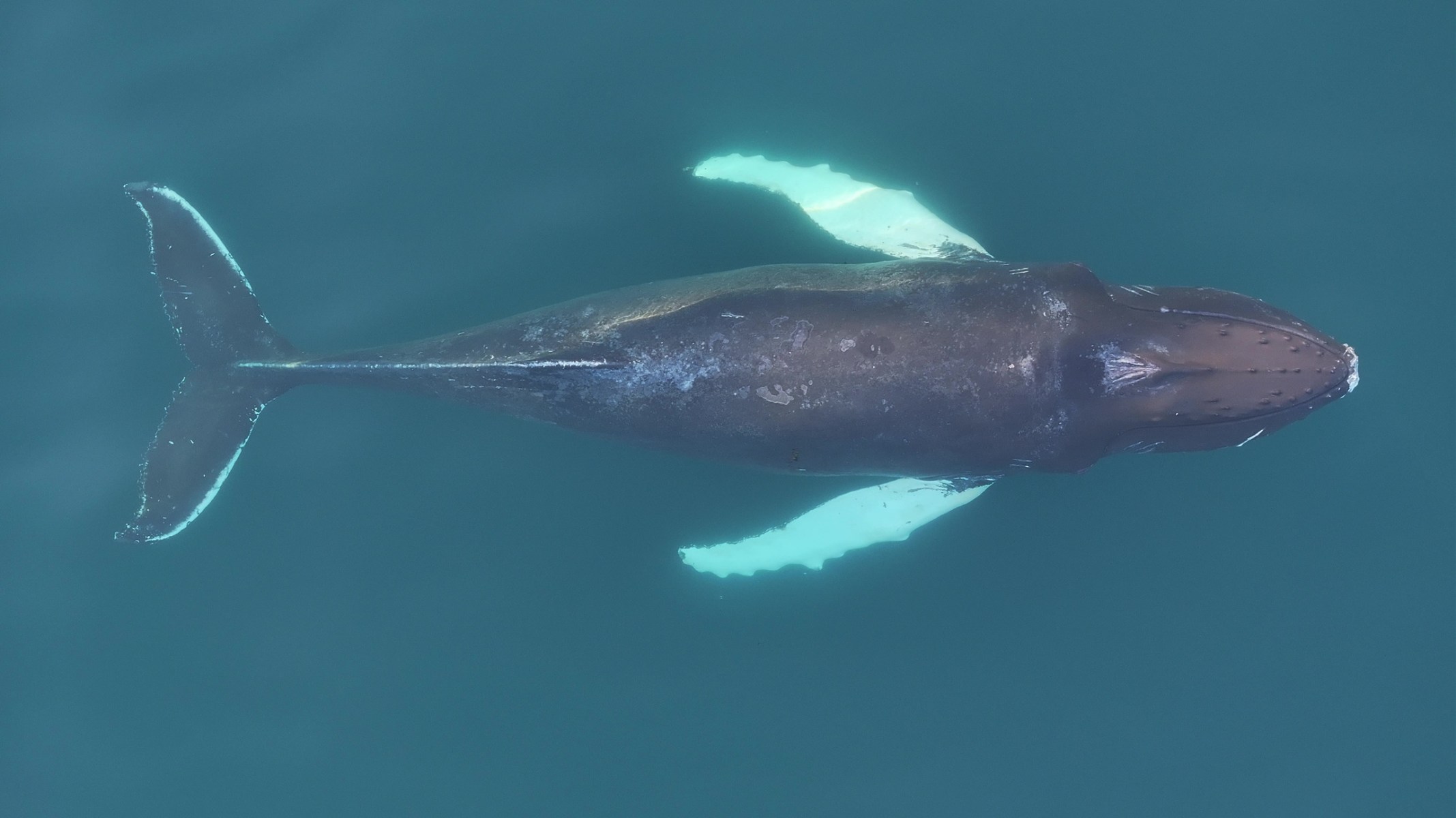
A city of whales in the wildest winter
Written by Tom Grove
I want to tell you about one of the most magical experiences of my life –
finding whales upon whales in a frozen Westfjords winter.
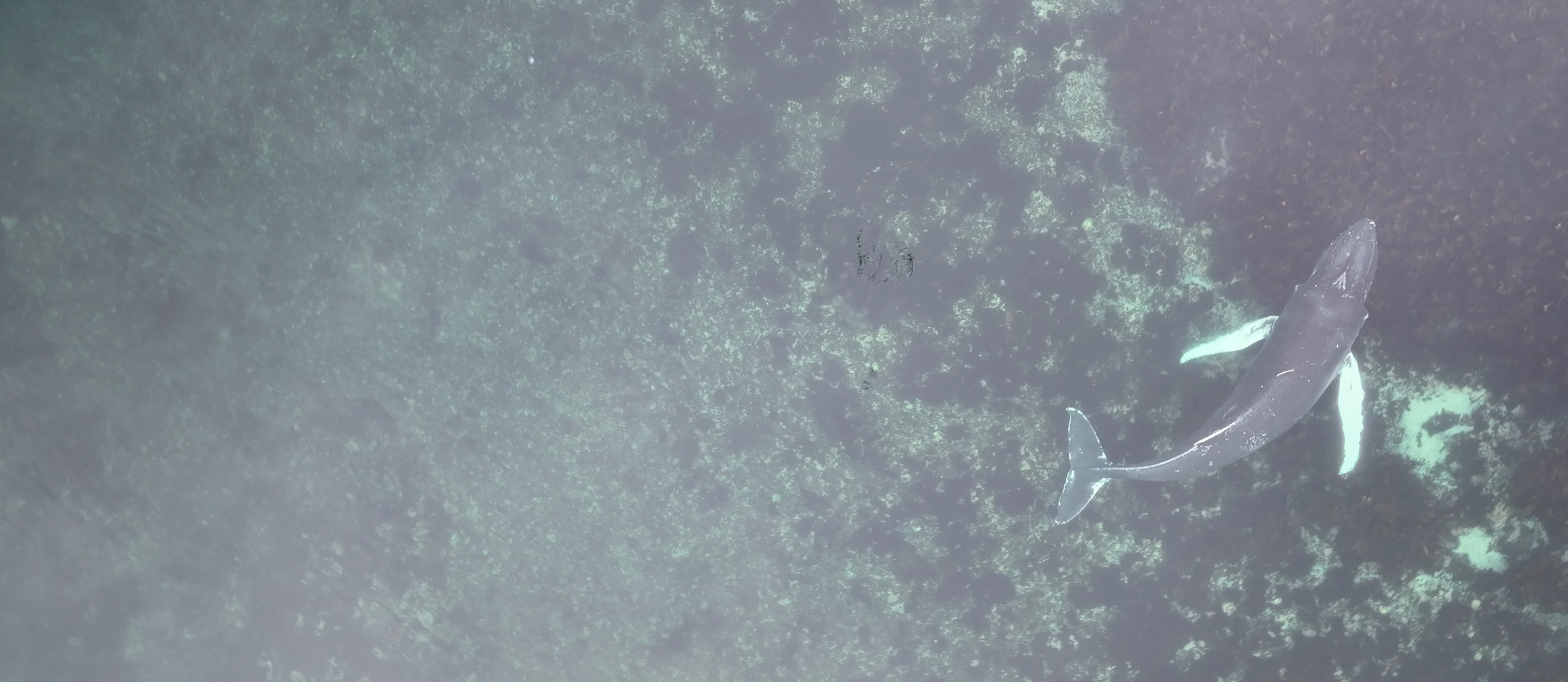
As I write from a cosy house in South Wales (where I’m spending Christmas), the words above almost feel imaginary. Did I actually spend the first half of winter driving along the icy roads of the Icelandic Westfjords, finding translucent landscapes of whale breaths I could only dream of? Upon reviewing our photos and drone videos, I’m happy to report that these memories are indeed real. This November and December, we documented extensive humpback whale occurrence throughout the Westfjords, with incredible numbers, fascinating behaviours and a growing understanding of this community of giants. This follows an amazing research trip on October 6th with our collaborator Sjóferðir.
Alongside masses of data, we were fortunate to witness countless whale stories. These won’t all fit in one blog – and we’re excited to share more in the coming months – but I’ll start by giving an account of (nearly) every day of fieldwork during this period. I’ll focus on Ísafjarðardjúp, the largest fjord system, and I’ll share my impressions and highlights from each day. Through these reports, I want to convey three things:
- Whales are awesome.
- We are only beginning to understand the intricate, fascinating society of Westfjords humpbacks.
- The Westfjords are off-the-charts incredible for land-based whale-watching, even when it’s difficult to stand due to gale-force winds.
(PS if you want more information on land-based whale watching you can become a Friend of Whale Wise)

Icelandic winter doesn’t make fieldwork easy
Let’s start by setting the scene. To study whales, you want calm winds, no waves, sunshine and accessible coastline. In winter, the Westfjords does an excellent job of destroying these criteria and leaving them in an icy-muddy-snowy-lightless-windblown mess.
Winter is dark – really dark. In December, the sun doesn’t rise until midday – that is, if the sun isn’t blocked by the mountains, which it is in most of the fjords. You might be greeted with an incredible pink sunrise – turns out this is also the sunset. Three hours later, you’re back in darkness.
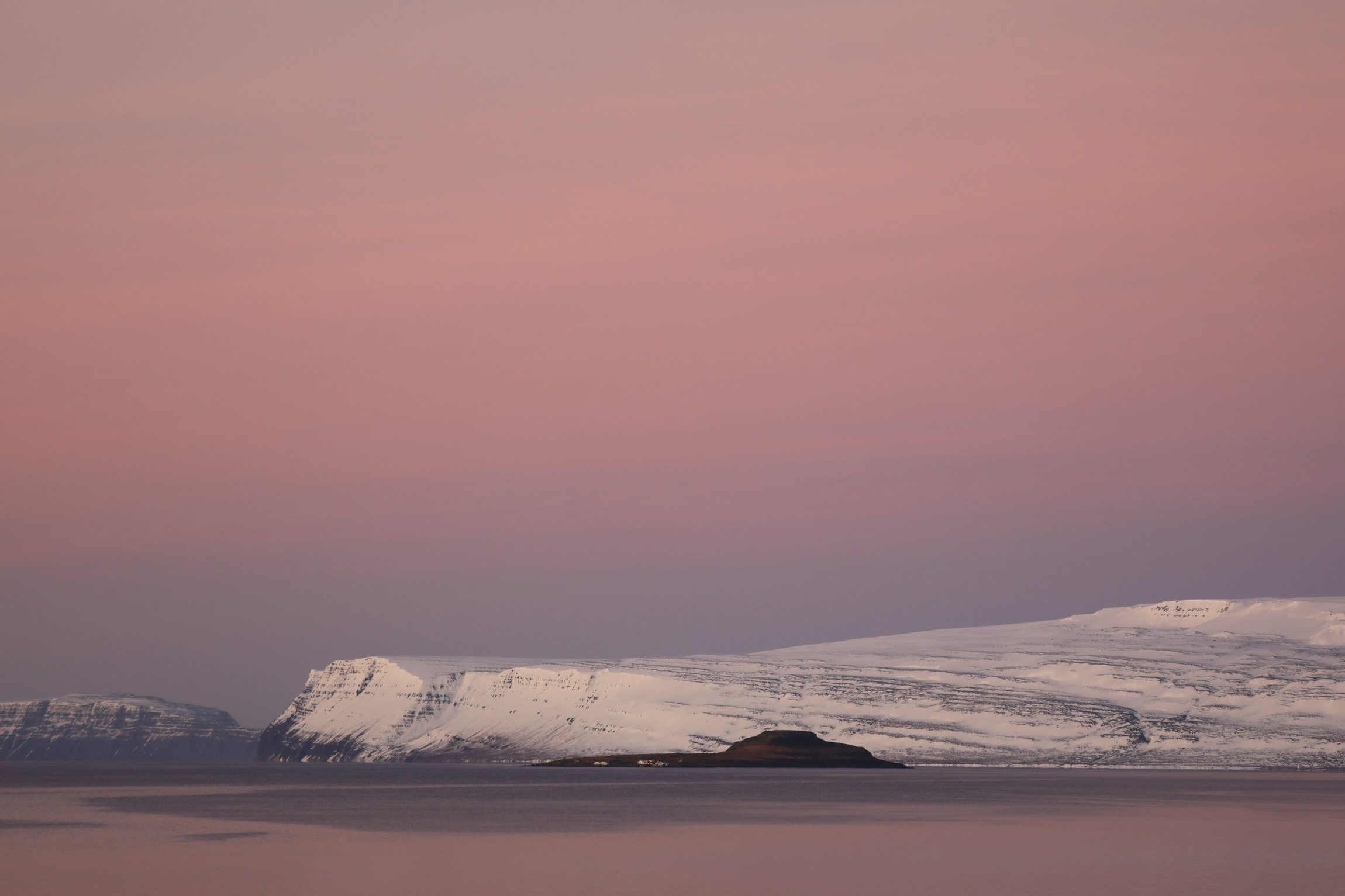
This darkness is compounded by grey skies and frequent rain or, more often, snow and ice. In fact, the Westfjords specialises in producing snow showers when the forecast shows complete blue skies. Perfect for planning fieldwork. The mixture of rain and snow, freezing and thawing, also produced roads that resemble glistening ice rinks – not ideal for driving. And when they melt? Gravel roads turn into literal mud baths.
We knew this already but Iceland is WINDY. We were based in a small cabin in Drangsnes, on the edge of a cliff, and it was unusual when the whole cabin wasn’t shaking with constant storm-driven gusts. Drones don’t like the wind and neither do cameras when they’re being pelted by salt spray (even on land).
So Iceland isn’t the easiest place to study whales in winter. But when you get lucky, the results can be incredible.
October 23rd
This October, we ran three weeks of intense fieldwork with a team of four – Alyssa, Tom, Josie and Rebekka. The weather was very challenging … until the day we needed to drive down south to Reykjavík (is anybody surprised?). So, on that final morning, we left early, driving over the mountain pass to Ísafjarðardjúp, and we were greeted by more whales than I have ever seen from land.
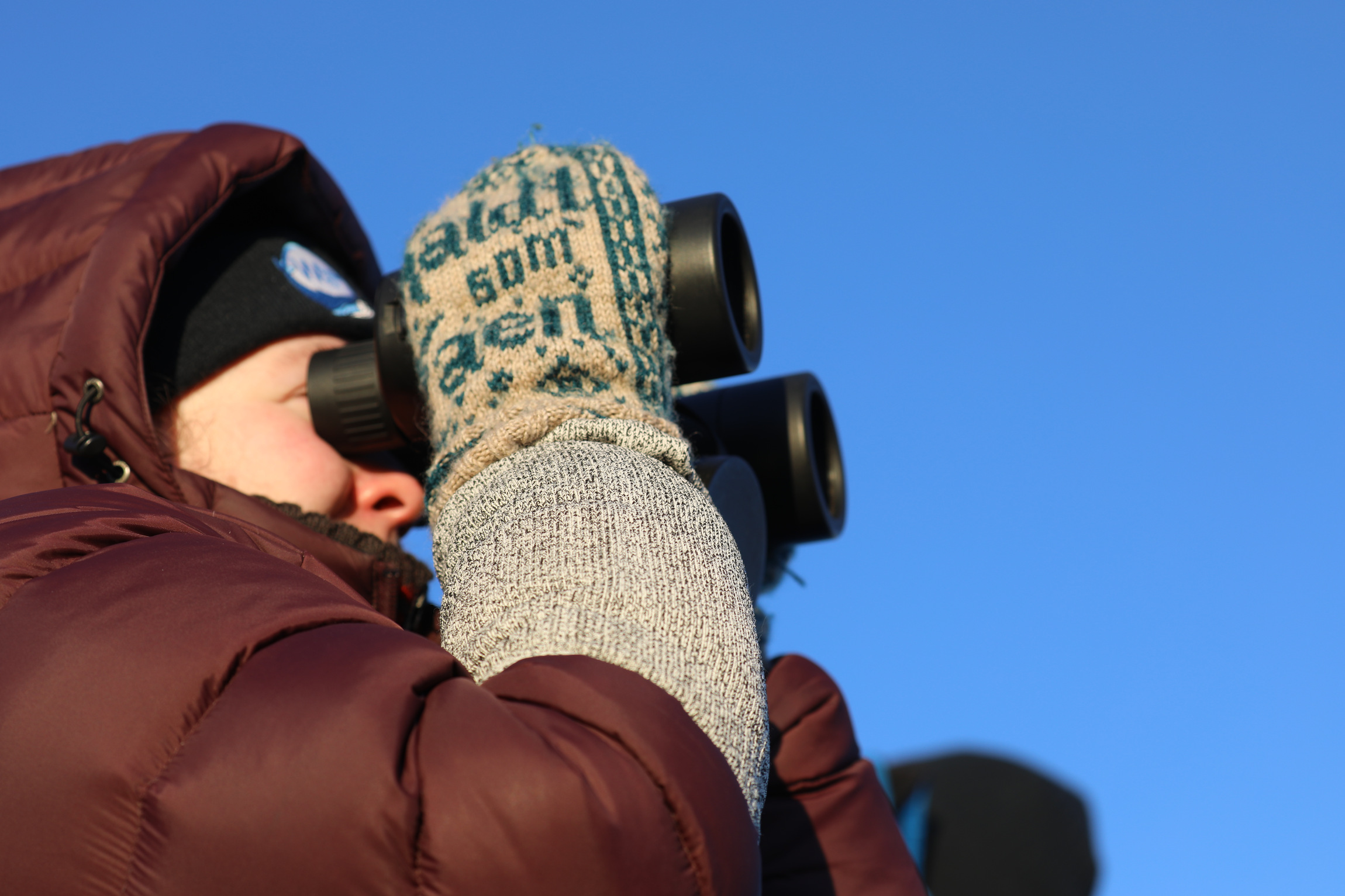
Even in the dark, you could hear and see the blows of humpbacks – it clearly wasn’t going to be a normal droning session. As the sun rose, we saw groups foraging all throughout the fjord system, mostly between the islands of Vigur and Borgarey. After droning whale after whale, we identified 52 individuals – smashing our previous record of 35 whales for land-based droning. We saw some new individuals but the vast majority were regulars from earlier in the season. You’ll notice this theme – large numbers of whales spend long periods of time in this fjord. It’s their seasonal home, one that they return to year after year.
After a frantic few hours of research, we sadly had to drive south, saying goodbye to a whale paradise. We dropped off Josie and Rebekka at Keflavík airport and there ended an amazing October field season.

The highlight: A blurry image of Ashes, a cherished humpback we haven’t seen in years, hanging out with Starlight, one of our adopted whales. I actually named Ashes as an intern at Húsavík Research Centre in 2017 and hadn’t personally seen this whale, so it was a pretty special day.
November 12th
From the end of October, it was just Alyssa and I in the cabin in Drangsnes, our current home. After that magical late-October day, the weather descended once again. Two frustrating weeks later and the mirage of a good weather forecast finally led to a calm day.
We thought we had seen the peak in late October but, my goodness, were we wrong. Starting with several whales in and around Skötufjörður (close to Vigur Island), we then headed farther into the fjord. Earlier in the day, while it was still too dark to do anything, we actually heard a few blows close to Borgarey, really far inside Ísafjarðardjúp, so we decided to look for them. I was completely unprepared for what we found.
The sea around Borgarey was alive with the blows and backs and tails of humpback whales. The whales we had watched all summer much farther out were now pushing in, likely taking advantage of late-season krill. It was surreal seeing so many of our favourites – such as Octopus, Osprey and Olive – using such a different part of the fjord system and so close to land. Even crazier that we were the only ones watching these whales – world-class whale watching all to ourselves. This was the case every day from mid-October onwards.
We ‘only’ droned 35 whales on this day, but there were far more in the area – they were farther from shore and darkness descended rapidly. Seeing so many whales in November – most of whom were familiar tails – reshaped our understanding of humpbacks in the fjord.
The highlight: a foraging trio of Osprey, Bisous and Olive – big, badass humpbacks fluking in synchronicity, framed by desolate snowy mountains.
Osprey is also one six humpback whales that you can adopt to support Whale Wise!
November 15th & 16th
After November 12th, we were more prepared and targeted the North gravel road around Ísafjarðardjúp, between Borgarey and Æðey, since most whales were hanging close to the North side. I’m happy to say that this paid off. Cold, dry conditions allowed us to drive along these isolated roads in time for the most incredible sunrises, with pinks and purples yielding to shocking black-and-white landscapes. And the whales continued to gather and feed.
The numbers were staggering, with about 50 IDs per day (we’re still processing data). Gathering in large aggregations, there was clearly a huge amount of food available. Before the sun rose, you couldn’t see so many whales. But once the sun struggled above the mountains, whale blows illuminated like fiery beacons as far as the eye could see. These views are tattooed into my brain and I hope our drone videos convey even a small fraction of their beauty.
As with previous days, most of the whales were regulars. But on these days, we started to see whales we hadn’t seen for several months, or years, or ever! We saw a mother-calf pair, groups of young whales and some big adults.
The highlight: seeing Snowflake, an old friend. Snowflake was one of the most regular whales in Ísafjarðardjúp since 2019 but hadn’t been seen in 2025 … until now! Hanging out with other long-time regulars such as Lucky Logan and Tadpole. We can report that Snowflake was still in the fjord as of December 6th.
November 22nd & 24th
A bad week of weather kept us stuck in the cabin, but another break in the weather allowed to search for our beloved whales once more. And we weren’t disappointed.


We weren’t sure when the whales started to leave the fjord. We know that some hang around in December thanks to reports from fishers, but how long would this incredible peak in sightings last? At least, it seems, until the end of November. Numbers were similar, or maybe even higher, than our previous research days. November 24th yielded 63 humpback IDs from land, another big record for Whale Wise. This is even more remarkable because new animals continued to join the fray, including Frodo, Airbender and Bottle. In other words, since November 12th we had seen far more than 63 whales, indicating just how many were in the fjord.
On these days the whales were a bit more spread out and not so far into the fjord. Many whales were foraging alone but there were also some larger groups, such as a posse of small whales led by Jamal and including Zephyr, Mold and Zebra.
The highlight: the lighting was actually unbelievable, the pink eastern sunrise battling with pewter-grey clouds to the west. At one point, a large rainbow descended onto the horizon while whale blows were also forming their own mini-rainbows everywhere.
December 4th and 6th
As November closed, the weather grew into an uncontrollable beast, with a constant onslaught of strong winds. The problem is, we knew there were many whales and that we could photograph some of them from land. When you have a whale addiction, this is dangerous information. So, on two days, we drove over the pass to Ísafjarðardjúp in gale-force winds in case we could obtain any more information before heading to Wales for Christmas.
My take-home message? It’s surprising how much whale research you can do in a storm.
On both days, winds were nowhere near calm enough to drone – we could barely stand, let alone control a small flying object. On both days, the roads were a pleasant mixture of ice and mud. And on both days, we collected vital data.
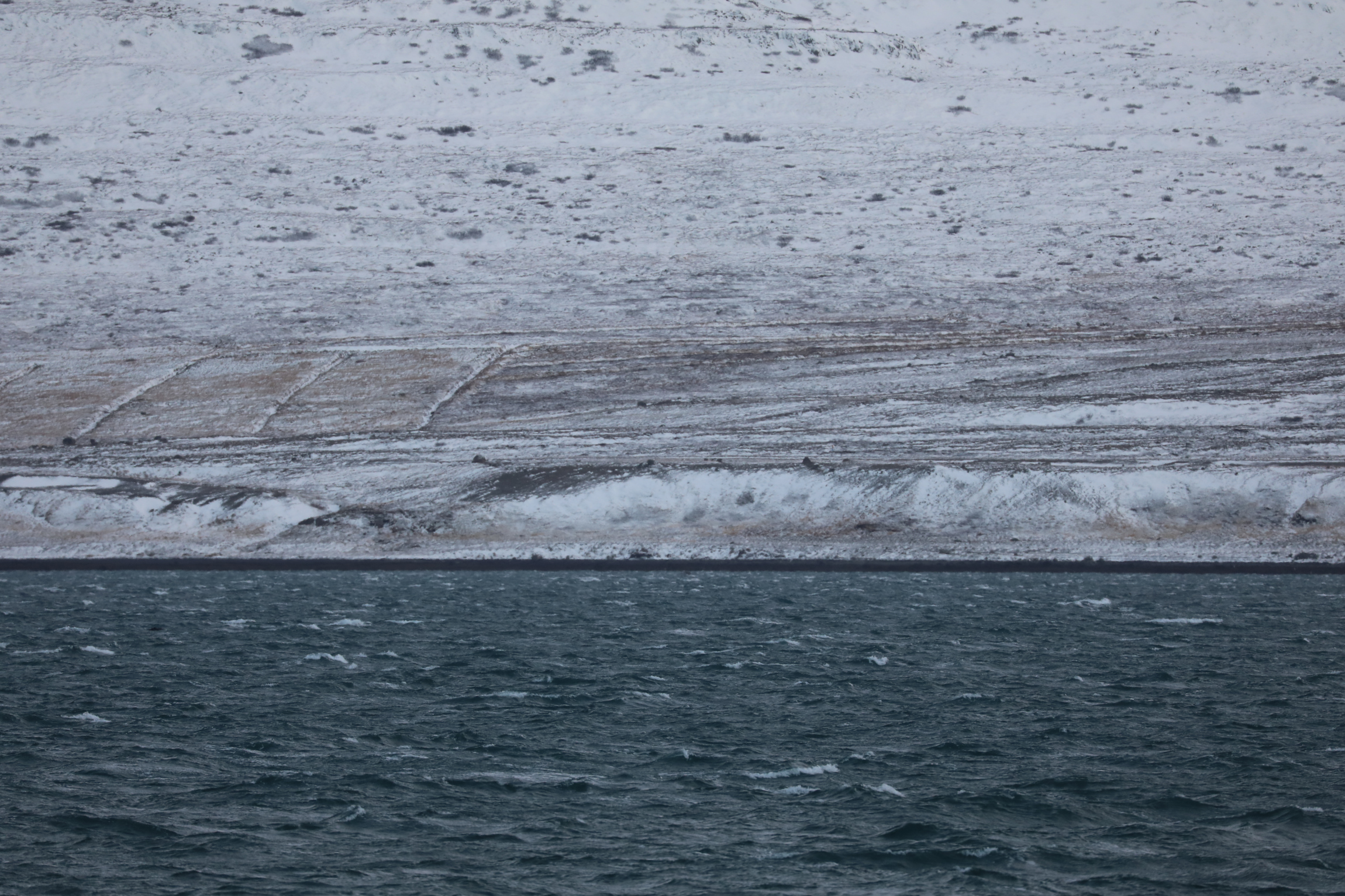
The second day, in particular, was remarkable. After photographing a few whales in Skötufjörður, we headed farther in again, close to Borgarey. By the end of November, nearly all the whales were farther out than Borgarey, but in early December they really pushed back in. As flying ice-mud pummelled our coats (which were shielding our precious camera), we watched whales cresting the waves, just a few hundred metres from shore. Naturally, we couldn’t collect as many IDs (although 20 is still a very good number!) but regulars such as Comb and Snowflake were interspersed with a few newcomers. Interestingly, we saw Osprey (an adopted whale) on both days but in very different parts of the fjord, showing how much they move around. Difficult conditions but critical winter data.
The highlight: at one point, two whales started breaching together! One was Shark, and the other remains a mystery. Humpbacks often breach more in stormy weather.
A note on ecosystem productivity
It’s no secret that whales eat a lot of food – an adult humpback can consume one ton of fish or krill per day. So with such big numbers in the fjord, they were clearly eating a lot of food (we think mostly krill). You might think that they would simply eat all the food and then leave – something that can spark controversial discussion in Iceland. But we’ve had large numbers of whales in the fjord since July (and consistent whales since April). To sustain these numbers, which increase in autumn, there might be huge amounts of food. And if whales simply ate all the food, they wouldn’t stay for many months and keep coming back year after year. Productive ecosystems that can provide for humans (and an amazing array of other marine predators) are not incompatible with thriving whale populations.
In fact, there’s a good chance that these humpback aggregations are increasing regional productivity. As they eat at depth and defecate at the surface, they are re-introducing nutrients into these icy waters. When spring arrives with longer days, these vital nutrients will help fuel vast phytoplankton blooms that form the basis for marine life. In other words, these whales could be fertilising these coastal waters in preparation for next year’s bloom, possibly leading to more fish and krill.
Anyway, that’s it from me and the most incredible time of my life. Thank you as always for supporting our work and our mission to protect whales. Have a wonderful festive period and we can’t wait to share more stories in 2026.
Support science for conservation
Our mission depends on your donations and advocacy. Here’s how you can uplift whale conservation efforts.
You can also follow us on social media and sign up to our newsletter. Thank you for supporting our mission.

Support science for conservation
Our mission depends on your donations and advocacy. Here’s how you can uplift whale conservation efforts.
You can also follow us on social media and sign up to our newsletter. Thank you for supporting our mission.