Whale Wise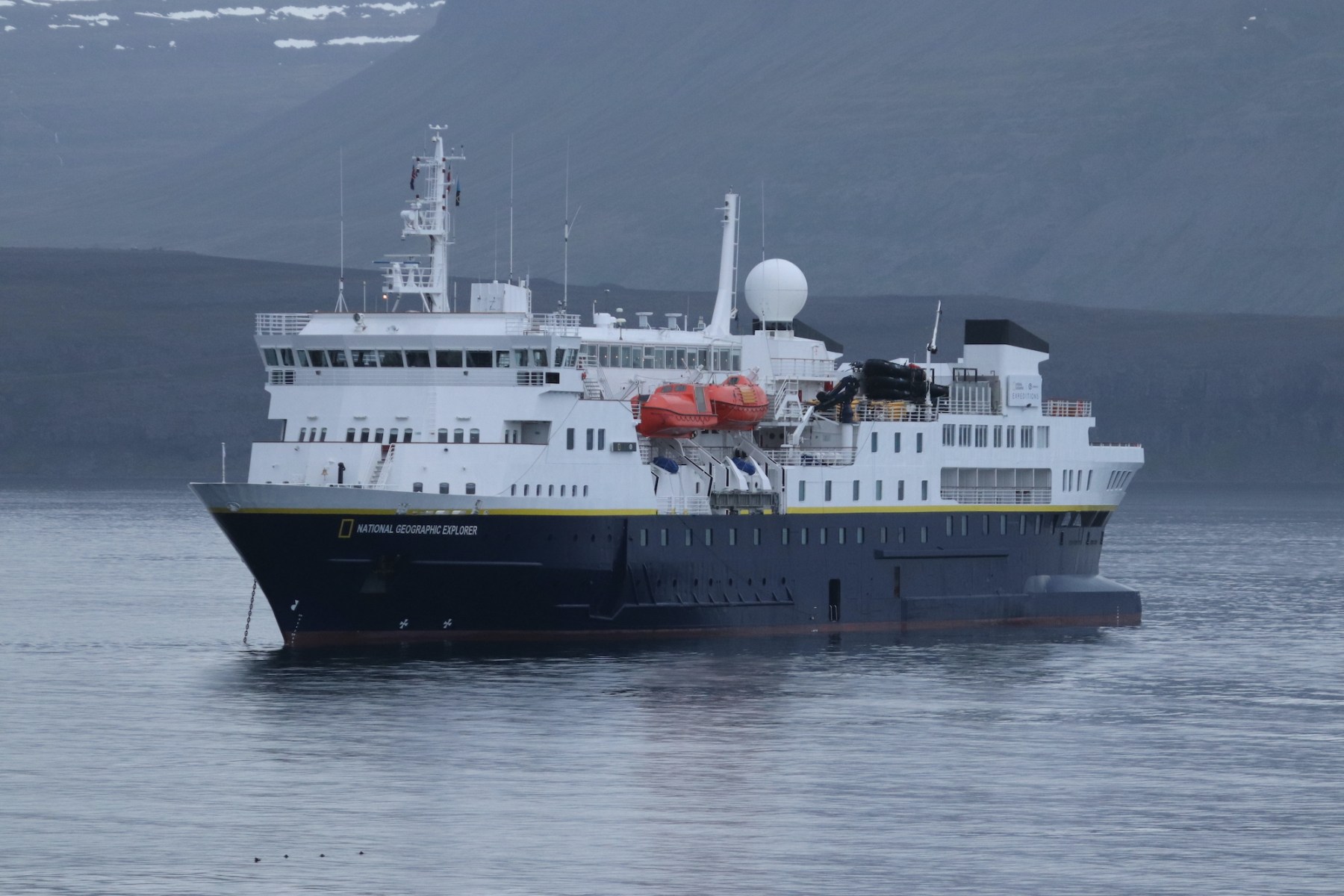
What does it really mean to be a researcher at sea?
by Benedek Regoczi
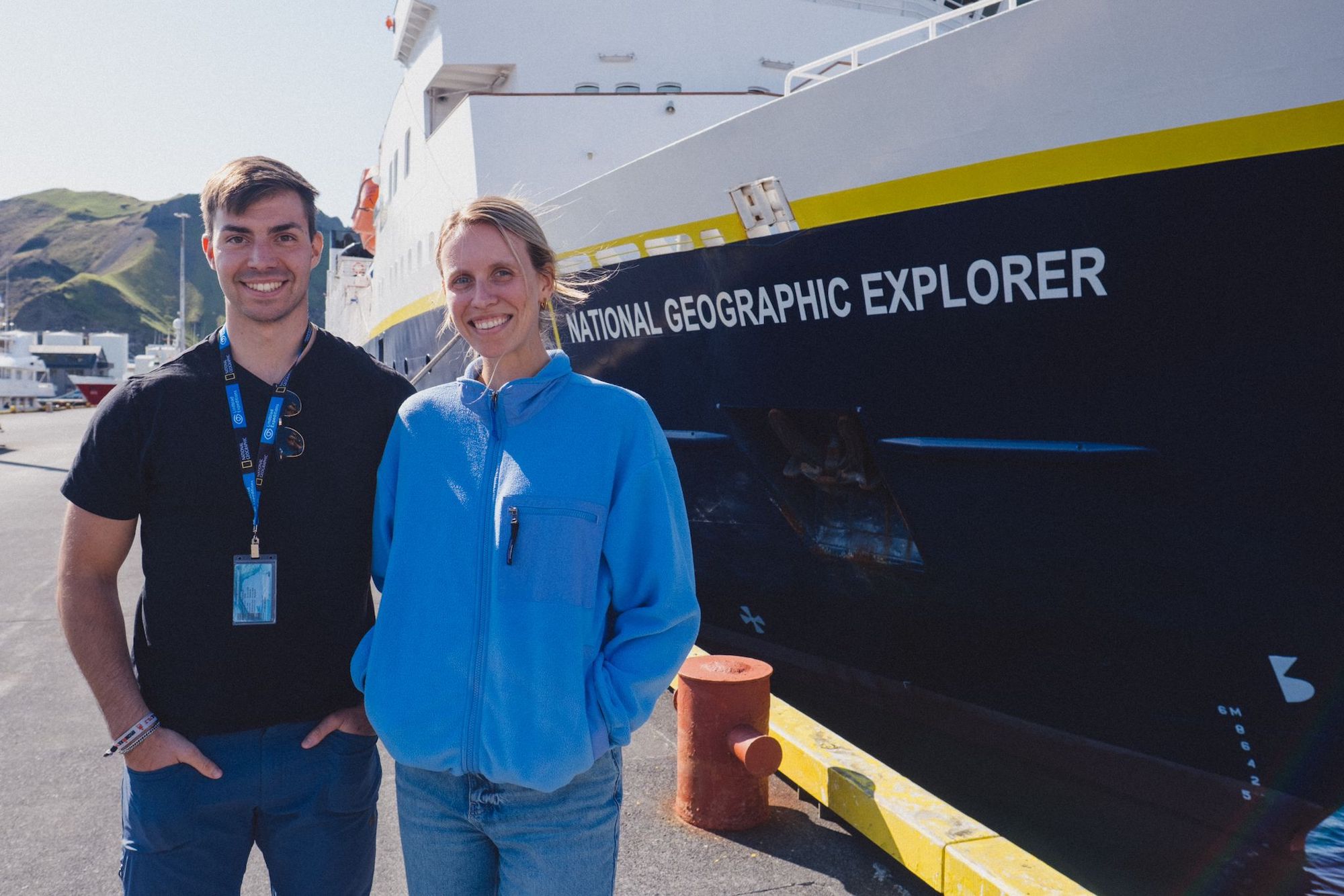
From June 24 to July 1, Katharine Hall and myself joined the National Geographic Explorer as visiting scientists on an 8-day expedition around Iceland, representing Whale Wise. During the voyage, we used the ship as an opportunistic platform for data collection, contributing to a larger research project focused on whales in northeast Iceland. Our focus during the voyage was the northeast, especially Finnafjörður, a remote and under-studied region where plans for a large port and mineral processing facility are moving forward. Until recently, this area lacked any baseline data on whale presence. With the data collected by Whale Wise over the past years, including on this trip, we are starting to build a clearer picture of how whales use this space.
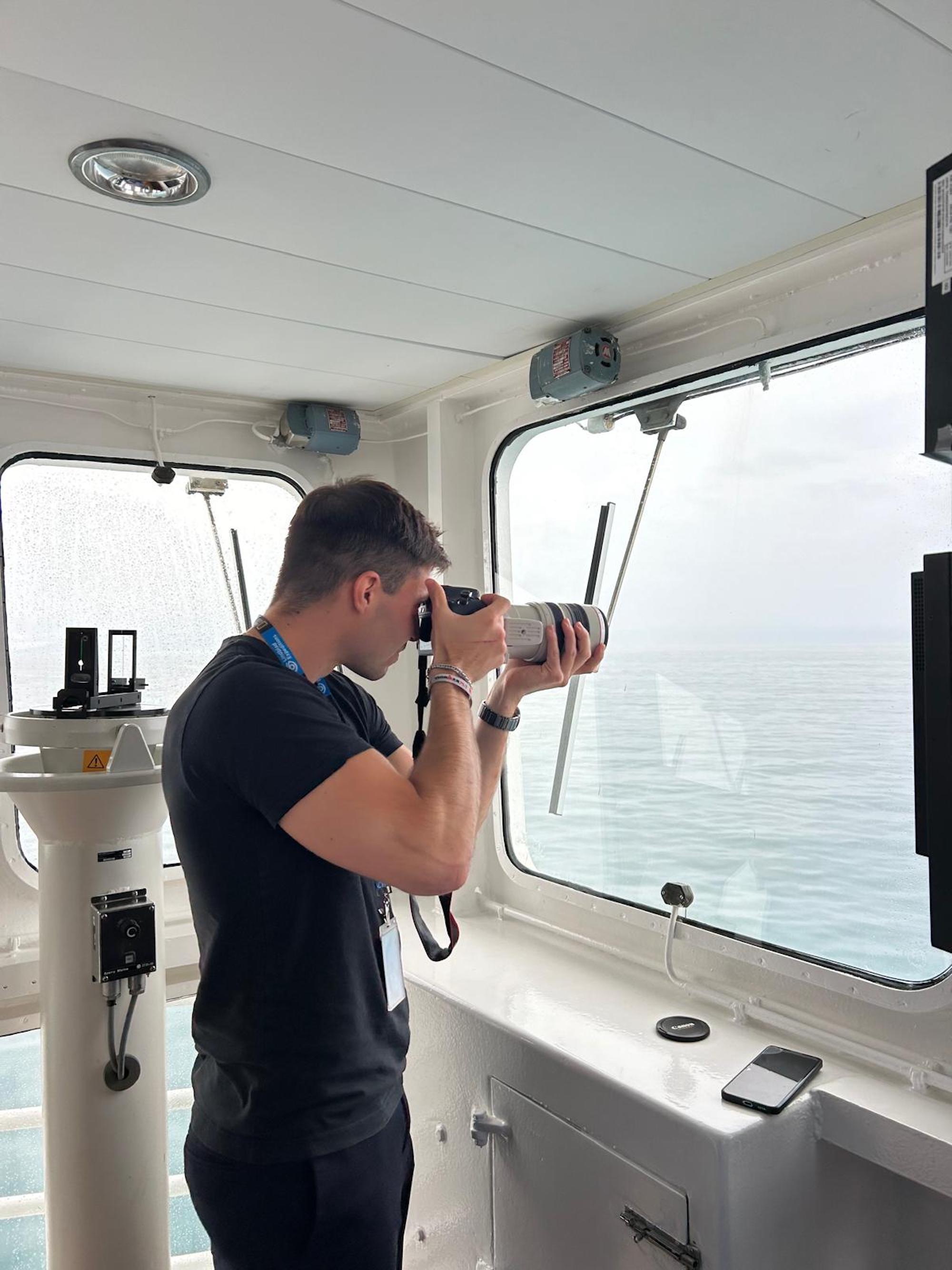
As with any fieldwork, nature writes the script. One night, we began our shift full of anticipation. We had just reached the northeast coast, the area we were most eager to survey. But as we started data collection at 23:05, thick fog began rolling in. Visibility dropped to 100 meters, and it stayed that way for hours. Until 04:13, we stood on the bridge, peering into the grey, searching for signs of life. Despite the conditions, we managed to spot five white-beaked dolphins and three humpback whales. This moment captured the reality of research at sea. It is not always glamorous or full of photo opportunities. It is about patience, persistence, and showing up, even when the horizon disappears.
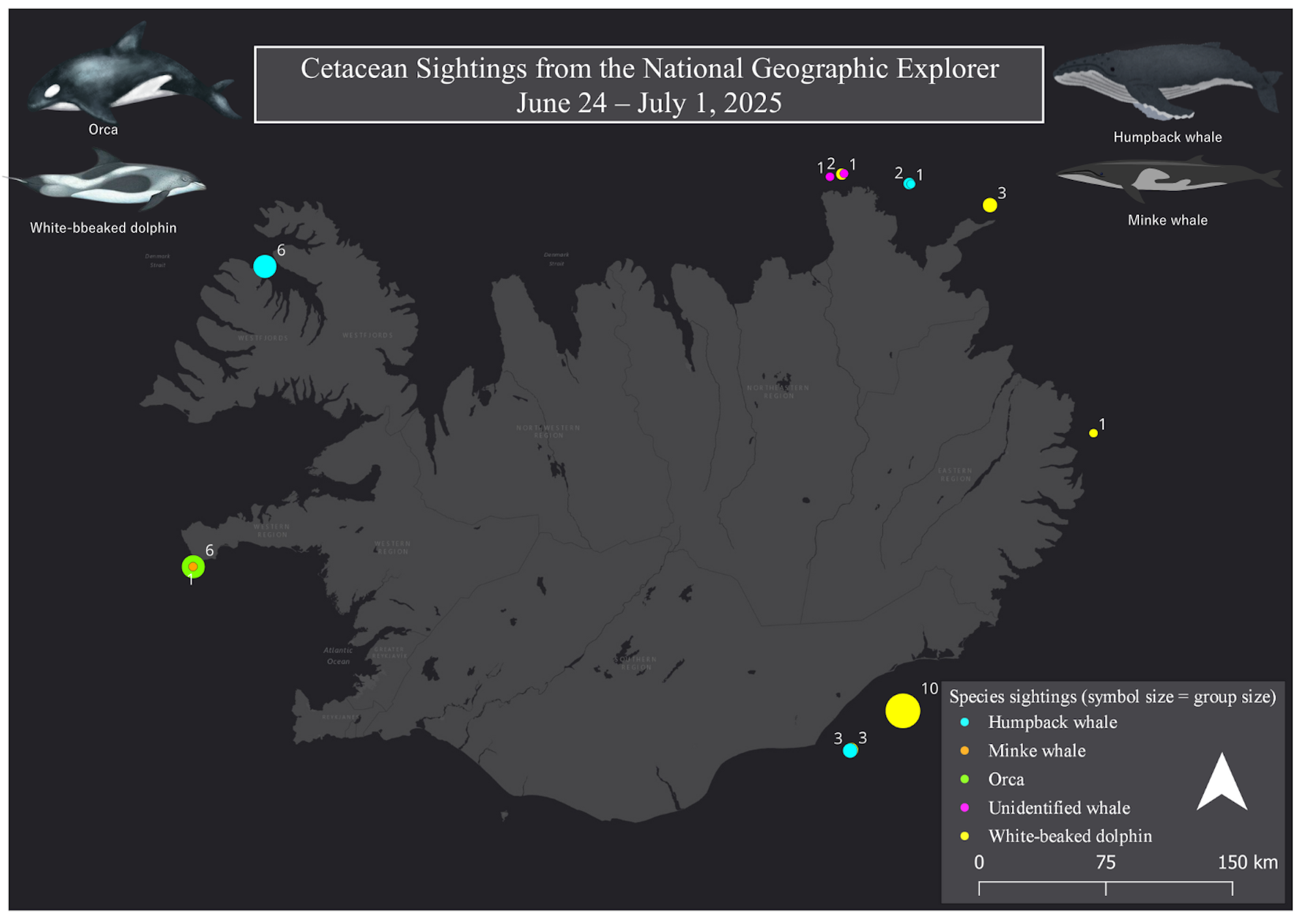
Over the course of the trip, we documented 40 cetacean sightings, including humpback whales, minke whales, white-beaked dolphins, and even a pod of killer whales. These observations are more than just sightings. They are a piece of a much larger puzzle: understanding where whales spend their time and how they might be affected by rapidly emerging anthropogenic activities.
Being a researcher at sea is not just about data. Katie and I also shared our work through presentations for the explorers onboard and led a playful, hands-on session for the kids. We talked about the whales of Iceland, the challenges they face, and why our research matters. Engaging others is a vital part of conservation. After all, people protect what they understand and love.
Along the way, we met members of the Icelandic Orca Project and Whale Wise president Rebecca Douglas, who joined us for part of the voyage. We also crossed paths with Ross Edgley and his team, who are attempting a world-first 1,000-mile swim around Iceland while collecting eDNA samples for marine research. Encounters like this remind us that we are part of a much bigger community, all working in different ways to protect the ocean. It reinforced the small but well-connected network of whale researchers in Iceland.
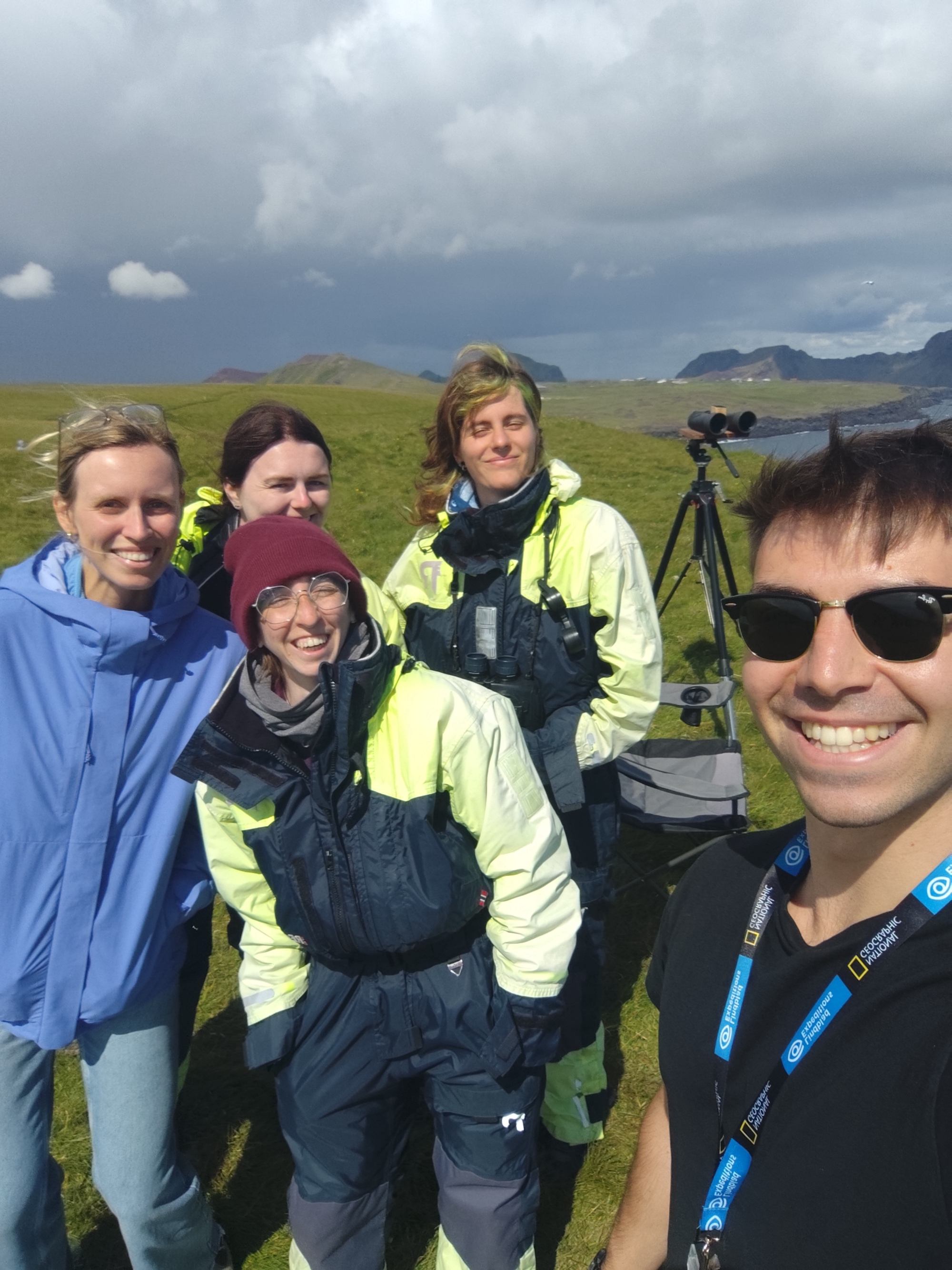
For me, being a researcher at sea means turning observation into understanding, understanding into connection, and connection into impact. It is foggy bridges at 4 AM. It is the joy of spotting dolphins through the mist. It is sharing science with curious strangers. And it is believing that even the smallest sightings can contribute to something bigger.