 Whale Wise
We’re proud and excited to share that Whale Wise has appointed a new Board of Trustees to guide the next part of our journey.
This expanded board brings together a powerful constellation of voices from science, storytelling, law, education and community. Each trustee brings not only professional expertise, but a deep personal commitment to the ocean and the species who inhabit it. Here’s a quick introduction to our vital new charity members, with more information on our trustees web page:
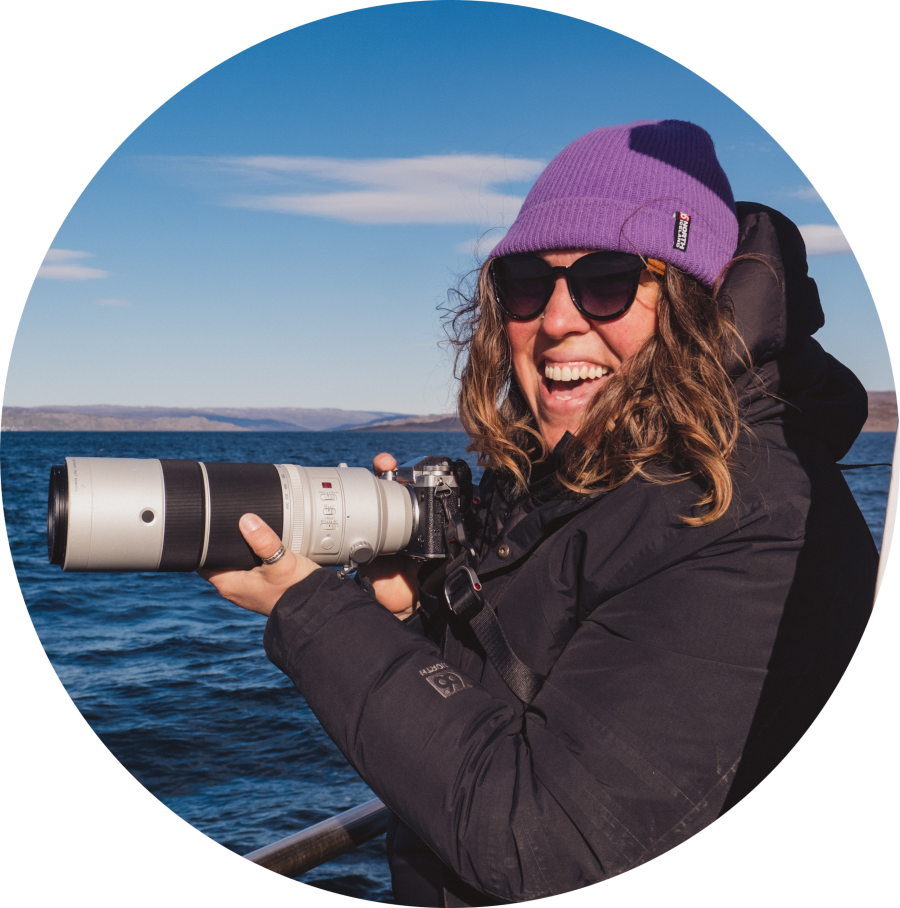
Rebecca Douglas (president): visual storyteller and ocean advocate, striving to rewild our connection to nature. Rebecca brings marketing and media expertise into this role, on top of incredible creativity, to enhance and uplift our mission.
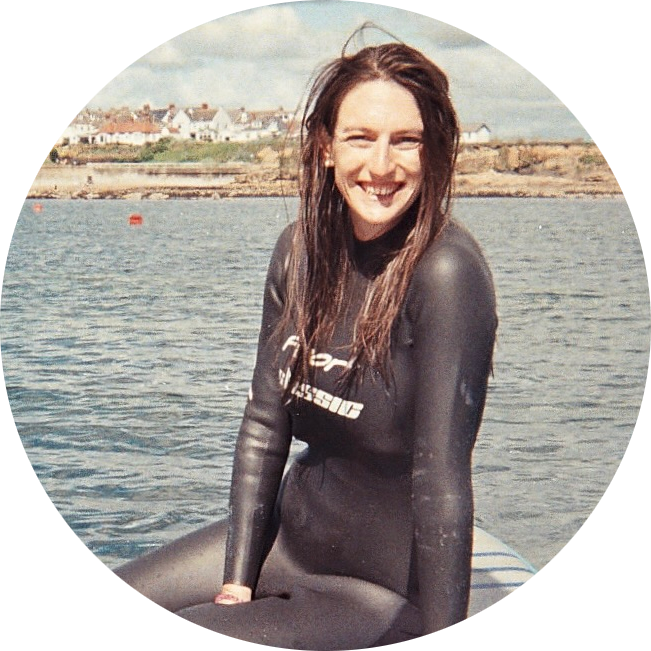
Helen Mitcheson (treasurer): a marine scientist and solicitor with nearly two decades of experience dedicated to environmental protection. Helen currently practises as an environmental lawyer, also co-directing the charity Cet Law.

Rebekka Þórsdóttir: an Icelandic whale-watching guide and certified captain. Rebekka has contributed to various marine conservation organisations in Iceland, bringing that experience and local knowledge into this new role.
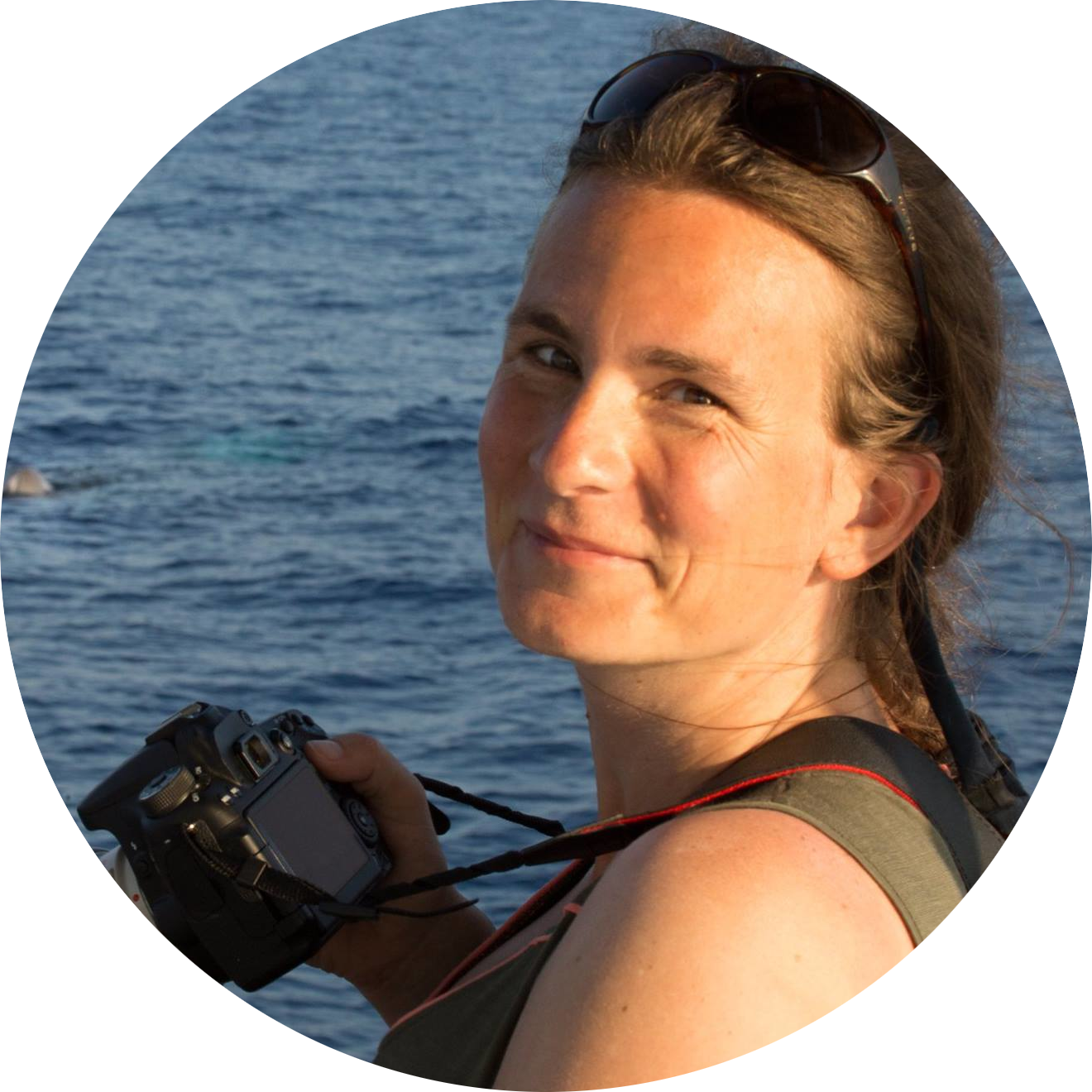
Denise Risch: a marine mammal ecologist interested in the study of underwater sounds and aquatic soundscapes. Denise’s research experience will be critical in guiding our scientific research for conservation purposes.

Abigail Robinson: a marine environmental policy and sustainability expert, with expertise in biosecurity. Abigail’s policy experience and professional connections will help ensure that our work is translated into conservation action.

Lizzie Daly: an ecologist, filmmaker and wildlife TV host with a lifelong interest in nature. Lizzie’s diverse expertise will enhance all aspects of our work, from fundraising to public outreach.

Laura Wells: a science communicator, environmentalist and model, passionate about educating people on the natural world. Combined with a background in marine biology and law, Laura’s experience will be key in shaping our mission and strategy.

Valentina DaCosta: an international environmental lawyer, PhD candidate, and passionate advocate for marine mammals. Valentina’s specialism of integrating scientific knowledge into legal practice will be vital in shaping our approach to informing policy for conservation purposes.
At a time when marine mammals are facing increasing threats — from entanglement and ocean noise to climate disruption and habitat loss — the role of Whale Wise has never felt more important. We’re excited to have their support as we step into the next part of our journey — a phase of growth grounded in collaboration, clarity and a shared dedication to meaningful, evidence-based impact.
This group will support our growing team and help steer our research, advocacy and public engagement work into a future shaped by integrity, inclusion and action.
To our current community, thank you for being part of our journey so far. To those just joining us, welcome. We’re so glad you’re here. Together, we’ll keep listening, learning and working to protect the lives of the whales we serve.
A statement from our new president, Rebecca Douglas
It’s an honour to step into the role of President of the Board of Trustees at Whale Wise.
This charity has been close to my heart for a long time. What began as a collaboration through my photography has grown into something far deeper, a shared commitment to protecting whales through research, advocacy and public engagement. Over the past few years, I’ve witnessed first-hand the depth of integrity, dedication and scientific excellence that defines the Whale Wise team. From advocating for an entangled whale caught in ghost gear, to researching the impacts of ship traffic on whale migration routes and pioneering, our work is grounded in rigorous research and driven by a deep respect for the ocean and the species who call it home.
Whale Wise is doing vital work in an increasingly busy ocean. Entanglement in fishing gear remains one of the leading threats to large whales. In Iceland, at least one in four humpbacks show signs of entanglement, a statistic that became devastatingly real when the team and I rallied to assess an entangled humpback whale named Bird. That moment became a turning point for me. A moment of hope that illuminated what’s possible when science, conservation and community come together. And that’s what Whale Wise does so well. It doesn’t just study whales, it works to advocate for and protect them.

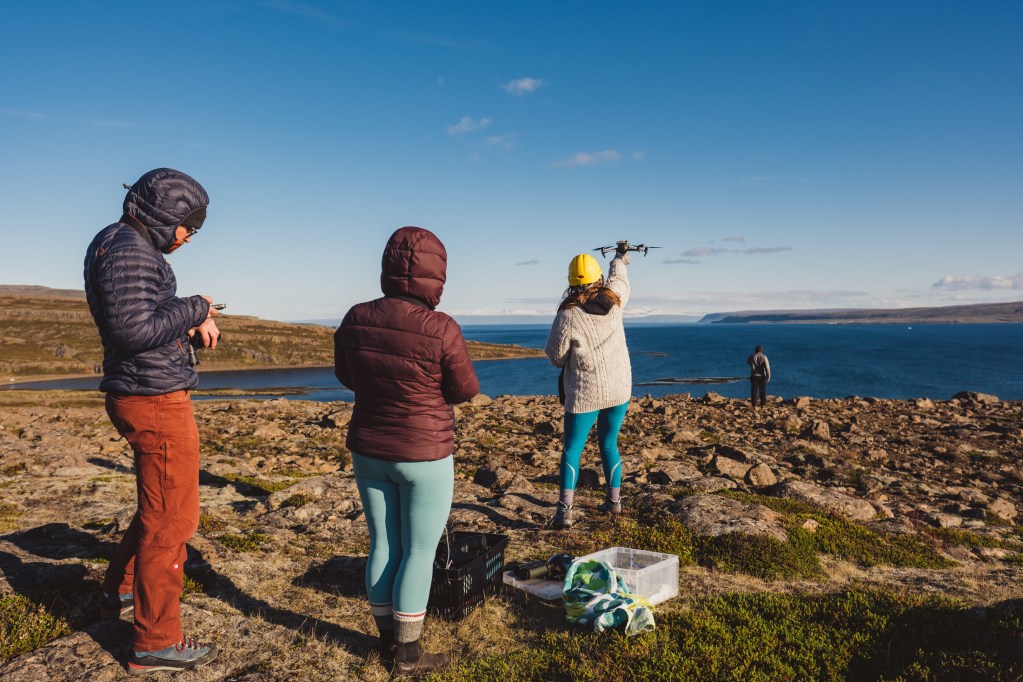
As President, I bring with me not only deep personal investment, but also over a decade of experience as a visual storyteller, educator and purpose-led business owner. With a background in geography and marine conservation and experience teaching in higher education, I’ve built a creative practice rooted in connection and impact. Through underwater, drone and environmental photography, I’ve collaborated with organisations who put people and planet first. Alongside image-making, I’ve supported campaigns, helped raise funding and built engagement strategies that connect audiences to urgent environmental stories, skills I now bring into service for Whale Wise as we continue to grow.
Our approach is simple and powerful. We study the interactions between whale populations and human activity, using both novel and trusted methods, from drones and hydrophones to citizen science. We work closely with academic partners and local communities to ensure our research reflects the lived reality of life at sea. We believe research is most powerful when shared, and so our work extends beyond academic publications into public engagement, through film festivals, social media, creative collaborations and hands-on involvement in our research. And we are committed to translating our findings into conservation action, engaging directly with industries and policymakers to inform more sustainable, respectful use of our oceans.
We are entering a pivotal time for marine conservation. With industrial activity accelerating in the Arctic and climate change transforming marine ecosystems, the work of organisations like Whale Wise has never been more essential. I’m proud to support this remarkable team of researchers, educators, advocates and storytellers, as we deepen our impact, expand our reach and continue to protect the lives of the whales we adore.
Thank you for being part of this journey with us.

By Jessica Ward
“Why on earth would you want to run a marathon? And in a whale suit? You’ve got to be crazy.” In the spirit of International Women’s day last weekend, let’s dive in (pardon the pun).
On the 24th August 2024, the 39th edition of the annual Reykjavík Marathon was held in Iceland’s capital city. First started in 1984 by two young entrepreneurs as a way to attract tourists to Iceland, it is safe to say that they achieved their goal: the marathon attracts runners from around the world. A country known for its natural wonder, hidden elves and wool sweaters; when I think of Iceland, I remember the whales, the community and the endless running routes.
It was during a Whale Wise team meeting back in 2023, a cold London night and the team were brain storming possible Whale Wise event ideas. I suggested a whale marathon event… after all, how hard could it be? Running 26.2 miles in a whale suit, raising awareness on the modern threats to whales and raising money for our charity. Since that night, I tried to picture what sort of whale suit I might wear, as I would run along the Thames, oblivious to what was in store. I wondered whether I could actually make this happen. I am normally of the mindset that we should say yes to wild opportunities… if I hadn’t I would not have joined the Whale Wise team in the first place, so I entered the marathon and soon after, created a 16 week training plan. This would be my fourth marathon after running firstly Edinburgh, then Los Angeles and London. Reykavík however, would be my first in a whale suit.
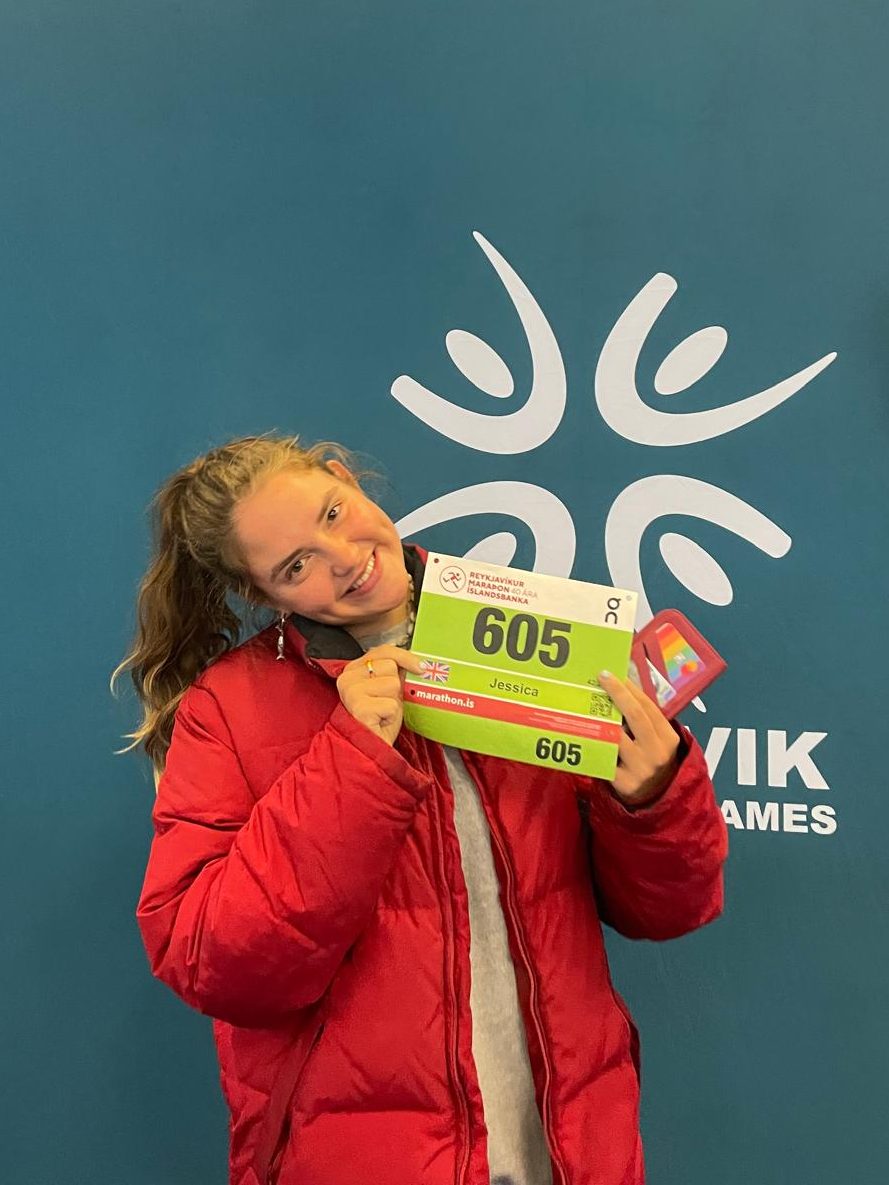
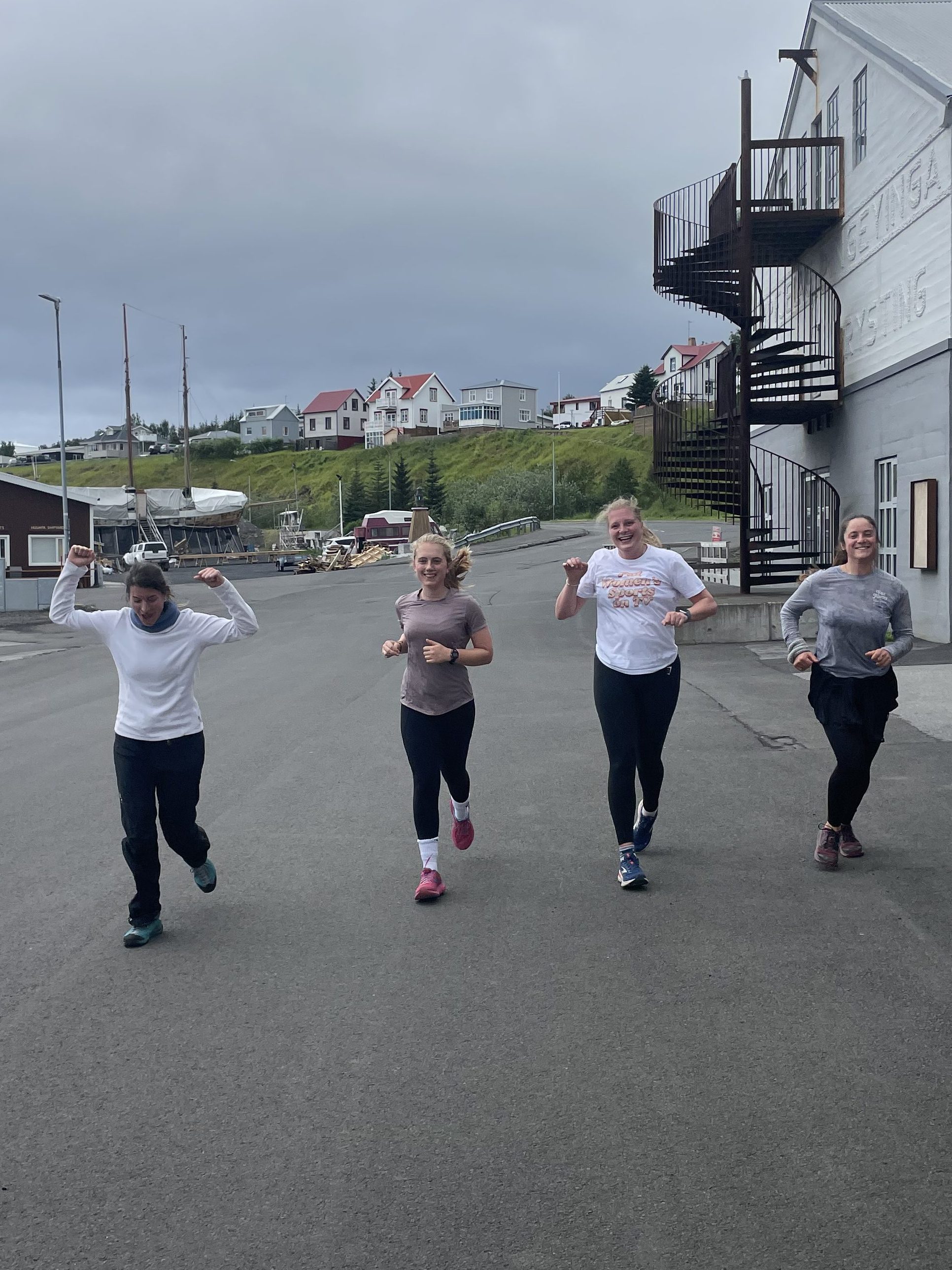
My training started whilst I was still at home in London, but most of my training took place in beautiful Húsavík: a town very close to my heart. Húsavík is the first place I ever lived in Iceland: it is where my career as a ‘whale girl’ began. I returned in May 2024 to work my second season as a whale watching guide, and to re-join the wholesome community of ocean lovers for my fourth consecutive year. For the next three months I spent my early mornings, late evenings and days off getting to know this gorgeous part of the world in a slightly different way than I had done so before. No longer returning home in the early hours from parties (this still did happen.. just a little less), skinny dipping in the hope that nobody else could see and sticking to my usual and comfortable 5k run routes up and around the lighthouse… I got to know each and every inch of the town and its surrounding areas, through long-distance running. I began to expertly juggle my work at sea with my running on land. Hopping off the boat, fueling with potatoes (Icelandic classics) and preparing for my next run. I would run along the coastline, following the whale watching boats that my friends were working on, imagining which humpback whales they were seeing. I would listen to podcasts, audiobooks and the same songs I would listen to to get drunk whilst I was at university. I had a lot of thinking time; something I really love about marathon training. Nights off work were spent cooking pasta, sipping wine and stretching. As well as teaching whale and ocean yoga, I set up a run club: each week we would re-define the phrase: run like a girl. We would continue to explore this beautiful corner of the world that we got to call our home away from home, chat about whales and sing and dance along the way. We ran through the town with rainbows for pride month, helped each other up hills and finished with a yoga class each week. The purest of happy moments; running free with no limits. I will always be grateful for this little run club, and for the community I was part of in Húsavík. I have met some truly inspirational women: too many to list.
Let me tell you now that marathon training in Iceland hits different, in the best possible way. Some runs I would finish close to midnight, the midnight sun carrying my legs those last few miles. Others, I would be shin deep in snow. I had to get used to running on a treadmill, on the days where running outside seemed near impossible. But any chance I could, I would run outside and normally, I would not regret it… and most certainly, not forget it. I got to know the lake on the way up to Húsavík mountain like the back of my hand, often joined by friends and my girlfriend, Hollie. Some days, friends would set up camp with a water station, picnics and music, and cheer me on as I would pass them each 5km lap – oh how the little things in life can bring the most joy! And the scenery in Iceland – breath-taking! I know because I ran it.

For anyone was has experienced Iceland, they will know that the weather changes faster than Paula Radcliffe (a marathon icon). On one particular weekend, I had the Sunday off, so my friend Carlota drove me 16 miles out of town. She asked me on the drive many times if I was sure that I wanted to do this. I reassured her. Waving goodbye to Carlota, I watched her drive away as I started my long run for that week. I figured that as opposed to running laps around the town, or up and around the mountain, this way I had only one choice: to get back home to Húsavík. On this run I kid you not, I faced more rain, hail and wind than the expression it’s raining cats and dogs. I was running slow, head down… it felt never ending. Just 7 miles in, I called Alberto (Carlota’s partner and my good friend). He drove to meet me on the side of the road, helped me undress and put on some fresh clothes in his car, warmed my hands and gave me waterproof gloves. Asking again and again if he could drive me home, I said no and continued my way up the windy and somewhat endless road. Every 20 minutes a truck or car would pass, many asking if they could take me anywhere. Albeit tempting, I would politely decline. Marathon training, like a lot of things, takes perseverance, and in return it has taught me so much. Looking back, this was the most difficult run, harder than the actual marathon in fact. I did make it home eventually… and spent the rest of the day warming up in the shower and baking a banana bread for Carlota and Alberto, as a thank you for their good friendship. I think as a result of this day, I have confirmed to them that I am in fact a little mad.
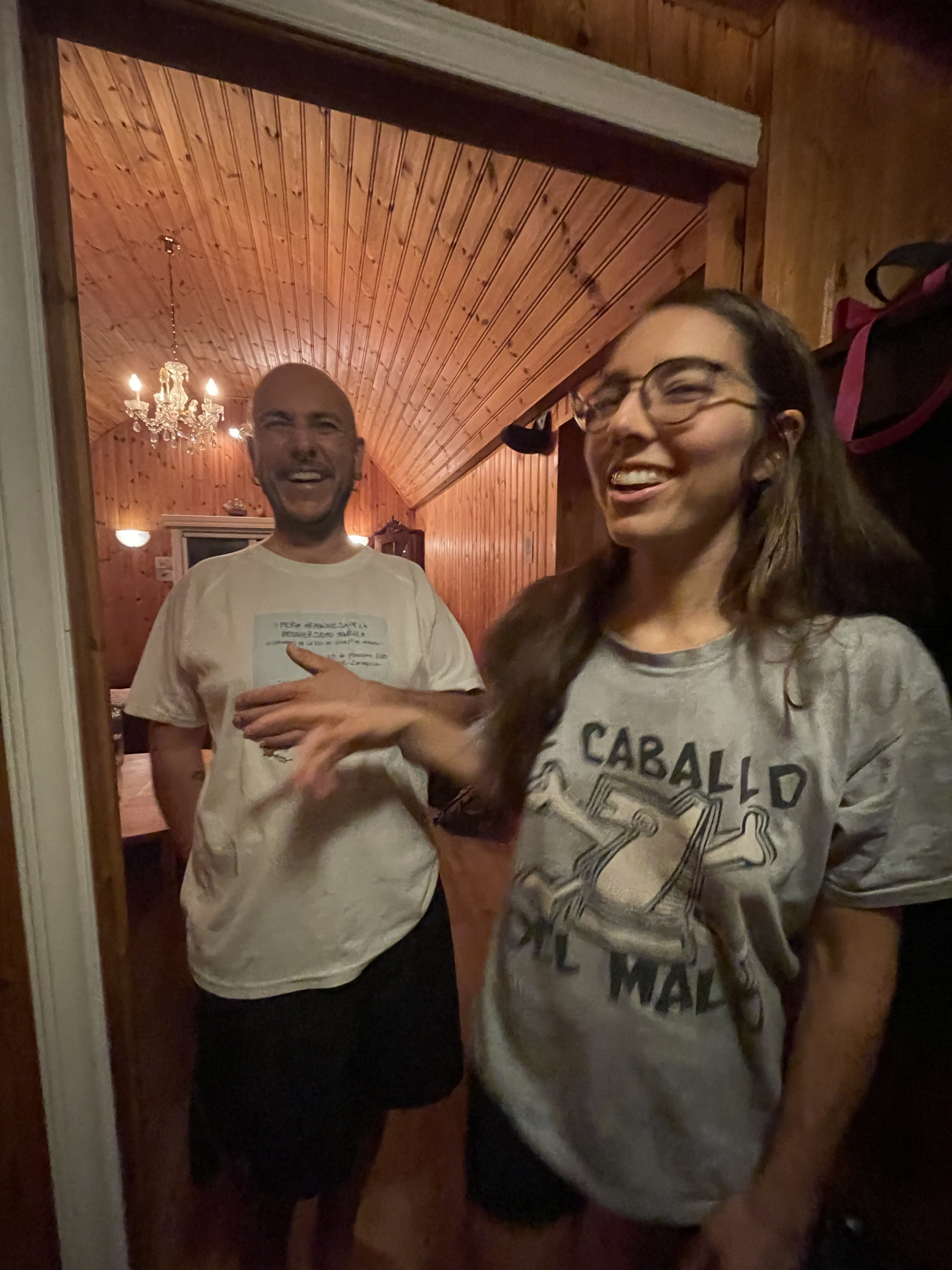
Of course it isn’t always easy and training doesn’t always go to plan. After this 16 miler, being exposed to the rawest and harshest of Iceland’s elements, I did pick up a toe injury, probably from running on freezing feet in my barefoot trainers. My next week’s long run, I ran out and back to Alberto’s serene guesthouse around 9 miles from town. I felt my toe the entire run, had to take a long break and reflect whilst eating the cereal that Alberto had prepared for his guests. I decided that after the run was finished, I would take two weeks off running. My point is that, we do what we can whilst dealing with the hurdles that come our way. That is what makes a marathoner! Slowly but surely, my training was tapering down. Suddenly my training plan had many crosses, as I would cross each day in a black marker pen (a ritual I suppose). I had completed my most difficult run, taken time out, finished my longest run of 20 miles… it was time to practice the real challenge: running in a whale suit. Alyssa lent me her orca suit, in which I wrote: JESSICA the whale. Meet us, don’t eat us. I only practiced short runs in the suit, just to know how it felt, where I needed to alter and also where on my body might need extra anti-chafe balm (vaseline works wonders). Anyone who runs long distance will know that chafing is a regular first hurdle. I needed to be prepared. I didn’t feel the need to complete all of my training in the suit, partly due to embarrassment at the idea of bumping into my passengers from my day at sea (Húsavík is a small town) and also, I trusted that the adrenaline and the crowds from race day would carry me through. I wasn’t wrong.
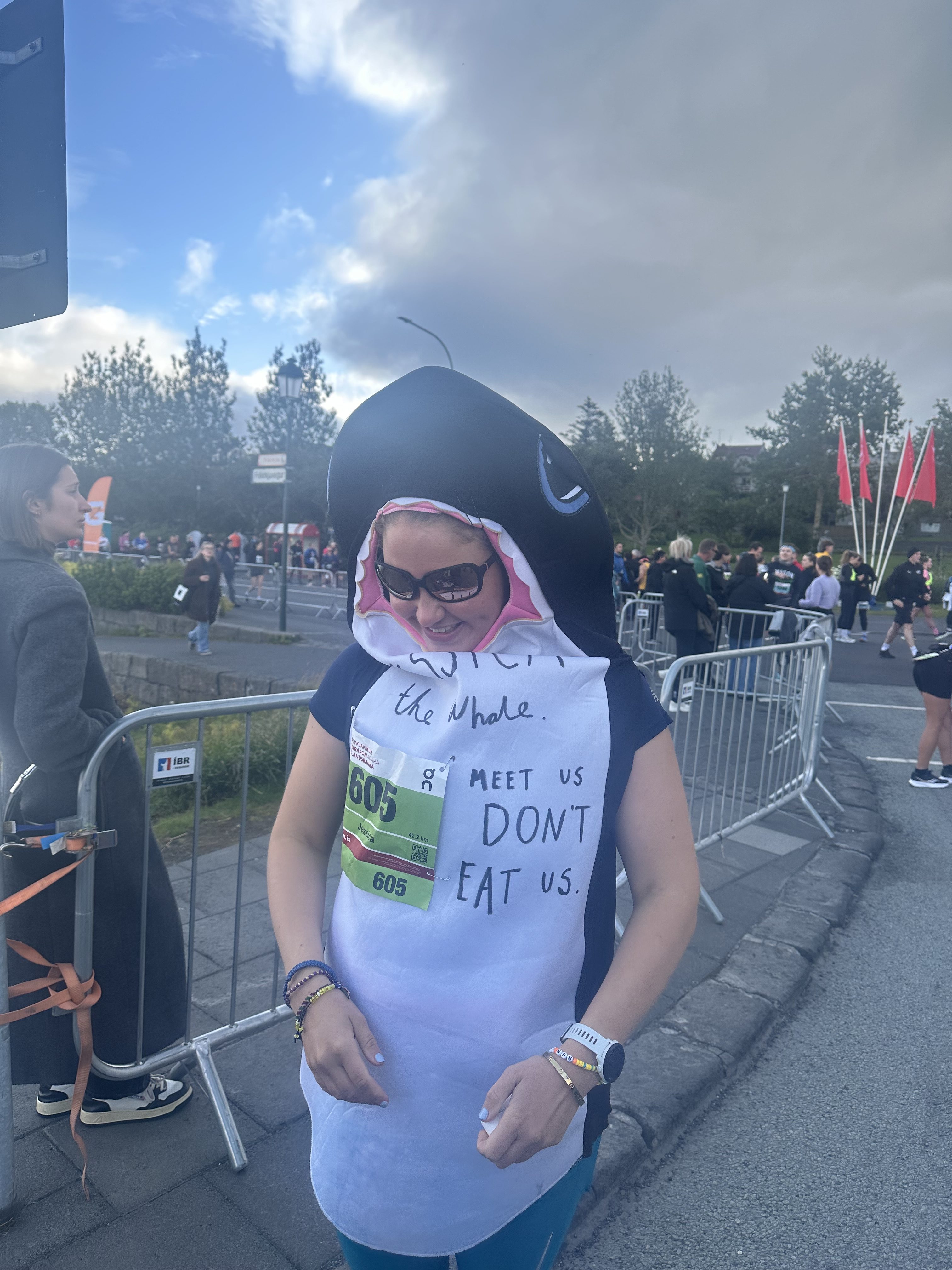
Race day was epic. The final little box in the marathon training schedule, just one last box to cross; at this point, the majority of the work is done so you’ve got to embrace it and enjoy it. I was joined by my sisters, Lara and Pippa, who flew from London, and my girlfriend Hollie, who since we met has been subjected to a lot of running chat. Tom, Flo and Rebekka from the team had woken up at 4am during their field season, to drive down to Reykjavík from the westfjords. My friend and colleague from the whale watching season, Paulina, who joined me on almost all of my long runs, was a photographer at the event too. I ran like a whale, stopping every 5 miles or so to greet and be motivated by my supporters, and also to pick up a threat! During the race, the Whale Wise team were filming and adding threats to my whale costume using safety pins. The vision was that my marathon journey would reflect the challenges that whales face today. The threats were: micro plastics, ship strike, climate change, whale hunting, noise pollution and entanglement by fishing nets. The latter threat is the basis of our current project: Scars from Above. The crowds were ecstatic and the runners along the way were truly fantastic. For the last 10 miles, I ran with three policemen, who were running in uniform. We spoke a little, but in effort to conserve our energy, we ran side by side, exchanging a few words of encouragement as we edged closer and closer to the finish line. These words (spoken and unspoken) helped carry me through and it was such a pleasure to celebrate the finish with them. “If you are losing faith in human nature, go out and watch a marathon.” – Katherine Switzer. I truly support this statement.
I finished the marathon in 4hours53minutes28seconds, raising a total of £1,282 for Whale Wise to continue researching the humpback whales in Iceland, and raising awareness of the threats that whales face today as a result of human action. Though it can be easy to lose faith in human nature, as we perhaps lose sight of mother nature, the backing and support I received from donors and all the people I mentioned in this blog, is a beautiful reminder of compassion: compassion for the whales and the work that we do. Thank you so much to my amazing marathon support crew. I could not have done it without you. Running like a whale is definitely a team effort!


Historically, marathon running was considered a man’s sport. No surprises there. In 1967, Kathrine Switzer famously disguised her gender and became the first woman in the Boston Marathon. Before 1984, there was no women’s marathon category in the Olympics. This same year, Joan Benoit Samuelson won the Olympic marathon and still races today at the age of 62. We are still in the first generation of women’s distance runners, which has included countless women since. May women continue to break into spaces that were once for men only: with passion, strength and integrity. May women continue to pioneer in long distance running. My best friend Annie and I ran our first marathon together whilst in our second year of university. Now an Officer in the British Army, Annie told me that when she was very new in her career in the military, she asked some of the guys what they thought of women as infantry officers. Their response: chicks can do anything. Now years on, she is thriving in her field and proudly says that she wants to be defined by her competence in the army, rather than as a woman in the army. I hope that this is where the world is moving to… yes, women have had to move mountains to get to the same places as men, and they still are. Whilst this deserves acknowledgment and respect, women should be defined by their extraordinary skills, whether in sport, science or any other pursuits, and by being experts in their fields, not only as women in their fields.

A particular pioneer in this sport was Rebecca Cheptegei, a 33-year-old marathon runner and mother from Uganda. She had just last year finished 44th in the marathon at the Paris Olympics; excelling in the sporting world and exercising her rights earned by those females who ran before her. Just a month later, Rebecca Cheptegei was set on fire and killed by her ex-boyfriend. Her legacy will live on as an inspiring woman and Olympian who also financially helped other runners in her community. The end of her story is a devastating reminder of the prominence of gender-based violence in our world. May she rest in peace and not be forgotten.
One foot in front of the other. We will strive for positive change. May women run safely, may whales swim safely.
Girls, there are no limits in what you can do. Yes, maybe we are crazy, but in the best possible way. Run like a girl.


As seen in this month’s newsletter.
Whale Photo-ID: A Rewarding Game of Patterns and Memories
By Johanna Behrisch
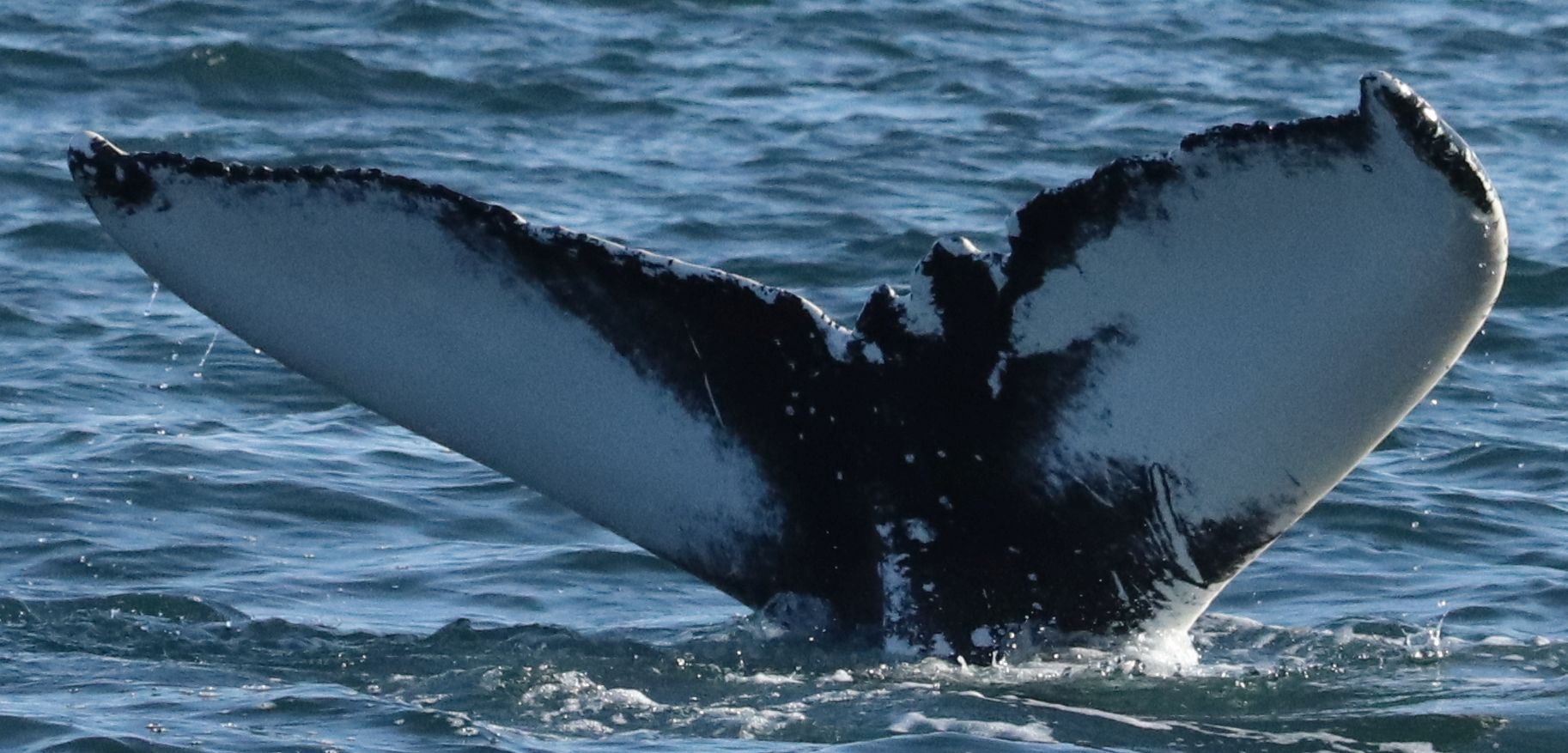
Have you ever wondered how researchers identify individual whales in the vastness of the ocean? It might sound impossible, but humpback whales have a unique feature that helps us: the black-and-white pattern on the underside of their flukes (tails). Much like human fingerprints, no two flukes are the same. This method, called photo-identification, allows us to track the lives and movements of these giant creatures.
Since 2018, our team has compiled a master catalog of 551 individual whales encountered during our field seasons. Every year, we add to this catalog by identifying whales observed during that season. Last year alone, we took images of 175 whales using drones, and every one of them needed to be matched against the master catalog to check if it was a familiar fluke or a new friend. Matching isn’t always straightforward. While the fluke’s underside is the most distinctive feature, it’s not always visible, especially when using drones for aerial photos. In those cases, we rely on other clues, like scars on the top of the fluke, the back of the whale, the black and white pattern on the pectoral fins or even the tiny hairy bumps (tubercles) on the whale’s head. Sometimes it’s easy to recognize a whale, but other times it can take hours to match just a couple of them.
So, why do I enjoy spending hours pouring over whale photos? For me, it’s more than a task, it’s a game. Matching patterns and remembering identities feels like playing an advanced memory game. Over time, you start to recognize certain whales by their scars or marks, and it’s thrilling to say, “Wait, I’ve seen this one before!” Sometimes my brain surprises me with how quickly it recalls tiny details from hundreds of whales. It’s addictive, like solving a puzzle, and its great mental exercise, especially after a day of staring at spreadsheets or juggling numbers. And yes, this hobby has crept into my personal life. I now find myself looking closely at whale flukes in nature documentaries or online photos, secretly hoping one of “our” whales will pop up. It hasn’t happened yet, but I’m holding out hope!
Incorporating photo-ID into my daily life has become a rewarding routine. I fit it in when I need a break from desk work, often pairing it with music, podcasts, or audiobooks. I often make myself a nice cup of coffee and prepare some snacks before diving into the photos. I’ve found that dedicating 2 to 3 hours every other day works best for me. After that, my brain starts to tire, and it gets harder to stay focused on matching patterns. But within that time frame, it’s an incredibly rewarding experience that balances work and relaxation. On weekends, it feels more like a hobby than work. Even when the images are tricky, it’s more like a fun brain workout that keeps me engaged without feeling too exhausting or intense. Long train rides are also perfect for this task, letting me pass the time while doing something meaningful.
Photo-ID work offers a unique connection to the lives of these gentle giants, allowing us to track their journeys and gain a deeper understanding of their world. It’s a challenging, rewarding, and surprisingly addictive process. Most importantly, it’s a valuable tool for studying humpback whales and contributing to their protection.
Now it’s your turn to give it a try! Below are images showing the underside and topside of four whale flukes. Examine their patterns closely and see if you can determine whether they belong to the same whale or different ones. (Hint: Pay attention to unique scars, markings, or shapes in the black-and-white patterns!)

Winter work from the Southern Hemisphere
By Jessica Ward
I tell a lie. For me, it is actually summer. I am currently far away from the Icelandic humpbacks, living in Australia for a new life chapter. Luckily for me, there is a lot of data processing and analysis to be done, from our three field seasons in the westfjords of Iceland on those cold and snowy days that seem somewhat impossible to remember now I face the endless Aussie sun. So I am never far from Whale Wise and from the whales after all; just how I like it.
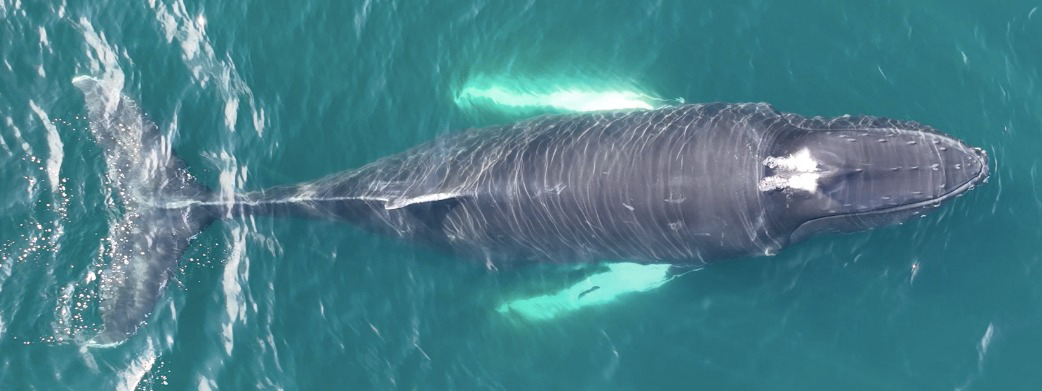
I am currently working through our 2024 data, simultaneously with Rebekka and Alyssa. As you can imagine, we have hours worth of footage filmed over four months and of over 100 whales. We want to extract raw data that we can use for scar analysis. So, this is where the man power comes in! We watch through each video, to extract aerial images: one whale per day per location. We split the humpback body into three segments, so for one day a whale might have one, two or three corresponding ‘screenshots’. This depends on many factors, for example the clarity of the image and the water, the position of the whale, the quality of filming etc… Segment one is the fluke, two is the middle and three is the head (see photos below for an example).

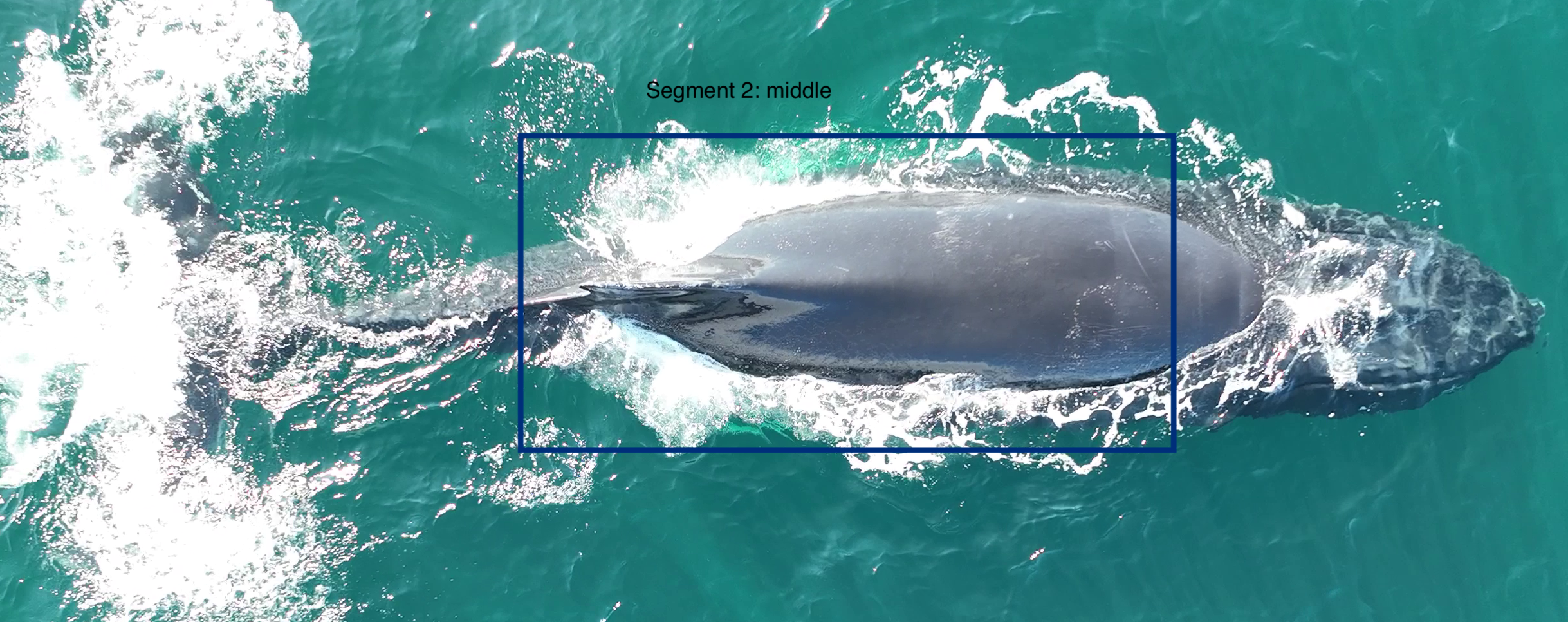
Last year I spent many rainy London nights doing this exact same process with the 2023 data. Now complete, this data is ready to be analysed: do the whales have scars? If so, do they have entanglement scars? We are then one step closer to matching these whale segments with body condition data and hopefully answering our research questions, predominantly: are whales that are more scarred from fishing equipment thinner and therefore less healthy?
This data processing can seem to be never-ending and also difficult to juggle amongst setting up a new life across the pond, starting new work and hobbies and making new connections. I make it work by working on this mammoth task a little a day until someday, it will be finished. I must admit I do look forward to my hour a day with the whales again. A slice of home; of memory and nostalgia, plus I get to continue to be a part of this awesome research project with this awesome team of passionate whale people, with the ultimate goal of making the oceans safer for the whales. I am grateful to be a part of it, albeit from afar.

*Johanna’s fluke matching answers: A=G B=H C=F D=E
Did you match correctly? If so, good, as there are plenty more to do!

Written by Tom Grove
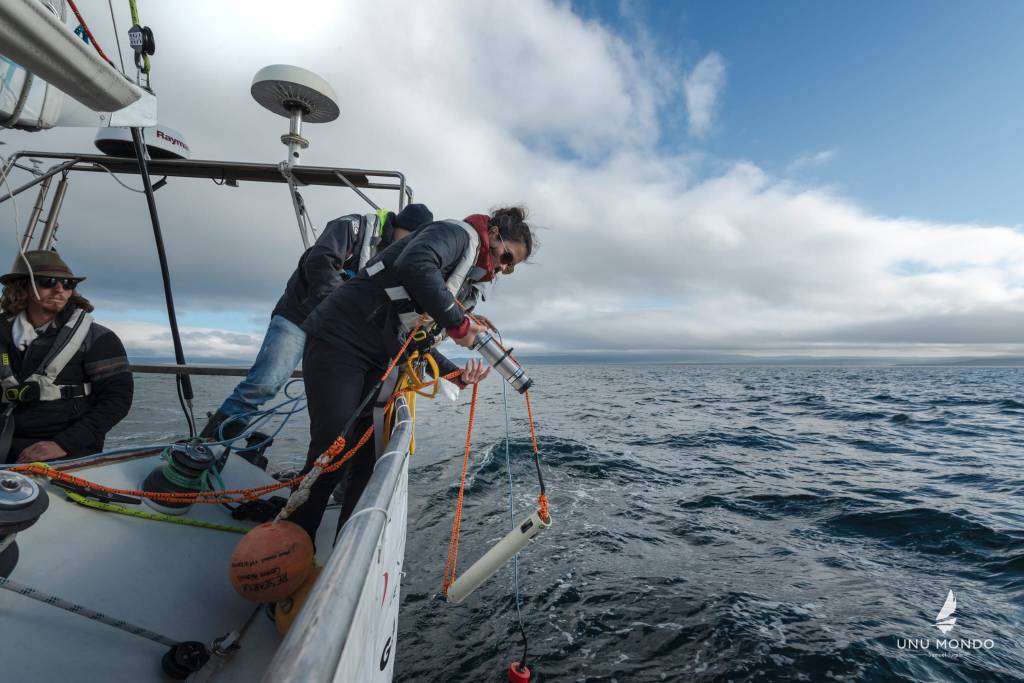
This January, Tom and Alyssa are spending a month in the remote northeast corner of Iceland, studying cetacean occurrence at the site of a potential future port construction. By looking for whales, dolphins and porpoises in winter, we aim to support acoustic evidence of cetacean occurrence and understand the seasonality of their presence. Ultimately, by putting these animals on the map (literally), we aim to protect them from the potential impacts of future development. However, winter fieldwork in Iceland certainly has its challenges!
Why Finnafjörður? Why winter?
The remote Northeast of Iceland has very low levels of coastal human activity, currently limited to local, small-scale fisheries. The area may be an important foraging ground for marine mammals such as humpback whales, although there has been very little scientific research. However, in the small fjord of Finnafjörður, a large port (6 km long, 1,200 hectares) is scheduled for construction to serve trans-Arctic shipping traffic and process raw mining materials from Greenland; both activities are forecast to increase due to melting Arctic ice. These operations present considerable threats to whale and dolphin populations, including noise pollution, vessel collision, and physical habitat loss. Therefore, there is a critical need to determine the presence and distribution of cetaceans in the area to mitigate potential disturbance. Such measures would also help to safeguard fishing grounds for local communities.
Therefore, we set up the Whales and Sounds of Finnafjörður project to collect essential baseline data on cetacean occurrence. To date, we have deployed a hydrophone (underwater sound recorder) for one year at the mouth of the fjord in 2021-22. Research Officer Amelie analysed these sound recordings (published in the Marine Pollution Bulletin) and discovered the year-round occurrence of marine mammals, including the near-constant singing of humpback whales between mid-December and mid-February. Singing is a critical social and mating activity for this species, which will likely be impacted by construction and shipping traffic.
These acoustic recordings are critical but should be supported by visual evidence to confirm whale presence, species and distribution. Therefore, this winter Alyssa and I are performing a month of land-based visual surveys, paired with a second hydrophone deployment in Finnafjörður (deployed in July 2024).
Settling into Icelandic winter
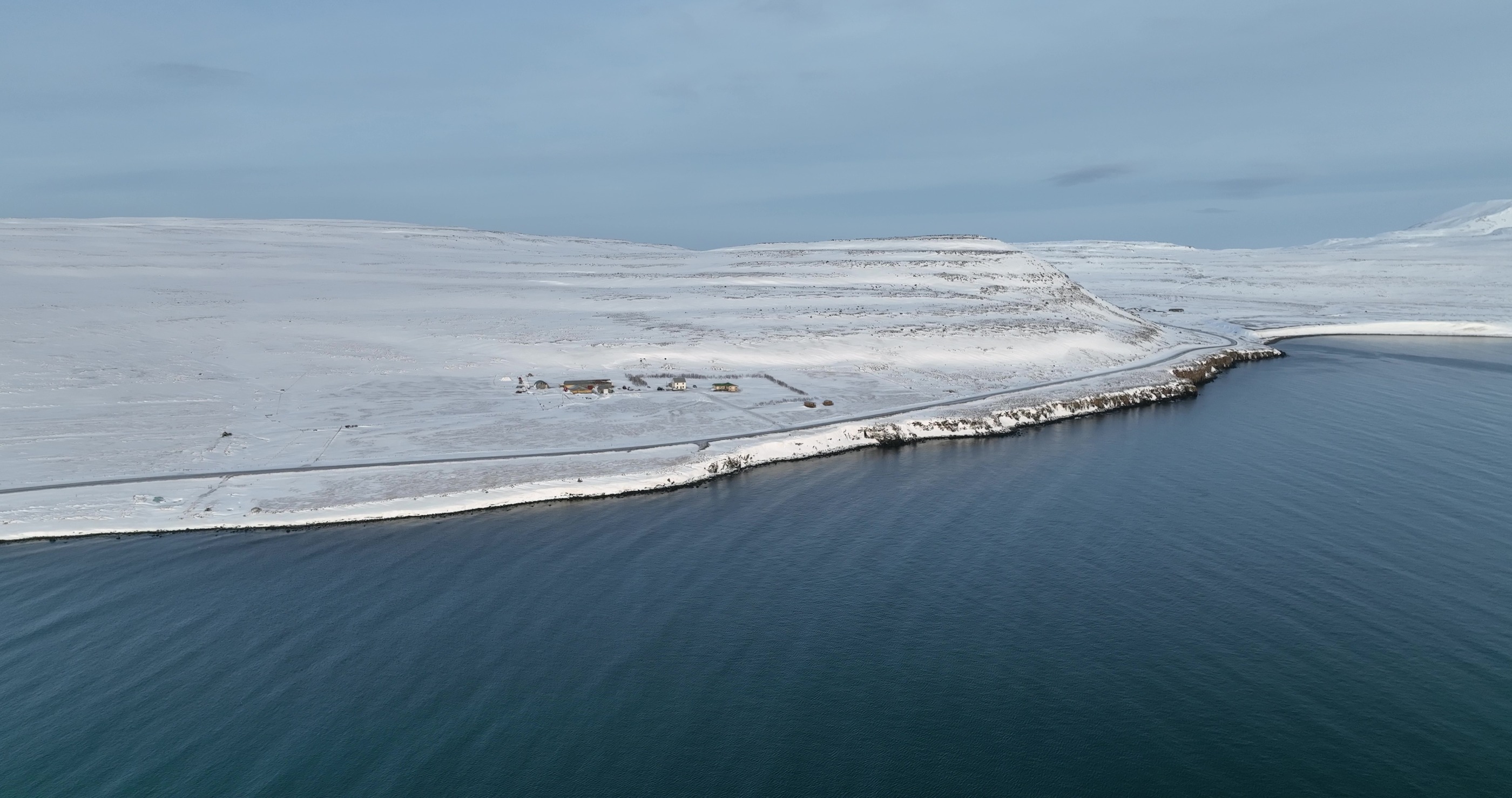
Alyssa and I arrived in Reykjavík (southwest Iceland) on January 16th and the next day started our journey to Finnafjörður on the opposite side of the country (northeast). On the way we became acquainted with slippery, snowy roads. Iceland in winter is stunningly beautiful.
In Finnafjörður, we’re staying with one of the only residents in the area, Reimar Sigurjónsson (who, by the way, has two amazing summer holiday cottages!). In a small farmhouse with Reimar and two gorgeous dogs – Lára and Stígur – we’ve settled into a routine led by the waxing winter days. Sunrise is about 10:30 am and sunset is at 3:30 pm so you need to make the most of any daylight you have! Most days have been too rough to watch whales but we go outside every day, usually for a snowy walk in gale-force winds with the dogs. Either side of that, cosy computer work is the norm.
This is our first winter in Iceland and we’re blown away by the raw, lonely beauty of the place. The rivers of snow that blow past you as make your way through four-foot drifts. The white-on-grey-on-white of the monochrome landscape. The toothy waves gnashing at the frozen shore, with bobbing eiders and soaring fulmars as witness. The imposing mountain of Gunnarfjall as a constant companion in the otherwise-open landscape. I’m currently writing this under the psychedelic watch of polar stratospheric clouds. We feel very fortunate to spend time here.


Whales amongst the waves
This is a very beautiful place but we’re here to focus on the whales. Whenever conditions allow, we hike up the hill behind the farmstead, set up our equipment and look for whales. Trekking up the icy slopes with a large theodolite (instrument to determine whale location) is challenging but feasible, and the views are a helpful distraction.
While we have attempted to scan the seas on numerous occasions, conditions were only optimal on two days (calm seas and good visibility). Amazingly, we’ve recorded sightings on both occasions! I use the term ‘amazingly’ because we really didn’t know what we would see coming here – from a scientific perspective, it’s a truly unexplored place in winter.
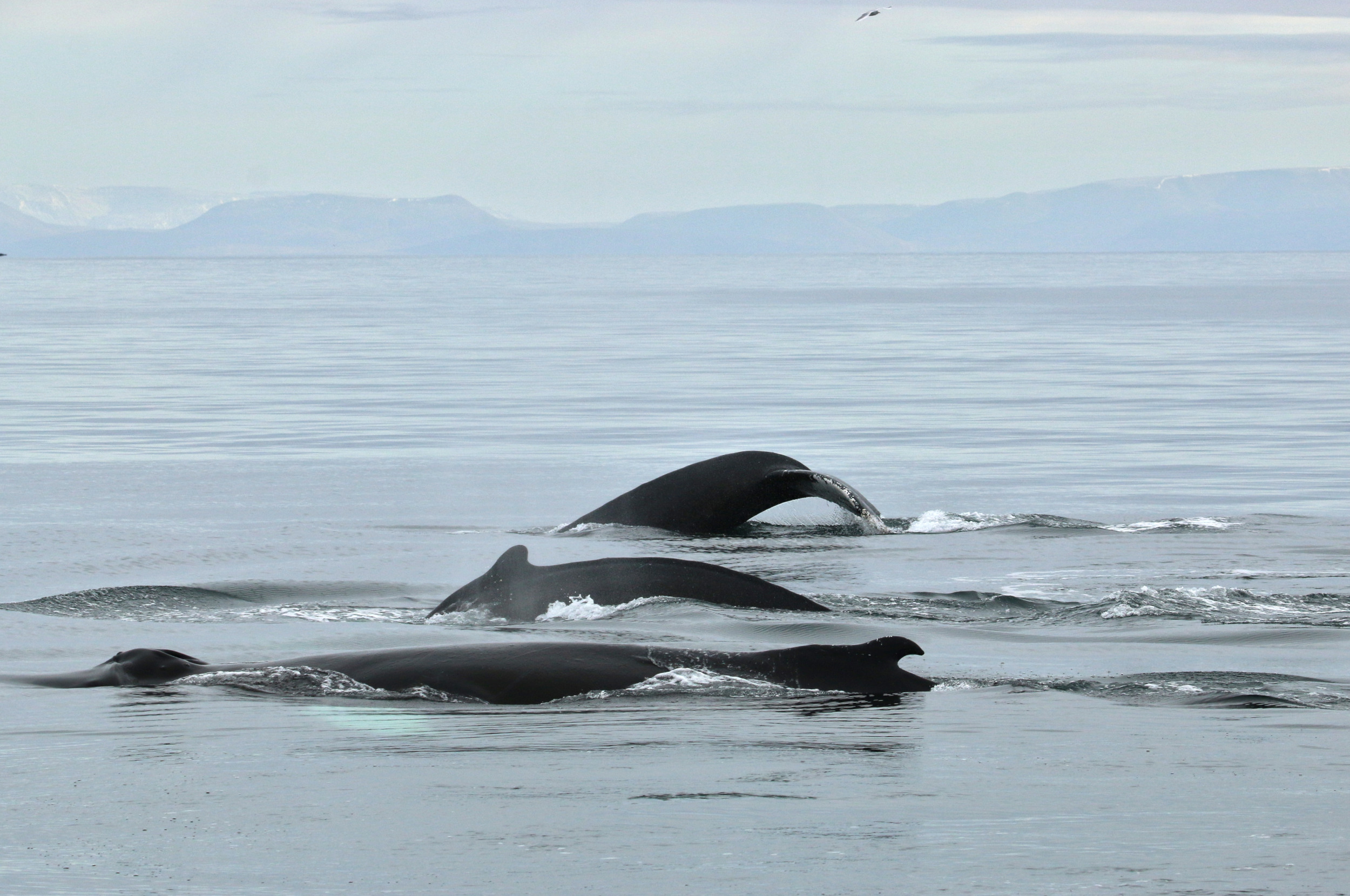
On the first day, Tom spotted three blows in the far distance and a few minutes of observations confirmed that they were humpback whales! We are most interested in this species due to their acoustic presence in winter 2021/22, and we’re very curious to see whether the current hydrophone deployment picks up singing at this time. We were ecstatic.
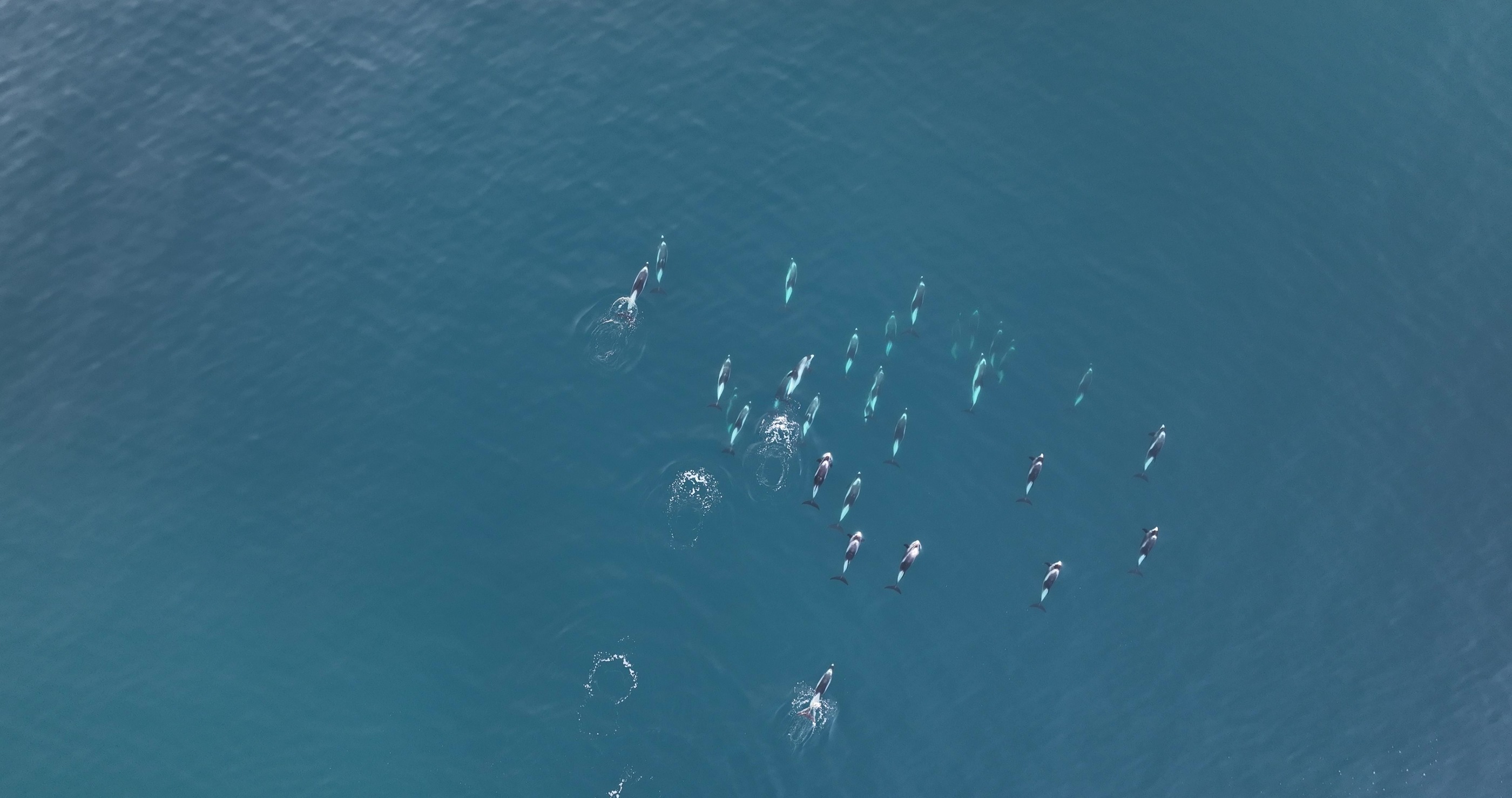
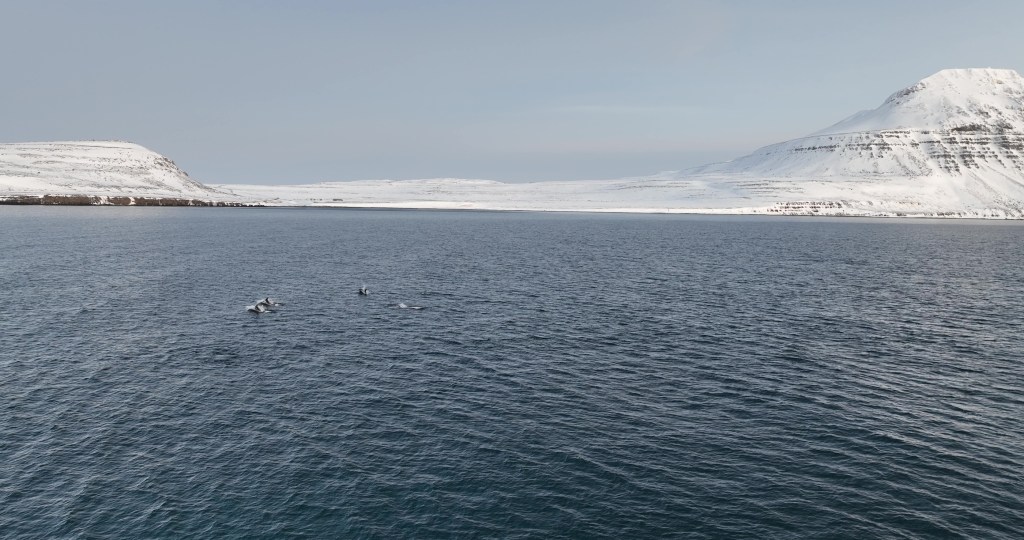
On the second day, we had been watching for a while when Alyssa spotted a pod of white-beaked dolphins charging into the fjord! After we finished our visual survey, we launched the drone to confirm the presence of about 50 adults. Interestingly, no young (small) animals seemed to be present. They spend the next three glorious hours moving back and forth within the fjord, sometimes in bursts of speed, other times milling around on social circles. We don’t know why they were here, but their move into the fjord seemed very deliberate. It’s sobering to think how the port construction would change this habitat.
What’s in store?
As I write this on February 1st, we are planning to spend 1-2 more weeks at Finnafjörður before heading to the Westfjords. Amongst forecast storms, our fingers are crossed for a few more calm days and even more cetacean sightings. After this field season, the next step is to pick up toe hydrophone in July and compare our visual sightings with acoustic evidence of cetacean presence. Stay tuned for results!

By Tom Grove
The festive period of December–January is a time of celebration and togetherness for many human communities, but what does this time mean for the cetaceans of Iceland and the wider north Atlantic? For them, it’s a time of great movement, foraging, gathering, mating, birthing and – as always – surviving an increasingly human ocean. With a healthy dose of poetic license, here are the festive stories for some of our cetacean friends.
Humpback whale
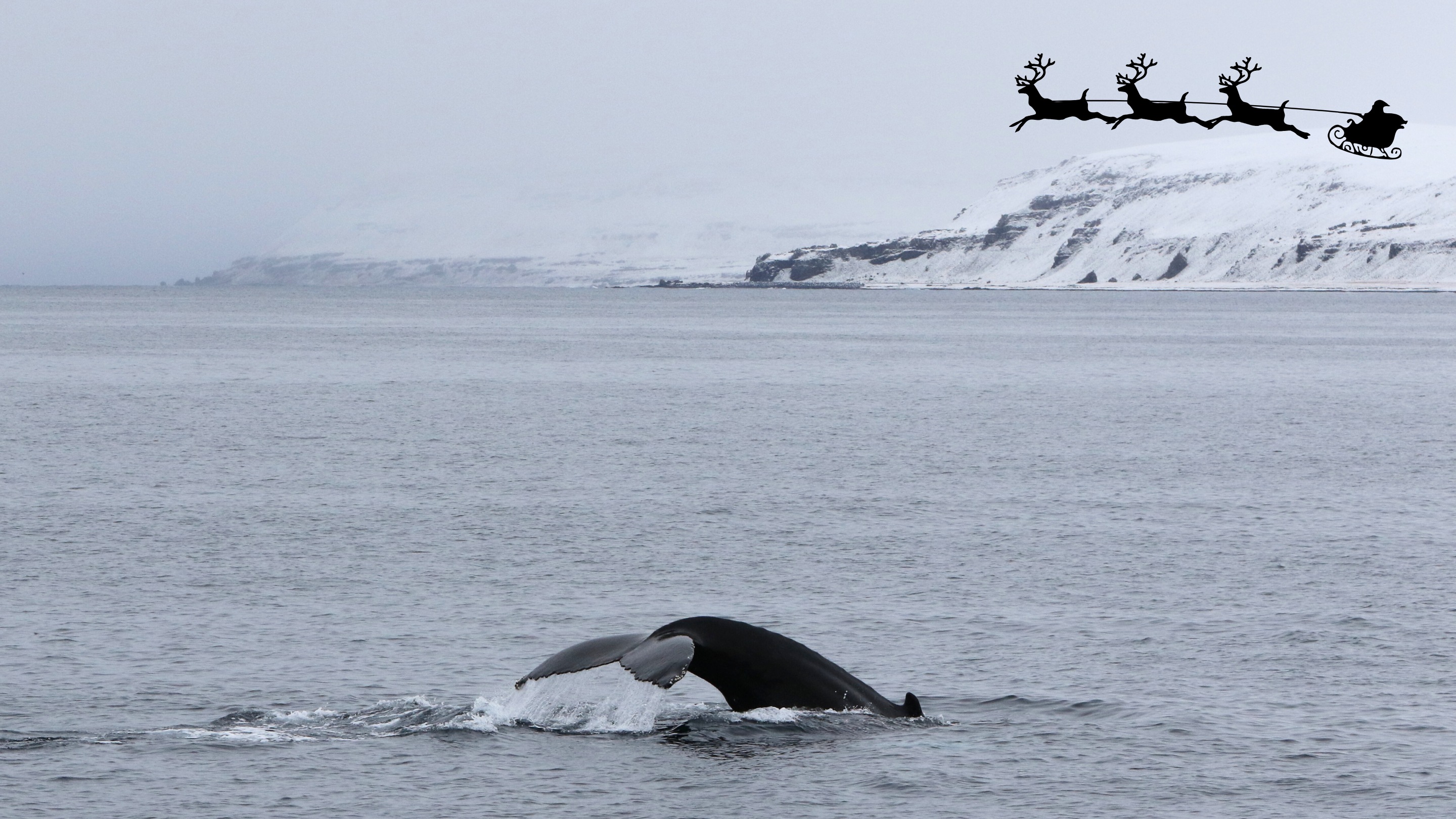
As an Icelandic humpback, I could take one of two very different paths in December. Last year, I stayed in Iceland for the entire winter, feeding in the frigid waters which are still surprisingly full of fish. However, this year I will be leaving my icy foraging ground and swim south to the warm, clear waters of the Caribbean. It’s a long migration – thousands of miles – but one I have made before. In fact, I travelled from the island of Guadeloupe to Iceland when I was just a few months old. There’s little krill or small fish to eat down south, but that doesn’t bother me much; I’ve built up enough energy reserves during the summer.
In these tropical seas, my extroverted side comes out to play – this is a time for socialising and even mating. As a female humpback, when I’m older this is also the time I will give birth. As the breeding season progresses, the waters become alive with the ghostly carols of male humpbacks, echoing hundreds of miles through the Caribbean Sea. As I migrate, these melodies draw me into the congregation, although it’s increasingly difficult to hear them as vessel noise increases year-on-year. Some of us even get hit by these huge, fast ships – I’m one of the lucky ones.
White-beaked dolphin
Unlike many humpbacks, the winter waters of Iceland are my permanent home – ♪ the cold never bothered me anyway ♪. Over the festive period, my pod and I stay busy hunting for fish and squid. As the auroras dance across the sky, my dark winter days are illuminated by the exuberant company of my podmates. We’re always on the move, leaping through the waves and playing together – every day is a reason to celebrate. If we come across a whale, we’ll ride the pressure wave generated by its huge head – and if it’s a humpback, we’ll tease it for fun, daring each other to jump on its head!
My pod is everything to me and communication is constant, with clicks and whistles keeping us together. Scientists might not understand all the details of our language, but every call carries meaning, allowing us to navigate and survive in the dark shelf waters of Iceland.

Sperm whale
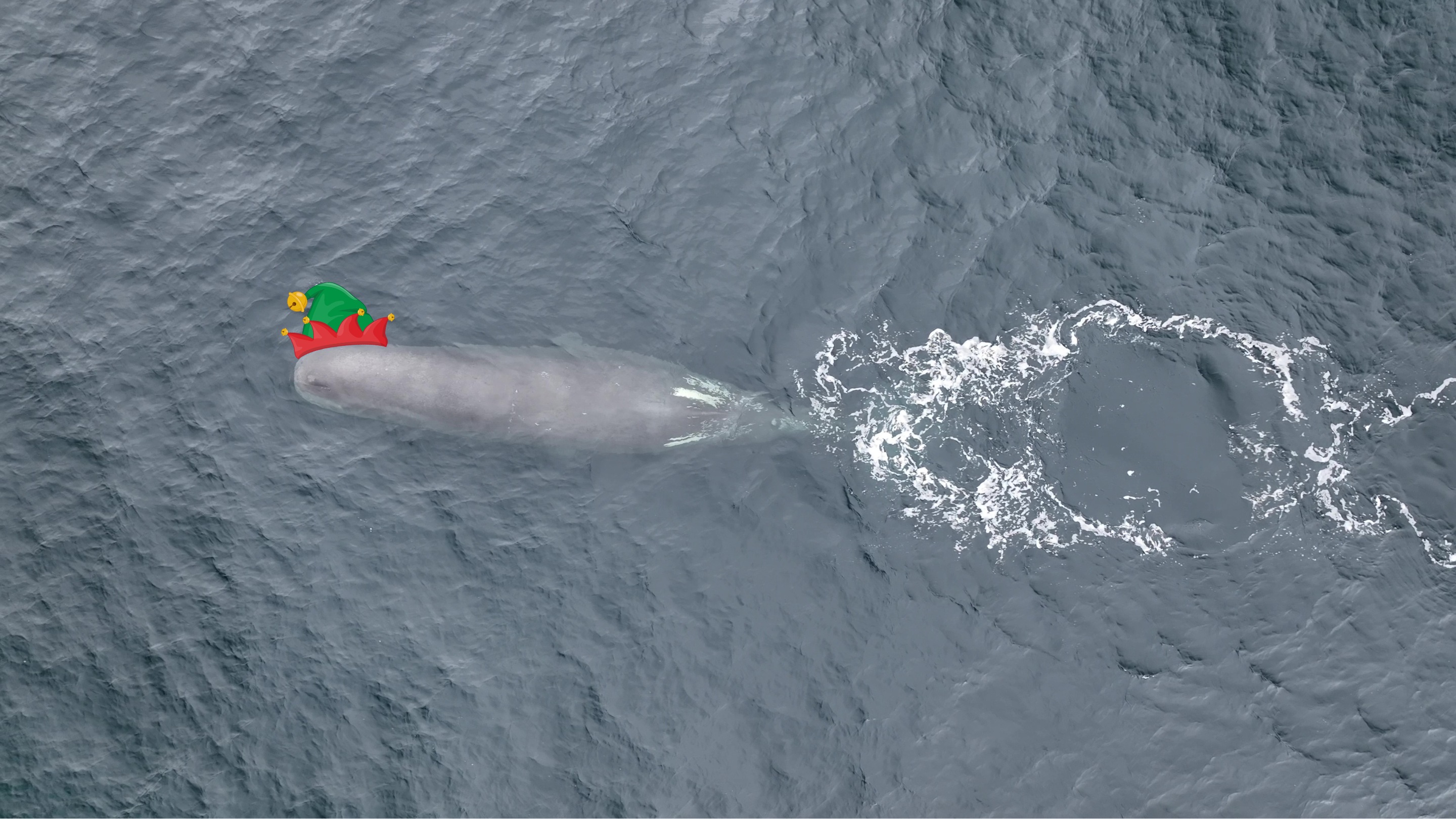
As a subadult male sperm whale, the winter months are a quiet time for contemplation. While females and younger whales stay in warmer, shallower waters, and some of my mates have swum south to join them, I roam the deep and frigid waters around Iceland and beyond. My world lies far beneath the surface, in the inky darkness of the ocean’s depths.
Diving thousands of meters below, I hunt for fish and squid, my favoured prey. Using my echolocation, I “see” in the darkness, clicking to navigate and locate my next meal. These dives are long and intense, but they sustain me through the solitary stretches of ocean. Occasionally, I’ll encounter other males, but our interactions are brief. My festive journey is one of endurance, a lone traveller in a vast and silent world, lit down below only by the glowing creatures of the deep.
Orca
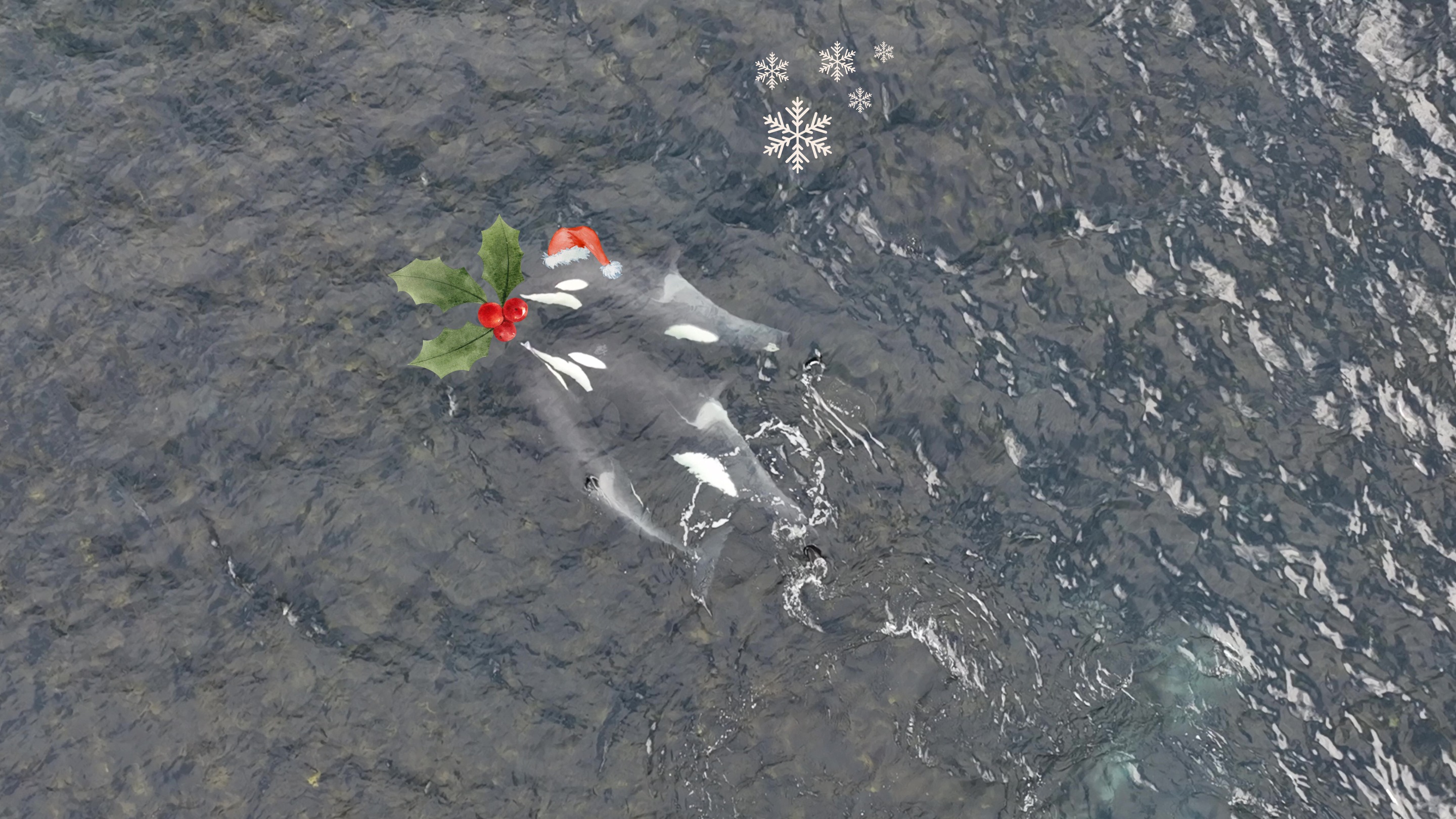
December in the North Atlantic means plenty of herring. As an Icelandic orca, my pod and I rely on these fish to sustain us during the harsh winter months. Together, we roam the icy waters around Iceland, working as a team to corral schools of herring. Our coordination is seamless, a result of years of learning and trust within the pod. Tail slaps and sudden bursts of speed are our tools, stunning the fish before we feast.
The long Arctic nights are part of our world, but the darkness doesn’t hinder us. Like the sperm whale, my echolocation paints a vivid picture of the underwater environment. Unlike the sperm whale, however, family is key to my survival and happiness. The bonds within our pod run deep, strengthened by communication and prey sharing, our favourite gift. We split up from time to time, but we will always see each other again. Our pod has been doing well recently, with babies and plentiful food, but I’ve heard about the troubles experienced by other populations – the silent killer that is persistent organic pollution rendering us unable to breed. Slowly, we are dying out. My pod and I are grateful for every day of prosperity.
The North Atlantic during the holiday season is far from quiet. Beneath the waves, a world of activity and life continues, diverse and mysterious. Whether it’s the humpback whale’s songs echoing through the warm Caribbean waters, the white-beaked dolphin’s playful leaps in the frigid seas, the sperm whale’s solitary dives into the abyss or the orca’s coordinated hunts beneath the Arctic sky, each species has its own story to tell. While we humans celebrate in their unique way, let’s remember our blubbery neighbours – their lives, our impacts and the work we can do to protect them.
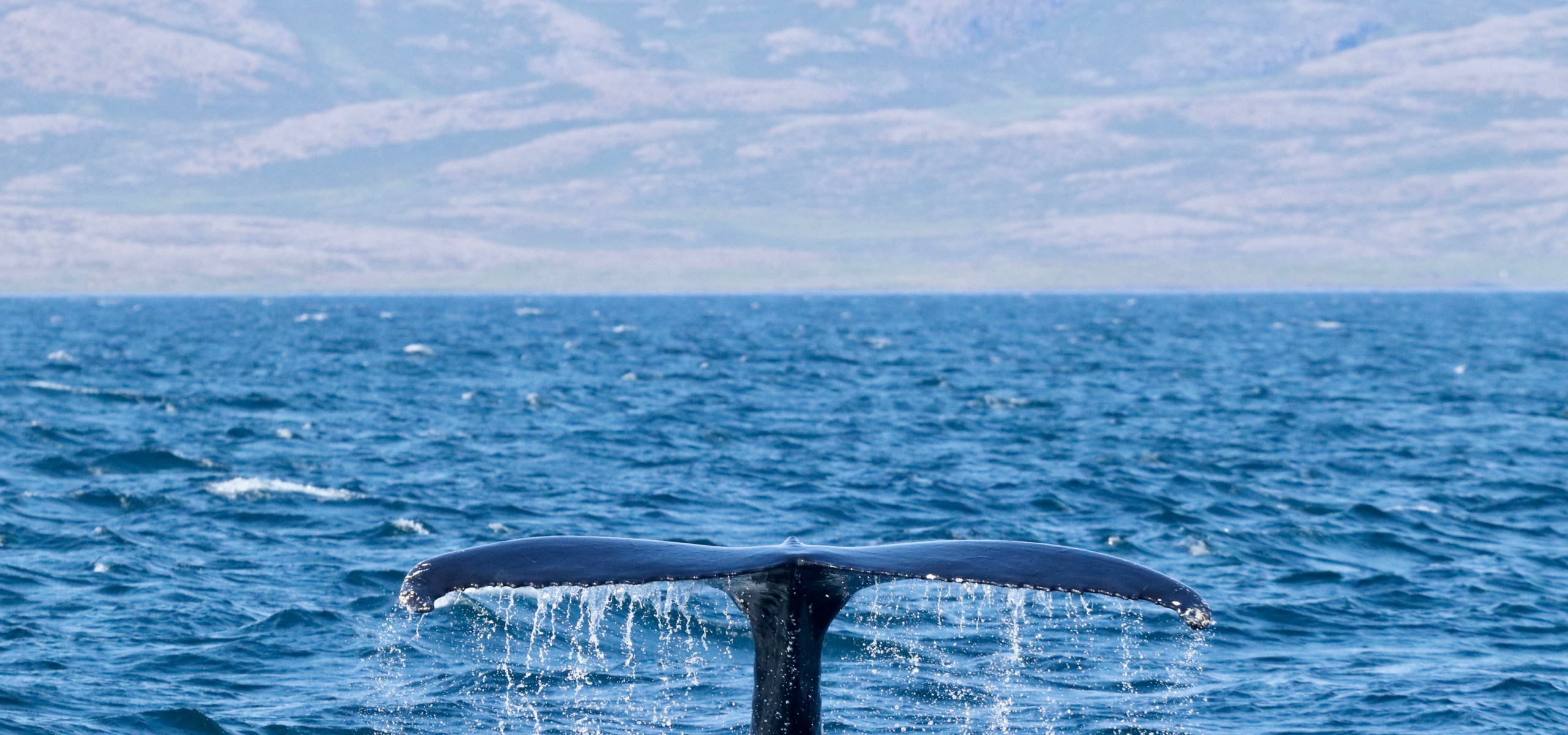
By Katie Hall
Since returning home to the U.S. after my first field season in Iceland, I’ve been asked many times about the highlights of my experience. And I find myself repeatedly reflecting on how wonderful it was for life to revolve around whales again. It’s been a few years since I last had the chance to do field work, and I’d almost forgotten how spectacularly blissful it is to spend every waking moment thinking about whales and to be surrounded by people who get equally excited to see them.
Don’t get me wrong… it can be exhausting. There are days we’re out the door by 4am. You won’t see me jumping up and down with excitement at 4am (though Tom will make up for that with his boundless energy and enthusiasm). We may debate over whether the 4am start was worth it, but in hindsight, it always was. Outside of field season, computer work and the odd conversation allow me a daily dose of whales, but rarely do I have the opportunity to fully exist in the world of whales outside of field season. What a joy it is to live and breathe whales for a whole month and be surrounded by people who get it.
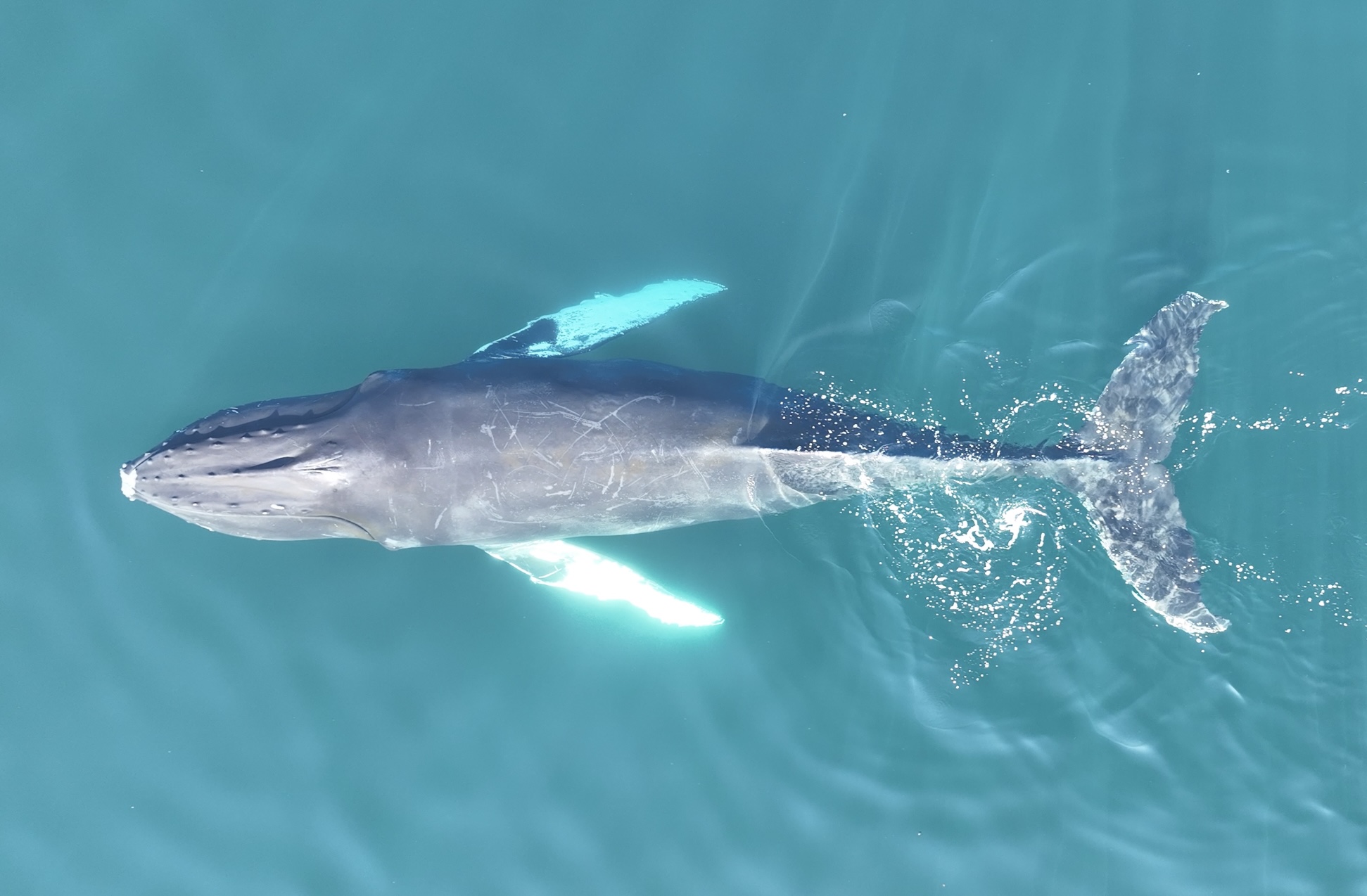
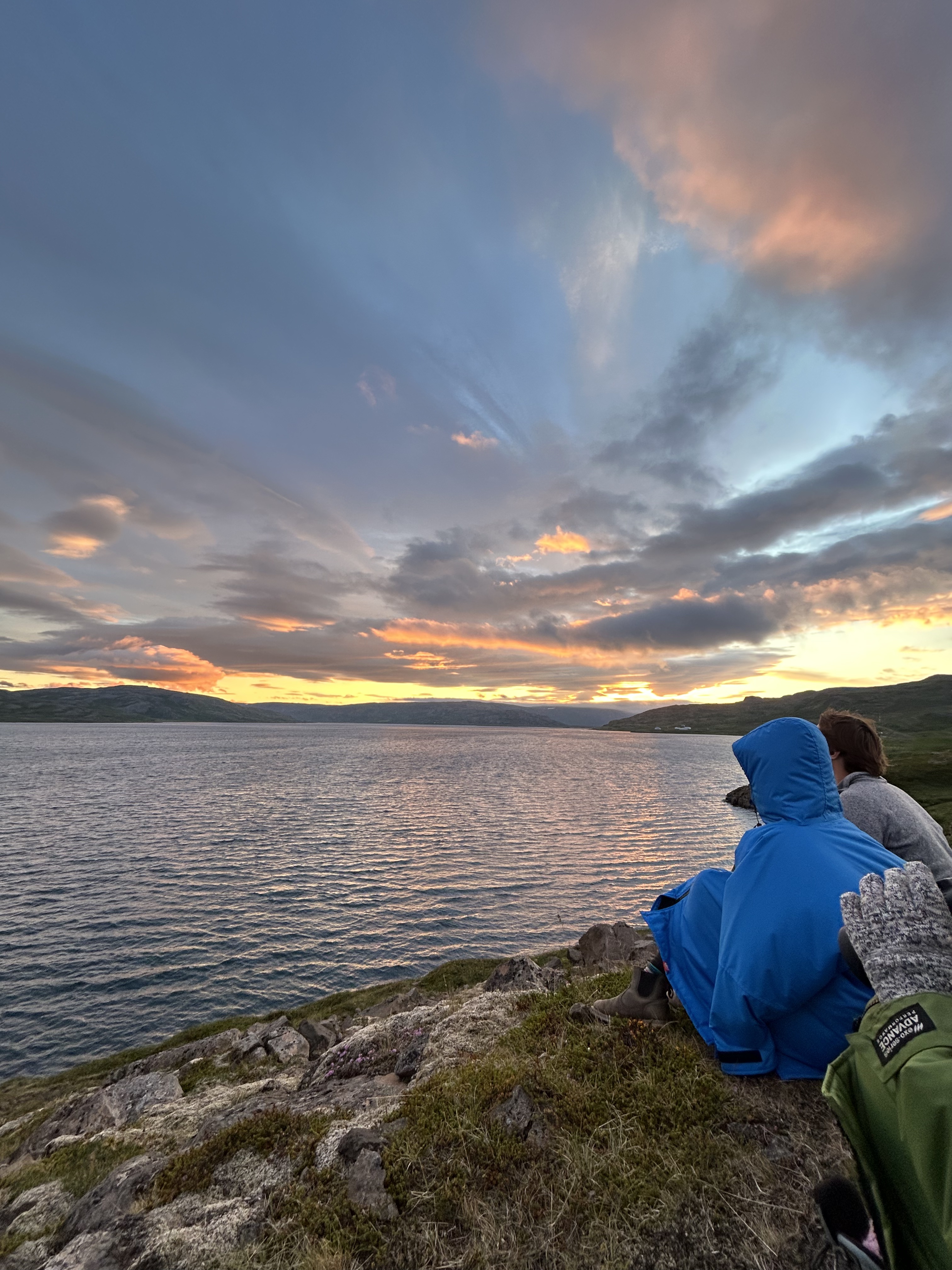
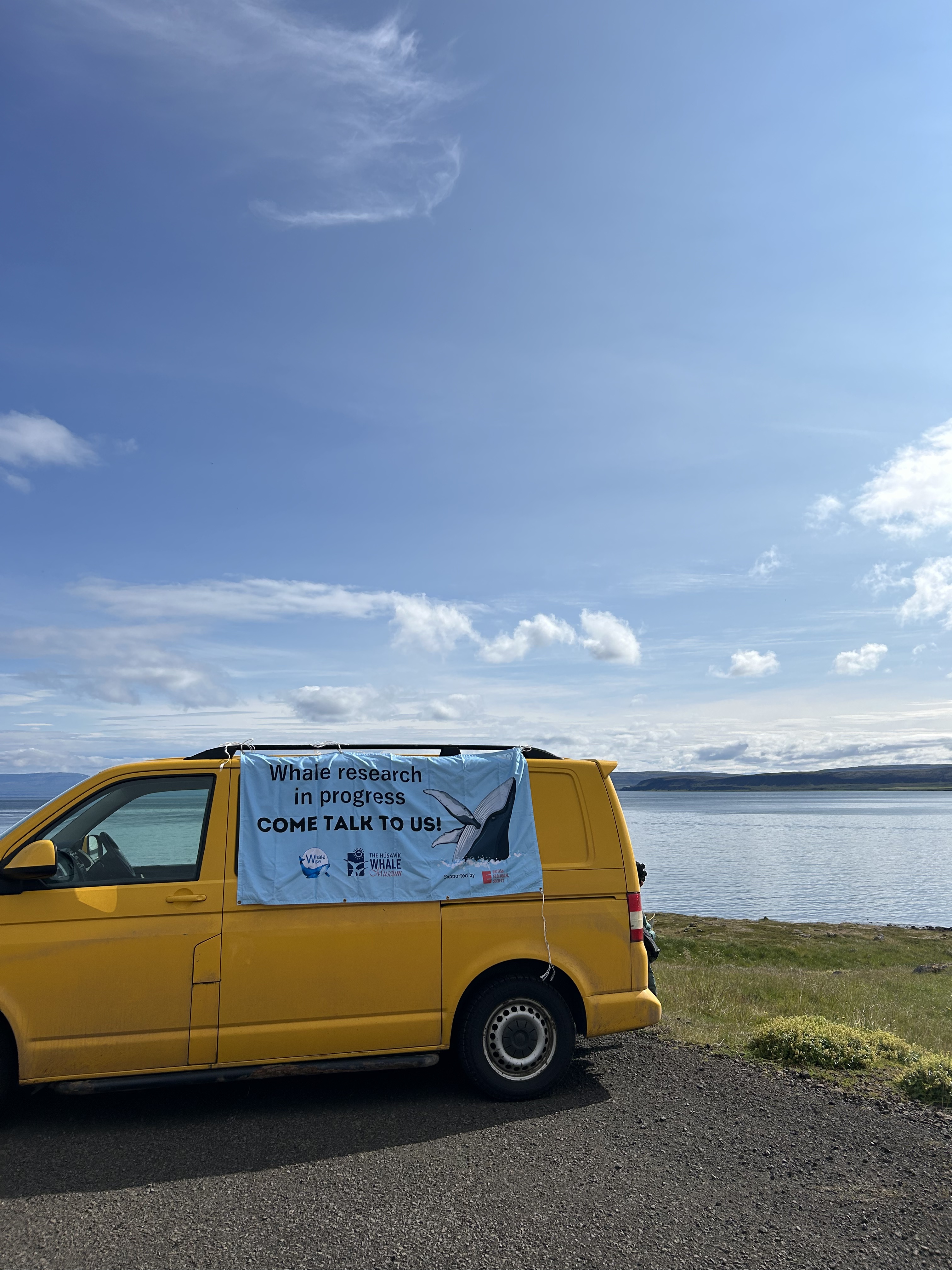
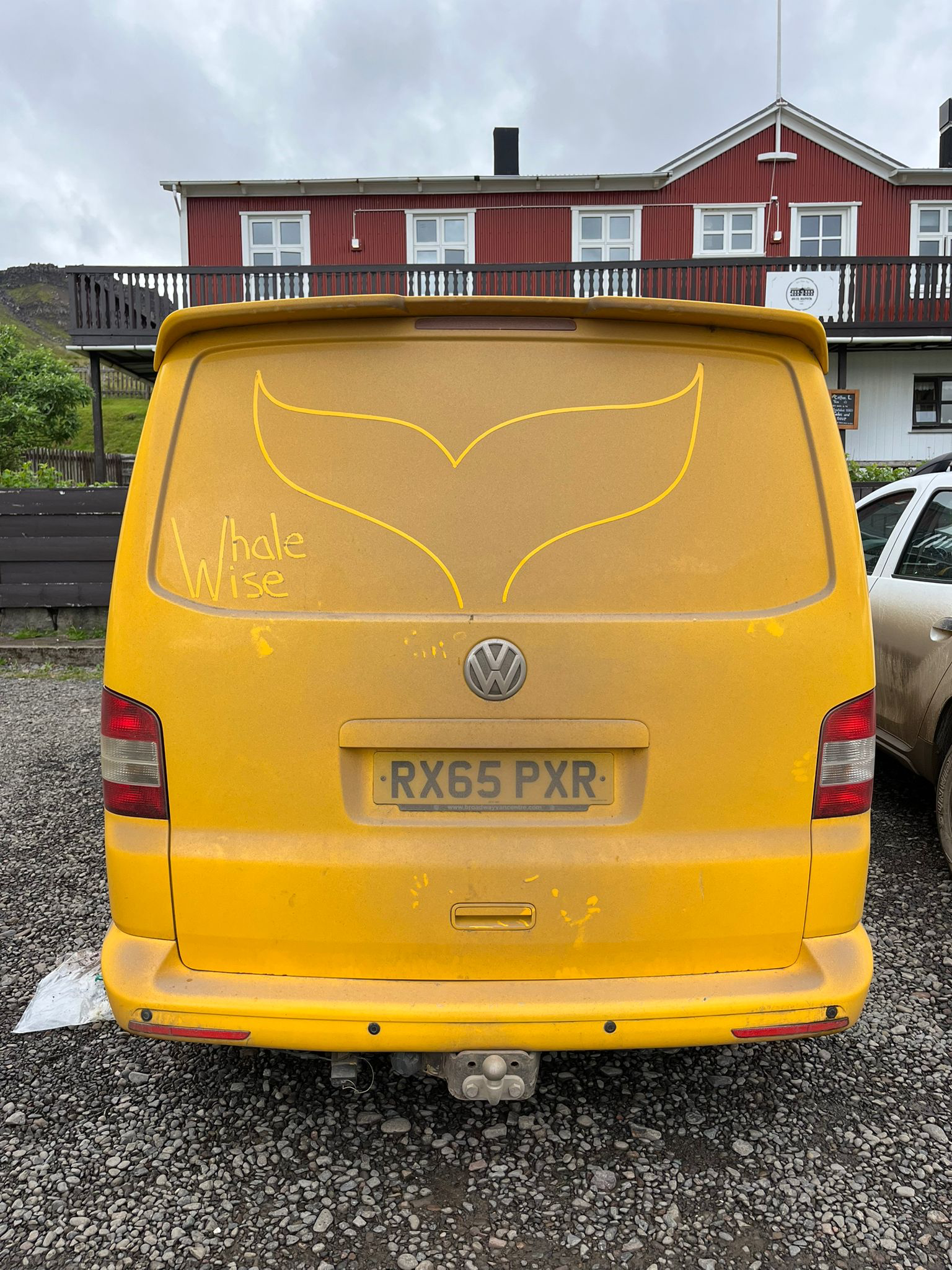
During field season, we get to be the crazy whale people. We drive around in a yellow van and stand alongside the road in our matching blue Dryrobes, shouting with excitement as we stare at whales in the fjords. We could be a cartoon. When we receive a message from our friend Judith that there’s a blue whale in Steingrímsfjörður, we lose our minds. “Get in the [expletives] car!” rings perpetually in my mind as I remember us wildly scrambling to get in the van to go find the elusive blue whale. I’m not going to lie, when we did see the blue whale, it was kilometers away and we could hardly see it, but the excitement did not fade. That’s just how field season is.
What’s beautiful about a month with whales–other than the beautiful whales themselves–is that it’s not just about the whales. I feel that it’s about focusing my thoughts and energy on this world that’s bigger than myself. It’s about finding joy in the life around us, including the marine life that spends most of its time below the surface but, just for a moment, invites us into its world.
When I start to learn the humpbacks by name, suddenly I feel as if I know those whale as individuals. And I start to care about them. When I make eye contact with a harbour seal, it’s as if the fourth wall is broken. Suddenly we’re coexisting in this world together. I might even start paying attention to the birds flying overhead and find myself worrying about that duckling we saw on its own earlier.
Despite the moments of utter madness as we hurry to locate a blue whale or to hustle out the door at 4am, we’re forced to slow down and take it all in. We might spend hours standing on the side of the road, flying the drone back and forth over the fjord as we collect aerial images of the humpbacks below. While we may be a few kilometers away, we’re fully present there with the whales, taking it all in. I find myself paying more attention to my place in this world and the role we as humans play in these ecosystems. As someone who’s been incredibly fortunate to have had the opportunity to spend time observing whales, I feel that I have to do more to protect them.
There’s so little that we know and so much to learn about these animals and the ways they’re impacted by human activities. When life revolves around whales, the more curious I become and the more I want to make a difference. I feel increasingly inspired to do meaningful research that will inform impactful conservation measures. That’s why I’m so grateful to be a part of Whale Wise and work alongside a team of curious and passionate people who aim to make a difference in the world.
by Jessica Ward
“I could never have dreamed I would have seen something like that in my life.” The day we spent with orcas in Steingrímsfjörður.
At the start of this month, our current field research team were utterly blown away and lost for words for how the day unfolded. We started with humpbacks (our study species) so we knew it would be a good day. We collected some data and we got to spend time with whales; perfect, and all in a morning’s work.
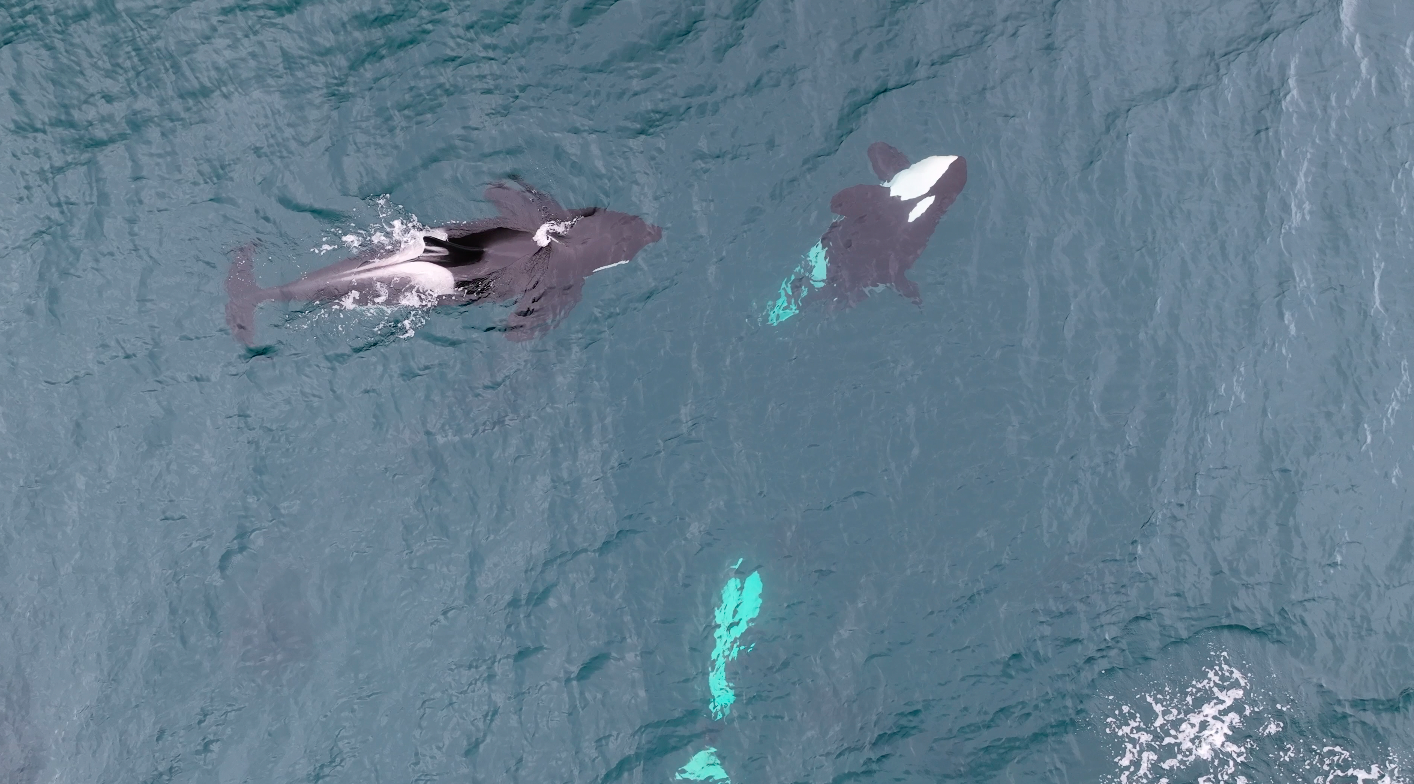
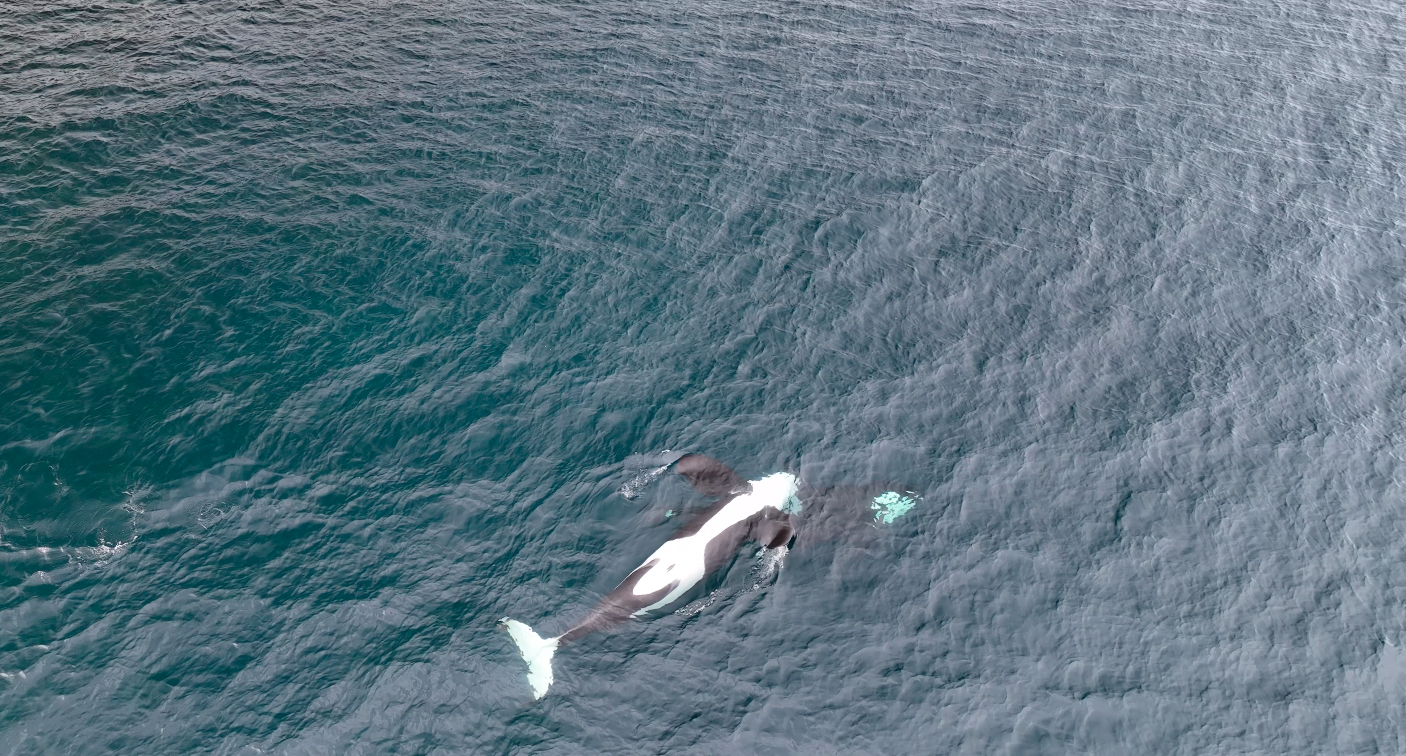
It was when we were back in our van, driving along the coast that we discovered a different species: orcas! Orcas, commonly known as the wolves of the sea, swimming next to the coastline. We couldn’t believe it. Orcas are very rarely seen in our area in the Westfjords. The rest of the day took us following these beautiful and powerful animals all the way up the coast. We had some extremely special and close encounters, as well as being able to fly our drone to capture footage of some incredible and unique behaviours.
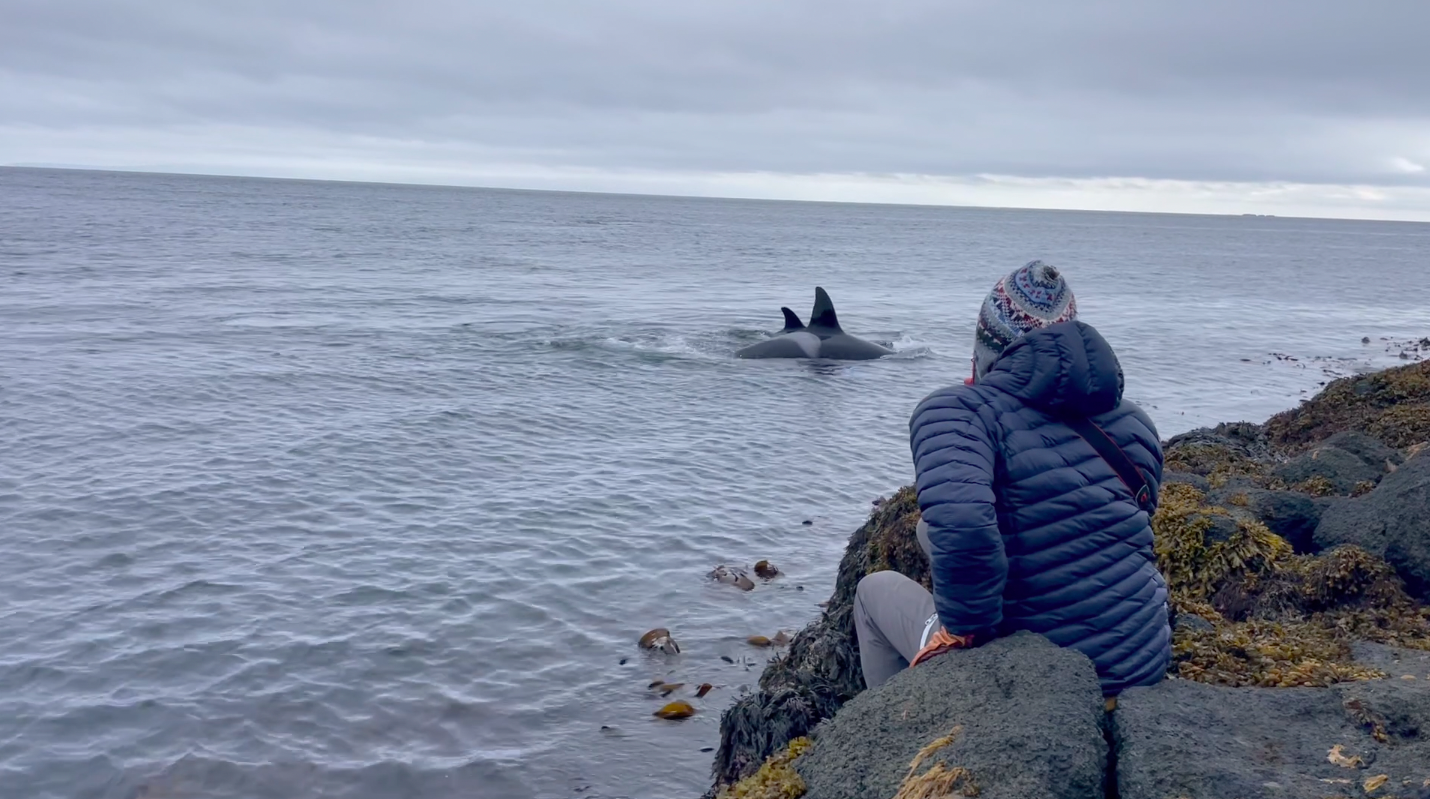
We know from our friend and colleague Filipa Samarra who studies the orcas in Iceland and runs the Icelandic Orca Project, that this pod of orcas are in fact well known in Iceland. In Filipa’s catalogue the pod is labelled as the IS090s (IS standing for Ísland/ Iceland). Orca pods are matrilineal: they are matriarchal families, led by the oldest and wisest female, the grandmother of the family who will pass her knowledge and wisdom on. It was so interesting to see how the members of this family interacted with each other and how the leading female orchestrated her family. We recognised the leading female of this pod. Her name is Sakkara and it is not the first time we have seen her!
Unlike the baleen whales, so the humpbacks for example, in toothed whales (including the orcas, also known as killer whales) the males are larger than the females. Sakkara was travelling with five other individuals, one of which was a very large male. Male orcas have very tall and pointy dorsal fins. This particular male is not believed to be part of this matriline, but has been seen together with them on many occasions. He has also been spotted alone in Scotland. Orca pods are very tight knit families; orcas naturally remain with their mothers throughout their lives, though of course there are some exceptions. Unfortunately pods might get separated for a number of reasons: individuals might lose their family as a result of anthropogenic disruption, illness or even intervention by humans (captive orcas are normally individuals from different pods). Additionally, males will leave their pods to mate elsewhere, and this is maybe the reason that this large adult male was with Sakkara’s pod: to mate. From our perspective, it definitely seemed that the male was interacting a lot with the entire pod, and playing around and having fun with the younger individuals too.
Sakkara and her pod are known to spend most of their coastal time in Iceland in Snæfellsnes: the long and narrow peninsula north of Reykjavík. This year they spent all of July in the Vestmann Islands, off the south coast of Iceland, catching seals and ducks. Sakkara and her pod have also ventured to the Westfjords periodically, including of course the day we saw them in Steingrímsfjörður, travelling next to the little town where we live. As mentioned above, we have also seen Sakkara here at least twice before, and off the coast of Ísafjörður (the largest town in the Westfjords) last year during early summer where we saw Sakkara kill a porpoise! Orcas have a diverse diet and different orca populations can feed on fish and squid or larger mammals like seals and other whale species (including sometimes humpback whale calves). On this day, we were very surprised to see Sakkara and her pod catching the eider ducks!
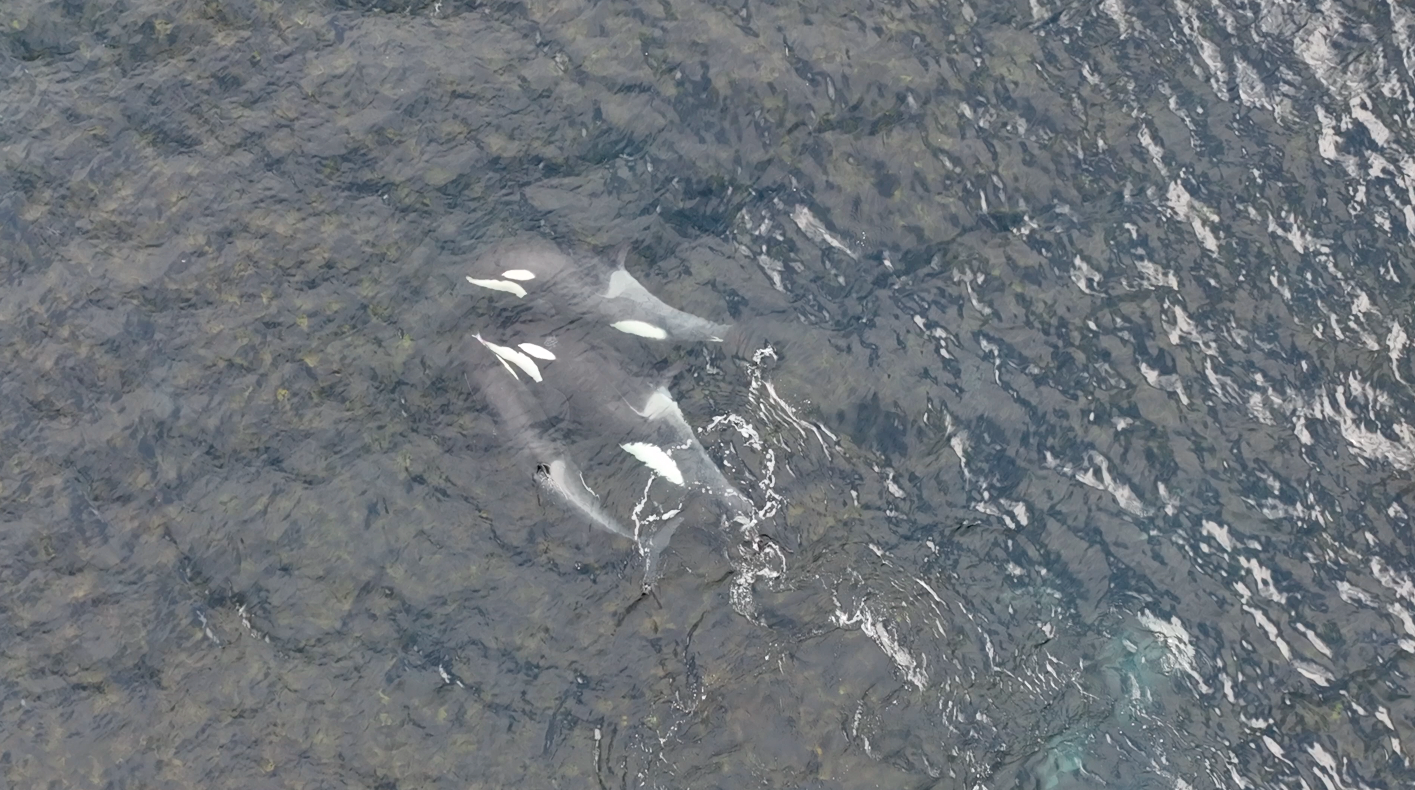
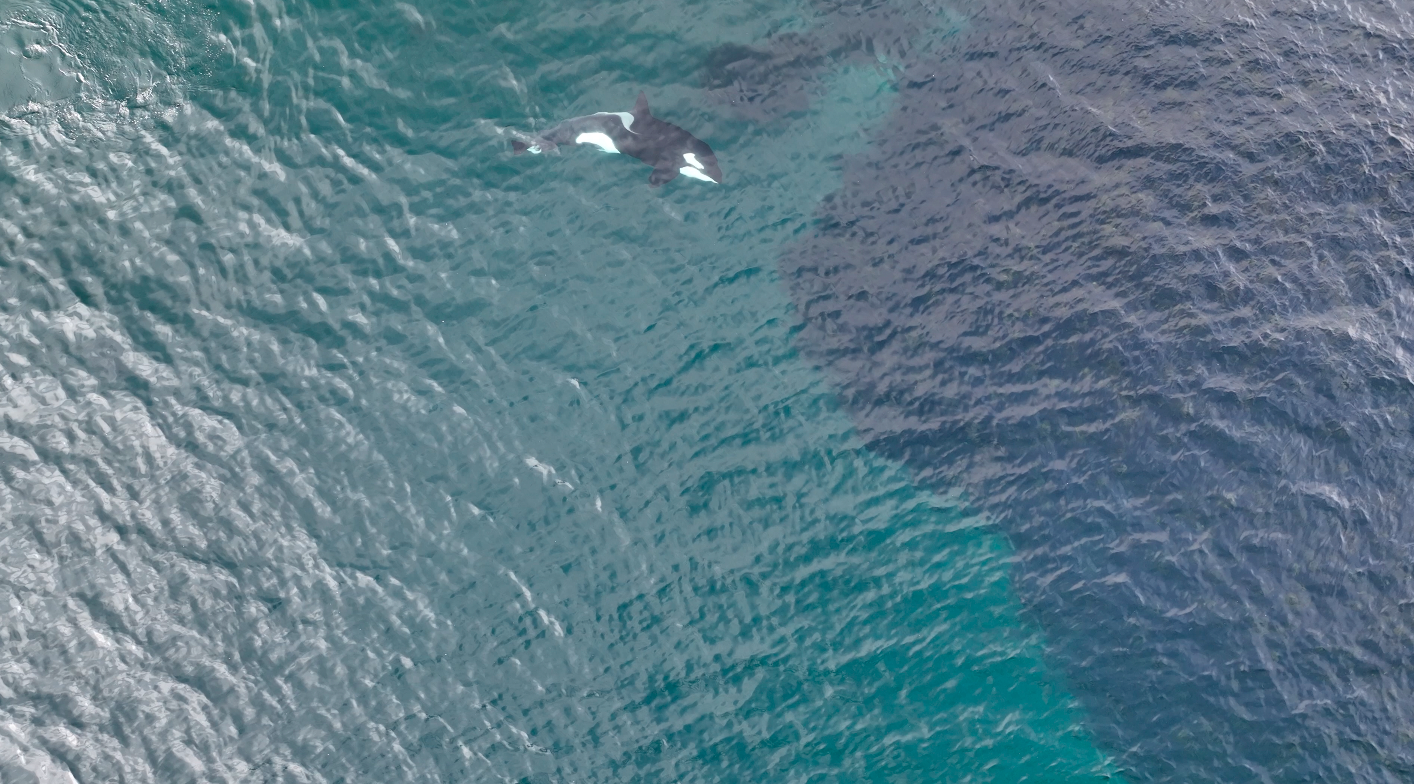
The many hours that we, unexpectedly, got to spend with the orcas allowed us to closely observe their behaviors, their movements and their interactions. We could speculate as to what it meant and although we do not understand it all, for example exactly why they were in Steingrímsfjörður and what exactly the male was doing there, how long they might stay, how long he might stay etc… lets talk about what we saw! A particularly surprising behavior was, as mentioned above, their interactions with the eider ducks. We noticed that it was usually the adult orcas catching the birds and seemingly injuring them so that then the younger orcas could ‘have a go’. Perhaps this was a way for the younger orcas to practice hunting? We don’t know whether birds are typically part of the orca diet. We didn’t actually see the orcas eat the birds, but the younger ones were definitely sharing and ripping the flesh. Another noticeable interaction was that we saw the adult male ‘flirting’ with another female in the pod. They had been swimming in very close connection, almost with their bellies touching, but not quite. There was one moment when these two were separated from the rest, and one younger orca was guided away from them by Sakkara. Sakkara and this younger whale swam just meters from the coastline, meanwhile we even saw the penis of the adult male… so it definitely seemed reasonable enough for the younger one to stay away for this! At this point in time, we really could not believe our eyes! We had seen it all.


Being able to see orcas in the wild is an extreme privilege. These fascinating, hugely intelligent and infamous apex predators (hence the wolves of the sea) are capable of igniting so much curiosity, compassion and excitement. Knowing the history (and in many cases the current lived experiences) of these animals in captivity, made this encounter that bit more meaningful to us. Knowing how social and close these animals are in their pods and how they can travel such great distances over time (in the case of Sakkara and her pod being spotted in many different locations around coastal Iceland), it is hard to believe that these animals in captivity are confined to a small tank, stripped of their complex wild lives, their autonomy and their families. In 1985 in SeaWorld Orlando Kalina, also known as “baby Shamu”, became the first killer whale calf to be successfully born and raised in captivity. Her mother Katina was an Icelandic killer whale who mated in captivity with a Southern resident killer whale named Winston. 4 years later, Kalina was separated from her mother, Katina, and that night Katina showed extremely obvious signs of grief, anger and upset (this is not the only example of this sort of behaviour being seen when captive orcas have been separated). Katina spent the following night in the corner of the pool and she was recorded making extremely long-distance vocalisations in search for her lost baby. Sadly, Kalina was moved to SeaWorld Ohio, so despite being possible in the wild, these calls would not reunite the mother with her baby. Kalina went on to live until 25 years old (her lifespan in the wild could have been double this) and during this time she lived in four different SeaWorlds and gave birth five times, including unfortunately yet unsurprisingly to one stillborn. Thankfully, our experience with Sakkara and her pod was nothing but special and very humbling. They took control of our emotions, albeit for just one day, and not the other way round.
We were in complete awe of these animals: how they navigate such deeply complex lives in the sea. Perhaps a story we will never fully understand, yet one we should not exploit. There are a total of 55 orcas left in captivity worldwide, 33 of which were captive-born. 18 of these animals live in the three remaining SeaWorld parks in the US. In 2016, SeaWorld announced that they were ending their killer whale breeding programme. Thankfully there will no longer be killer whales born to a life in captivity in SeaWorld like Kalina. The orcas who currently live there will be the last generation. Unfortunately this is not the case for other marine park companies, yet. May the future bring positive change, and learn from their ways in the wild, just like Sakkara and her pod. These orcas were free and we could observe them interacting with each other in ways we couldn’t imagine. May Sakkara and her pod continue to do so and continue to capture people as they caught us that day: completely and utterly mind blown.
Read more about the story of Kalina and Katina in captivity, and others like it, here:
https://missionblue.org/2013/08/blackfish-a-killer-documentary/
https://killerwhales.fandom.com/wiki/Katina
https://www.sciencedirect.com/science/article/abs/pii/S1558787819300164

By Flordespina Dodds
Yesterday, a critical rescue took place in Steingrímsfjörður, where a young humpback whale known as Bird was successfully disentangled from fishing gear. This operation, coordinated by MAST (Icelandic Food and Veterinary Authority), local fishers, rescue teams, and Whale Wise, underscores the importance of collaboration in protecting marine life.
Bird is named for a distinctive mark on its fluke, which resembles a bird in flight. This young whale has been a familiar presence in Steingrímsfjörður since early August, and Whale Wise has been seeing it throughout the month. In late August, we captured aerial images of Bird for the “Scars from Above” project, documenting scars that reflect past entanglements. These images are crucial in our research to understand how entanglement impacts whale health over time, making Bird an important part of our ongoing work.
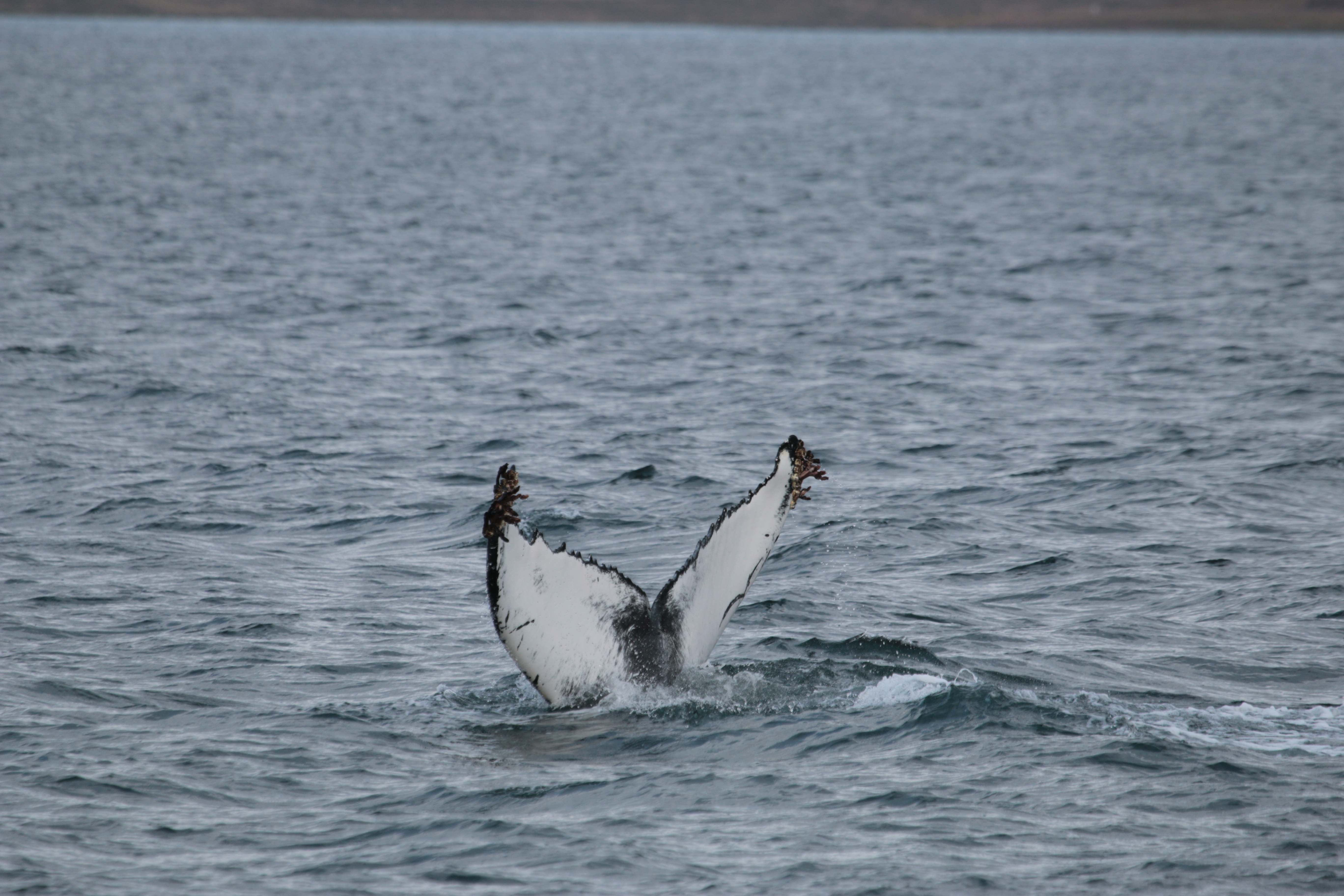
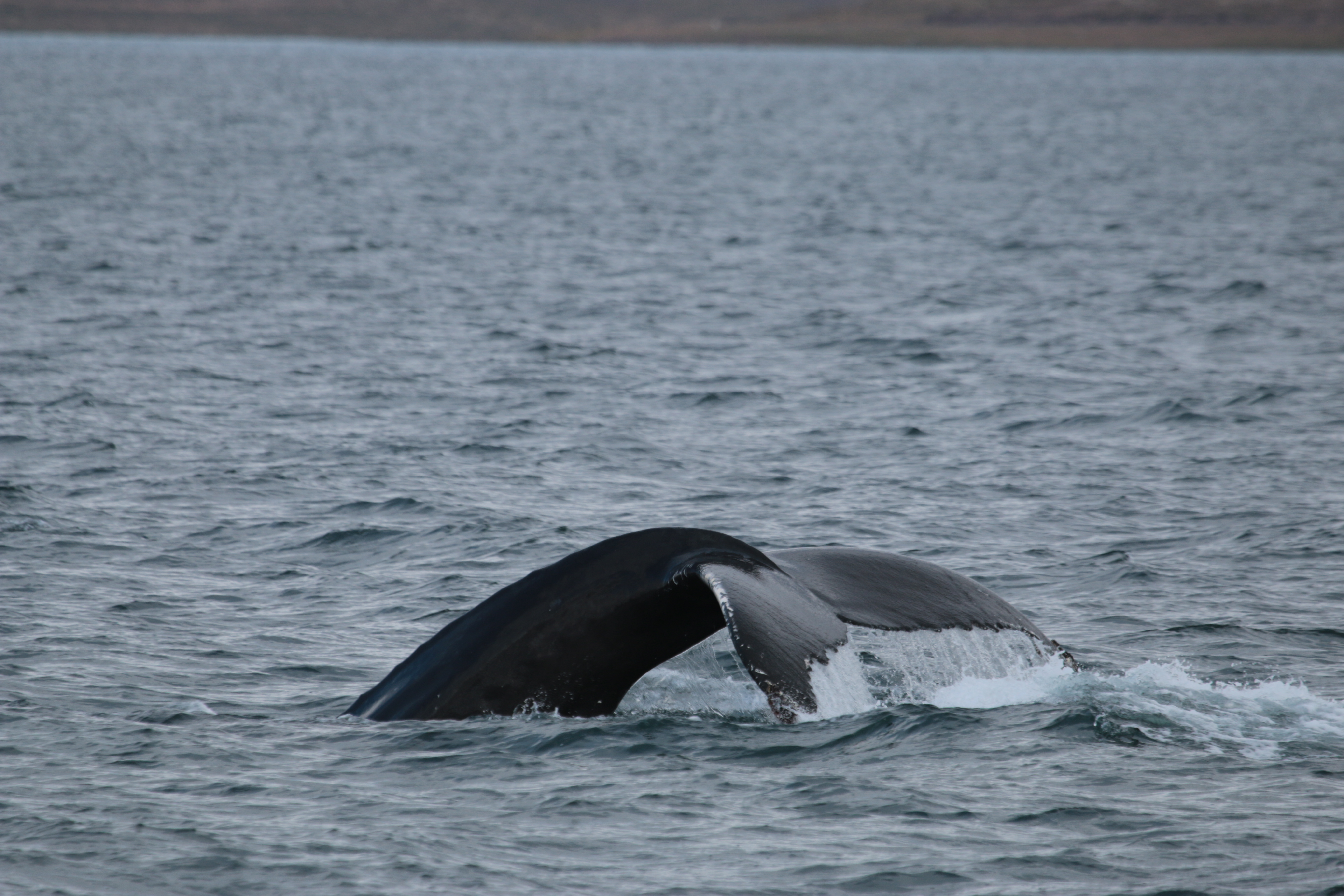
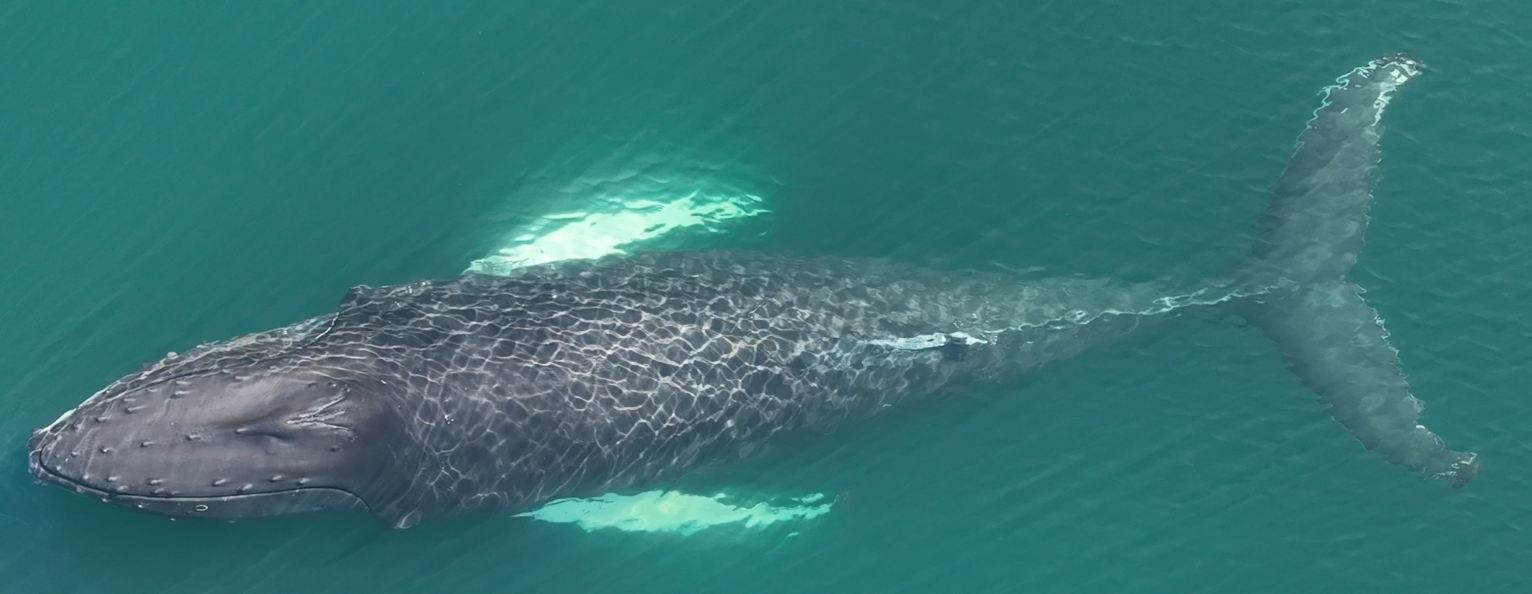
On September 11th, we received a report from Judith Scott, a whale-watching guide from Láki Tours, who spotted Birdstruggling in fishing gear during a tour. Shortly after, fisherman Baldur Steinn Haraldsson shared a video confirming that Bird was still alive and entangled. Both Judith and Baldur played key roles in alerting us to Bird‘s condition, enabling a swift response.
Upon receiving the reports, we drove back to Steingrímsfjörður from Ísafjörður where we had been collecting aerial images of the whales. Using a drone equipped with a 7x zoom camera, we carefully monitored Bird from above and confirmed that the whale was still entangled. The drone footage revealed a line wrapped around Bird‘s tail stock and scars along its body, showing the fishing line may have shifted along its body. Our actions were guided by advice from the British Divers Marine Life Rescue (BDMLR) Large Whale Disentanglement Team, who helped us assess the extent of the entanglement.
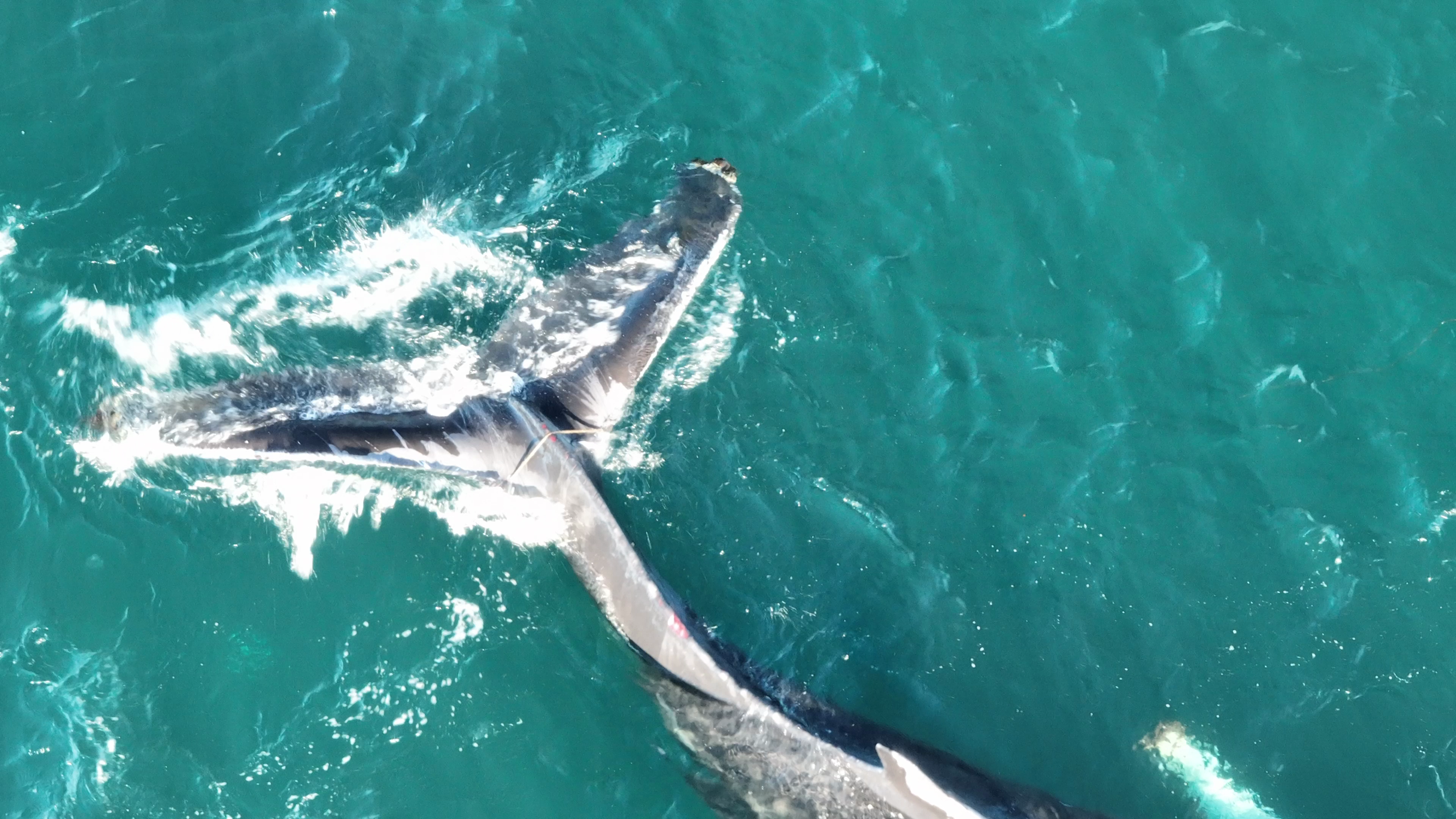
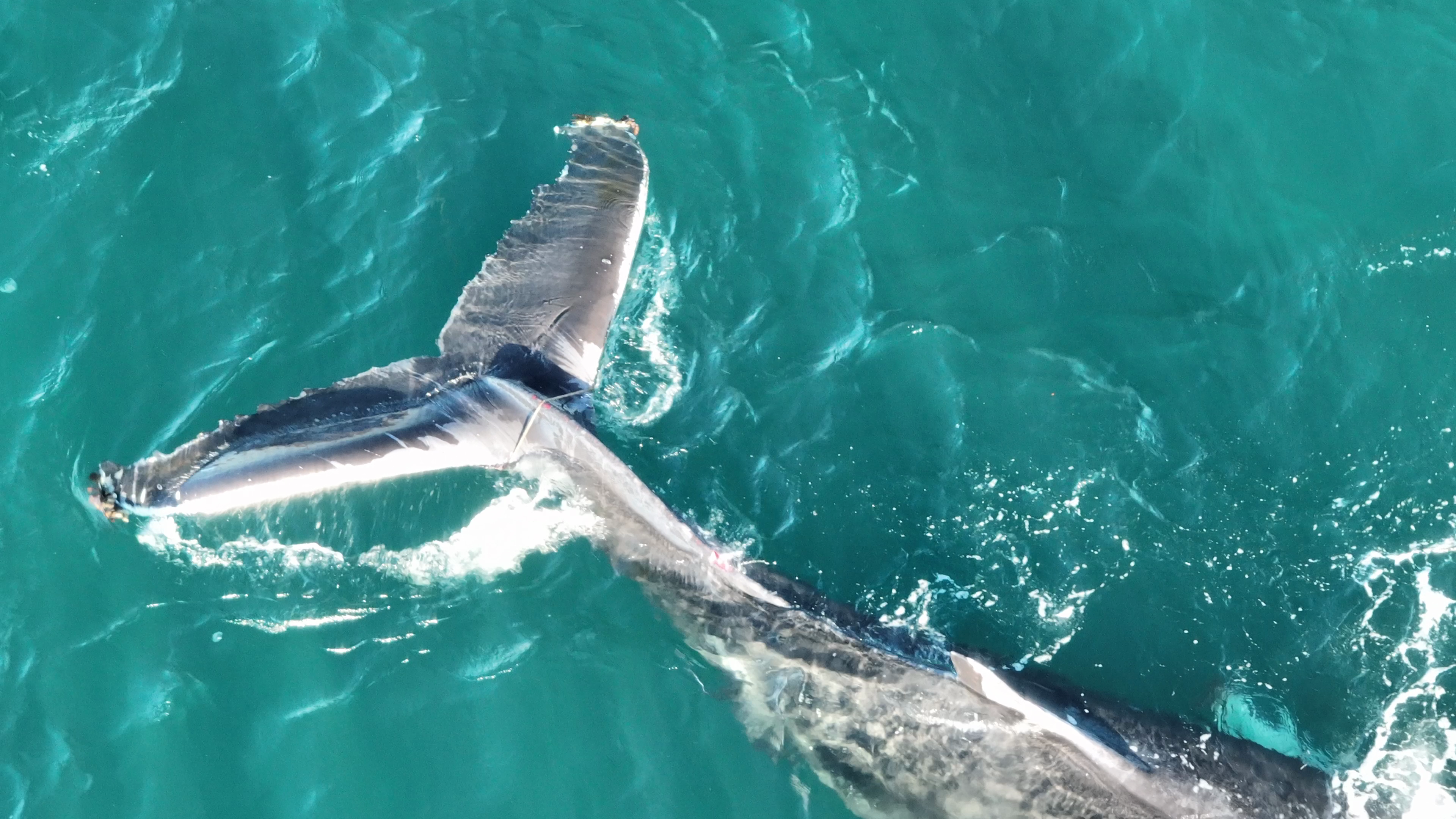
In an amazing display of teamwork, three fishing boats and an ICE-SAR rescue boat arrived on the scene. Informed by our earlier drone footage (showing the position of the entanglement), these trained professionals worked slowly and carefully to disentangle Bird without causing further stress or harm. After precise manoeuvring, the whale was finally free, lifting its tail and swimming back into the fjord.
This was a moment of relief and reflection for our team. At Whale Wise, we focus on studying scars from past entanglements to understand the long-term effects on whale health. Watching Bird—a whale we had been observing since early-August—struggle in real time was a heart-wrenching reminder of the dangers these animals face. Without intervention, Bird may not have survived.
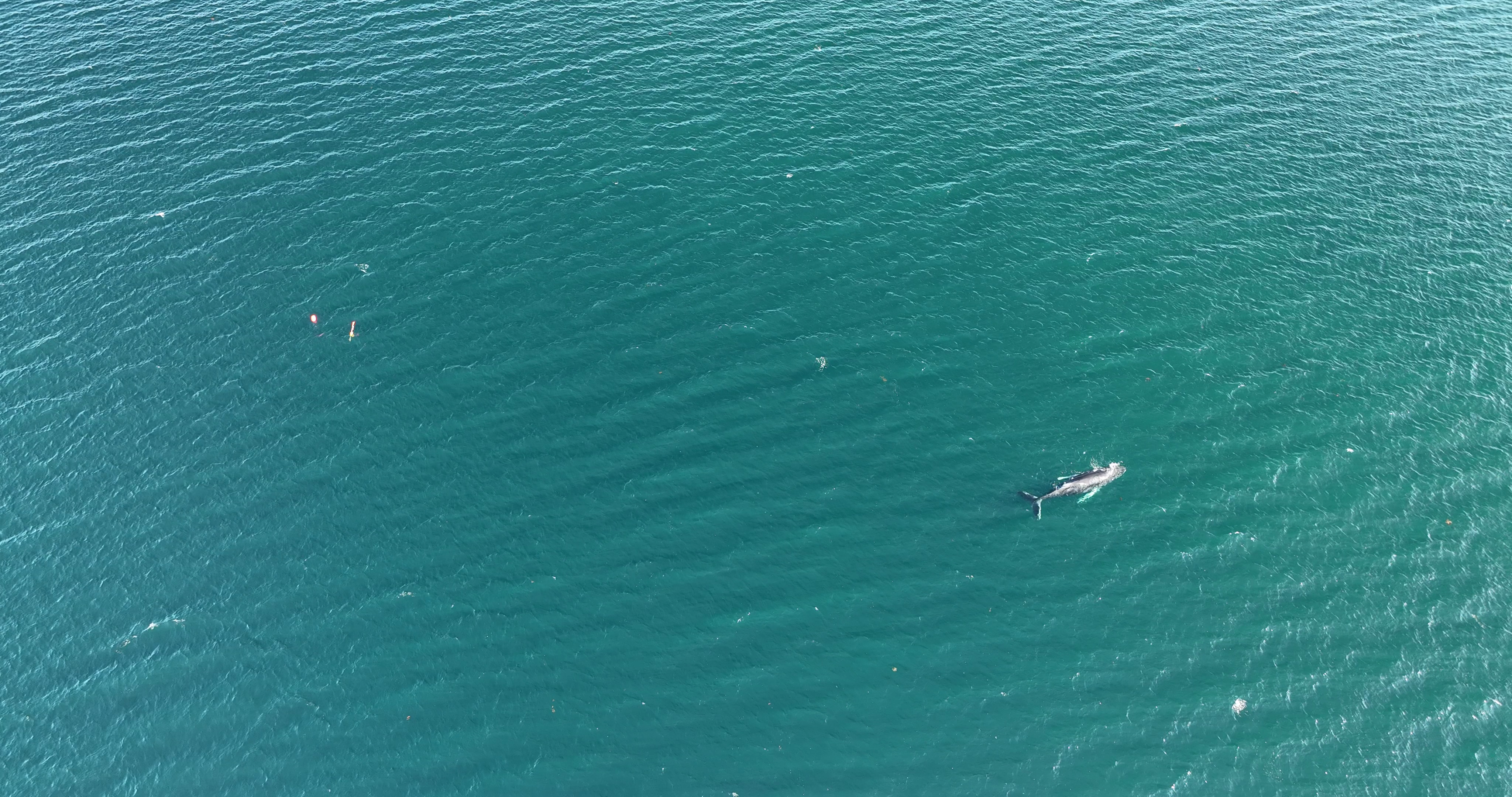
We are incredibly thankful for the collaboration of everyone involved. This rescue was made possible through the combined efforts of Judith, Baldur, local fishermen, and the ICE-SAR team.
Whale Wise, is dedicated to whale conservation in Iceland, and continues to study the threats of entanglement through our “Scars from Above” project. In collaboration with Dr. Charla Basran from the University of Iceland, we are using drones to monitor and understand these threats in humpback whales.
What to Do If You See an Entangled Whale
If you spot an entangled whale in Iceland, it is crucial to keep a safe distance and avoid interfering. Instead, contact MAST or ICE-SAR and report the sighting. You can also contact BDMLR, who are trained and equipped to handle these delicate situations.
Thank you to all who contributed to Bird‘s successful rescue and to those working every day to protect our oceans and marine life.
Stay tuned for more updates on our work and follow our journey as we continue to protect the magnificent humpback whales of Iceland.

by Flordespina Dodds
The more time the team spends in Iceland the more we can recognize some of the humpback whales year to year. Humpback whales all have unique black and white markings on their flukes (bottom of the tail), like fingerprints. This means that when we take pictures of their fluke, we can identify them to the individual. Unfortunately, some whales have very “average” flukes with a pattern that doesn’t stand out, so it is hard to remember those individuals. On the other hand, some whales have unique flukes that we can recognize immediately. Some of these more unique whales have been seen across a few years, which makes it feel like seeing an old friend when you see them again. It is nice to know that some of the whales we have seen before have survived the winter, and have chosen to come back to the same area.


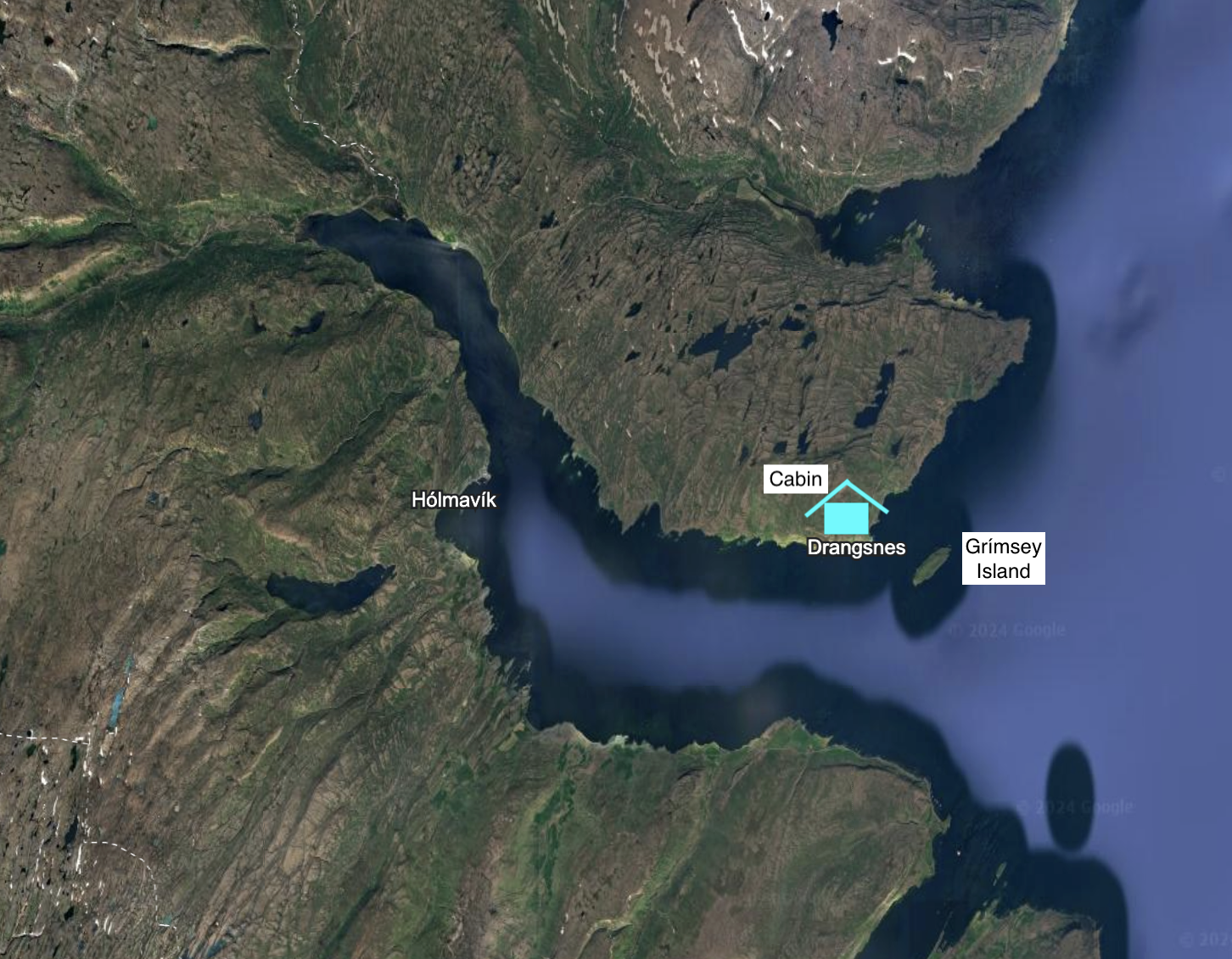
Our team stays in a small town called Drangsnes along Steingrímsfjörður to collect data for our Scars from Above project. The goal is to collect aerial images of humpback whales to look at entanglement scars as well as measuring their length and widths for age and health estimates. We are then comparing the entanglement scars we see from the drone to pictures taken from boats (the standard method). Judith Scott our good friend and collaborator takes photos of the whales on her boat trips and keeps her own catalougue of the humpback whales that she encounters. Judith is the whale watching guide for Láki tours from Hólmavík, and one of the biggest whale nerds we know. Sometimes when the weather isn’t good enough to fly the drone (windy, rainy) we will join Judith on her Láki Tours trips in Steingrímsfjörður to collect photos of the whales. We also sometimes drive west to Ísafjarðardjúp a large fjord system to fly our drone over the whales there as well.
Here I will talk about just a few of the team’s favourite whales that we have seen this year. You will see each of the whales meno#, this is their number in our fluke catalogue, and their menoa#, which is their number in our aerial catalogue.
Angel, meno381, menoa52
Steingrímsfjörður
2022/08, 2023/06, 2024/07/08
length = 10m, max width = 1.87m

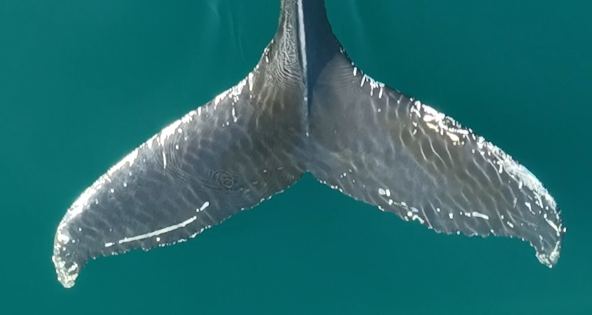

Angel is a special whale in Steingrímsfjörður. Angel’s name comes from the very beautiful pattern on its tail that looks like angel wings in the middle of its fluke. Judith first saw Angel in 2022, the same year we first saw Angel in August. We then saw this whale again in June 2023, and this year in July and August. On one trip this year in mid-July, we saw a few humpbacks, including Angel. Angel came very close to the boat a couple of times; it was so humbling to be so close to Angel and to be able to hear them breath in and out. It was a special moment. When we fly the drone, we see the backs of the whales first and then if we are lucky and they lift their tails for a dive we get to see their fluke. Angel has a nice distinct mark on the top side of their tail that we can see very clearly as the drone pilot, yet another reason why Angel makes a very nice whale to fly the drone over.
Vampire, meno372, menoa83
Steingrímsfjörður
2022/08/09/10, 2023/06/07/09/10, 2024/08/09
length = 10.92m, max width = 2.05m
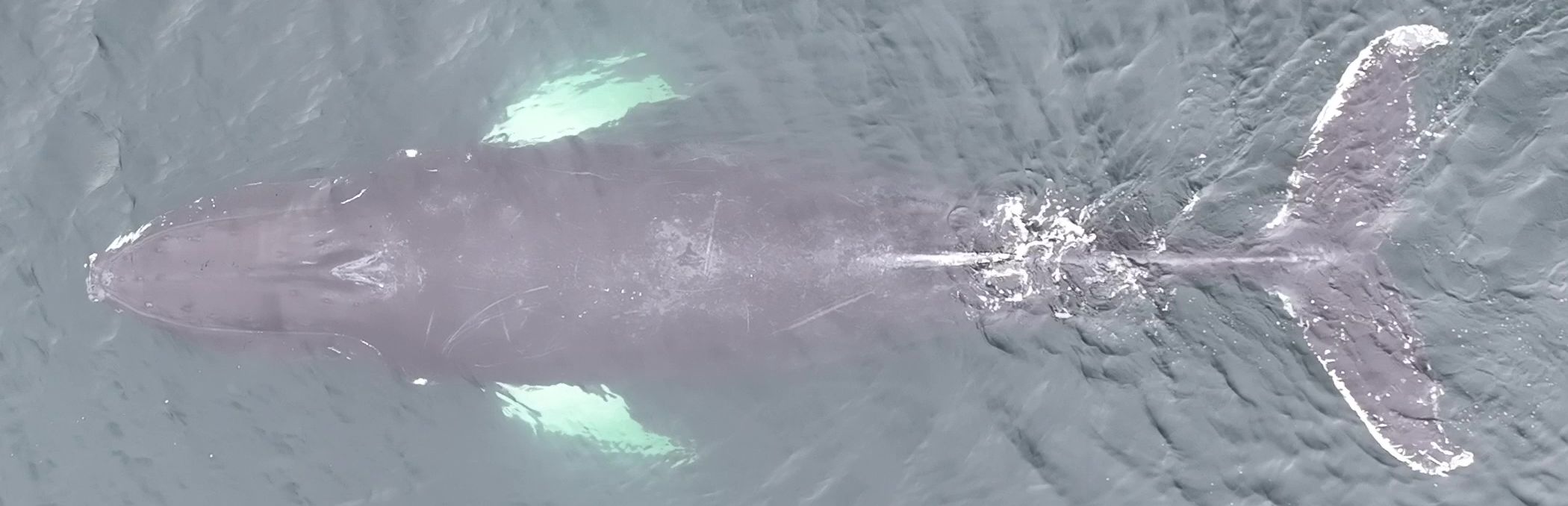
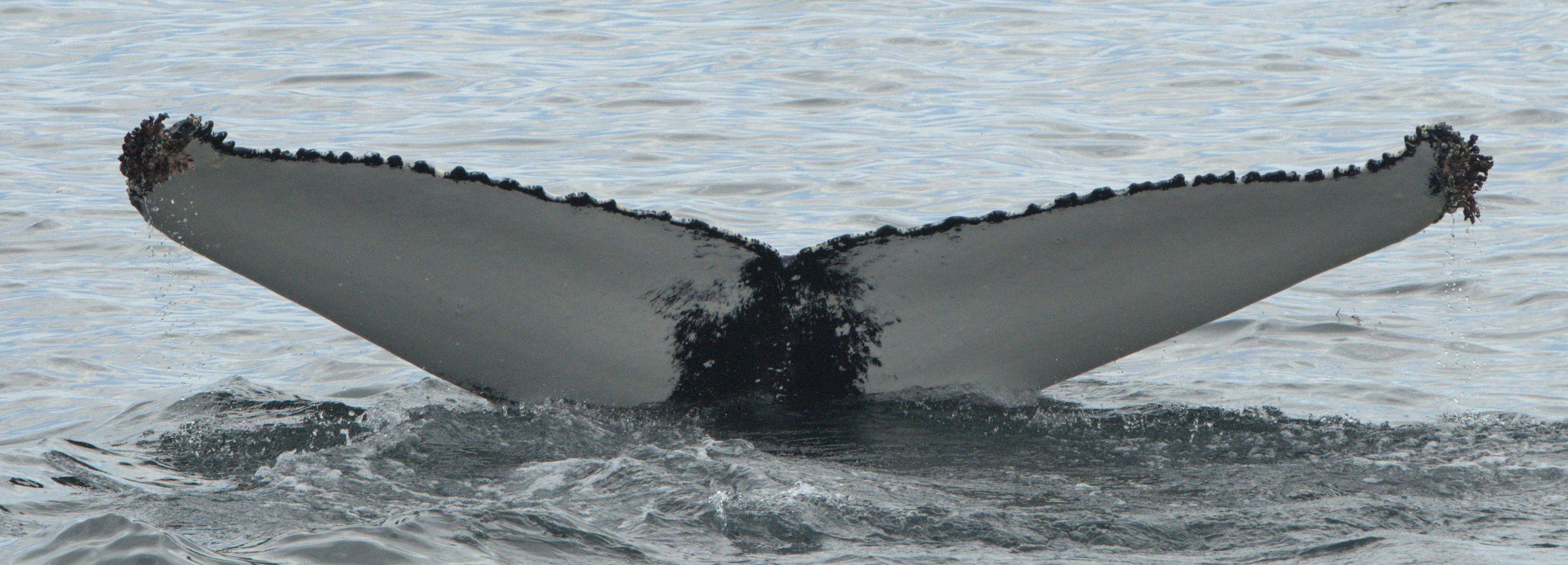
Vampire is another special whale. Named for two white spots in the black portion of their fluke, which looks like the teeth marks a vampire might leave behind. Sometimes you need some creativity when naming the whales based on their fluke patterns! We have seen Vampire in 2022, 2023, and this year, always in Steingrímsfjörður. In fact, Judith has been the whale watching guide here since 2017 and she has seen Vampire every year since, Vampire is the only whale she has seen every year she has been here! Vampire must love Steingrímsfjörður. One of the team’s special memories of Vampire is from back in June 2023. Our cabin in Drangsnes looks out over the sea and Grímsey Island, a small island covered in seasonal marine birds (puffins, razorbills, kittiwakes, etc) about 1500m off the coast. Vampire spent about a week hanging out by the island, among all the birds and seaweed. Whales are not often seen between the coast and the Island but Vampire sure was enjoying the aera. It’s nice to know Vampire likes to return year after year and we hope to see them next year.
Chopped off, meno320, menoa141
Ísafjarðardjúp
2021/08, 2023/06/07/08/09, 2024/08 (Arvik 2022)
length = 9.81m, max width = 1.81m
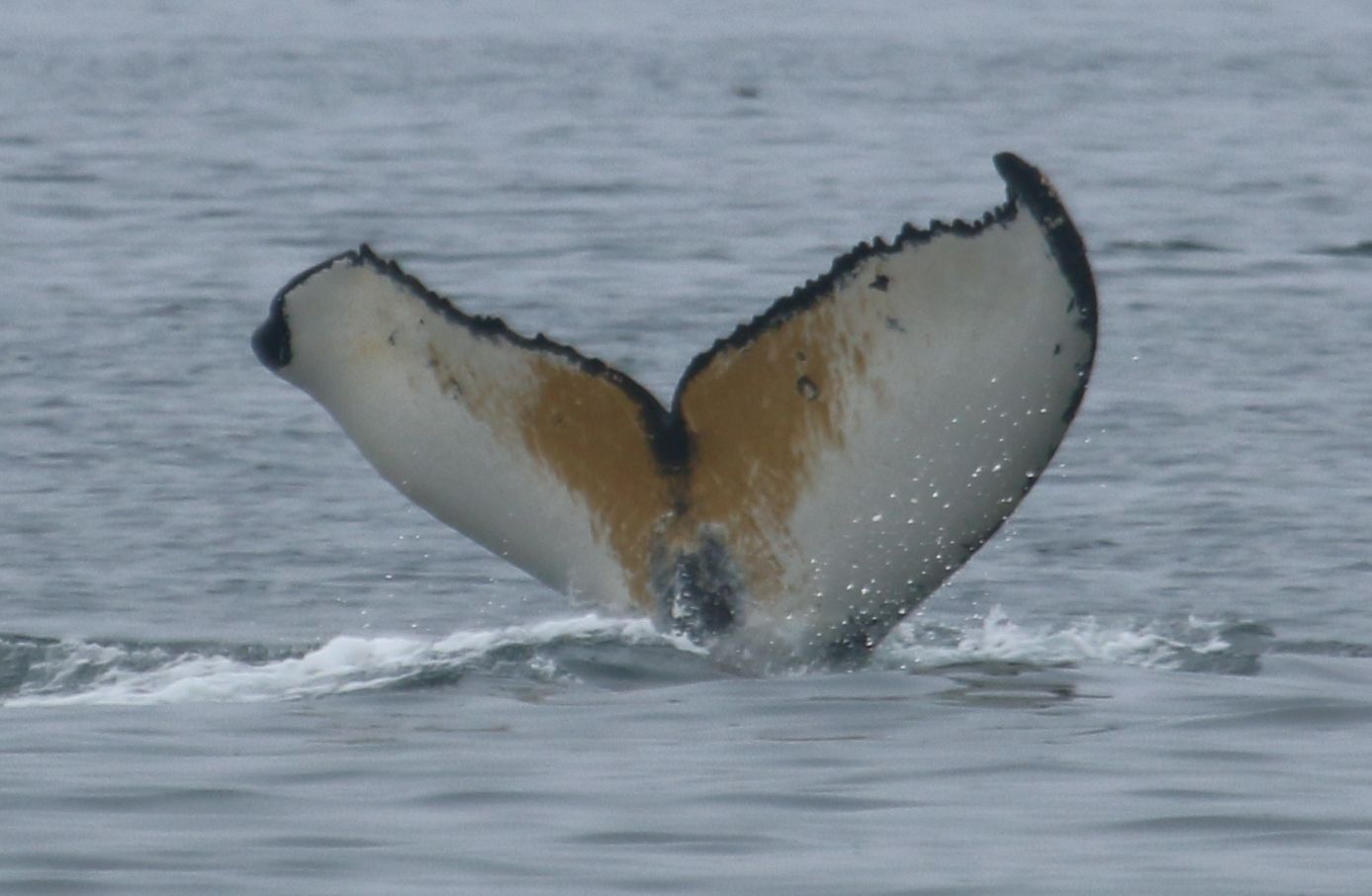
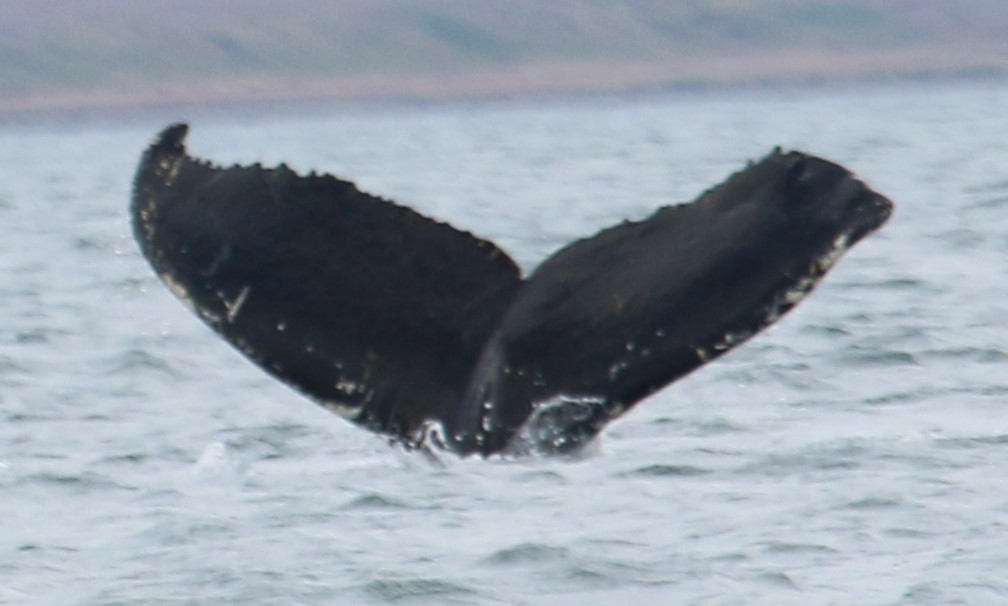
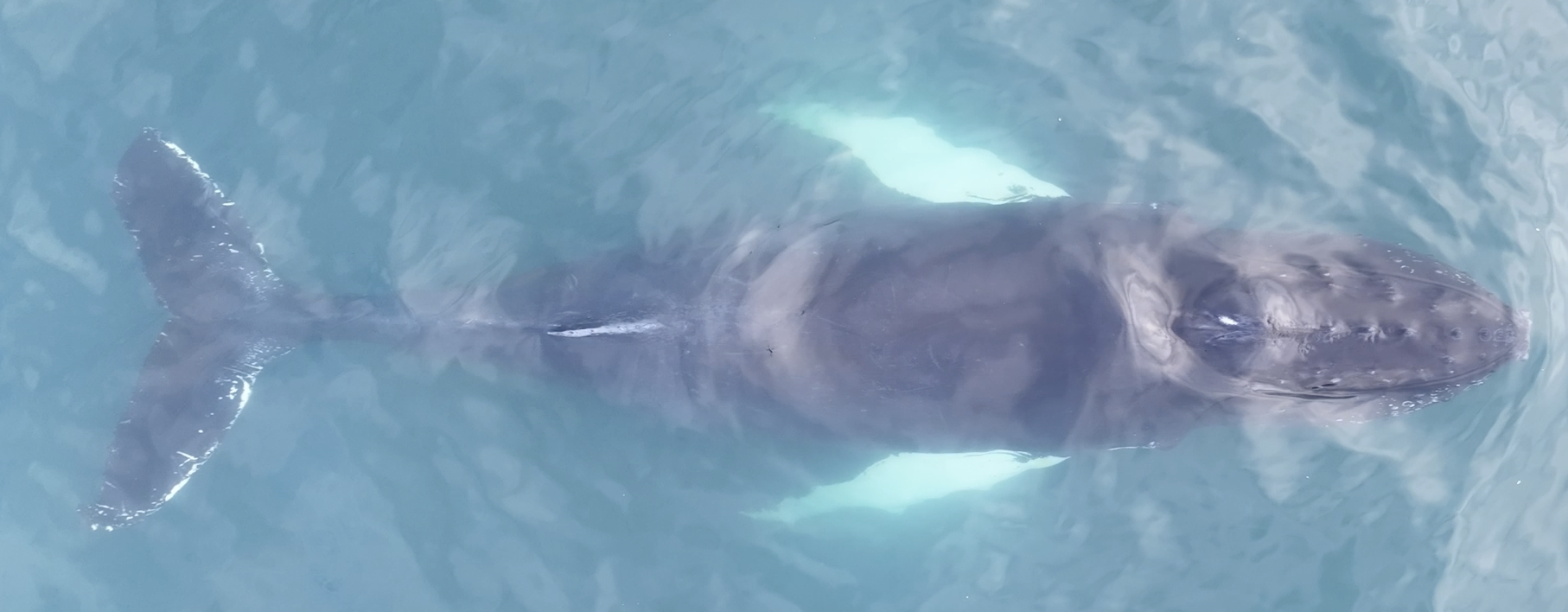
Chopped Off has an unfortunate name but it really has stuck. Looking at their fluke you can see where the name came from. At some point in their life, they must have had an accident. It could have been a boat strike or a severe entanglement where Chopped Off lost the end of its fluke, though survived and fortunately now lives on. We have only ever seen this whale in Ísafjarðardjúp, a very large fjord system which seems to be a good area for humpbacks. We often see large gatherings of 20-30 humpback whales throughout the fjord system.
We first saw Chopped Off in 2021 and then in 2023 and again this year. However, we know that this whale was also seen in 2022 (not by us). In 2023 we worked with a Sailing boat called Arvik: they provide a platform for research groups to conduct their projects at sea. We joined Arvik for a few weeks in July and August 2023 in Ísafjarðardjúp. While on board we collected aerial images of many humpback whales, one of which was Chopped Off. We showed the Arvik team this whale because it is so unique and to our surprise, they said they knew this whale and that it was their favourite humpback. Arvik had spent some time in Ísafjarðardjúp in 2022 before we knew them, and they had seen Chopped Off then! Nice to know that Chopped Off consistently likes to come to Ísafjarðardjúp.
Banana, meno524, no menoa yet
Ísafjarðardjúp (Mjóifjörður)
2024/08
length = 7.91m, max width = 1.44m
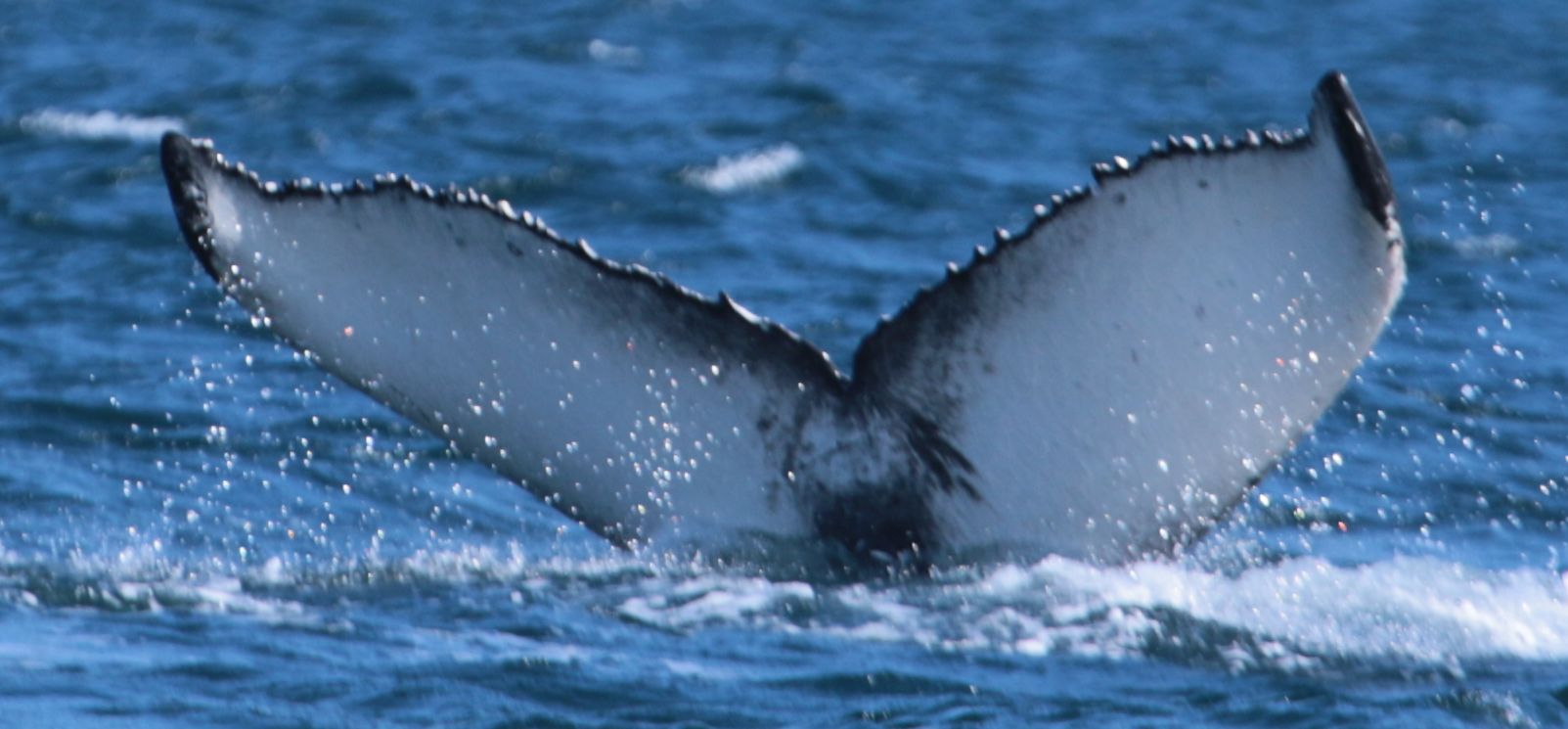
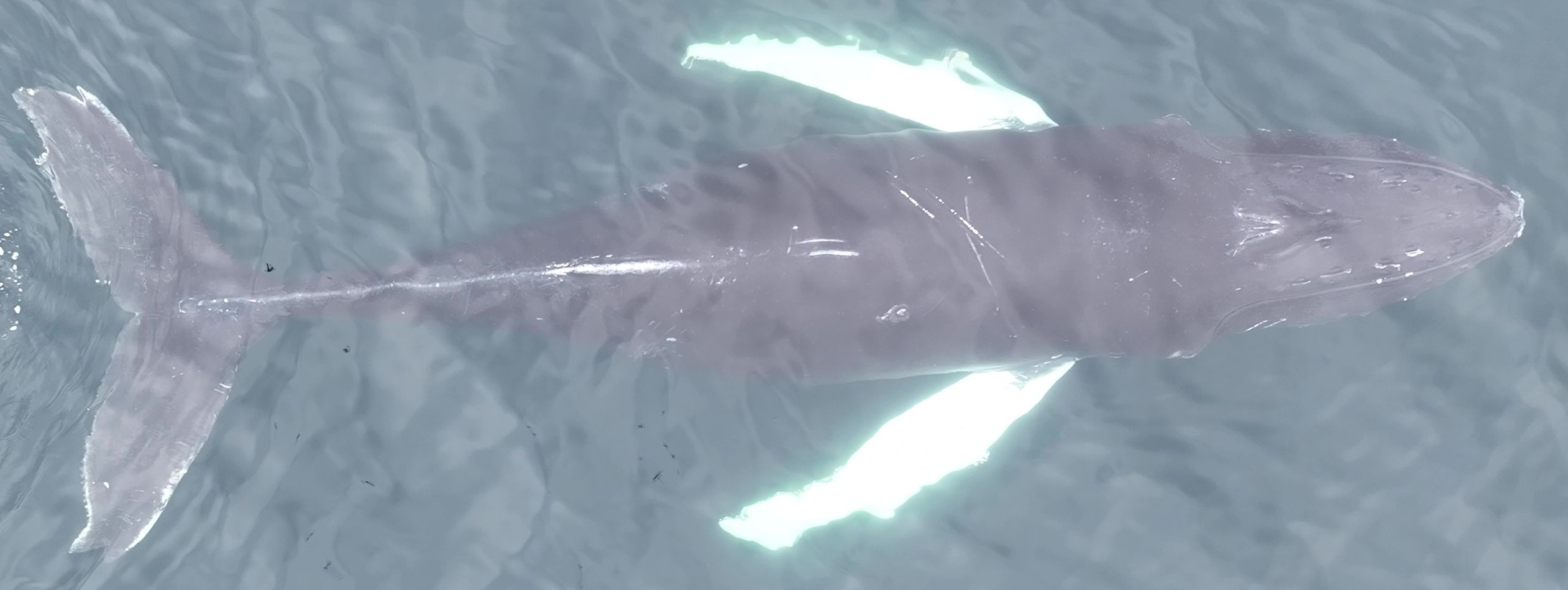
This season, one of our most unique experiences with a whale has been with Banana. On the 4th of August the team drove to Ísafjarðardjúp to look for whales on a what was supposed to be a good weather day. There were whales but it was too windy to drone in the end. So instead, we decided to stop at some geothermal hot pots on the way back to Drangsnes. These hotpots are down at the end of one of the fjords which has a bridge at the opening (Mjóifjörður). The team assured Katie (one of our new team members) that you never see whales in this fjord because of the bridge. Once in the hot pot, what happens? A whale starts breaching (jumping) repeatedly. We drove around the fjord to see it closer, and the whale came within 100m of the shore. We got out the camera and got some ID photos. The whale was named Banana because it has a banana shape on its fluke and… the team was eating banana bread while watching the whale.

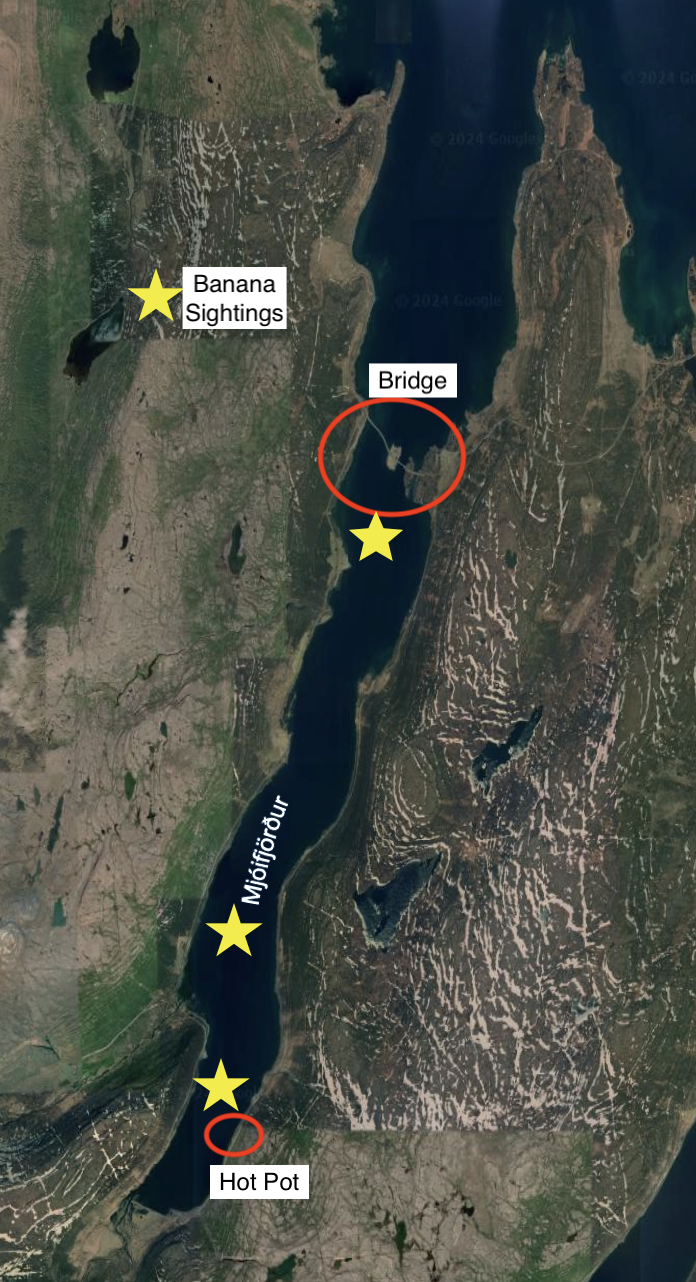
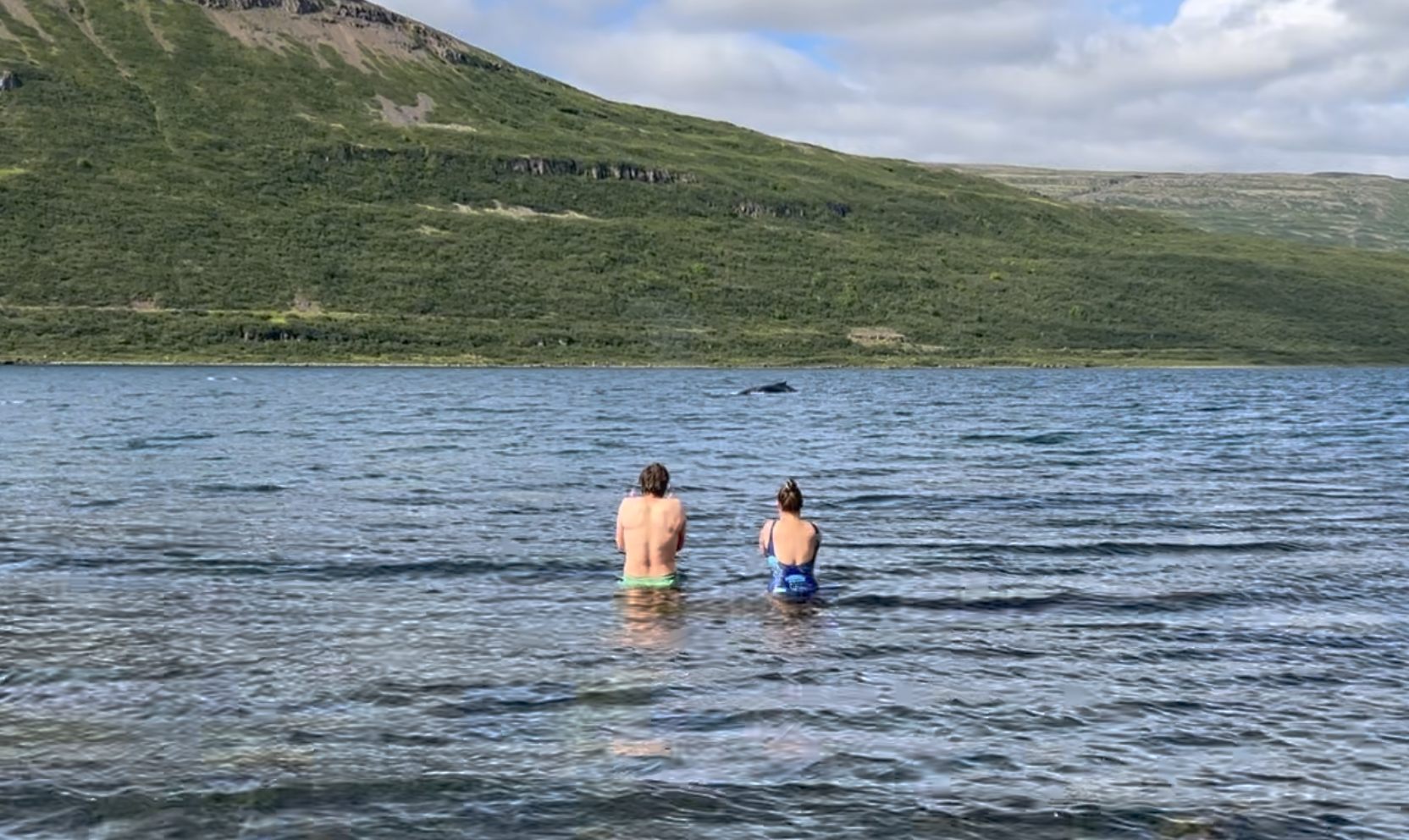
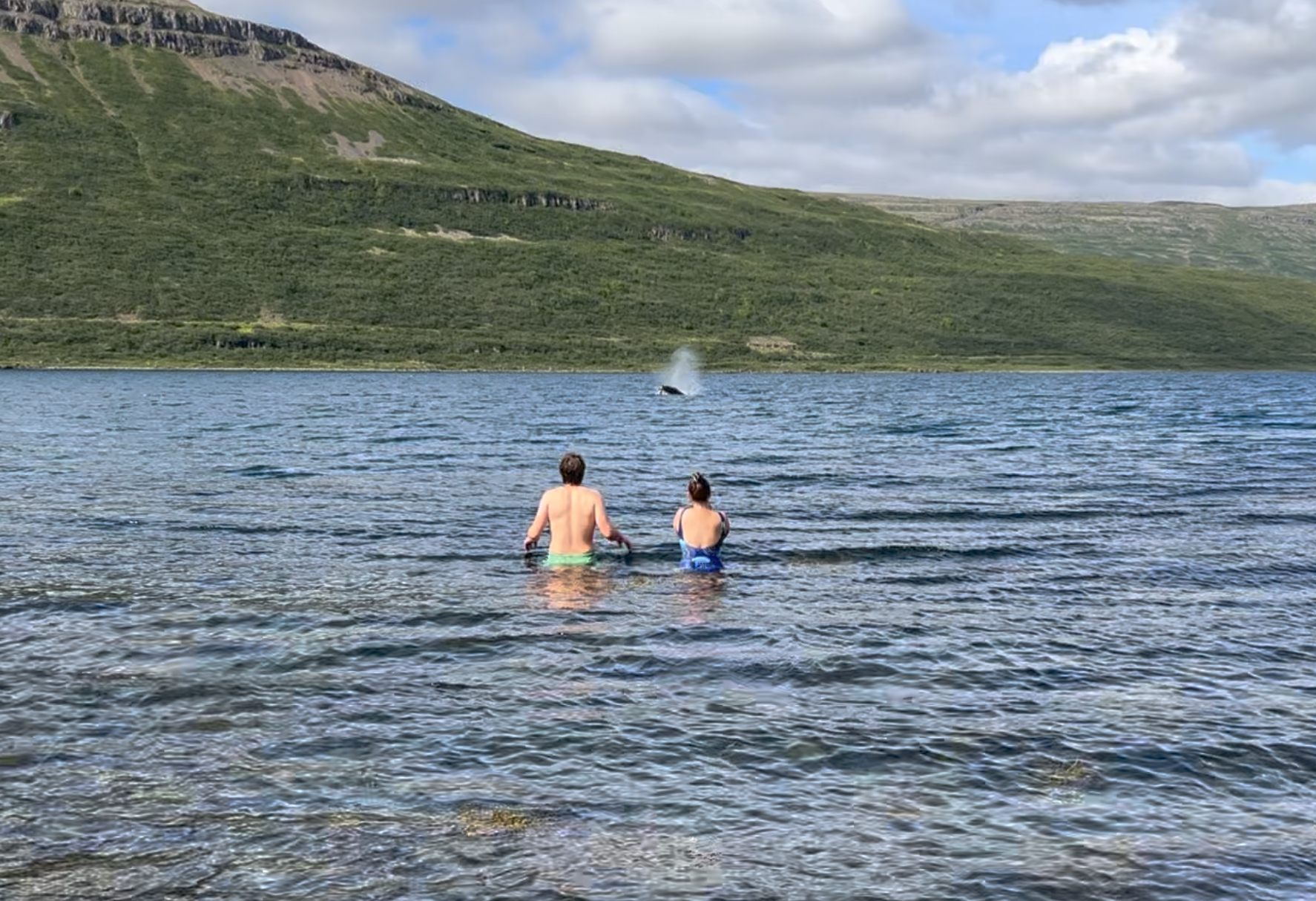
On august 7th the team returned to Ísafjarðardjúp to drone the whales (on an actually good weather day) and they got an aerial image of Banana on the way back to Drangsnes again in Mjóifjörður. On August 12th the team returned once again to drone over the whales in Ísafjarðardjúp and stopped again at the hot pots on the way back. This time Banana was still in Mjóifjörður and very near the hot pots, so some of the team braved the cold Icelandic sea and swam with Banana (100m at the closest). It was a magical experience! The team last saw Banana again on the 29th of August. Driving once again to find the whales in Ísafjarðardjúp, the team was just crossing the bridge at the mouth of banana’s Fjord (Mjóifjörður) and saw a blow. The team pulled over and got the drone up to get another aerial image of Banana. Then Banana breached twice which was amazing to watch. It is impossible to know if Banana is the only whale willing to go under the bridge, or if Banana has left Mjóifjörður between the times we visited. Alas, we hope Banana is enjoying their time in Mjóifjörður.
Mufasa, meno313, menoa4
Skjálfandi, Steingrímsfjörður
2021/07, 2024/08/09
length = 9.21m, max width = 1.56m


The last whale on our list is Mufasa. For the Whale Wise team Mufasa has been a special whale for a while. Back in 2021 the team was out on Skjálfandi Bay near Húsavík in a 5m boat collecting aerial images and blow samples for our projects at the time. It had been a long and early morning and just before giving up for the day and returning to the harbour, the team spotted one last whale. They approached slowly and got the equipment ready. But before they knew it the whale had approached the boat and was very curious, circling the boat and spy hopping (lifting its head out of the water). It was the most spiritual experience. The whale had loads of scars all over its body and so was initially named Scar, but because the whale had really been the hero of the day it was renamed Mufasa. Fast forward to 2024 in Steingrímsfjörður, the team finally gets a good weather day in August and gets the drone up in the air. They fly the drone over some familiar whales: Angel and Vampire and then one of the drone pilots says, “goodness this is a super scarred up whale!”. Once back in the cabin the team found that the fluke in the drone video matched Mufasa. So, we got to see Mufasa again after 3 years!
Judith calls this whale Scarface, and she saw them for the first time in 2019. This whale stayed in Steingrímsfjörður for a long time that summer. She remembers one amazing trip with Scarface in 2019 where it breached over and over! She had not seen this whale since 2019 so it was a nice surprise to have Scarface back this year.
The team is still seeing Mufasa in Steingrímsfjörður this year and hopes that we will continue to do so for many years to come.

By Ellie Young
FIeld season has well and truly kicked off and unbelievably we are almost 2 weeks into the field season, in the westfjords back in our beloved cabin. Here is a little recap on what has happened so far.
Tom and Alyssa started the field season a little differently this year spending 2 weeks in the eastfjords for the whales of Finnafjörður project. Getting there was quite the adventure with some car issues in our beloved yellow van Savannah, the team got there 2 weeks later than expected with Tom getting stuck in Germany with a broken down van. Luckily fellow whale wise member Johanna was nearby and Tom managed to get the van in tip top condition to continue to Iceland. Despite the van issues the team still had a successful stint in the east scouting land based sites and making great contacts to continue our research there.
Next up was the Ocean Film Festival in Húsavík where the rest of the team met up. It was a great few days and with a really interesting range of films from adventure documentaries through Iceland’s rivers, to the weird and wonderful world of deep sea creatures. It was great to see so many people interested in learning more about our oceans and having engaging discussions after the movies, giving us all food for thought.

Once the film festival was over, Tom, Alyssa, Katie, Flo and I said our goodbyes to Húsavík and started the long drive to the Westfjords to Drangsnes, our home base for the field season to continue our Scars from Above project . On the way we had an amazing encounter with 3 humpback whales feeding very close to land. Many people had stopped at the side of the road to see these magnificent whales from their cars. Unfortunately, the weather wasn’t quite good enough for us to be able to drone so we said goodbye to the whales and continued our journey. Once we arrived at the cabin, we then had the mammoth task of unpacking the van and sorting all of the research equipment.
The first week in the cabin was a bit of a whirlwind. We had pretty mixed weather which wasn’t the best for droning. Very excitingly, local whale watching guide Judith from Laki Tours messaged us that there was a blue whale in the fjord so the team very quickly and excitedly got in the van to see it from land. It was quite far away but we were able to hear the blows from the whale and see it swimming through the fjord. A very rare sight here in Drangsnes.

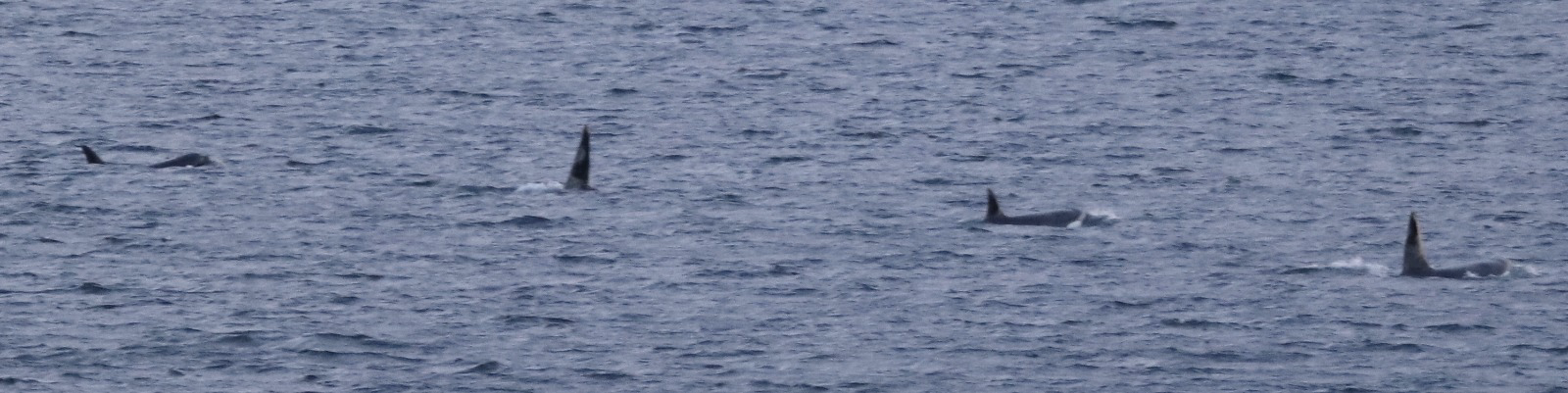
The next day we had a big driving day to Ísafjörður to meet up with masters students Ben and Laura whilst droning where we could along the way. After leaving at 6am we were all pretty exhausted when we finally headed toward Drangsnes at 10pm, however, the day did not stop there as we saw some Killer Whales!! Another rare sighting in this fjord and to see them one day after seeing a blue whale was pretty crazy. We spent another 2 hours watching the pod, going incredibly far into the fjord, passing a feeding humpback along the way. There were 2 big males in the pod and it was incredibly exciting to see them. Even from land you can really appreciate the size of the male’s dorsal fin towering above the water. Finally at midnight the team was well and truly exhausted and headed to bed after an exciting couple of days.
Then it was time to head down to Reykjavik as Tom and Alyssa joined the National Geographic Lindblad ship, as visiting scientists to continue our research. We had a couple of hours to enjoy Reykjavik which mainly meant having good food and coffee (see Katie’s excitement after our bakery stop below). Sadly this also meant saying goodbye to Alyssa as she will be heading back to the US, and coming back later in the season.

That left the cabin team, Flo, Katie and I to continue our droning in Drangsnes. We have already managed to get aerial images of 12 whales, but unfortunately the weather hasn’t been the best and right now we’re in the middle of a storm which is going to last a few more days. We have been filling our days with yoga, computer work, celebrating Flo’s birthday and some nice walks. We even found a rather adorable baby duck on our last walk which thought that I was its parent for a while. So I guess I’m a bird mom now.


By Amelie Laute
What can you hear when you put your ears below the water surface? Is it loud or is it quiet? Maybe you can hear the sound of wind and waves. If it’s raining you can hear the water droplets hitting the surface. Maybe you can even hear the low rumbling when the earth is moving, during an earthquake or volcano eruption. Depending on where you are you may also hear some animals: dolphins whistling, fishing moaning, sea urchins scraping on the seafloor, or humpback whales singing. It’s never really quiet below the water surface. But since a few decades it’s becoming even louder… now you can often hear the sound of ships passing by, the bangs produced by construction work or the high frequency beeping of fish finders. Many of our human activities in and around the ocean produce noise that contributes to all the sounds underwater. We call all these sounds together the soundscape, like a landscape, but for sound. In our modern ocean you can barely find a place where human made noise doesn’t contribute to the soundscape. This contribution of noise can have effects on the animals relying on sound, for example for communication or navigation. If the sound is too loud or in a similar frequency, the signal of interest (e.g. a call from a conspecific or the movement of prey) can be masked. The animals can also perceive the sounds as a threat and try to move away, avoiding otherwise important feeding areas. For scientists, it is very difficult quantifying these changes due to anthropogenic activity because we don’t have data from the time before the human sounds were present. So we don’t know how exactly it sounded before, or how the animals were behaving differently.


Photo credit: Barba.no
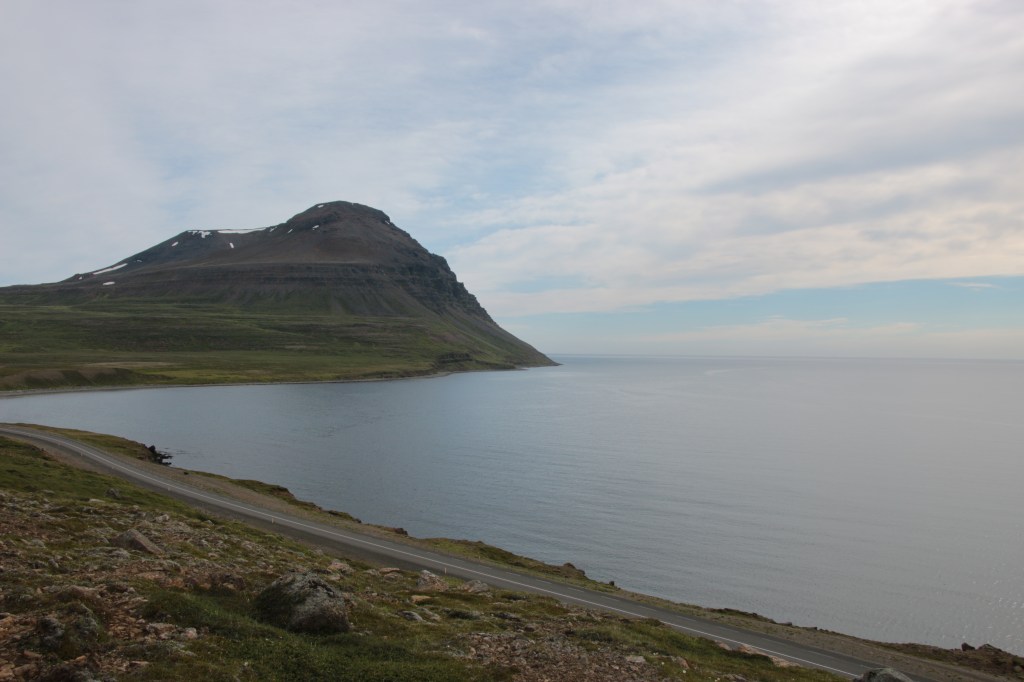
In the Northeast of Iceland there is a remote fjord with currently very limited anthropogenic activity. The “Finnafjörður” is relatively pristine, only a few fishing vessels use the area once in a while and few large vessels pass in the distance. According to the locals, the fjord is regularly visited by a variety of animals, including many fish species, pods of dolphins, minkes, and humpback whales. There is no village on the coastline of Finnafjörður and only one small fishing village in the larger area, Bakkaflói. However, in some years this remote area is about to change drastically. A large port is supposed to be built in Finnafjörður, facilitating trading, servicing, and processing of raw materials of increasing numbers of ships passing through Arctic water as sea ice is melting more and more. Both the construction as well as the operation of such a port is likely going to result in a drastic change in the underwater soundscape of the region with potential effects on the local animals.

To understand and monitor how much the port changes the soundscape of Finnafjorður we have recorded the underwater soundscape for one year in 2021/22 while the fjord is still relatively pristine. We have now finally finished the analysis and could confirm our expectations. The region is indeed relatively quiet at the moment and has limited anthropogenic noise sources contributing to the soundscape. Let’s go into a little bit more detail of our results:
We have measured how loud the soundscape of the fjord is overall using a variety of different metrics to make our values as comparable as possible to other studies and regions globally. And we found that the fjord is relatively quiet, with loudest underwater sounds in winter when it’s stormy and quietest times in summer and fall. We also analysed the contribution of different sources of sounds. Once in a while we could detect vessel and fish finder sounds but they were relatively quiet and overall not dominant. We could occasionally hear dolphin whistles and fish grunts. During winter we were really excited to hear humpback whales singing nearly every day. Usually, humpback whales migrate to the tropics to breed and give birth, and this is where singing of male humpback whales is commonly observed. Since some years however song is documented more and more also in high-latitude feeding areas in winter. Are these whales too young to reproduce practicing singing without travelling the long distance? Or does singing have another purpose but reproductive display? There are many open questions, and we are therefore thrilled to have recorded singing humpbacks in the fjord. This definitely needs to be investigated further. But neither dolphins, fish, nor the singing humpbacks were very loud and didn’t dominate the soundscape of Finnafjörður. Instead, the loudest and most common sound detected was wind. Wind and rain. The sound of crushing waves due to wind and of water droplets hitting the surface were clearly dominating the soundscape of Finnafjörður. We also detected sounds that couldn’t be clearly identified, most of which were low rumbling sounds, likely geophonic (produced by non-living nature, e.g. moving earth, etc.). And a mysterious sound in spring. Between end-March and July every night there was this continuous low-frequency humming, like a vessel but much more constant in amplitude during all night. We have searched the literature and couldn’t find a similar sound documented elsewhere. We also asked the locals, but no one has an idea where the sound comes from. It sounds as if it’s made by some human activity but there is no machinery, vessel or anything in the fjord constantly during this time at all. Maybe some fishing buoys have a function that makes sound? We are still searching for the source of this mysterious rumbling…
To summarize, we found that Finnafjörður is relatively quiet. Apart from the weird unknown sound in spring the soundscape is mostly dominated by natural sounds, like from wind and rain. Animal sounds can be regularly detected but are relatively quiet.
So what? This means that the soundscape of the fjord is indeed relatively pristine. We are currently in the process of publishing our results. Before construction of the port starts the company has to make an environmental impact assessment (EIA), describing the region scientifically and informing management plans, for example how much care needs to be taken to limit the amount of noise produced. Our results can be implemented into this EIA, ensuring noise reduction during construction and operation is given enough importance by showing how pristine the fjord currently is and by documenting its use for certain animal species. Additionally, our results can be used later to monitor the changes in the soundscape and animal presence when the port is actually built. Documenting these changes can be used to inform future construction plans elsewhere and hopefully positively impact the anthropogenic footprint on underwater soundscapes.
So, are we done for now with this project? Not at all! This summer (mid-July) Whale Wise has deployed another hydrophone in Finnafjörður for a year. We want to make sure our results are general and not specific for 2021/22. We also want to investigate the winter song of humpback whales further and hopefully find out the source of the weird spring sound. Additionally, since only animals that make sounds and are close enough to the hydrophone can be recorded, and since the species making a sound sometimes cannot be clearly identified (e.g. many dolphin species sound similar), we also plan active field work in the Finnafjörður area. This July Tom and Alyssa have tested the idea and have spent many hours on the shore conducting scan samples, counting and documenting every whale seen. This helps to describe the presence of animals that cannot be detected on the hydrophone and to assign detected vocalizations to specific species. We intend to collect many more scan samples this winter and potentially next summer. So you will hear much more about exciting field stories from Finnafjörður later.
By Tom Grove
Why have one field season, when you can have two?!
Normally, a Whale Wise field season is focused around a single major research project; we are based in one location and may travel to other areas over the course of summer. We often conduct other research projects along the way, such as hydrophone deployments and testing drone noise, but they are not the primary driving force for running a months-long field season.
However, 2024 will be different. Lasting from June to October, our summer research campaign will be split into two quite distinct seasons in different areas, involving three major research projects. Two projects were already established in previous years and one is completely new in 2024. Let’s take a journey through our 2024 plans …

June–July: Whales of Finnafjörður
First, I want to transport you to the remote northeast of Iceland, and the small fjord of Finnafjörður. Rolling hills and wide-open landscapes slope down to coastlines filled with the sounds of seabirds. This area is beautiful in its desolation, one of the most remote parts of Iceland. Due to its location, there is limited scientific knowledge about whales in the wider area, but anecdotal observations suggest that this could be an important foraging ground for species such as humpback whales. This information (or lack thereof) is important because there are plans to build a large port in this small fjord in the coming years to serve trans-Arctic shipping. Port construction and ensuing vessel traffic could negatively impact whales in the area, but without information on species occurrence, distribution and habitat importance, we cannot take steps to limit these potential impacts.
To address these knowledge gaps, we are using acoustic and visual methods to better understand whales in the area. This started with a year-long hydrophone deployment in 2021-2022; Amelie has analysed these recordings for her master’s thesis and we can’t wait to share those results soon. Sound recordings are very important to assess whale occurrence and behaviour, but shouldn’t be used in isolation – they don’t give accurate information about the absence of whales (i.e., a whale might be present but not vocalising) and it’s often difficult to determine species and number of animals from these recordings.
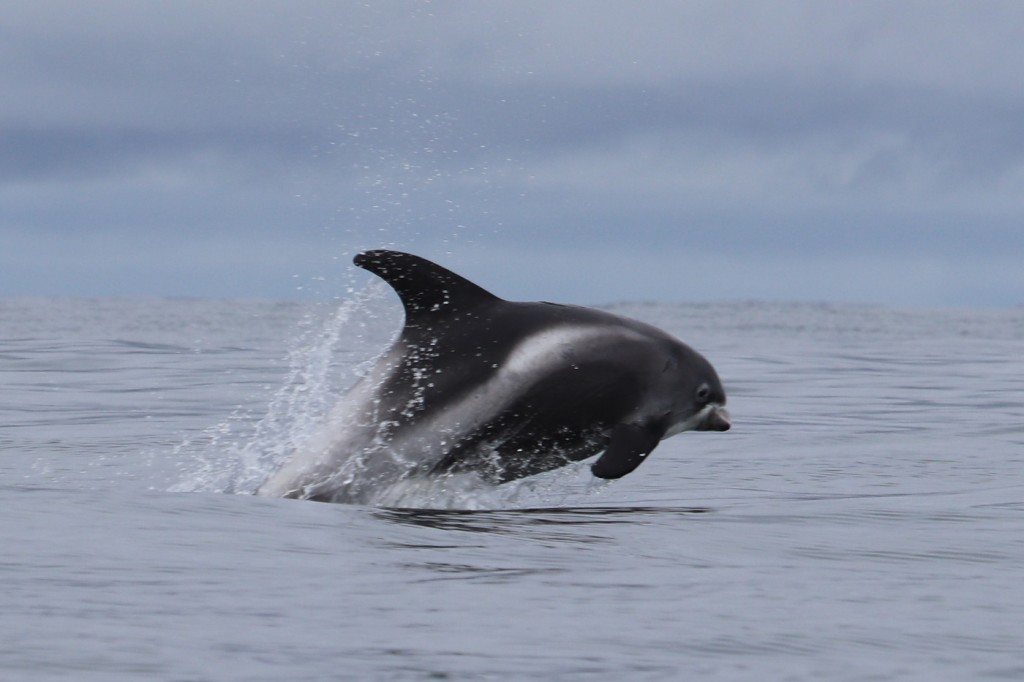
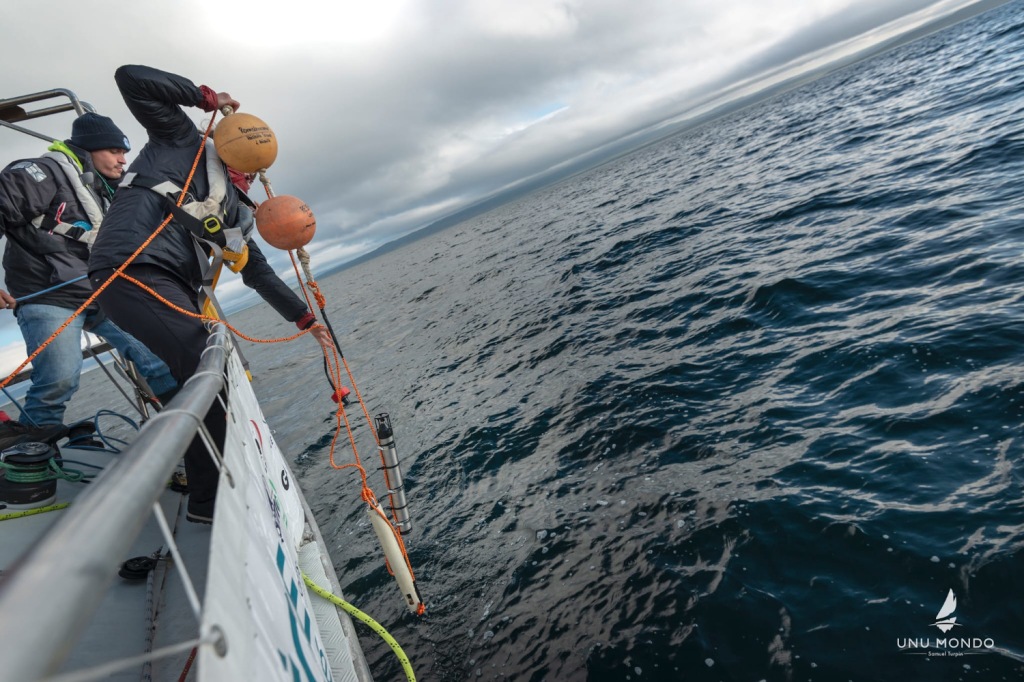


Therefore, in 2024 we are combining acoustic and visual methods to record whale occurrence, diversity and distribution. Alyssa and Tom will conduct visual surveys around the port area for three weeks and deploy our hydrophone for another full year. We know that humpback whales frequent the wider area in summer and we can’t wait to see what other species we can find. For humpback whales, we will also attempt to collect fluke photos for photo-identification, in order to determine how humpbacks in this area are connected to other parts of Iceland and the north Atlantic.
Critically, we couldn’t do this work alone and we are thrilled to work alongside the local community to achieve this. We will be based at the nearby village of Bakkafjörður, with discounted accommodation provided by Northeast Travel – special thanks to Þórir Örn Jónsson. Þórir and other people from Bakkafjörður have helped us to choose field sites, frame research questions and get out to sea for hydrophone deployments. We are utterly grateful for their input and knowledge – working alongside local communities is critical to conduct this work in a fair and effective way.

July–October: heading west
After our ‘east’ field season, we head west for the next 10 weeks. On the way, we will spend a few days in Húsavík, where we will team up with Húsavík Whale Museum to run the annual film festival, Ocean Films Húsavík. Over two days (July 19th and 20th), we will showcase amazing ocean films from around the world. This is an open event and you can join us at the museum in person or watch the films online!
Straight after the film festival, the team heads to Drangsnes, our main field base for the last two seasons. From here, we will collect data for two projects, with four team members at a time. The first is Scars from Above, our main project since 2022. This is our third and final season of data collection for the project, which involves taking aerial images of humpback whales using drones. These images will be compared to boat-based images of tail stocks, primarily taken by our long-term collaborator Judith Scott, a whale-watching guide for Láki Tours. 2023 was our best season yet and we can’t wait to collect many more images this summer.


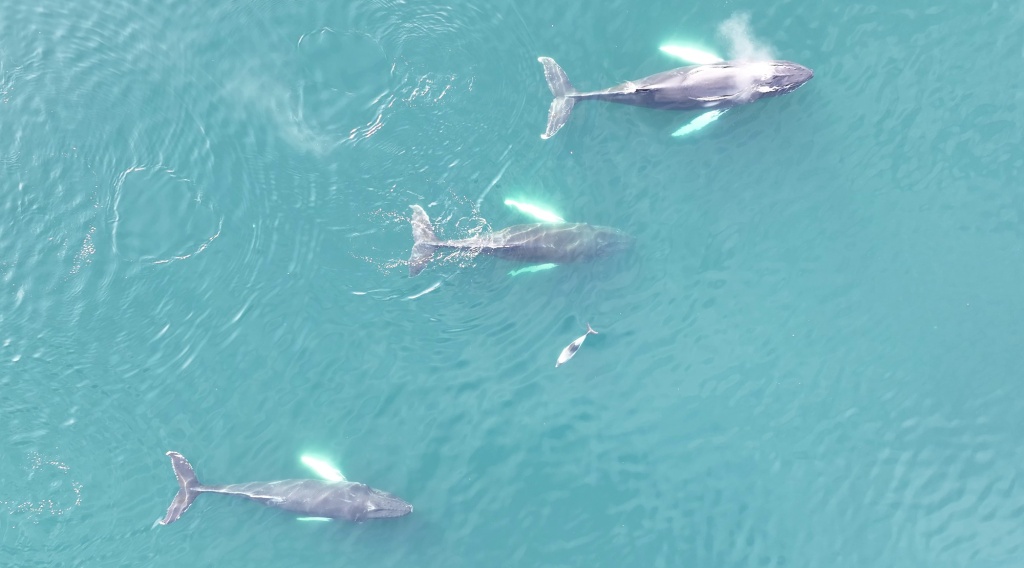

As part of Scars from Above, we have spent many hours watching and study whales in Ísafjarðardjúp, a large fjord system to the west of Drangsnes. Despite not being a well-known ‘whale hotspot’ for tourists visiting Iceland, this is actually an incredible area to see humpback whales, often feeding in large groups close to shore. We originally found out about the area through sighting reports on the ‘Iceland Whale Sightings’ Facebook group. Due to the increasing presence of whales, there is now a small whale-watching industry based out of Ísafjörður. Beyond this, levels of human activity are increasing in the area, from large-scale aquaculture (fish farms) to cruise ship traffic.
Since there had been limited scientific research in the area, we were interested in studying whale distribution, occurrence and behaviour in the area to inform possible conservation measures to protect this foraging habitat (such as rerouting vessel traffic where feasible). We discussed this with our connections in the area, including whale-watching companies and the University Centre of the Westfjords (all based in the town of Ísafjörður), as well as the University of Iceland. Together, we came up with a research project to improve our baseline understanding of humpback whales and other cetaceans in the area, called ‘Whales of Ísa’.
This project is centred around local partners. Two students from the Coastal and Marine Management Master’s programme at the university centre – Laura Lyall and Benedek Regoczi – will conduct their master’s thesis on the abundance and distribution of humpback whales throughout the fjord system. Laura will use photo-identification to determine how many whales use the area, and how long they stay for – key measures of habitat importance. Ben will use sighting surveys from land and vessels to map the distribution of whales – critical information to inform conservation measures. Brack Hale, academic director at the university centre, helped us to select students and led a successful grant application to provide summer salaries for Laura and Ben! Meanwhile, Filipa Samarra and Marianne Rasmussen from the University of Iceland (our longstanding collaborator) are co-supervising the thesis projects, alongside Tom and Alyssa from Whale Wise, and are additionally providing research equipment.
To inform this research and gain access to a vessel platform for research, we are working with two whale-watching companies – Sjóferðir (through owner Stígur Berg Sophusson) and Borea Adventures (through guide Justin Brown). Stígur has regularly shared his sightings for the last two years, and Justin was one of the first people to study whales in Ísafjarðardjúp, and our 2024 research will build directly on his master’s thesis. Laura and Ben will join their vessels throughout summer to collect photos and sightings data. Without the support of these local companies, the project simply wouldn’t take place – thank you both for sharing your knowledge and shaping the project’s direction.
From the research results of this project, we aim to produce a set of management recommendations which we can discuss and share with local communities and industry. We are grateful for the network of partners we have developed in Ísafjarðardjúp and we hope this is just the beginning of long-term monitoring, working with students and interns to better understand and protect the whales of the Westfjords.
During our busy Westfjords field season, we will continue with our engagement activities. Beyond social media and blogs, we will also run Whales on the Go after a successful 2023 trial – using our roadside research to engage passersby with whales and their conservation.

Thanks for reading about the 2024 season and stay tuned for exciting updates as the season progresses!