 Whale Wise
Sixty humpbacks in one fjord: an incredible day of research in the Westfjords
Tom shares insights into a full dedicated whale survey of the largest fjord system in the Icelandic Westfjords.
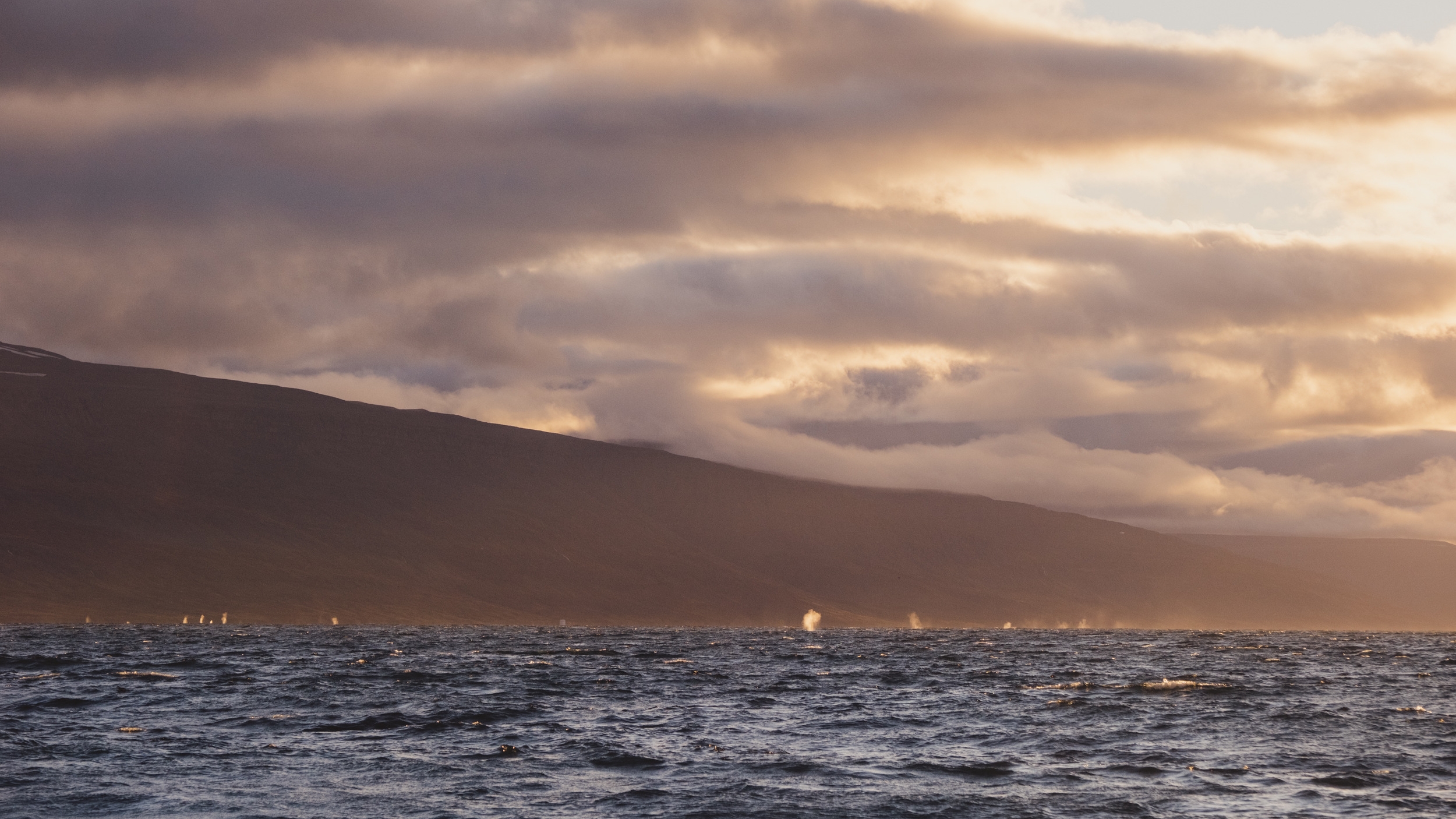
A calm autumn day in the Westfjords. A chill in the air signals impending winter. And in my eyes and ears, the breath of humpback whales – blows everywhere, leviathans gasping for air after foraging in the frigid depths. Winter may be on the way, but this fjord is literally full of life.
Around the world, most humpback whales feed in high-latitude foraging grounds in summer and migrate to tropical breeding grounds in winter. However, in some foraging areas, humpback whales hang around late into the season, stretching into autumn and even winter.
The Westfjords is one of those places. We see whales throughout summer, but the real peak seems to be autumn – October and possibly November. However, sighting effort remains limited during this period – the whale-watching season has ended, light is fading and the weather is often pretty awful. Therefore, documenting this peak in occurrence is challenging and possibly hasn’t been achieved before.

Why recording the autumn peak of humpback whales in the Westfjords matters for conservation
In science, we often talk in terms of averages – looking for trends in data and paying less attention to outliers. However, applied to wildlife, it’s also really important to capture peak occurrence in an area. If we can identify the time that most humpbacks visit the Westfjords, and estimate the number of whales present, then we can pinpoint the most critical time for habitat protection. For example, let’s say the population was declining and vessel traffic was identified as a potential threat – the peak season for humpback occurrence might be the best time to enforce stricter vessel traffic regulations. This prioritisation of management is critical – it maximises the benefit for wildlife, but also limits disruption of coastal human activities upon which Westfjords communities depend.
A motley autumn crew
To capture this peak in whale occurrence, we wanted to document the number of humpback whales present in a single day. We focused on the largest fjord system, Ísafjarðardjúp. This area has some of the largest numbers of autumn whales and is subject to rapidly expanding industries. Since we couldn’t survey the entire Westfjords at once, focusing on this area made the most sense.
To achieve this, we set out on October 6th with Sjóferðir, a whale-watching company based in Ísafjörður. Captain and owner Stígur took us out on the vessel Ingólfur, kindly donating these resources to the survey. Having worked alongside Sjóferðir throughout summer, we knew firsthand that they prioritise responsible whale-watching that limits disturbance to all cetaceans.
Alyssa, Tom, Josie and Rebekka from the Whale Wise team led the survey. Our aim was to photograph as many whales as possible and record sightings distribution. We were also joined by Rebecca Douglas, our board president, who took photos and videos throughout the trip for both research and media purposes. Finally, Judith Scott, an experienced whale-watching guide in Iceland, boarded to offer her photographic expertise.


When we returned from the trip, we immediately started processing images, matching fluke photos to our local catalogue of whales sighted since 2018. We used the incredible Happywhale – an online, global database of humpback whales – to facilitate this process and gather extra information about each whale, including international matches. If you ever take fluke photos, I strongly encourage you to upload them to Happywhale to support science and follow your whales’ epic journeys.
Success in numbers: 60 humpbacks in a single day!
Our trip was a huge success. The weather was mostly calm(ish) and sunny, allowing us to make the most of daylight hours surveying the fjord. Ísafjarðardjúp consists of a larger central fjord, with smaller fjords branching off – we weren’t able to cover those small fjords, but we surveyed a large portion of the area, confident that we covered the primary whale areas.
In total, we identified 60 humpback whales based on their fluke pattern – SIXTY! We knew there were plenty of whales but we were truly shocked by the final number. This number should be treated as a minimum – at least two whales didn’t fluke (show their tail) and I’m sure we missed a few others.

This number included some new tails for the season (11 to be exact), but also many familiar ones – Starlight, Shadow, Octopus and Osprey, to name a few. Most whales were spotted in the main large fjord, in water deeper than 120 metres (400 feet) – we think they were feeding on krill, which accumulates in huge densities in these deep channels. Group size ranged from 1 to 5 animals – when animals came to the surface together, they were likely foraging cooperatively, possibly helping each other to corral swarms of krill into smaller areas.
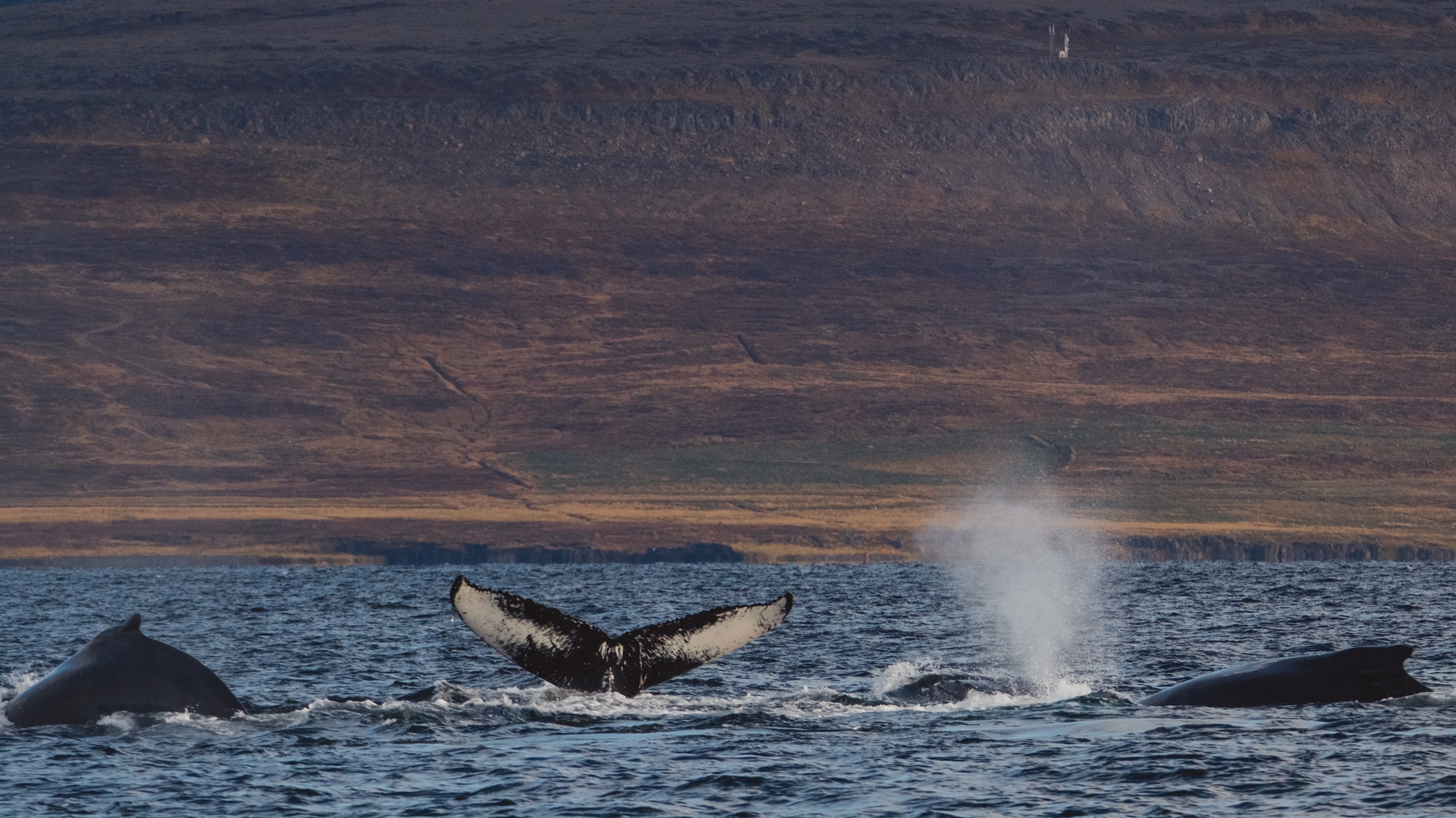
Whales in Ísafjarðardjúp exhibit very high inter-annual resighting rates: in other words, most individuals come back year after year. Out of the 60 whales that we saw on October 6th, 40 had been seen in the fjord in three or more years (and 26 whales for 4+ years). One whale – Butterfly – has been seen for at least 7 years! In contrast, to our knowledge, 7 whales seen in our snapshot survey had not previously been documented in the fjord.
International connections: long-distance migrations across the North Atlantic
Humpbacks are known for their long-distance migrations spanning entire ocean basins. For Icelandic humpbacks, we know that their breeding grounds include the Caribbean and Cape Verde (off West Africa) but only a very small proportion of whales have been photographically matched to these areas. However, amongst the 60 whales we surveyed in a single day, the connections are amazing – most whales had been seen elsewhere in Iceland, but plenty matched to areas farther afield. Locations include (with whale names):
- Dominican Republic (Starlight, Vivi)
- Guadeloupe (Lobster)
- British Virgin Islands (Zephyr)
- Ireland (Jasper)
- West Greenland (2Lines)
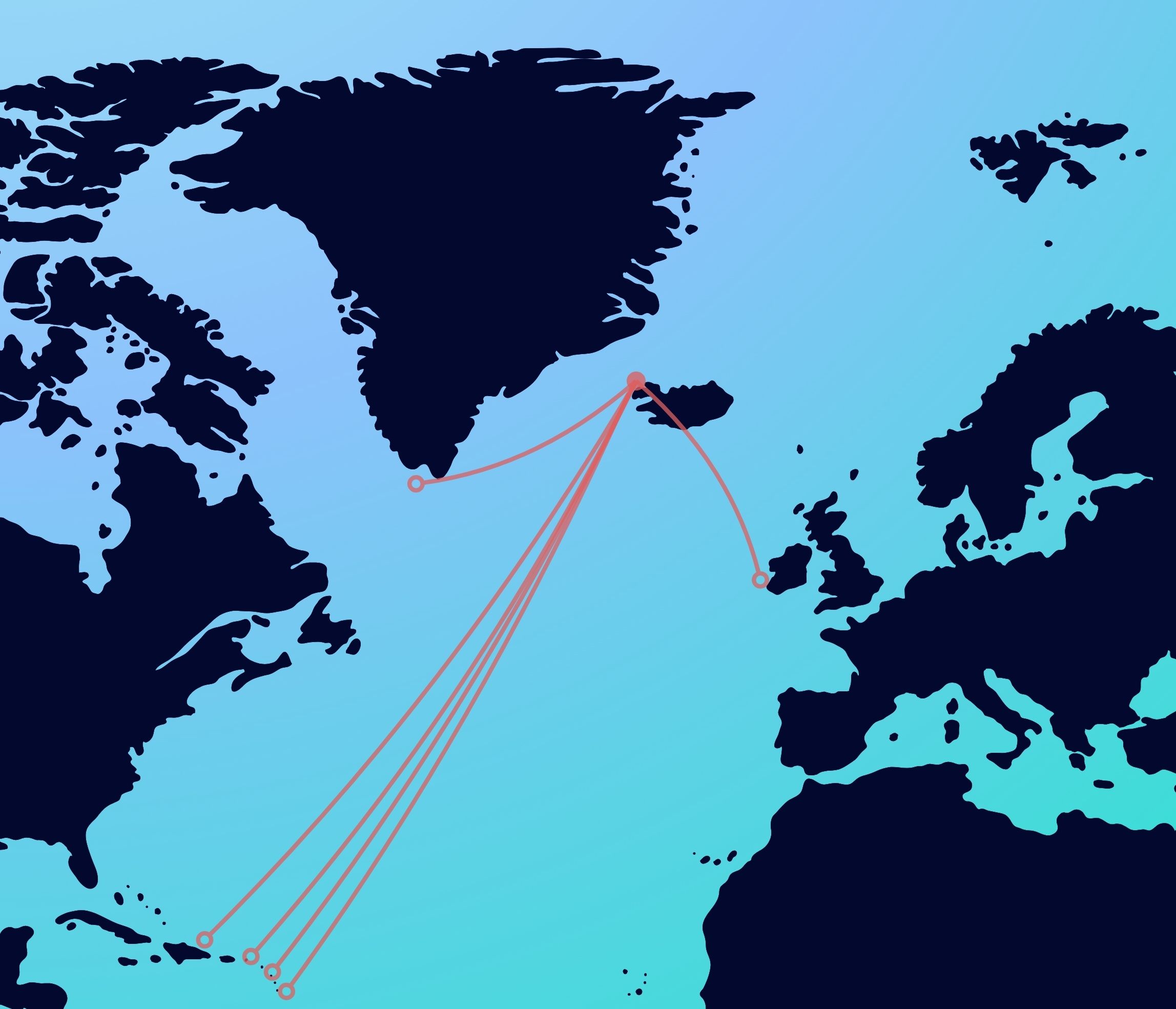
One whale deserves special mention. Duo was first spotted in Ísafjarðardjúp in 2018. Several years later, in 2022, this whale was spotted with a calf in Barbados – incredibly, the first humpback match between Iceland and Barbados! We then spotted Duo and her calf in Ísafjarðardjúp in September 2022, confirming a huge northward migration. These observations were included in a publication led by collaborator Dr Charla Basran. That same year, we also spotted Osprey with a calf, confirming her sex and reproductive status. We were excited to spot these two known mothers on October 6th.

It’s not just one day: the importance of long-term monitoring
We wanted to dedicate an entire day to capturing this snapshot of Ísafjarðardjúp, but we’ve also been consistently monitoring this area since the end of May, and more sporadically since February. Many of the 60 whales have been seen throughout summer, including 19 since July and 3 since April. One small whale – Valentine – has been seen every month since February! In other words, October might be the peak, but these individuals rely on Ísafjarðardjúp for far longer periods. This year’s observations are in line with data from 2024 (our first year of consistent monitoring) – as part of her master’s thesis, team member Laura found that visiting humpbacks spent nearly 3 months in the fjord system, on average, before moving on.
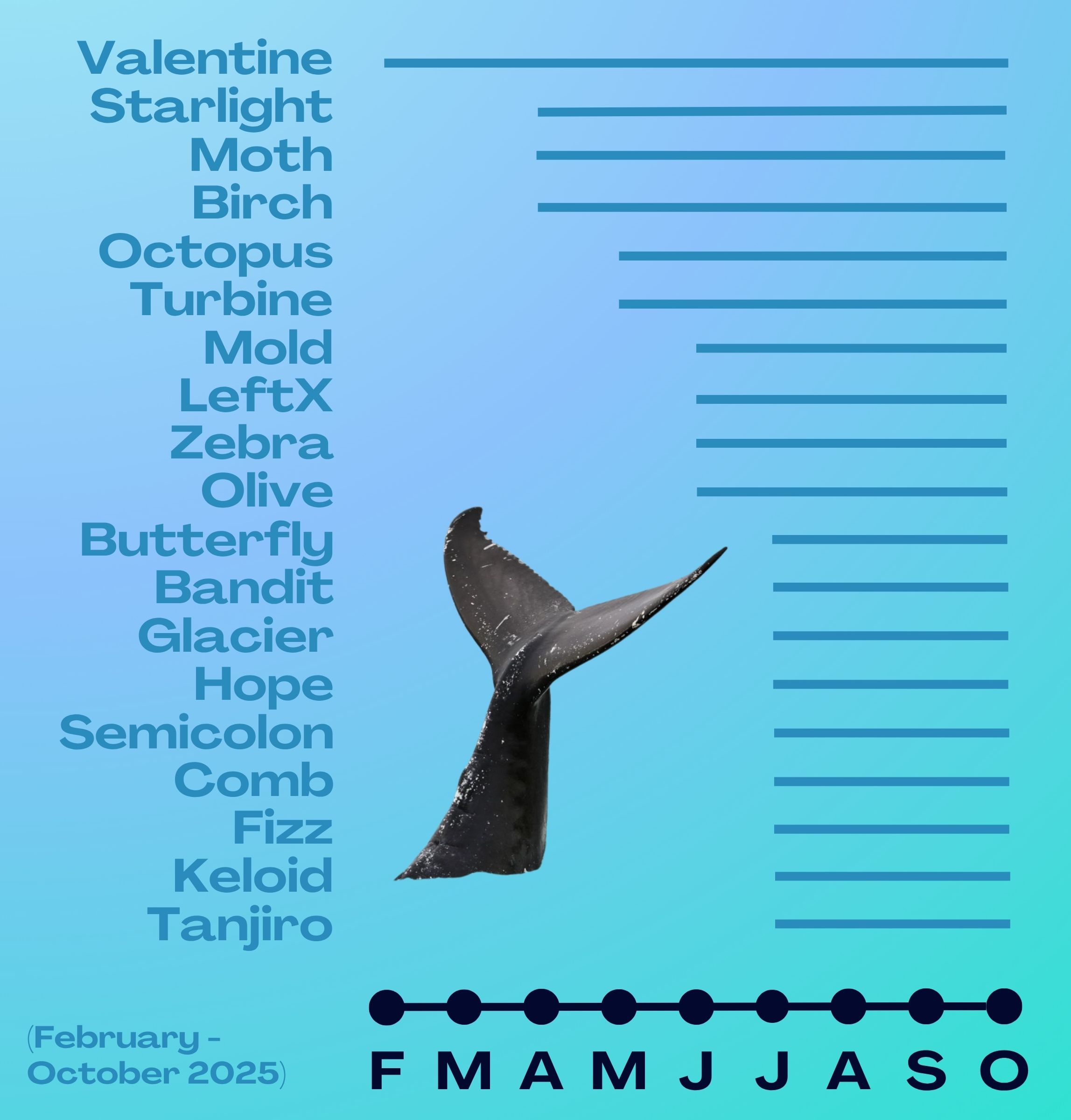
Combined with consistent re-sightings across years, these high residency times highlight the incredible productivity of the region. Failure to protect this habitat could compromise the health and fitness of individual whales that consistently rely on it.
Mixed news: fresh injuries highlight population threats
We were very happy to see so many familiar faces, but some had clearly faced recent challenges. Comb and Glacier, two of our most regular whales, had been recently entangled in fishing gear, evidenced by fresh injuries and pieces of flesh hanging off. This highlights that, despite the area’s importance, these whales are still threatened by human activity locally. Entanglement in fishing gear remains one of the largest threats to humpback whales globally and, in Iceland, at least 25% of individuals have been entangled.
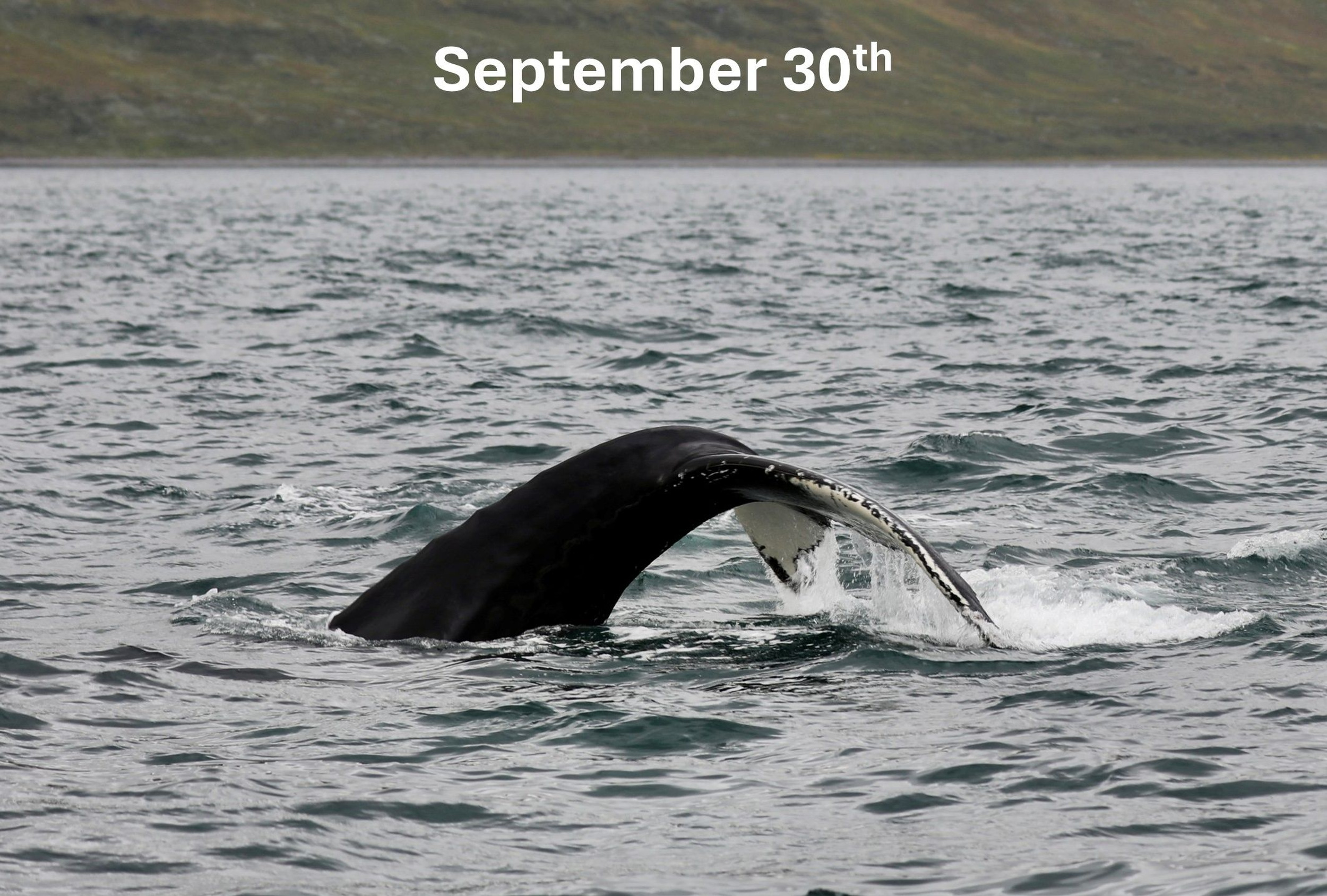
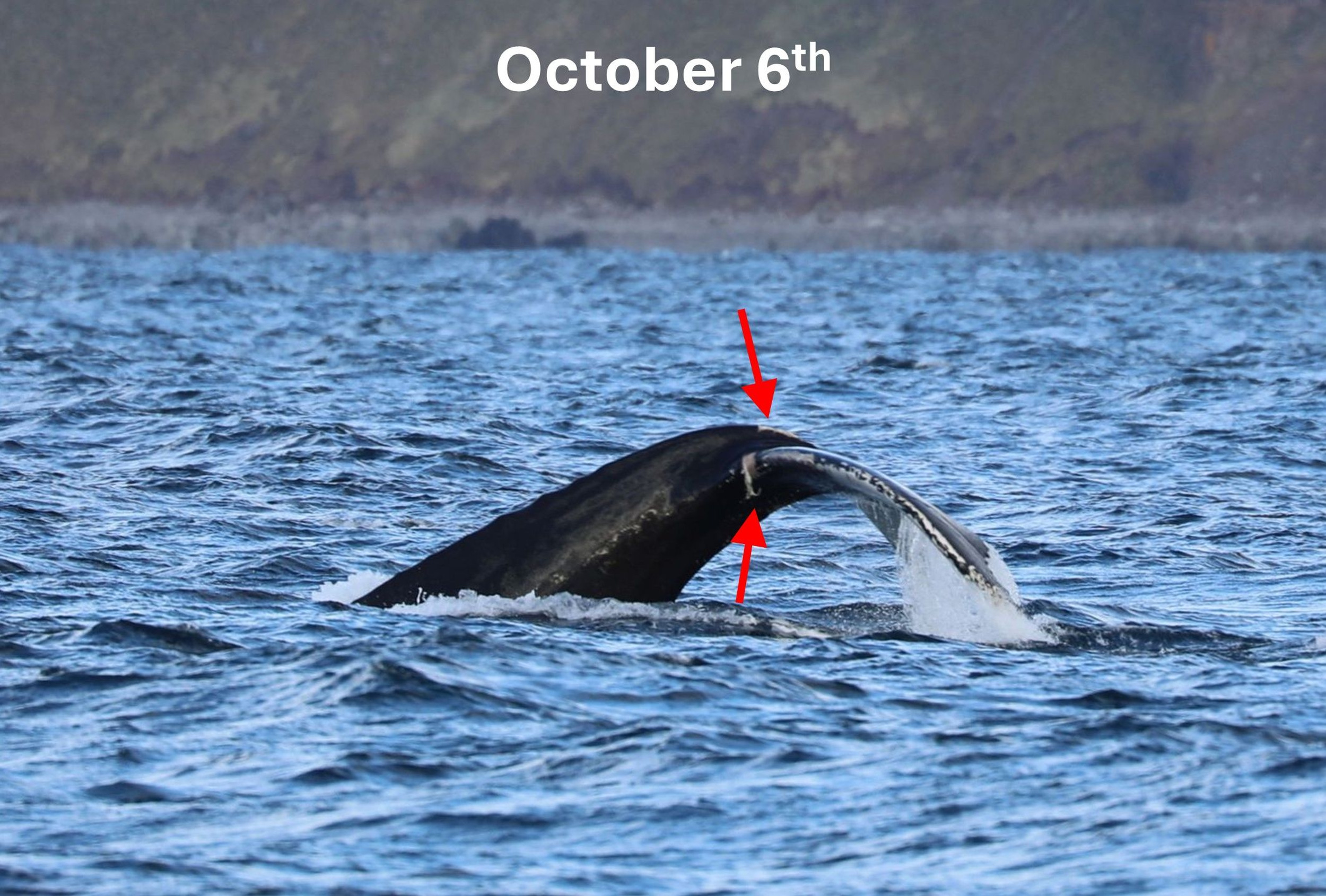
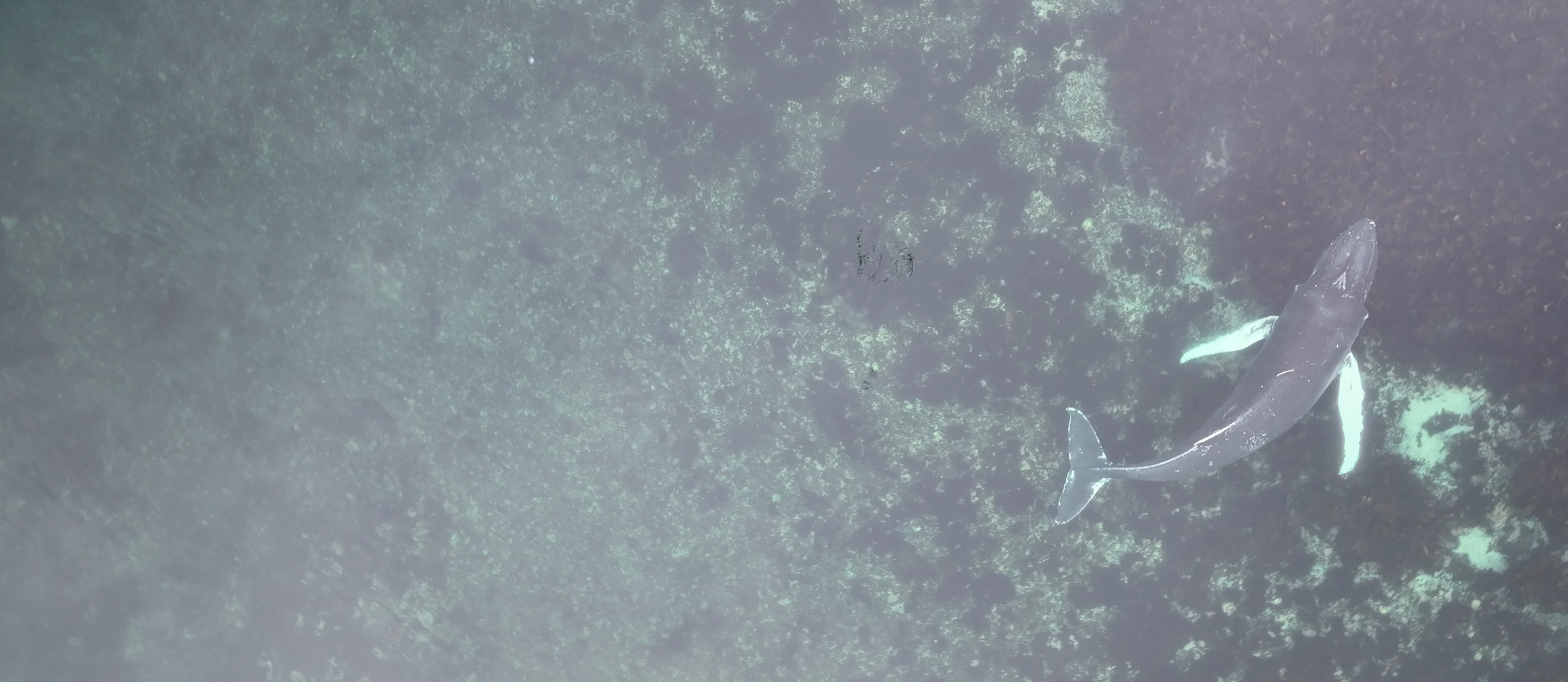
To better understand the impact of entanglement on Icelandic humpbacks, our Scars from Above project is using whale images from drone and vessel surveys to assess the prevalence of entanglement injuries and potential health and welfare implications.
The West at its best
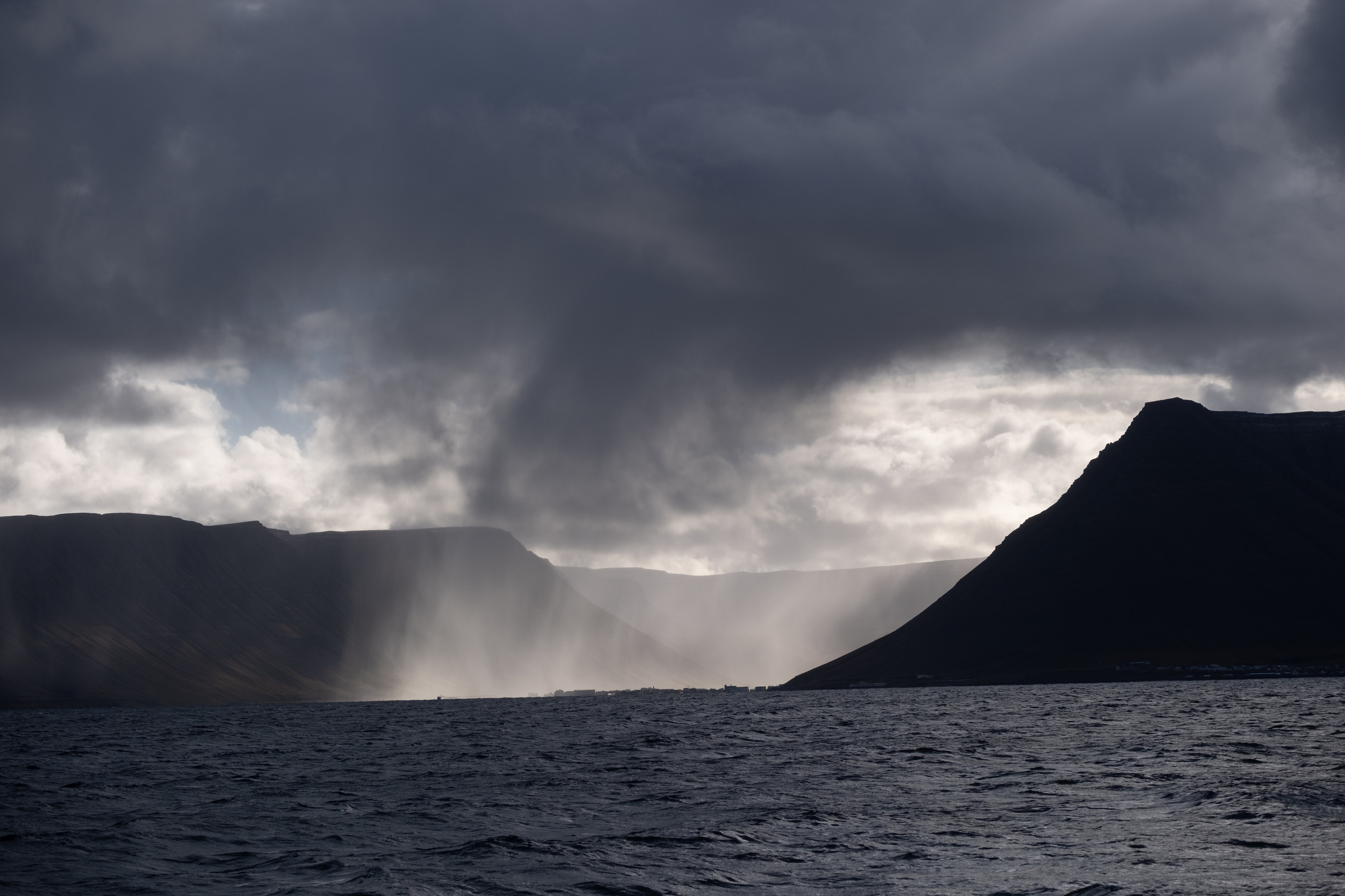
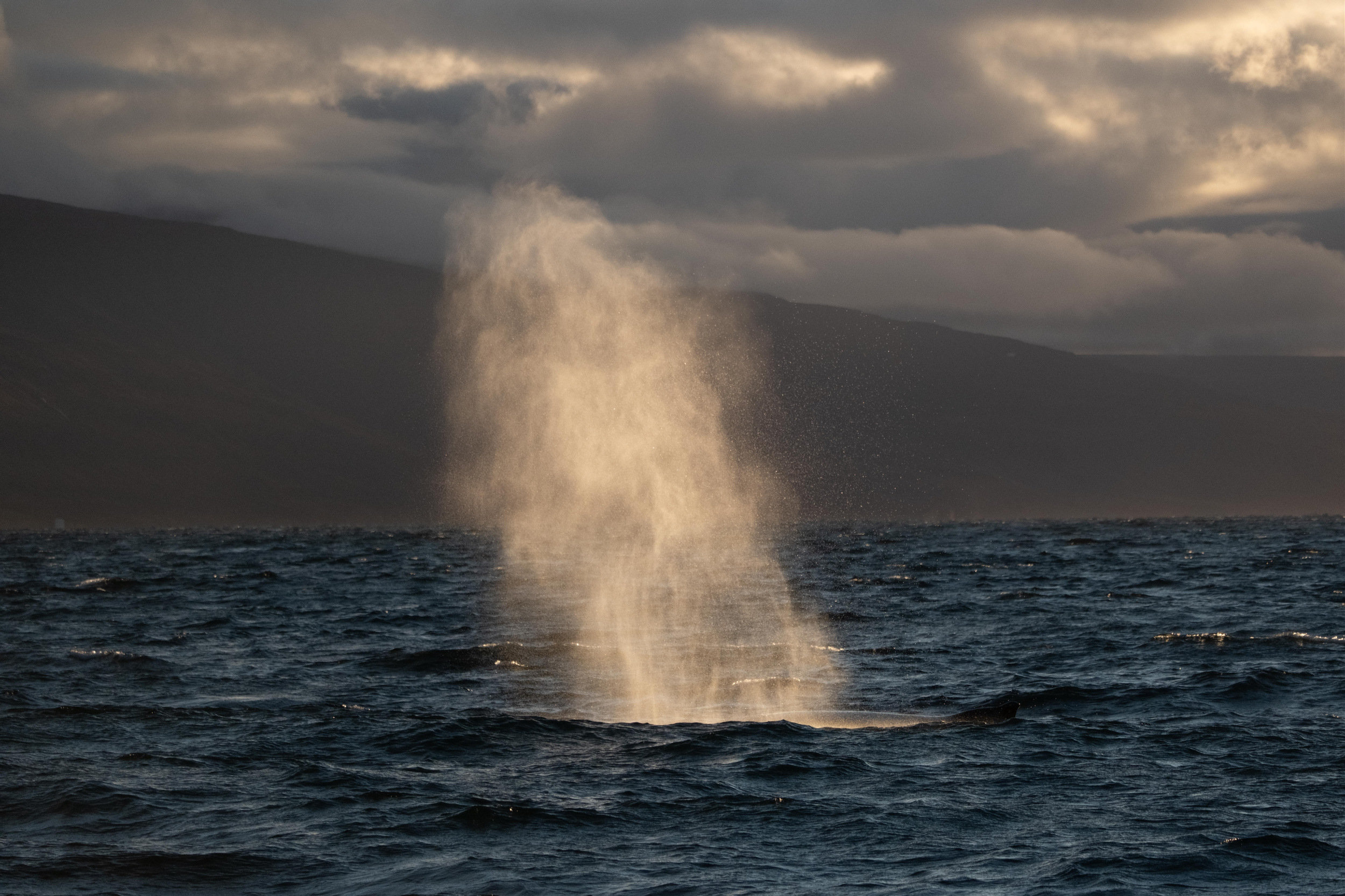
The aim of this survey was scientific, but we also wanted to capture the beauty of this area and the life it holds. As the low wintering sun set whale blows alight, the beauty was breathtaking. Conveying this natural wonder and the immaterial value is holds for people is just as important as scientific data to inform its protection. Thank you for following this snapshot of Ísafjarðardjúp and joining us in our mission to protect whales.


Support science for conservation
Our mission depends on your donations and advocacy. Here’s how you can uplift whale conservation efforts.
You can also follow us on social media and sign up to our newsletter. Thank you for supporting our mission.

Support science for conservation
Our mission depends on your donations and advocacy. Here’s how you can uplift whale conservation efforts.
You can also follow us on social media and sign up to our newsletter. Thank you for supporting our mission.