Whale Wise
Written by Petr Slavik (ocean cover image by ©Petr Slavik)
A noisy, dusty abyss? Could such a deep place even matter to whales?
When we see or just think about large rorquals like the humpback or fin whale, for example, we hardly ever think about the deep-sea realm hidden underneath their surface pastures or migratory routes. No wonder that is the case! Baleen whales often simply do not have much to do in the big deep – most are surface feeders after all, migrating across large distances staying mainly in the surface waters up to 100 metres deep. There are of course moments when they need to utilize deeper waters say to avoid predators like orcas, or perhaps to search for alternative sources of food – that happens rather rarely, however. Then, why should whatever happens down in the deep sea have an impact on animals living up in the surface waters, kilometres away, vertically speaking, from the abyss? To answer that, believe it or not, we will have to go a bit deeper…
First, we need to ask the question: what is the deep sea in greater detail?
The deep sea or the deep ocean, if you like, generally begins where our ever-needed sunlight begins to diminish. We like to call this the twilight or mesopelagic zone, which more or less begins at 200 metres of depth, underneath the photic or epipelagic zone, which still receives enough sunlight to support photosynthetic organisms. We can observe photosynthesis even at depths greater than 200 metres, though you would see that the amount of sunlight that can penetrate greater depths rapidly decreases as we go deeper and deeper. Ultimately, we would not be able to find any more photosynthetic life at 1000 metres and deeper – instead, down there the life relies on food that sinks, in the form of deadfalls and marine snow, from the surface and the upper pelagic zones, or completely prioritises chemosynthesis. We therefore like to call this place the midnight or bathypelagic zone, which stretches to around 4000-metre depth. Beyond that, we would find only two more vertical zones, the abyssopelagic or abyssal zone, reaching a depth of around 6000 metres, and the hadalpelagic zone stretching to the almost unbelievable 11 kilometres of depth, which consists of the world’s deepest trenches, including the world’s deepest point the Challenger deep in the Pacific Ocean’s Mariana Trench. Overall, more than 70% of our planet is ocean, and to think more three-dimensionally, 90% of that ocean space is the deep sea (i.e. the ocean’s depth of 200-11,000 metres, at places). Isn’t that just mind-blowing? This ultimately makes the deep sea the most extensive habitat on Earth, which supports, perhaps surprisingly, rather high biodiversity.

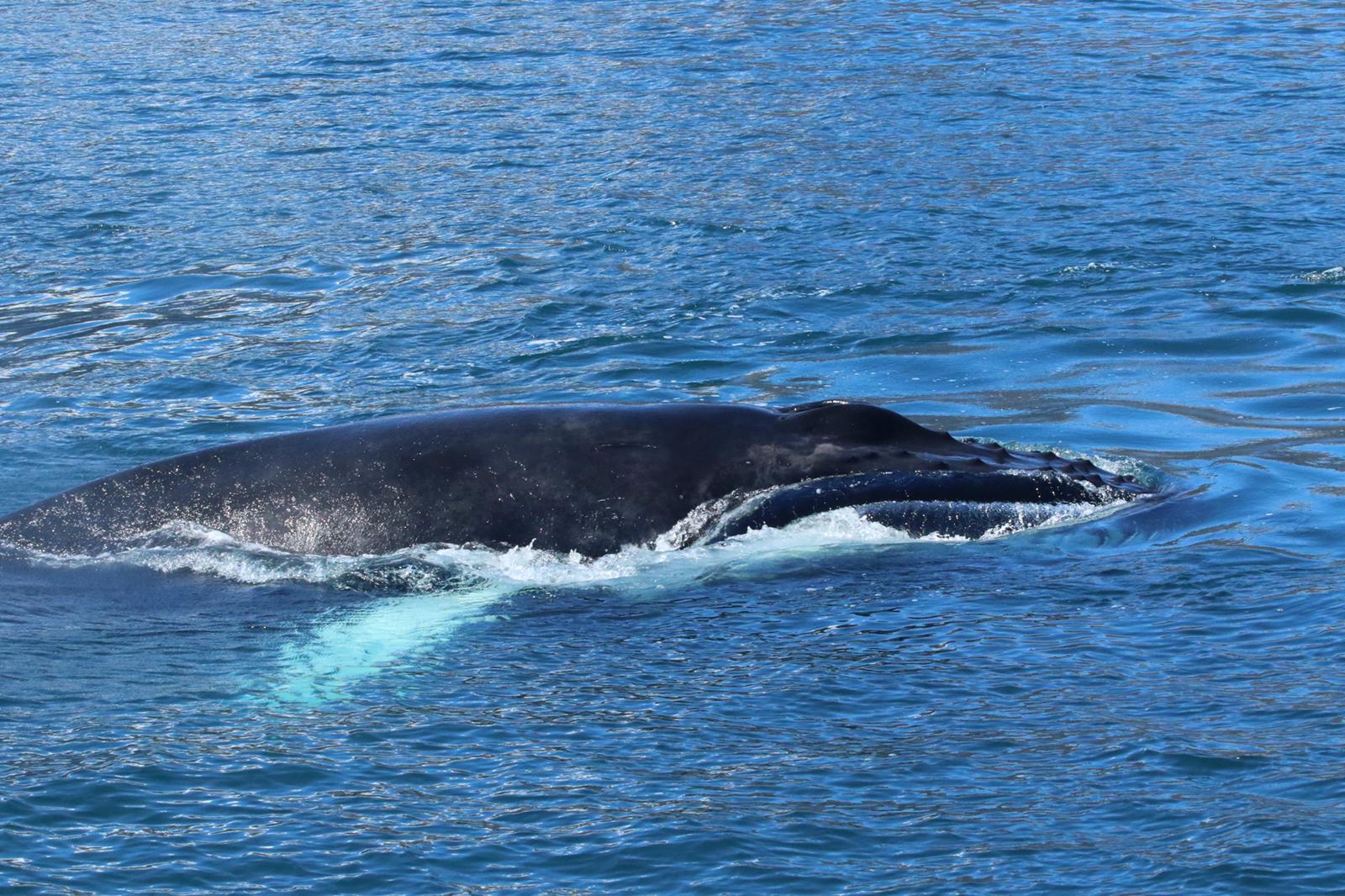
©Petr Slavik; commercial fishing vessel
So, what’s the matter?
Now that we know a bit about what the deep sea is, let’s talk about the rather big, mysterious elephant in the room – being that the fact that the deep-sea biodiversity, as our shallow water life, is increasingly under threat from our activities.
While people become generally more aware of the threats our oceans face, particularly when it comes to coastal areas exposed to litter or the issues around over-fishing and climate change, we still tend to think that the seemingly distant and unexplored deep sea remains untouched. However, the reality is quite the opposite. Just fishing activities can reach depths of 2 kilometres. Deep-sea bottom trawling in particular has been found to cause widespread, long-term destruction to deep-sea environments globally, ultimately raising concerns about the conservation of fragile benthic habitats. Some oil and gas activities have been pushing into even deeper waters, raising concerns about their safety when operating at high-risk depths of up to even 3 kilometres deep. However, perhaps the biggest concern over the past few years has been raised by the dawn of a new industry – deep-sea mining – the industry currently taking its first steps to begin mining the seabed for deep-sea mineral resources, used for manufacturing most of our electronic devices, from mobile phones to electric car batteries. Yes, if you take your everyday phone apart, you would likely find a battery consisting of lithium – one of the metals, along with cobalt, nickel, copper, zinc and many other rare-earth metals that can be found in some of the deep-sea mineral depositories.
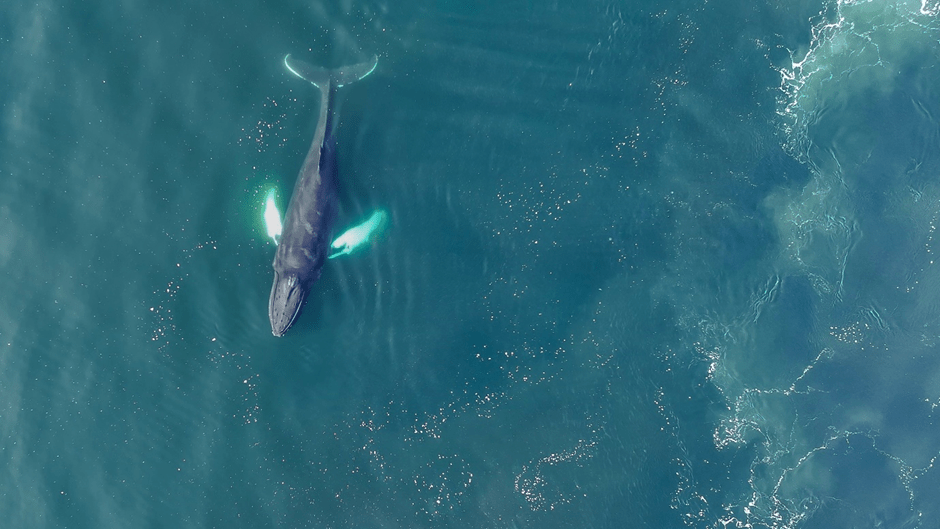
©Petr Slavik, Whale Wise
Could such deep-sea mining have an impact on shallow-dwelling cetaceans, however?
The simple answer is – yes, it certainly could. The reason behind it is that deep-sea mining involves a series of activities that can impact the quality of a given marine environment’s entire water column, on several different levels, from the seafloor to the surface.
Deep-sea mining, particularly that involving polymetallic nodule mining, will generally require a surface operation vessel, from which a collector vehicle will be deployed and tethered down to a seafloor of up to 5km deep. Mining these nodules, composed of various metals mentioned earlier, will produce two different types of plumes. One type will be produced by the collector vehicle collecting the nodules directly on the seafloor. The nodules are then sucked up from the collector vehicle to the surface vessel, bringing further plumes up from the seabed. These then need to be discharged either at the surface or the mid-water column, which ultimately brings fragments of the mined elements to an area where they simply do not belong.
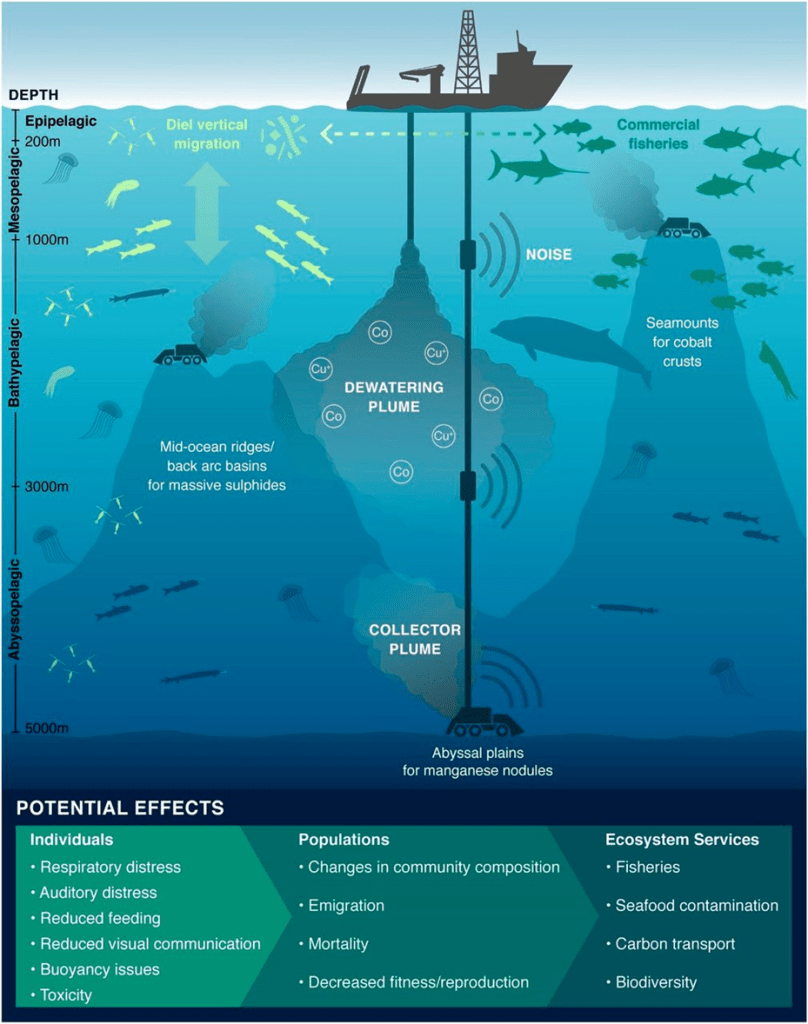
Potential impacts from deep-sea mining: doi.org/10.1073/pnas.2011914117 ©Amanda Dillon from Drazen et al. 2020
Water-quality speaking, these discharge plumes, also known as dewatering plumes, can impact various life in the upper portion of the ocean water column, from fisheries to cetaceans. Individual animals facing these plumes may experience respiratory distress, reduced visual communication, buoyancy issues, or even toxicity in some cases where the dewatering plumes include large amounts of some of the earlier-mentioned trace metals. Particularly large baleen whales engulfing vast proportions of seawater to filter-feed will be exposed to potentially toxic amounts of trace metals. However, even smaller, toothed whales feeding on fish and larger prey could be at risk via biomagnification. Even visual predators like marine birds could potentially be at risk in areas with excess surface plume sediments.
Acoustically speaking, deep-sea mining will also produce noise pollution of high risk, particularly to highly acoustic species like cetaceans. This noise will be generally produced as the mined nodules are pumped up to the surface vessels via pipes made of materials that need to withstand high-pressure environments at great ocean depths. Deep-sea mining will also likely not involve only nodule-mining on the deep abyssal plains at depths up to 5km deep. Plans exist to also mine mid-ocean ridge areas and back-arc basins for massive sulphides, as well as seamounts for cobalt crusts, which are often found at depths of 1 to 3 km deep. This means that the noise sources will sometimes be even closer, vertically speaking, to areas where cetaceans aggregate to potentially feed, socialize and so on. However, overall, regardless of the water depth where deep-sea mining occurs, its noise levels will likely always reach cetaceans and other animals in the surface waters. Now, given that the deep-sea mining noise overlaps with the frequencies at which cetaceans communicate, it comes as no surprise these mammals will have to face auditory masking, and will likely be forced to change behaviour to avoid potential hearing injuries. Ultimately, this auditory distress can lead to reduced feeding and poorer fitness and potential changes in community composition of various cetacean species, or even costly emigration of populations to more acceptable areas. Worth mentioning are also some of the deep-diving-toothed whales like the beaked whales. These animals target great depths to search for deep-sea squid and fish. Encountering large noise sources causing auditory distress at those depths can then lead these extreme divers to premature, rushed surfacing and cause the so-called bends, or decompression sickness if you like.
Ultimately, not only cetaceans can be affected by poorly managed deep-sea mining. Including the obvious destruction of some of the seafloor habitats and their species by the direct contact of the collector vehicle with the seabed, there is a vast array of animal groups that could be at risk. From benthic suspension feeders like deep-sea sponges and sea cucumbers, which are highly vulnerable to excess sediments produced by the plumes discharge, to pelagic fish vulnerable to impaired chemoreception, needed for searching for food, by the very same excess sediment. Even some of the smallest critters could struggle, including various species of zooplankton, whose larvae may become disoriented due to the noise pollution when searching for suitable settlement areas using auditory cues. Potential light produced during the mining operation can also markedly disturb species that rely on bioluminescence to attract prey, defend themselves or communicate. This can all then have a cumulative impact on commercial fisheries, for example, and ultimately, via cascade-like effects, also human food security.

©Tom Grove, Whale Wise; bottlenose whales
Why is the issue so complex?
It is increasingly clear that poorly managed deep-sea mining will impact marine biodiversity likely across its entirety. Does it therefore mean we should completely rule this new deep-sea industry out; especially in light of our accelerating transition to renewable energy?
The United Nation’s 13th sustainable goal clearly states the urgent need to take action to combat climate change and its impacts. It therefore comes as no surprise that access to metals is the essence of supporting the transition to renewable sources for energy production. However, at the same time, the UN’s 15th sustainable goal states the need to protect and preserve terrestrial ecosystems via reversing land degradation and sustainable management of forests. The problem with this is that most current metal depositories, especially those including nickel, cobalt or manganese, for example, lay in largely forested areas of nations like Brazil, Indonesia, and some African countries. Unsurprisingly, these nations have been therefore losing large areas of forests, among other reasons, also due to mining for metals that are needed for the world’s decarbonization.
Is then deep-sea mining the ultimate solution?
Considering the above issues related to the impact of deep-sea mining on marine biodiversity, along with yet another UN sustainable goal, this time goal number 14, things become even more complex. The UN’s 14th goal clearly states the importance of conservation and the sustainable use of our oceans. However, considering the above deep-sea mining issues, it is clear that mining metals in the deep-sea also comes at a huge environmental cost, similarly as in the case of terrestrial environments, and therefore certainly is not the most straightforward solution to the ever more urgent UN’s 13th sustainable goal.
What are the prospects then?
While it remains unclear at what scale deep-sea mining will take place, it becomes increasingly evident that it will happen. The question that remains is how it will be done. In other words, there is no doubt that deep-sea mining has its role in supporting the world economy’s decarbonization and hence will likely take place at one level or another at various locations of the world’s oceans. However, there should equally be no doubt such deep-sea exploitation will need to be done with the utmost consideration of the marine environment and its vulnerable biodiversity.
More than ever, it is now important that site and project-specific environmental management through well-known environmental impact assessment, baseline assessment, environmental monitoring of vulnerable areas, as well as mitigation and environmental management planning, is established to identify and reduce potential impacts of future deep-sea mining. This is why no deep-sea mining activity should take place before sufficient baseline datasets about given environments and their biodiversity are collected and well used to inform relevant stakeholders and policy-making. It is equally crucial to not only consider the directly impacted marine fauna, like the seafloor species that are expected to be impacted the most but also fauna like pelagic fish and cetaceans that are perhaps not among the most obvious species vulnerable to deep-sea mining impact.
Finally, perhaps the most important consideration is to not rush this whole process of our understanding of the deep seas, our world’s last frontier. Because it is ultimately the rush to start the deep-sea mining that threatens marine biodiversity, people, and perhaps even the planet.

By Jessica Ward
The title quite literally sums up our whale and ocean themed yoga practice in Húsavík: come as you are, hop off the boat and join a yoga class! For the past two summers, as well as taking part in Whale Wise research field seasons, interning with the Húsavík Research Center, and guiding for North Sailing, I have been teaching yoga at the Húsavík Whale Museum. Starting as a very low-key practice, with a few of my intern friends in 2022 coming along to join my extremely small classes, I think I can happily say that yoga in Húsavík has blossomed! Merely as your guide, I hope those who joined continue to practice yoga, wherever you are, and you also remember to apply yoga philosophies off the mat too, in your careers, relationships and lives as a whole. I hope that, as I write, this marks just the beginning of whale and ocean yoga in Húsavík. May we continue to practice together whilst continuing to work to protect the lives of the beautiful whales that we know and love, the whales who are many of our reasons why: why we live in Húsavík, why we are studying and working, and often where we find a lot of our pure joy. So, now for a little more about our whale and ocean themed yoga practice and how it all began…
Before I started my quite whale-oriented lifestyle, and just after I graduated from my Bachelor’s, I decided to take my personal yoga practice to the next level and train to be a teacher. I never planned on teaching in Iceland (I was a very new teacher) but for anyone who has visited The Húsavík Whale Museum, I am sure you will agree, that it is such a little haven that radiates so much calm… I just couldn’t not consider using the space for yoga as well, and even better, for yoga dedicated to the whales and to the ocean, their home. Of course, so many people visit the town of Húsavík and the museum for the whales: for the inspiration, emotional perspective and pure magic that they provide. I wanted to hold a space where we could dedicate our thoughts to these majestic beings, whilst also moving our bodies and thanking the practice of yoga that has been earned over generations of existence and has travelled the globe (just like some of the whales have). So I chatted with Eva, the museum director who practices yoga herself, and we began regular yoga at the museum. Eva has been fundamental with helping the museum yoga come to light. It is also important to acknowledge the whole team of staff at the museum, for not only joining in with the yoga, but also helping massively before and after each class. And whilst I’m at it, I have to of course mention all the yogis that joined during those blissful summers. Whether you came for one class as you were passing through Húsavík or you were a regular: a researcher, a guide, a roommate, a flatmate, you worked in Húsavík seasonally, you worked in Húsavík full time… I loved having all of you and it was a pleasure to share my first experience teaching with you.
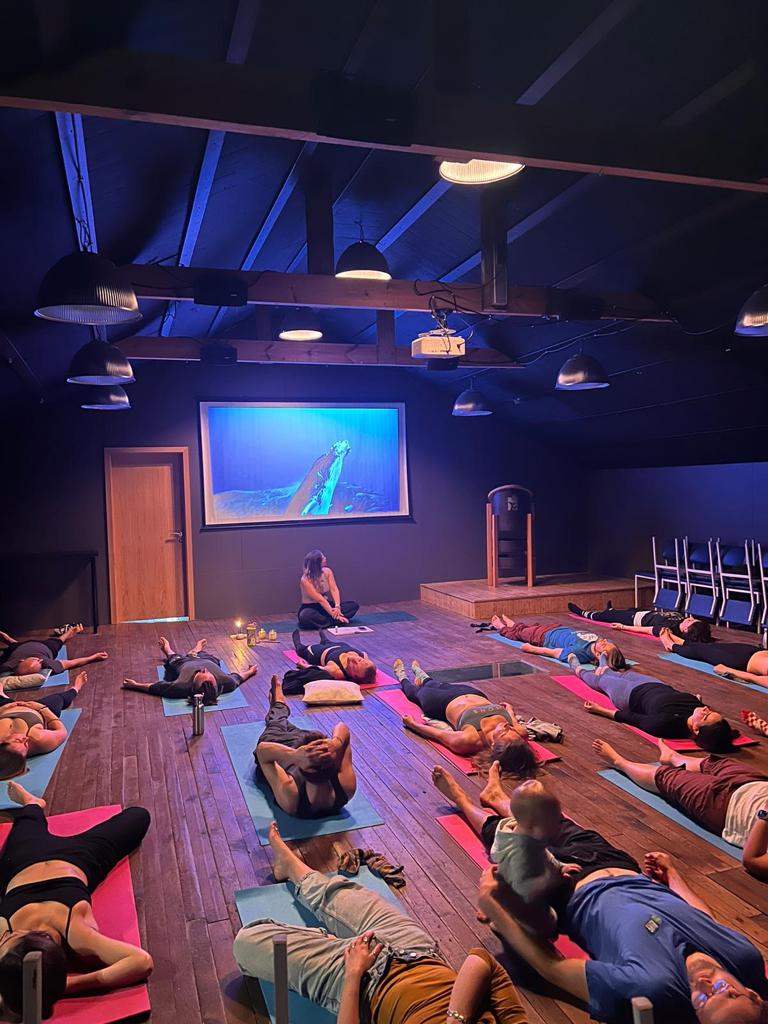
We would practice once or twice a week, usually upstairs in the museum, accompanied by underwater footage of a mother and calf humpback whale pair, gracefully swimming, feeding, existing, living… as they should. If the weather was not freezing, we would sometimes move our practice outside – we would quite literally do sun salutations against the sun, as the boats would come and go in and out of the harbour. Classes would be themed differently each week: for example, we might have a class dedicated to the topic of anti-whaling or anti-captivity, we might devote one practice to the white-beaked dolphins and the impact of the lunar cycle on their foraging behavior, or we might simply practice to the theme of love and acceptance. We would start with a small meditation, and then move through some vinyasa-style yoga (where poses are strongly linked to our breath and the mind–body connection is prioritised) with a still savasana (final resting pose) at the end, and finally finish with tea and chats about the theme of the class (and more!!). One of my favourite classes would be the special pride-themed classes each June. After all, homosexuality is not limited to the human species, and has been recorded in cetaceans too (quite recently in male humpback whales in fact)! We would come together, move together and feel immense gratitude for the small town of Húsavík, where queer people are especially accepted, something we will have to keep fighting for around the rest of the globe. We will keep celebrating pride (in the form of yoga and more) until the rest of the world catches up with Húsavík, a beautiful corner of the world where the whales and dolphins live and visit, you can feel a strong connection with the ocean and the natural elements, and you can feel warmly welcomed to come as your own authentic self. If you are reading this, and you haven’t visited Húsavík already… you must, and join a yoga class whilst you’re at it! Off the boat and on to the mat. I hope to see you there
I have always found storytelling fascinating.
A person’s ability to transport you somewhere else, immerse you into an entirely different world, without you even realising what has happened. Technically, really powerful storytelling is a type of illusion, which is also why you also have to be so careful in how you use it.
For me, although one of my favourite things in life is being out in the field as a scientist, I also love sharing the stories that nature and science have to offer. I am definitely not a professional filmmaker, but over the years I have loved making short and feature length films about the whale research that I have been part of. This love for finding stories and video editing, made their humble beginnings when my high school friends and I would make music videos to pre-existing songs. They were primarily to Taylor Swift songs, and they were awesome.

Nearly as much as I love creating my own work, I also love seeing others’. Short videos and documentaries can be incredibly powerful for sharing conservation messages and improving our connection to nature. It is critical that we keep sharing one another’s stories, and so I wondered if it would be possible to start up our own film festival. A few days later, I contacted Eva, director of the Húsavík Whale Museum, who has helped us A LOT with previous events, and asked if they would be interested in partnering up to create an ocean-themed film festival in Iceland. She immediately said yes, and from there we began planning all the logistics involved.
We selected a name, made a logo, set up a Filmfreeway site for people to submit films and started sharing and promoting the event as much as possible.
Since we began four years ago, every year has been an improvement – for both the quality of the films and number of people attending the festival.
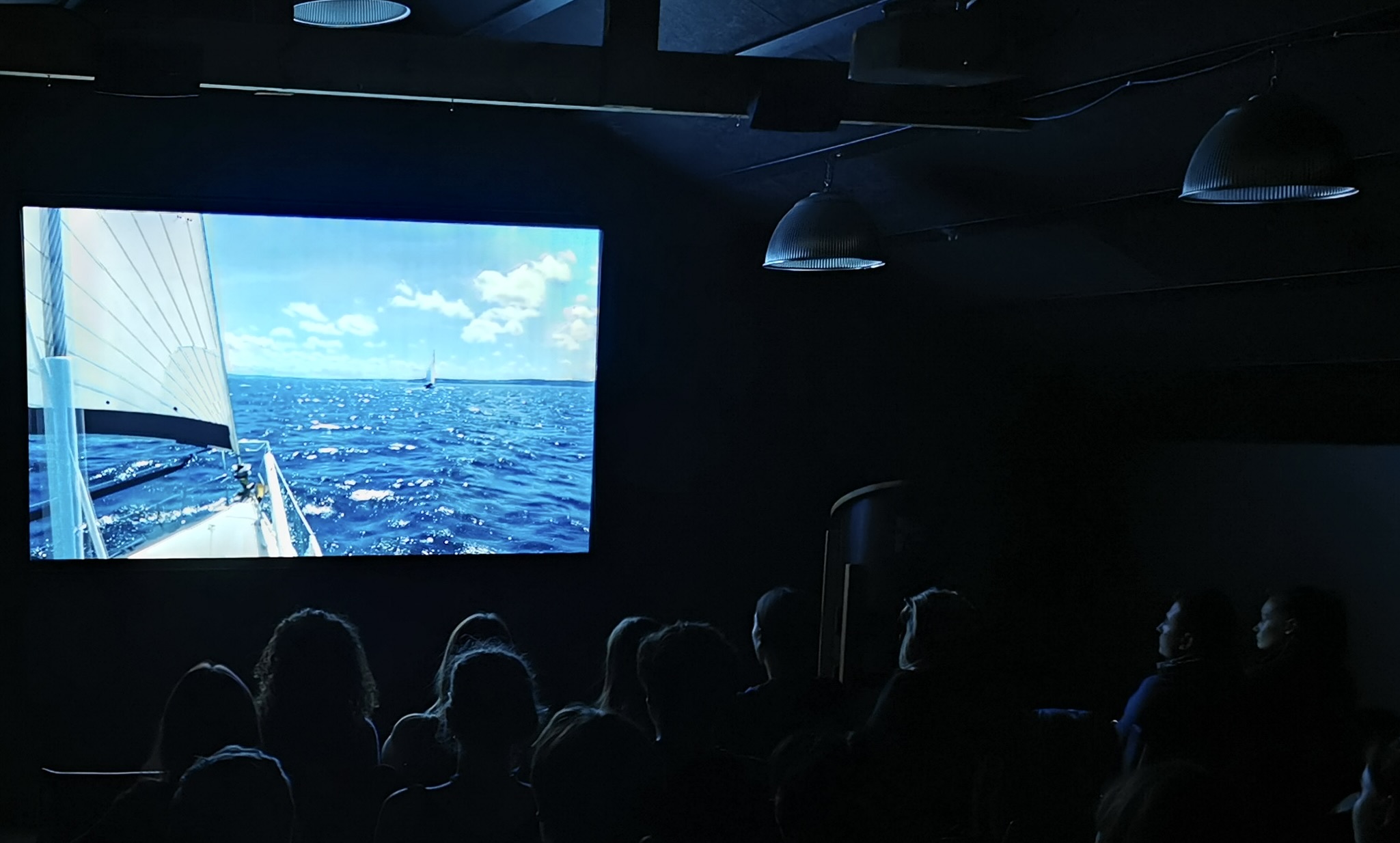
If you are interested in submitting to the Ocean Films Húsavík 2024 festival – you can do so now here! The deadline for 2024 submissions is March 1st, 2024.
FILM CATEGORIES:
- International (short and feature)
- Nordic (short and feature)
- Student

FESTIVAL DATES: July 19th – 20th, 2024
Location TBD
If you have any questions about the festival, do not hesitate to reach out to info@whalewise.org
A huge thank you to everyone who has shared their films this year and previous years – the festival would not be possible without you!