 Whale Wise
Soundscape of Finnafjörður; Listening Below the Ocean Surface
By Amelie Laute
What can you hear when you put your ears below the water surface? Is it loud or is it quiet? Maybe you can hear the sound of wind and waves. If it’s raining you can hear the water droplets hitting the surface. Maybe you can even hear the low rumbling when the earth is moving, during an earthquake or volcano eruption. Depending on where you are you may also hear some animals: dolphins whistling, fishing moaning, sea urchins scraping on the seafloor, or humpback whales singing. It’s never really quiet below the water surface. But since a few decades it’s becoming even louder… now you can often hear the sound of ships passing by, the bangs produced by construction work or the high frequency beeping of fish finders. Many of our human activities in and around the ocean produce noise that contributes to all the sounds underwater. We call all these sounds together the soundscape, like a landscape, but for sound. In our modern ocean you can barely find a place where human made noise doesn’t contribute to the soundscape. This contribution of noise can have effects on the animals relying on sound, for example for communication or navigation. If the sound is too loud or in a similar frequency, the signal of interest (e.g. a call from a conspecific or the movement of prey) can be masked. The animals can also perceive the sounds as a threat and try to move away, avoiding otherwise important feeding areas. For scientists, it is very difficult quantifying these changes due to anthropogenic activity because we don’t have data from the time before the human sounds were present. So we don’t know how exactly it sounded before, or how the animals were behaving differently.


Photo credit: Barba.no
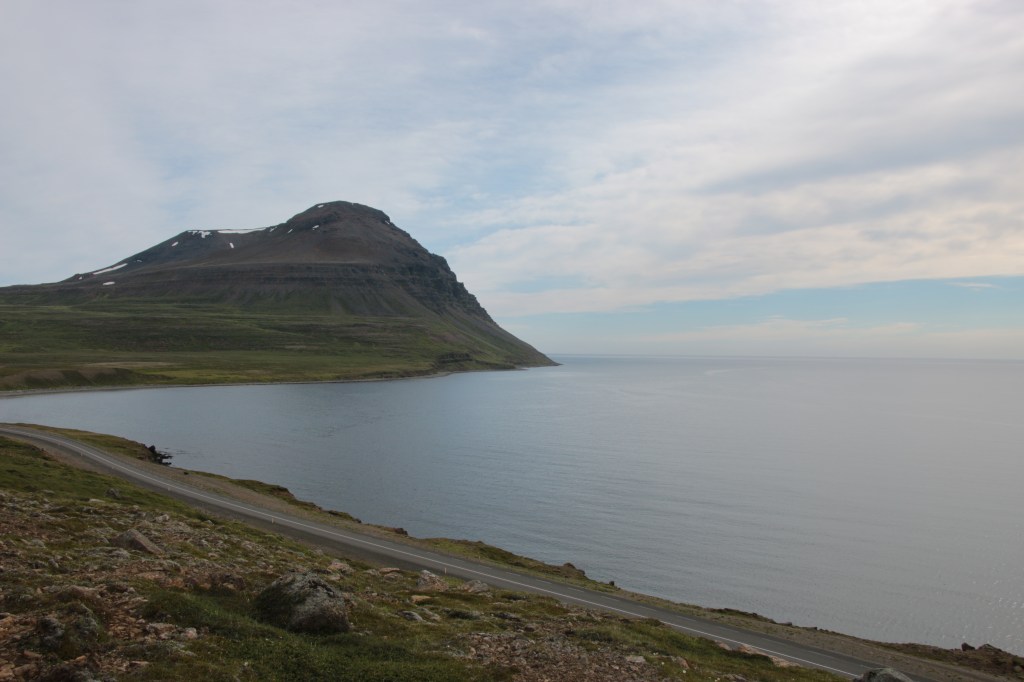
In the Northeast of Iceland there is a remote fjord with currently very limited anthropogenic activity. The “Finnafjörður” is relatively pristine, only a few fishing vessels use the area once in a while and few large vessels pass in the distance. According to the locals, the fjord is regularly visited by a variety of animals, including many fish species, pods of dolphins, minkes, and humpback whales. There is no village on the coastline of Finnafjörður and only one small fishing village in the larger area, Bakkaflói. However, in some years this remote area is about to change drastically. A large port is supposed to be built in Finnafjörður, facilitating trading, servicing, and processing of raw materials of increasing numbers of ships passing through Arctic water as sea ice is melting more and more. Both the construction as well as the operation of such a port is likely going to result in a drastic change in the underwater soundscape of the region with potential effects on the local animals.

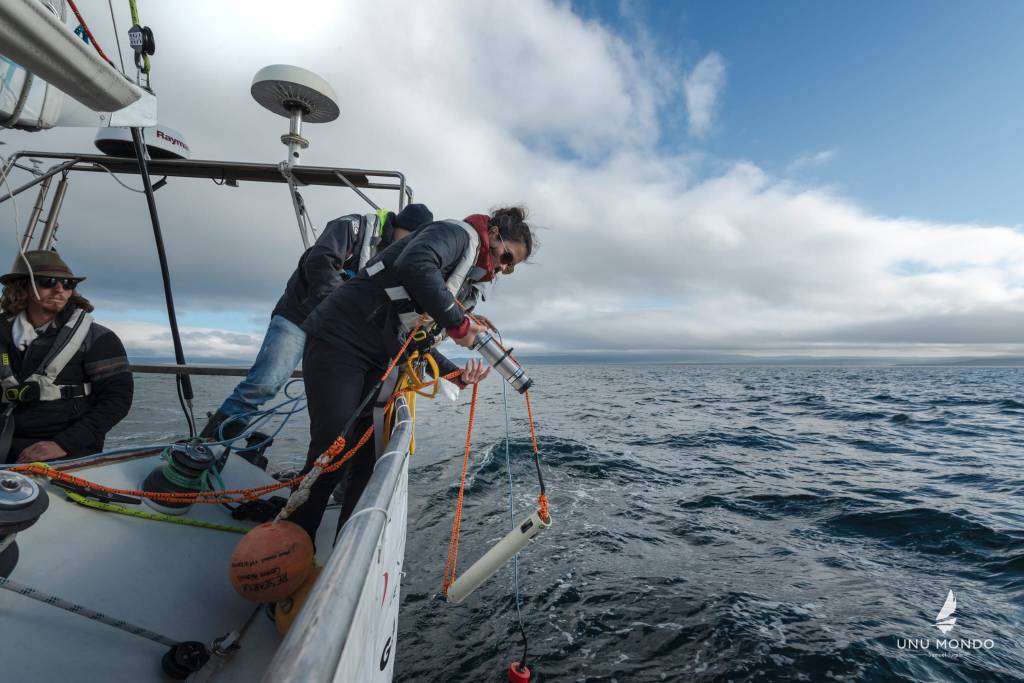
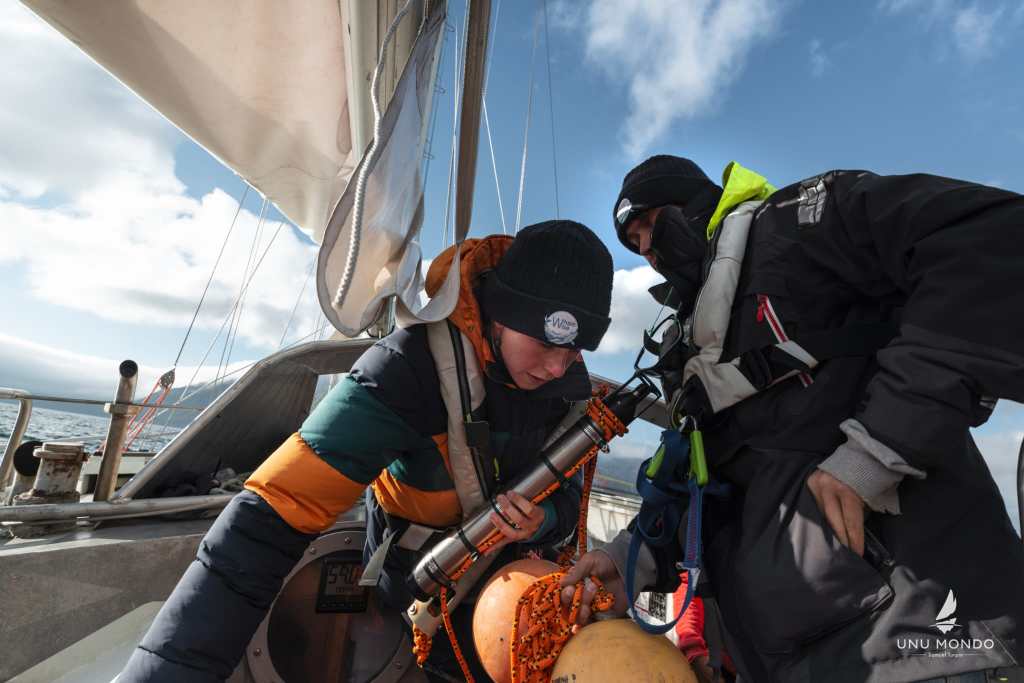
To understand and monitor how much the port changes the soundscape of Finnafjorður we have recorded the underwater soundscape for one year in 2021/22 while the fjord is still relatively pristine. We have now finally finished the analysis and could confirm our expectations. The region is indeed relatively quiet at the moment and has limited anthropogenic noise sources contributing to the soundscape. Let’s go into a little bit more detail of our results:
We have measured how loud the soundscape of the fjord is overall using a variety of different metrics to make our values as comparable as possible to other studies and regions globally. And we found that the fjord is relatively quiet, with loudest underwater sounds in winter when it’s stormy and quietest times in summer and fall. We also analysed the contribution of different sources of sounds. Once in a while we could detect vessel and fish finder sounds but they were relatively quiet and overall not dominant. We could occasionally hear dolphin whistles and fish grunts. During winter we were really excited to hear humpback whales singing nearly every day. Usually, humpback whales migrate to the tropics to breed and give birth, and this is where singing of male humpback whales is commonly observed. Since some years however song is documented more and more also in high-latitude feeding areas in winter. Are these whales too young to reproduce practicing singing without travelling the long distance? Or does singing have another purpose but reproductive display? There are many open questions, and we are therefore thrilled to have recorded singing humpbacks in the fjord. This definitely needs to be investigated further. But neither dolphins, fish, nor the singing humpbacks were very loud and didn’t dominate the soundscape of Finnafjörður. Instead, the loudest and most common sound detected was wind. Wind and rain. The sound of crushing waves due to wind and of water droplets hitting the surface were clearly dominating the soundscape of Finnafjörður. We also detected sounds that couldn’t be clearly identified, most of which were low rumbling sounds, likely geophonic (produced by non-living nature, e.g. moving earth, etc.). And a mysterious sound in spring. Between end-March and July every night there was this continuous low-frequency humming, like a vessel but much more constant in amplitude during all night. We have searched the literature and couldn’t find a similar sound documented elsewhere. We also asked the locals, but no one has an idea where the sound comes from. It sounds as if it’s made by some human activity but there is no machinery, vessel or anything in the fjord constantly during this time at all. Maybe some fishing buoys have a function that makes sound? We are still searching for the source of this mysterious rumbling…
To summarize, we found that Finnafjörður is relatively quiet. Apart from the weird unknown sound in spring the soundscape is mostly dominated by natural sounds, like from wind and rain. Animal sounds can be regularly detected but are relatively quiet.
So what? This means that the soundscape of the fjord is indeed relatively pristine. We are currently in the process of publishing our results. Before construction of the port starts the company has to make an environmental impact assessment (EIA), describing the region scientifically and informing management plans, for example how much care needs to be taken to limit the amount of noise produced. Our results can be implemented into this EIA, ensuring noise reduction during construction and operation is given enough importance by showing how pristine the fjord currently is and by documenting its use for certain animal species. Additionally, our results can be used later to monitor the changes in the soundscape and animal presence when the port is actually built. Documenting these changes can be used to inform future construction plans elsewhere and hopefully positively impact the anthropogenic footprint on underwater soundscapes.
So, are we done for now with this project? Not at all! This summer (mid-July) Whale Wise has deployed another hydrophone in Finnafjörður for a year. We want to make sure our results are general and not specific for 2021/22. We also want to investigate the winter song of humpback whales further and hopefully find out the source of the weird spring sound. Additionally, since only animals that make sounds and are close enough to the hydrophone can be recorded, and since the species making a sound sometimes cannot be clearly identified (e.g. many dolphin species sound similar), we also plan active field work in the Finnafjörður area. This July Tom and Alyssa have tested the idea and have spent many hours on the shore conducting scan samples, counting and documenting every whale seen. This helps to describe the presence of animals that cannot be detected on the hydrophone and to assign detected vocalizations to specific species. We intend to collect many more scan samples this winter and potentially next summer. So you will hear much more about exciting field stories from Finnafjörður later.
The detailed exploration of the underwater acoustics is truly captivating. It’s amazing to think about the rich tapestry of sounds beneath the ocean surface. Your insights bring a whole new dimension to understanding marine environments. Kudos for such an enlightening piece!