 Whale Wise
Whales on the go


Using land-based fieldwork to directly engage the public with whale research and conservation
If we want to encourage the public to support marine conservation, we need to recognise that facts alone do not change minds. Humans are social beings; we are far more motivated and impassioned to make changes in our lives by personal connection and experiences, rather than simply information. However, this is often not incorporated into environmental education practices, resulting in people being informed and scientifically literate, but not making changes in their daily lives to support conservation. In fact, this is one of the greatest modern challenges in conservation. We want to turn this around by using our roadside research in Iceland as a platform for face-to-face engagement, encouraging members of the public (tourists and locals) to see whales from land, get involved in our research and talk about marine conservation. This project is in collaboration with Húsavík Whale Museum.
Aims
With the ultimate aim of motivating people to support marine conservation, we want to encourage passersby to:
- Talk with us about marine conservation and our work
- Experience watching whales from land
- Take part in our land-based research
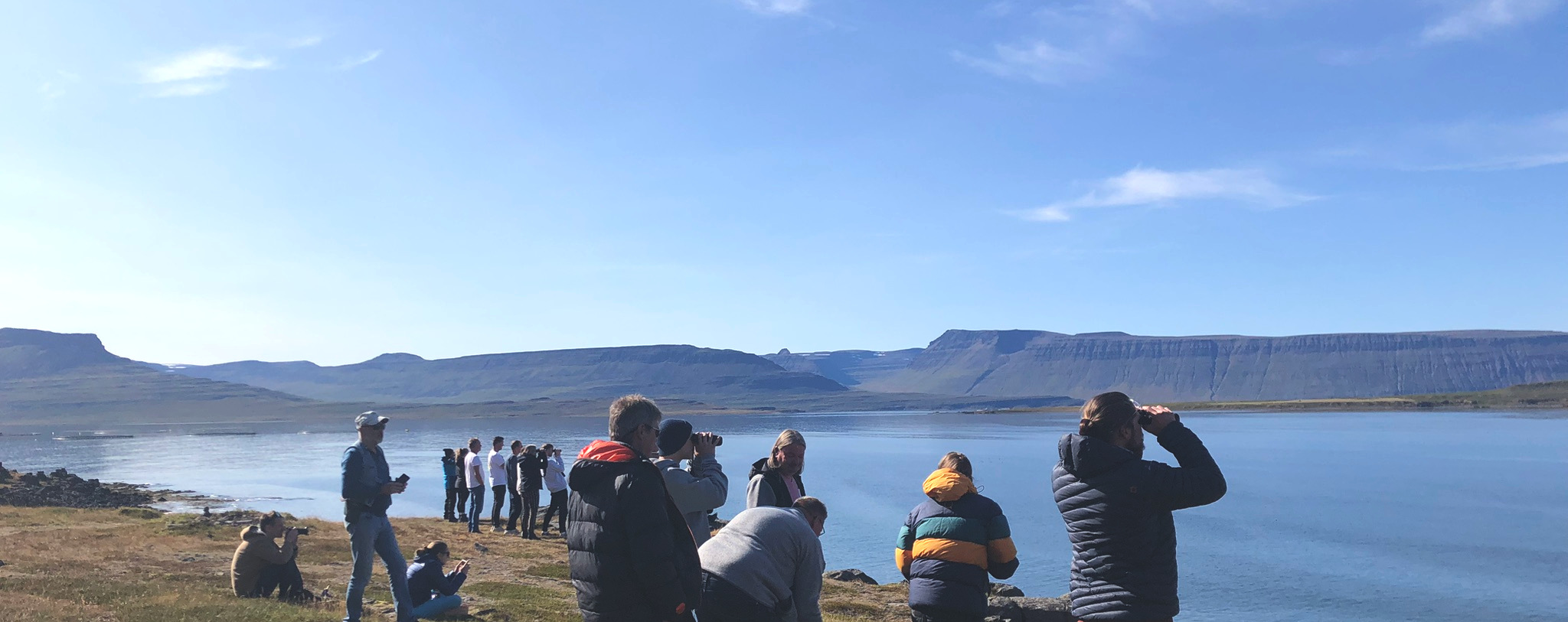

Project details
In Iceland, most of our fieldwork takes place from land, in particular using drones to collect aerial images of humpback whales. We are mostly working in the Westfjords, where whales often swim close to land. We frequently drive between our field sites in a yellow van and pull over at safe places on the side of the road. During this time, we have come to appreciate the beauty of watching whales from land, without disturbing animals and amongst beautiful Icelandic scenery.

We have decided to use this set-up to encourage passersby (drivers and walkers) to watch whales from land, discuss marine conservation and even take part in our research. Watching whales is often an emotional experience and we want to play our part in encouraging these special moments from land, which is less expensive, more accessible and less obtrusive than using a boat. Meanwhile, involving people in our research, helping us to spot whales and guide our drone pilot, is the best possible way to spread our work and conservation messages. Alongside these experiences, we simply want to have conservations with people – about our work, their perspectives and our shared experiences watching and studying whales. Taking this approach, we believe that these experiences can leave a lasting imprint on people, one that collectively drives us to make changes in our daily lives in support of conservation – whether that’s reducing our personal impact, flexing our positive consumer power or making our voices heard.
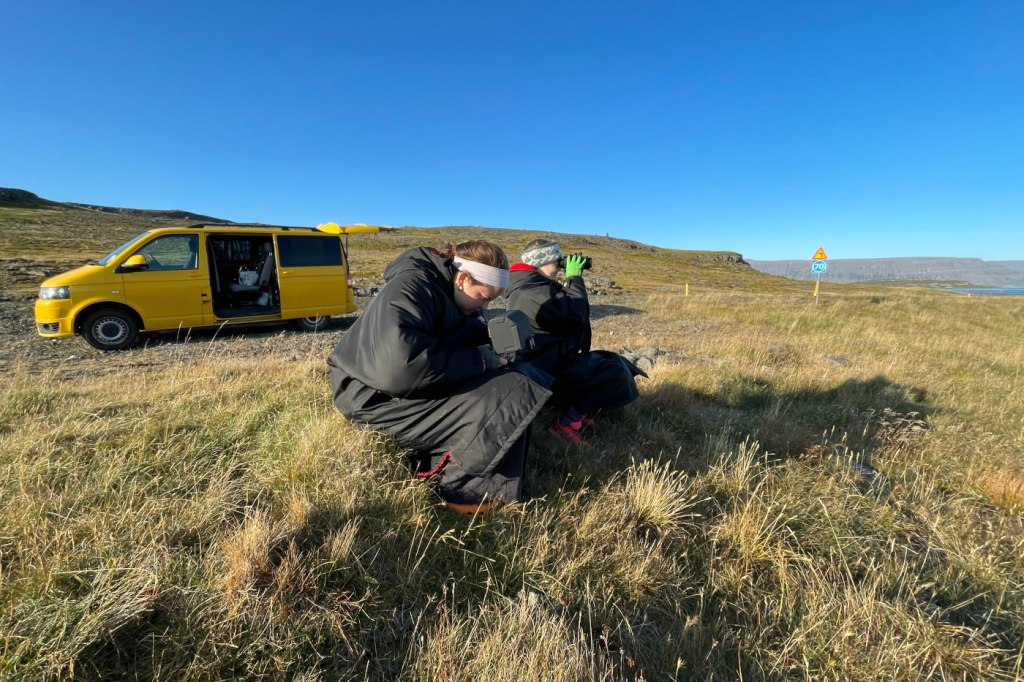
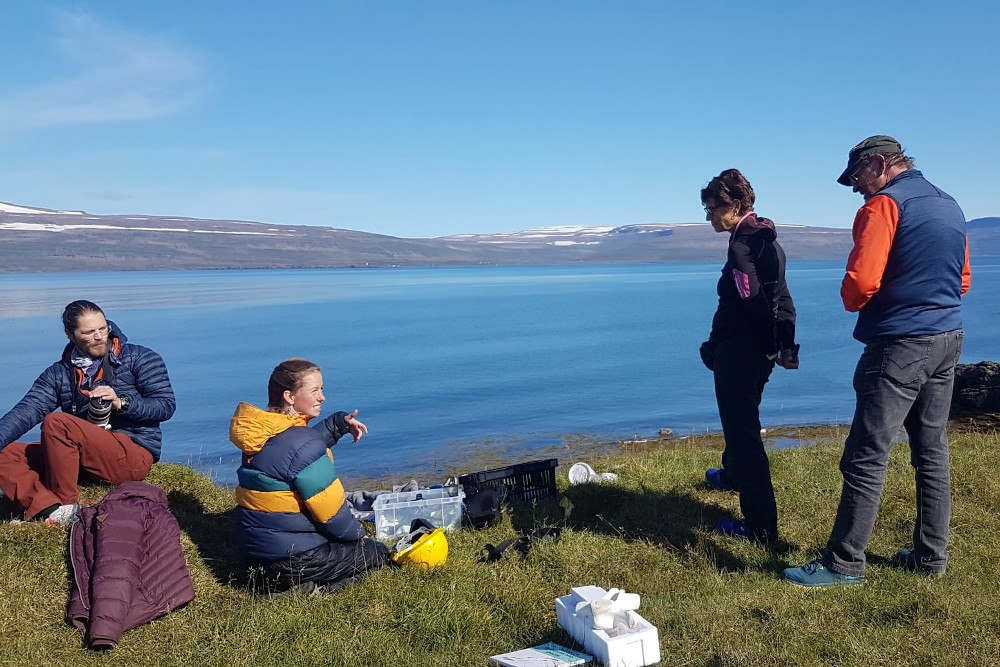

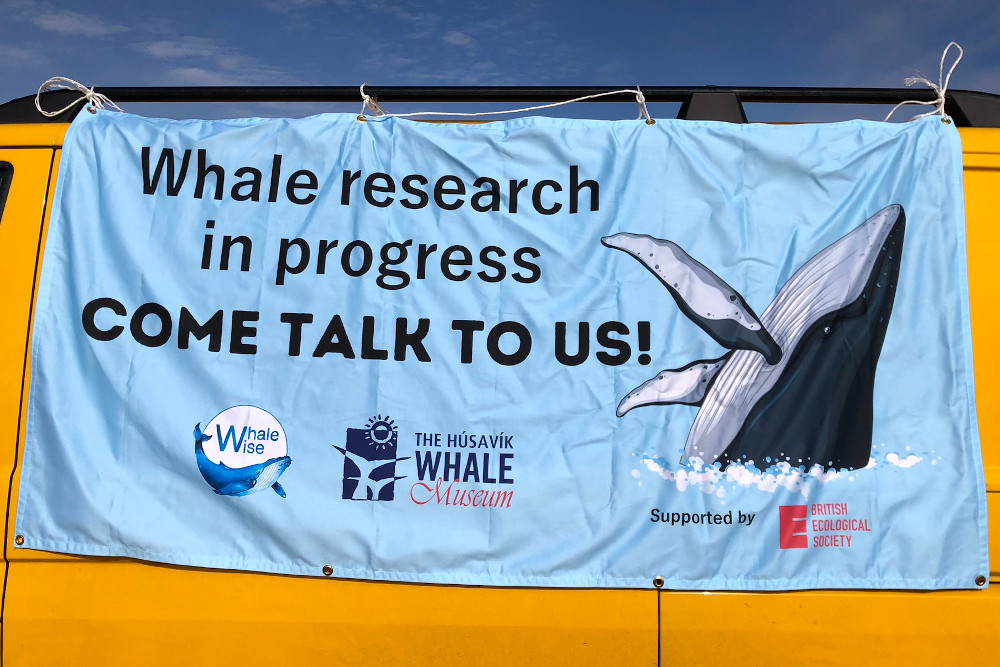
To advertise our presence, we tie a large banner to our van: “Whale research in progress. Come talk to us!” We have booklets to identify whale species and information cards to encourage people to share whale sightings online (part of our citizen science work), as well as bones, teeth and baleen as educational material. We also have spare binoculars to get a better look at whales and help us with our research. We are collaborating with Húsavík Whale Museum, which has provided bones and guided the development of the project, and the project is funded by the British Ecological Society.
If you are interested in submitting whale sightings yourself or downloading whale identification guides in English or Icelandic, you can do so here.

Project updates
We trialled Whales on the Go in 2023, funded by the British Ecological Society, and spoke with many people. In 2024, we look forward to expanding this project. Since we envisage studying whales from land into the forseeable future, this will be a long-term initiative for the Whale Wise team.