 Whale Wise
A whaley festive period
By Tom Grove
The festive period of December–January is a time of celebration and togetherness for many human communities, but what does this time mean for the cetaceans of Iceland and the wider north Atlantic? For them, it’s a time of great movement, foraging, gathering, mating, birthing and – as always – surviving an increasingly human ocean. With a healthy dose of poetic license, here are the festive stories for some of our cetacean friends.
Humpback whale
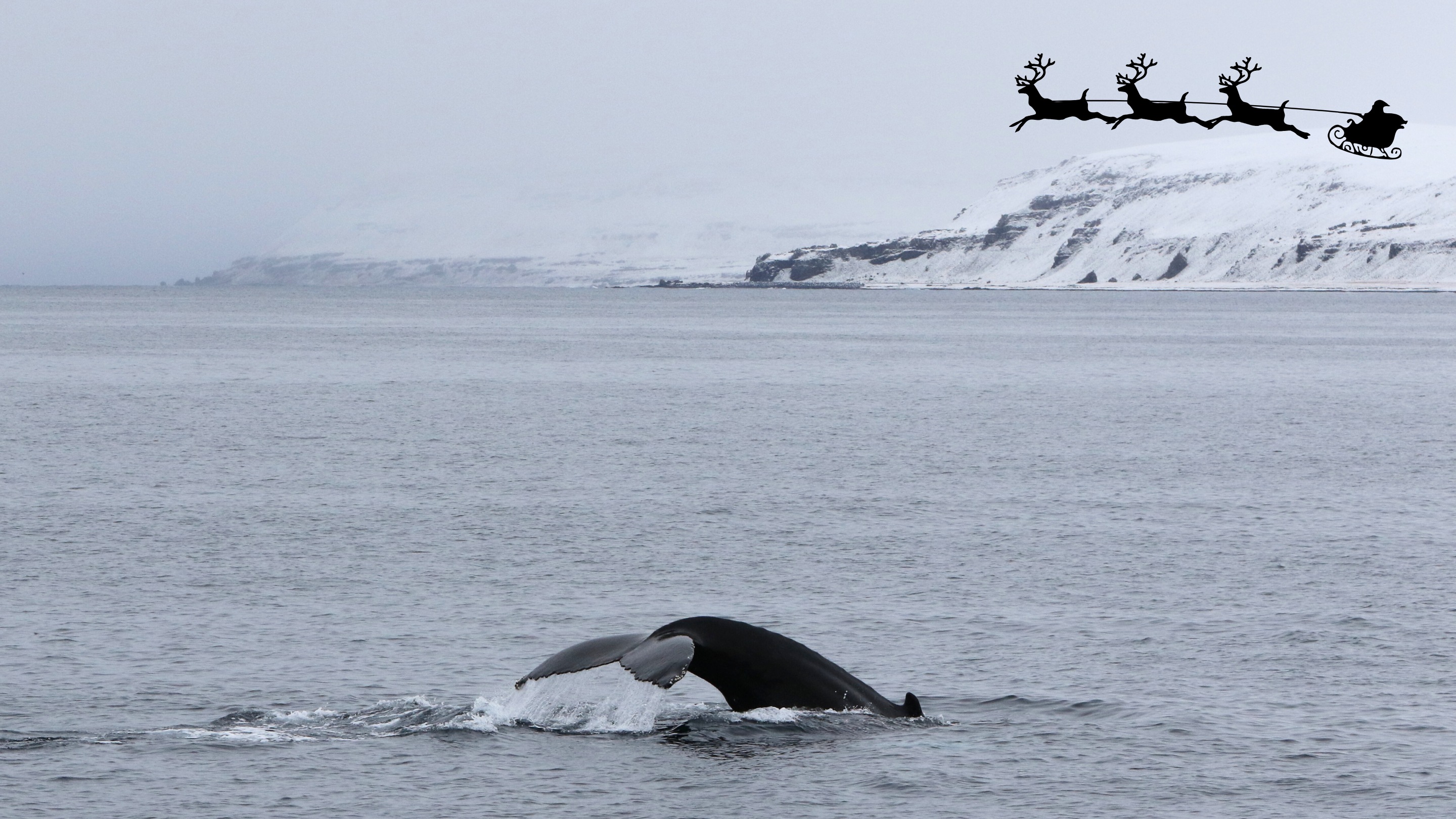
As an Icelandic humpback, I could take one of two very different paths in December. Last year, I stayed in Iceland for the entire winter, feeding in the frigid waters which are still surprisingly full of fish. However, this year I will be leaving my icy foraging ground and swim south to the warm, clear waters of the Caribbean. It’s a long migration – thousands of miles – but one I have made before. In fact, I travelled from the island of Guadeloupe to Iceland when I was just a few months old. There’s little krill or small fish to eat down south, but that doesn’t bother me much; I’ve built up enough energy reserves during the summer.
In these tropical seas, my extroverted side comes out to play – this is a time for socialising and even mating. As a female humpback, when I’m older this is also the time I will give birth. As the breeding season progresses, the waters become alive with the ghostly carols of male humpbacks, echoing hundreds of miles through the Caribbean Sea. As I migrate, these melodies draw me into the congregation, although it’s increasingly difficult to hear them as vessel noise increases year-on-year. Some of us even get hit by these huge, fast ships – I’m one of the lucky ones.
White-beaked dolphin
Unlike many humpbacks, the winter waters of Iceland are my permanent home – ♪ the cold never bothered me anyway ♪. Over the festive period, my pod and I stay busy hunting for fish and squid. As the auroras dance across the sky, my dark winter days are illuminated by the exuberant company of my podmates. We’re always on the move, leaping through the waves and playing together – every day is a reason to celebrate. If we come across a whale, we’ll ride the pressure wave generated by its huge head – and if it’s a humpback, we’ll tease it for fun, daring each other to jump on its head!
My pod is everything to me and communication is constant, with clicks and whistles keeping us together. Scientists might not understand all the details of our language, but every call carries meaning, allowing us to navigate and survive in the dark shelf waters of Iceland.

Sperm whale
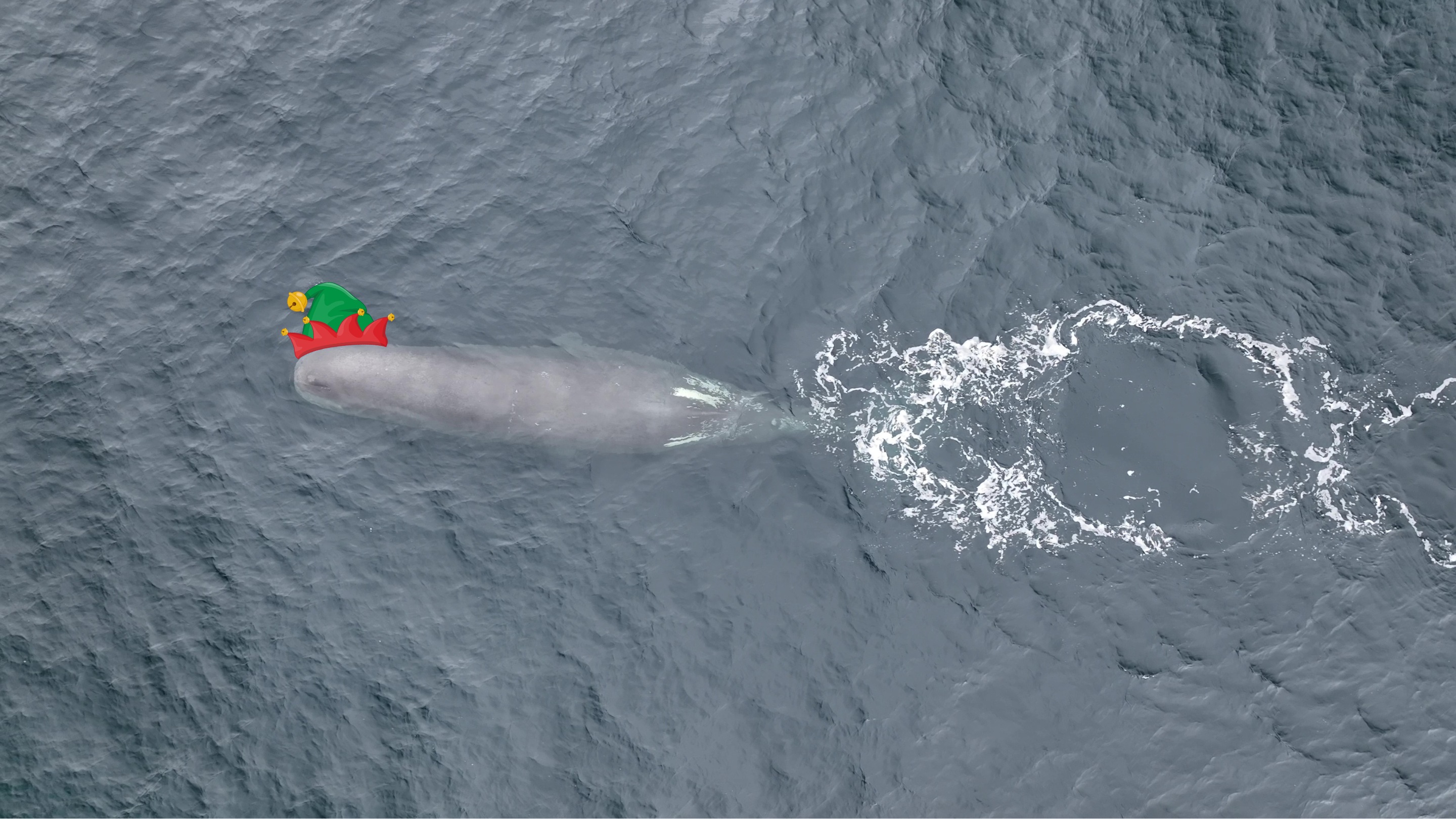
As a subadult male sperm whale, the winter months are a quiet time for contemplation. While females and younger whales stay in warmer, shallower waters, and some of my mates have swum south to join them, I roam the deep and frigid waters around Iceland and beyond. My world lies far beneath the surface, in the inky darkness of the ocean’s depths.
Diving thousands of meters below, I hunt for fish and squid, my favoured prey. Using my echolocation, I “see” in the darkness, clicking to navigate and locate my next meal. These dives are long and intense, but they sustain me through the solitary stretches of ocean. Occasionally, I’ll encounter other males, but our interactions are brief. My festive journey is one of endurance, a lone traveller in a vast and silent world, lit down below only by the glowing creatures of the deep.
Orca
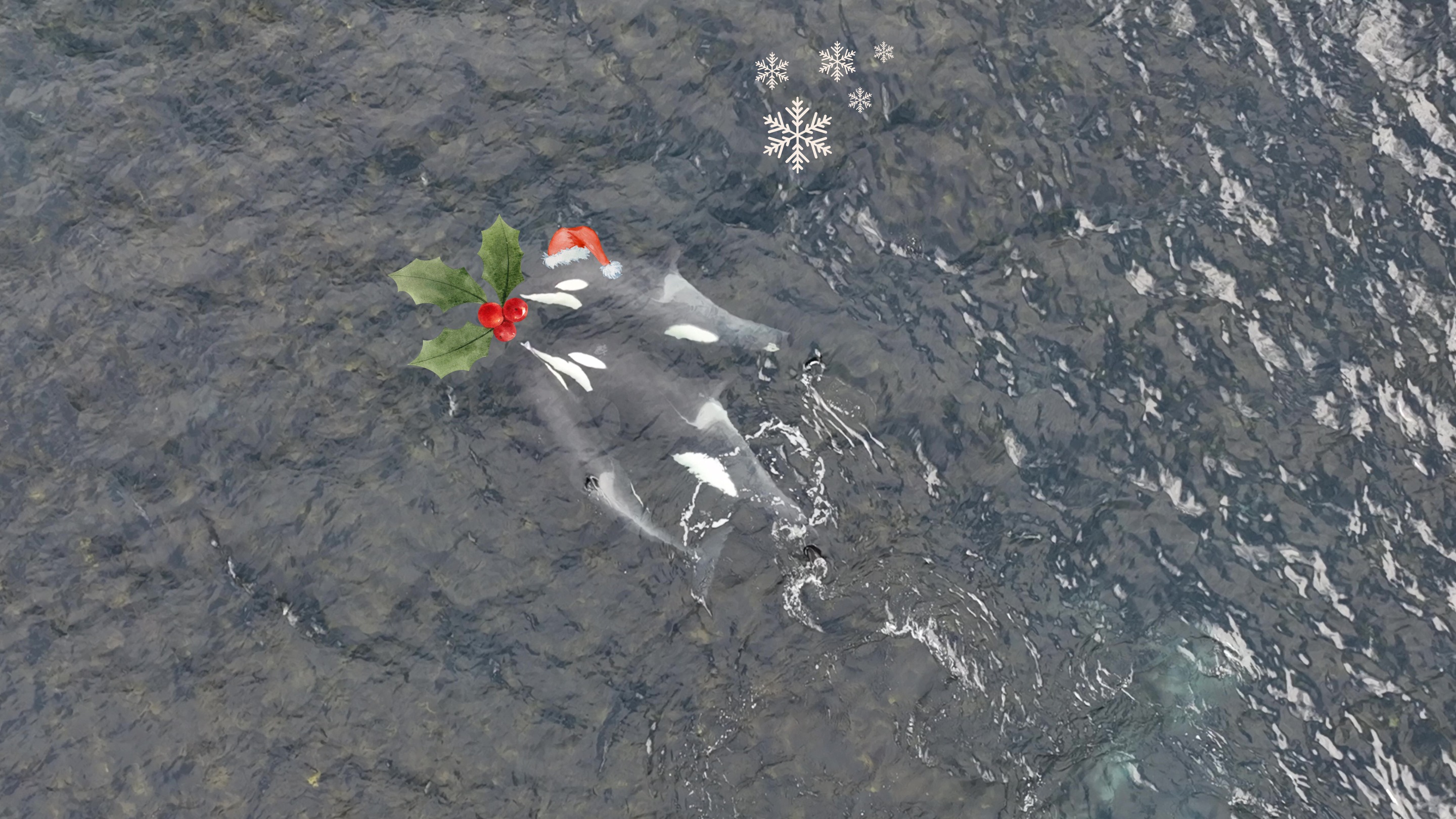
December in the North Atlantic means plenty of herring. As an Icelandic orca, my pod and I rely on these fish to sustain us during the harsh winter months. Together, we roam the icy waters around Iceland, working as a team to corral schools of herring. Our coordination is seamless, a result of years of learning and trust within the pod. Tail slaps and sudden bursts of speed are our tools, stunning the fish before we feast.
The long Arctic nights are part of our world, but the darkness doesn’t hinder us. Like the sperm whale, my echolocation paints a vivid picture of the underwater environment. Unlike the sperm whale, however, family is key to my survival and happiness. The bonds within our pod run deep, strengthened by communication and prey sharing, our favourite gift. We split up from time to time, but we will always see each other again. Our pod has been doing well recently, with babies and plentiful food, but I’ve heard about the troubles experienced by other populations – the silent killer that is persistent organic pollution rendering us unable to breed. Slowly, we are dying out. My pod and I are grateful for every day of prosperity.
The North Atlantic during the holiday season is far from quiet. Beneath the waves, a world of activity and life continues, diverse and mysterious. Whether it’s the humpback whale’s songs echoing through the warm Caribbean waters, the white-beaked dolphin’s playful leaps in the frigid seas, the sperm whale’s solitary dives into the abyss or the orca’s coordinated hunts beneath the Arctic sky, each species has its own story to tell. While we humans celebrate in their unique way, let’s remember our blubbery neighbours – their lives, our impacts and the work we can do to protect them.