 Whale Wise
Field season begins: drones, whales and sails!
by Tom Grove
Writing this blog post, looking out over a sunny, windy Steingrímsfjörður, it’s hard to believe that 11 days have already passed since the start of the 2023 Iceland field season! After months of preparation – fundraising, sorting equipment and protocols, coordinating the team and a whole raft of logistics – we are so excited to start our second year of data collection for Scars from Above.
Recap
Before I share some early-season stories, I’d like to provide a quick recap about the project and our plans for the field season. Scars from Above aims to use drones to assess entanglement in fishing gear for Icelandic humpback whales through scar analysis, and to determine the impact of prior entanglement on whale health and body condition. To achieve this, the main focus of this season is to collect aerial images from as many whales as possible. When we say ‘aerial image’, we mean a photograph taken by the drone with its camera pointing directly downwards, with a whale lying flat at the water’s surface (see photo below). We are comparing these images with photographs of the same whales taken from a boat (primarily taken by Judith Scott, a whale-watching guide and collaborator). Population entanglement rates are typically determined using these boat-based photos, so this comparison is essential to determine the reliability of aerial images for scar analysis. This work is being supervised by Dr Charla Basran from the University of Iceland, whose PhD focused on humpback whale entanglement in Iceland. Most of our research takes place from land but this year we are excited to work with Arvik Ocean (a French charity dedicated to ocean conservation), using their sailing vessel to collect images from the wide fjord of Ísafjarðardjúp, an area where whales are often too far offshore to fly a drone from land. With the bold aim of imaging 120 whales this year (an improvement from 91 in 2022), it promises to be an exciting season!
A motley (research) crew
This year, our ‘full’ field season started on July 20th – Alyssa and Tom have collected some data earlier in summer but the full team didn’t arrive until this date. We started as four: Alyssa, Flo, Petr and Tom. Before beginning fieldwork, we first spent a day discussing protocols, timelines and sorting equipment – in particular, attaching our LiDAR system to the drones. LiDAR is essentially a small laser system that precisely measures the height of the drone above the water surface, which is necessary to accurately measure a whale’s length. We then had a few practice drone flights to refamiliarize ourselves and we were ready to go! Fortunately, we didn’t have to wait long ago – as we were finishing practice, we spotted a few humpbacks close to Hólmavík and collected our first aerial images of the full season!
A few days later, we were joined by Amelie, her partner Beni and their 1-year-old son Phil! Within Whale Wise, we are determined to enable team members to continue their involvement as they enter parenthood – this is often not made possible within the field of whale research and puts parents at a massive career disadvantage. Of course, finding the balance within the field season takes time but so far data collection has progressed well and we’re thrilled to have the whole family as part of our team.

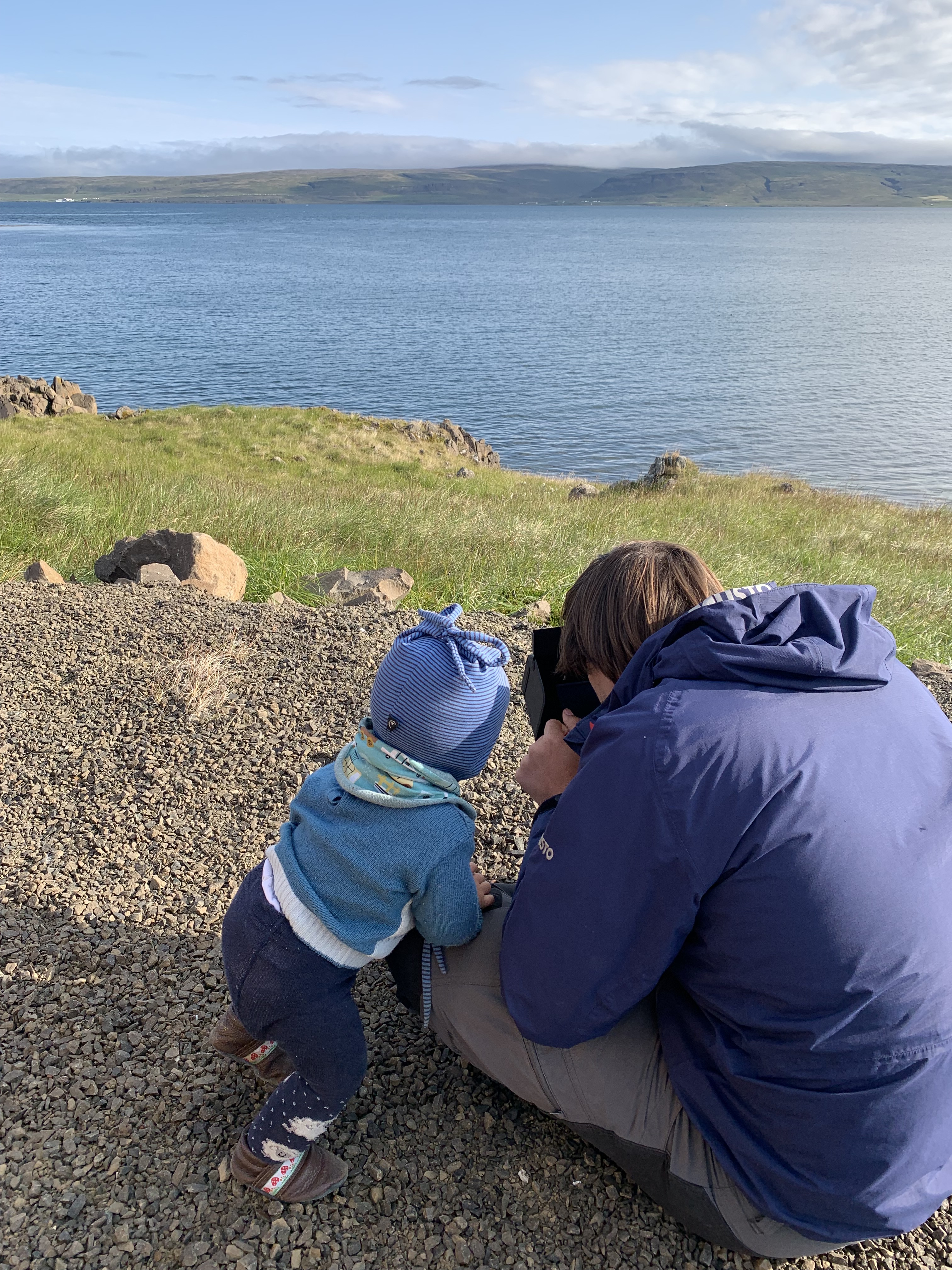
Left: our field team at the beginning of the season! Left to right: Petr, Alyssa, Tom, Beni, baby Phil, Amelie, Flo. Right: Phil helping Tom with droning.
An Arvik adventure
Even though we are less than two weeks into the season, we already have some exciting stories from the field. Soon after Flo and Petr arrived to Drangsnes, Tom and Alyssa headed to Ísafjörður to join the Arvik Ocean crew for a few days.
How would I summarise this time? Frustrating weather but INCREDIBLE whales.
Ísafjarðardjúp is quite a large area – about 50 km long, up to 10 km wide and a complex system of smaller fjords – and the whales can move around a lot from day to day. Fortunately for us, however, we found the humpbacks only a few kilometres from Ísafjörður harbour! Over quite a large area (a few square miles, ~500 football fields), we saw at least 20 humpbacks on each of our first two days, in groups of up to six animals. At some points, you could just see blows everywhere you looked as the whales prepared to dive back down to feed on (likely) krill. Excitingly, we recognized several of these animals from earlier in the summer but also from 2021, when we visited this area a few times to collect blow samples.
The only catch was the weather. The first day was cloudy and windy – good enough to fly the drone (this drone is called Oscar) and collect aerial images from 15 whales (an amazing result!) but unfortunately these were not particularly good quality due to the conditions (choppy water results in unclear aerial images, see photo). The second day was slightly rainy – which means strictly no droning – and the third day was simply too foggy to spot the whales. So, conditions were a tad frustrating at times but we were still able to collect aerial data and we also took fluke photos (from the boat) of more than 20 whales! This is exciting because we can directly compare visible entanglement scars of the same whales using photos taken from the boat and aerial images taken from the drone.


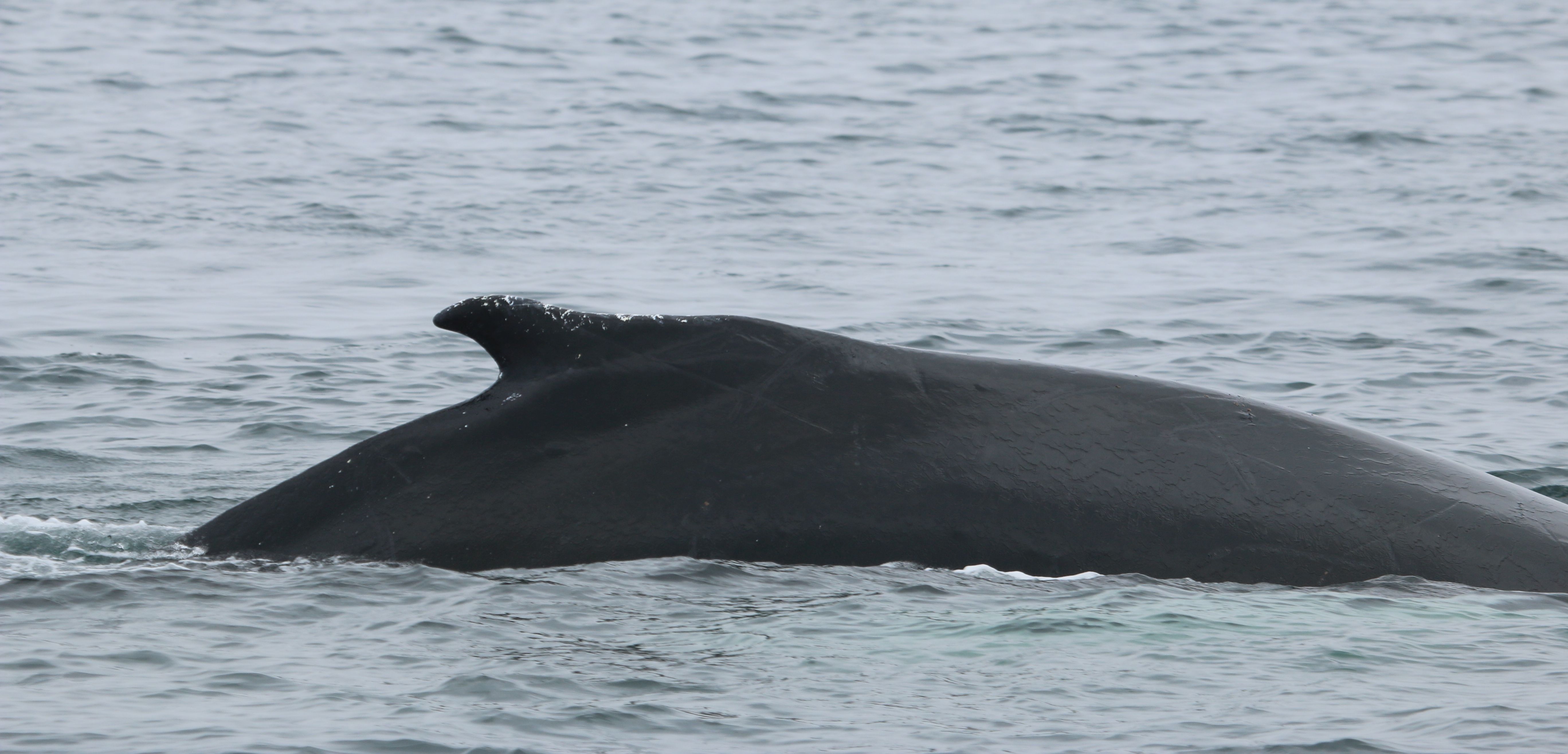

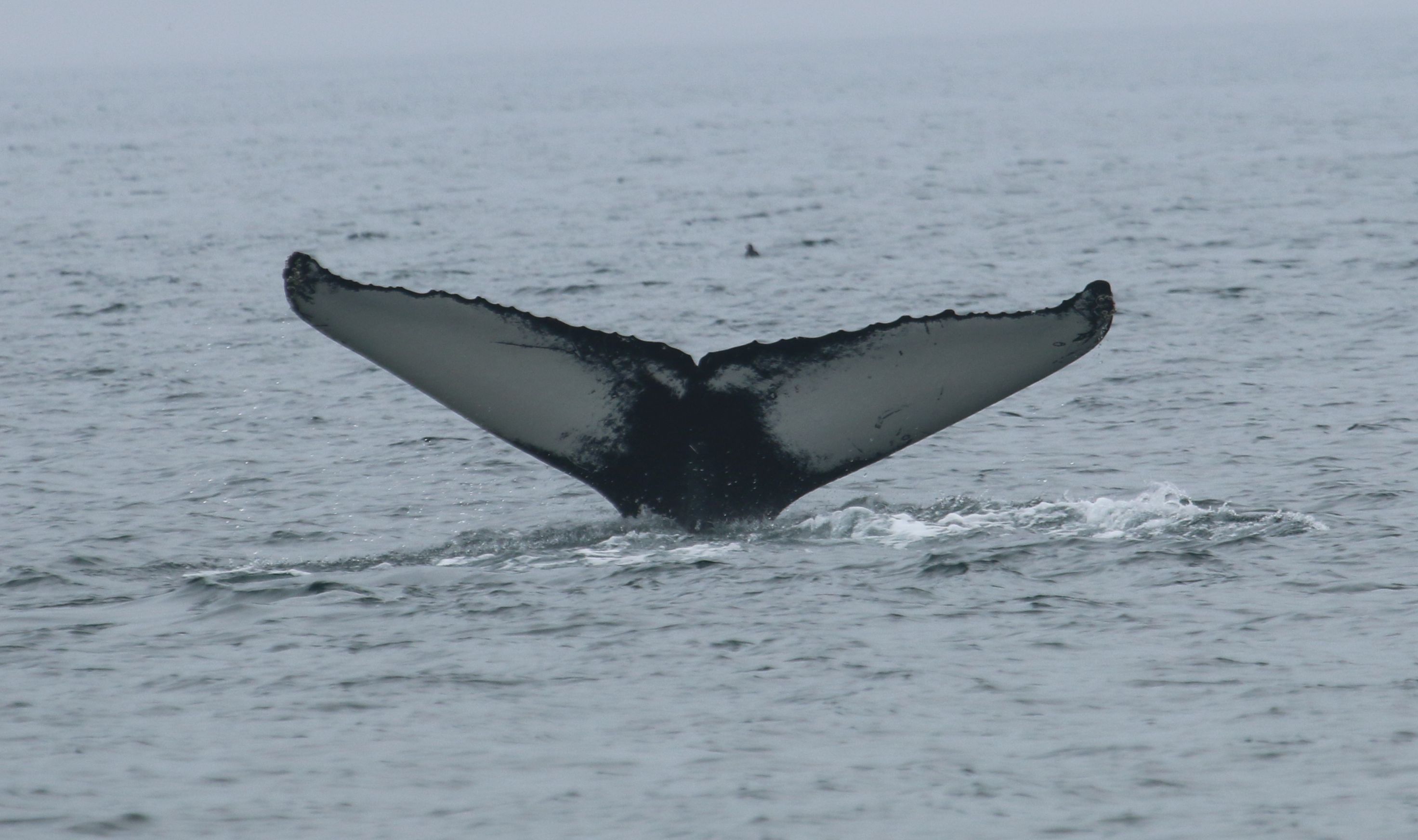

Flukes and dorsal fins taken from Migaloo
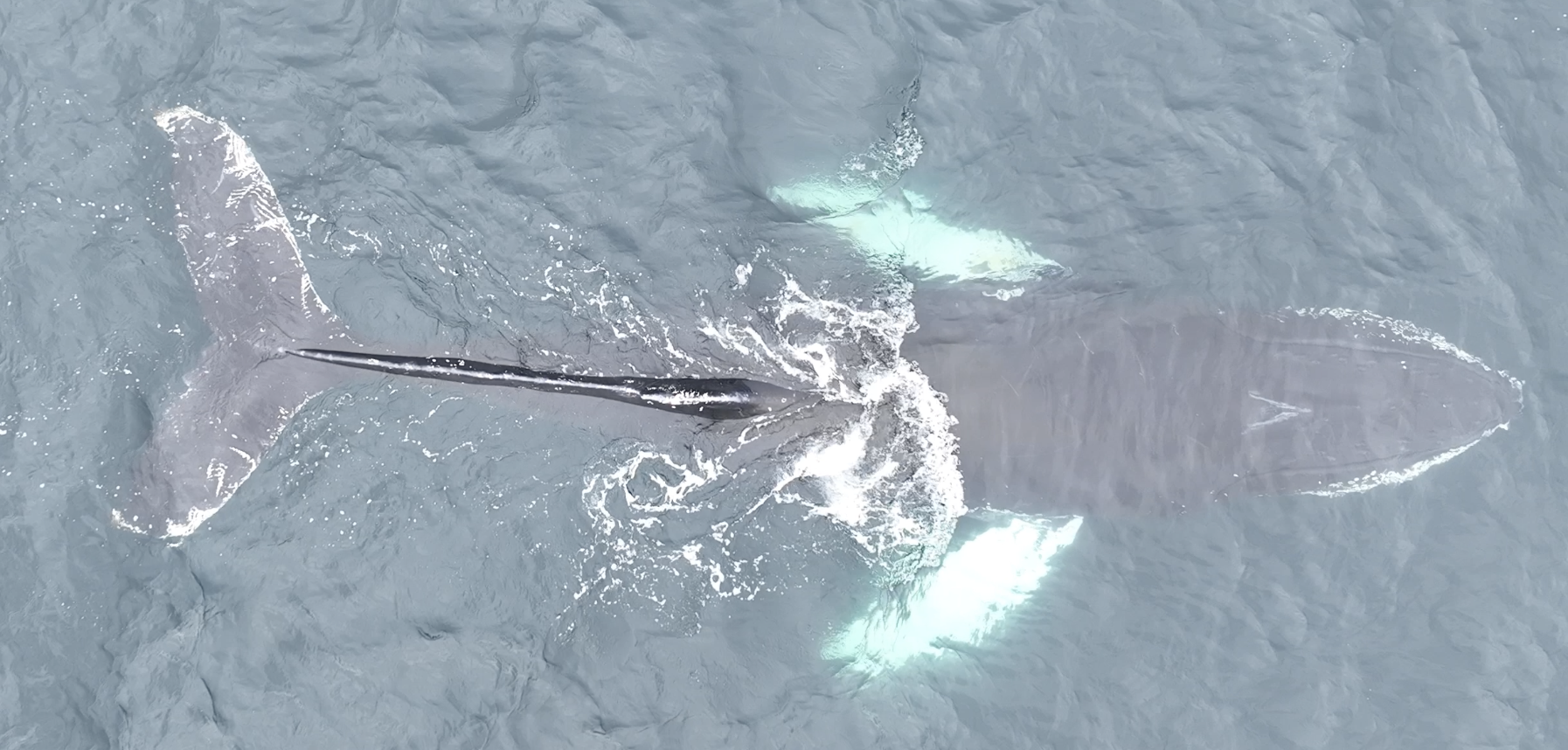
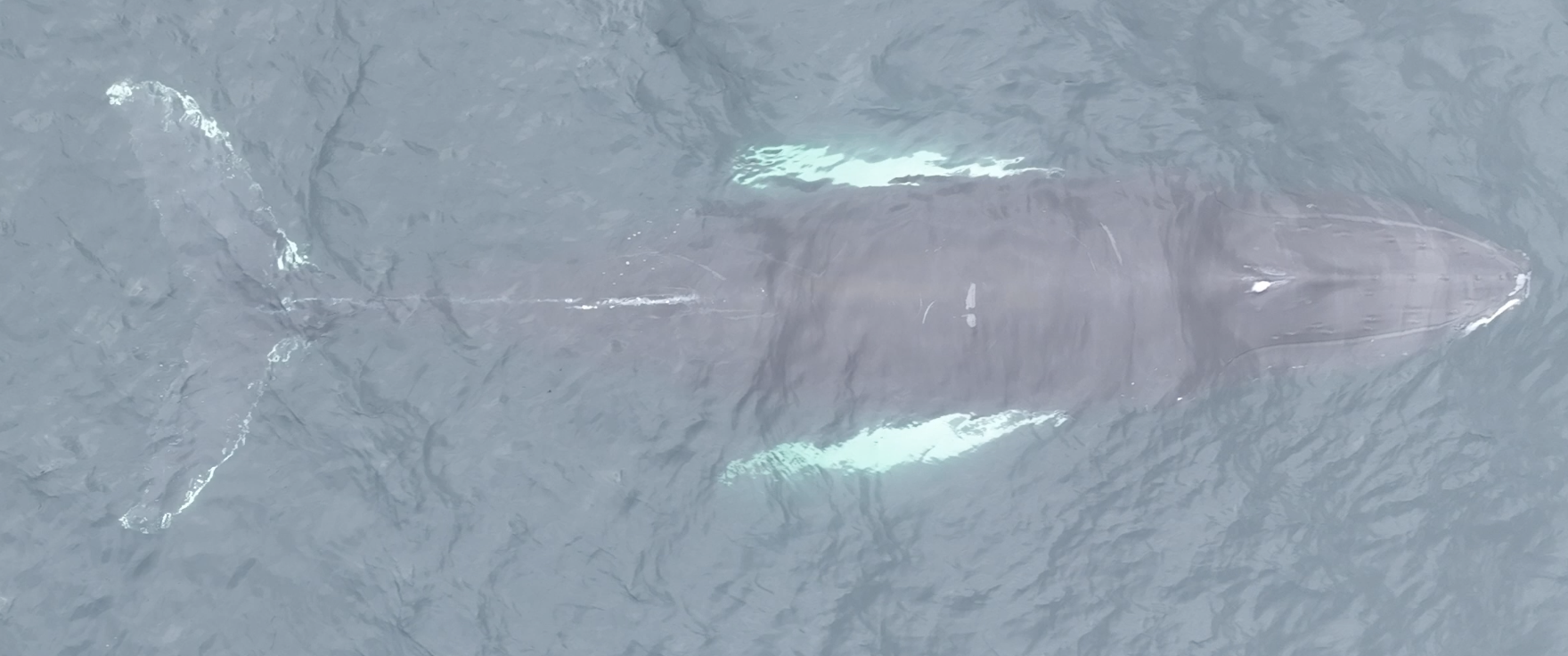
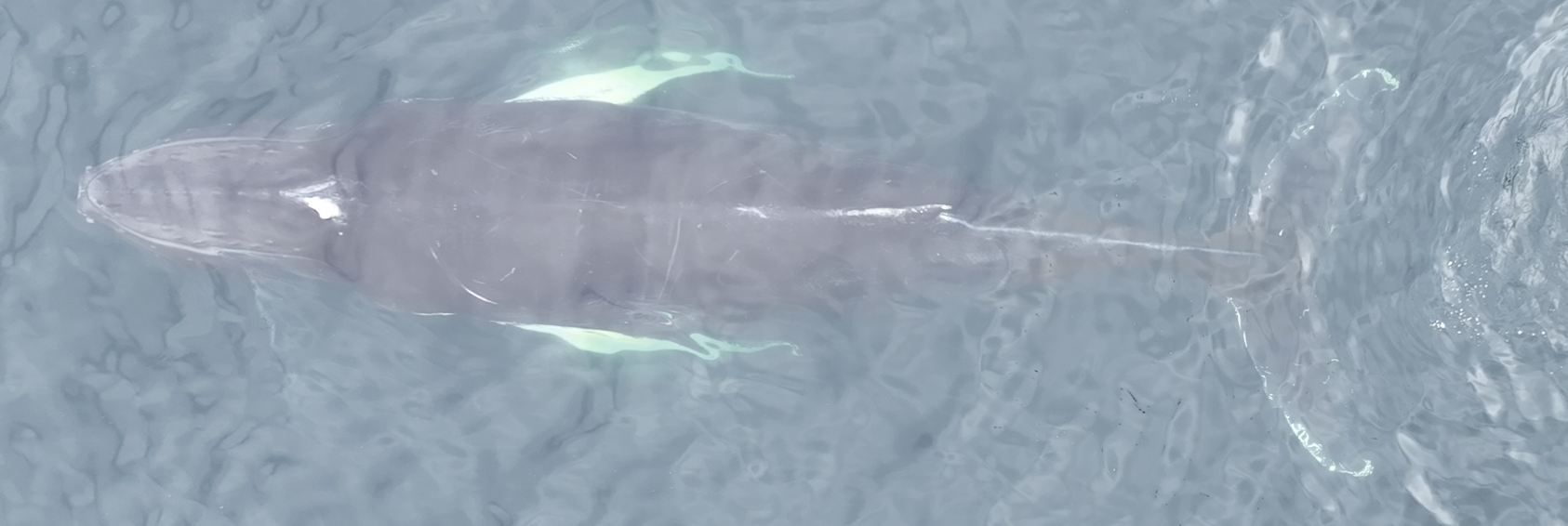
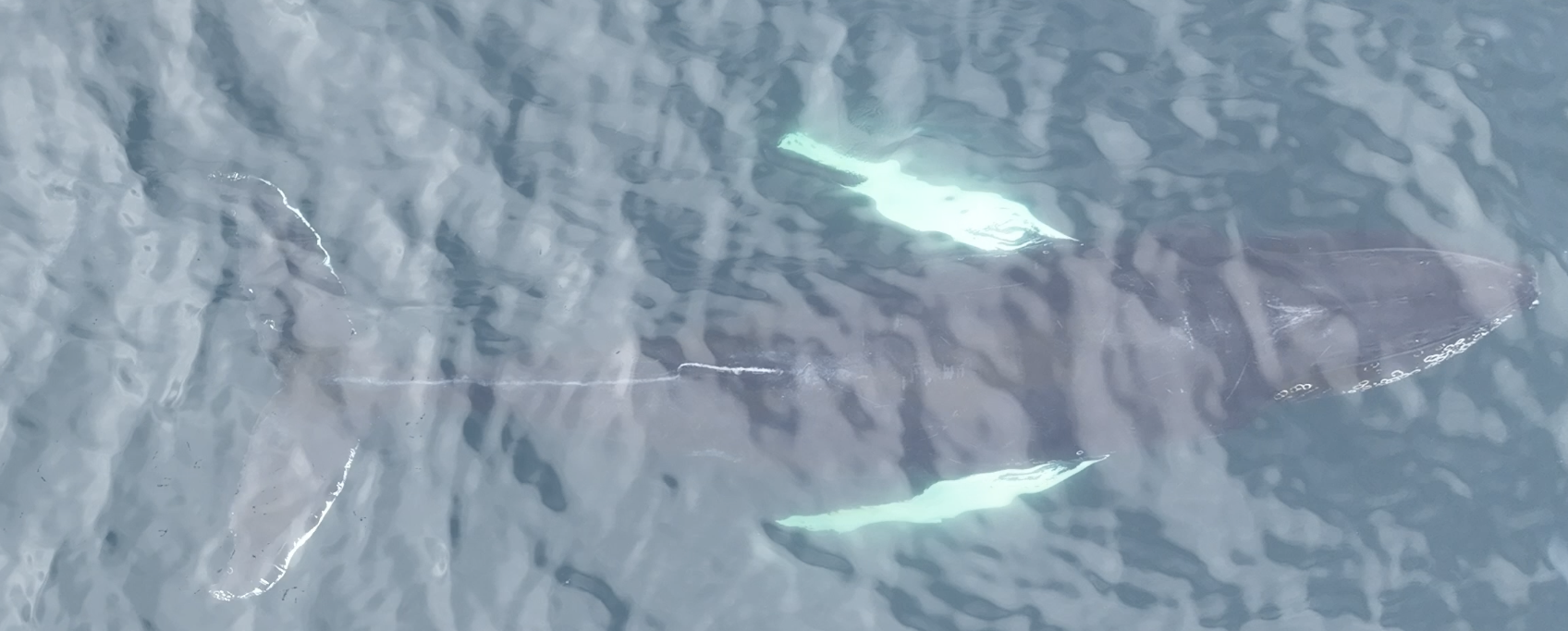
A selection of aerial images from our first few days with Arvik – plenty of whales but challenging conditions!
The experience of seeing and studying these whales was made all the more special by joining Arvik Ocean’s small sailing vessel, Migaloo. The Arvik Ocean crew is seriously committed to moving by sail only (and not the engine) whenever possible to minimise carbon emissions, noise pollution and disturbance to marine animals. As scientists who are more familiar with motorized vessels, this required a change in perspective – we moved very slowly and we often could not travel to the whales in a straight line. However, if you change your expectations and have patience, this is a fantastic way of working at sea – using drones means that you also do not have to approach very close to the whales. Additionally, they try as hard as possible not to purchase food with plastic packaging (which can be a challenge) and to minimise freshwater consumption by using saltwater wherever feasible. It was inspiring to join them for a few days and we want to re-explore the ways in which Whale Wise can also reduce its environmental impact as a charity.
After Alyssa and I hitch-hiked back to Drangsnes (our base for the field season), Flo and Petr made their way to Ísafjörður for the next Arvik shift – more on that in the next blog post, so stay tuned!
Pingback: Adventures with Arvik | Whale Wise