 Whale Wise
Spring whales of Finnafjörður: 2026 fieldwork results!
Written by Tom Grove
In the previous blog post, I outlined our spring plans to study the whales of Finnafjörður and the wider bay of Bakkaflói. In this post, I’m thrilled to share that we had an incredible and productive two weeks in the field. We were fortunate with both weather and whales, and were able to make the most of this opportunity.


20 humpbacks in the far northeast
In April 2025, we encountered large numbers of humpbacks (25+) in the large bay of Bakkaflói, including the small fjord of Finnafjörður. Local knowledge suggested that the numbers of whales were unusual, but it wasn’t unusual to see whales at that time of year.
Our fieldwork in April 2026 provided scientific evidence to support this local knowledge. On every day that the weather was good, we saw humpback whales. Numbers were lower than last April, with 5-10 whales each day, but they were very consistent and in total we observed 20 individual humpbacks, which is an awesome result. We also saw minke whales, white-beaked dolphins and harbour porpoises, albeit less frequently.
The bubble-netting continues
The most shocking part of our April 2025 sightings was the use of bubble-netting as a foraging tactic by every humpback we observed in the area. As a rarely-documented behaviour in Icelandic waters, this was a mind-boggling observation. Again, we were curious to see if this behaviour continued in 2026.
When Alyssa and I first made our way across Iceland to our accommodation, we drove along a foggy Bakkaflói, hoping that these conditions wouldn’t plague the season (the northeast can be very foggy). About five minutes from the village of Bakkafjörður, there was a small break in the fog and we couldn’t believe our eyes – two humpbacks, close to shore, creating the most incredible bubble-nets.
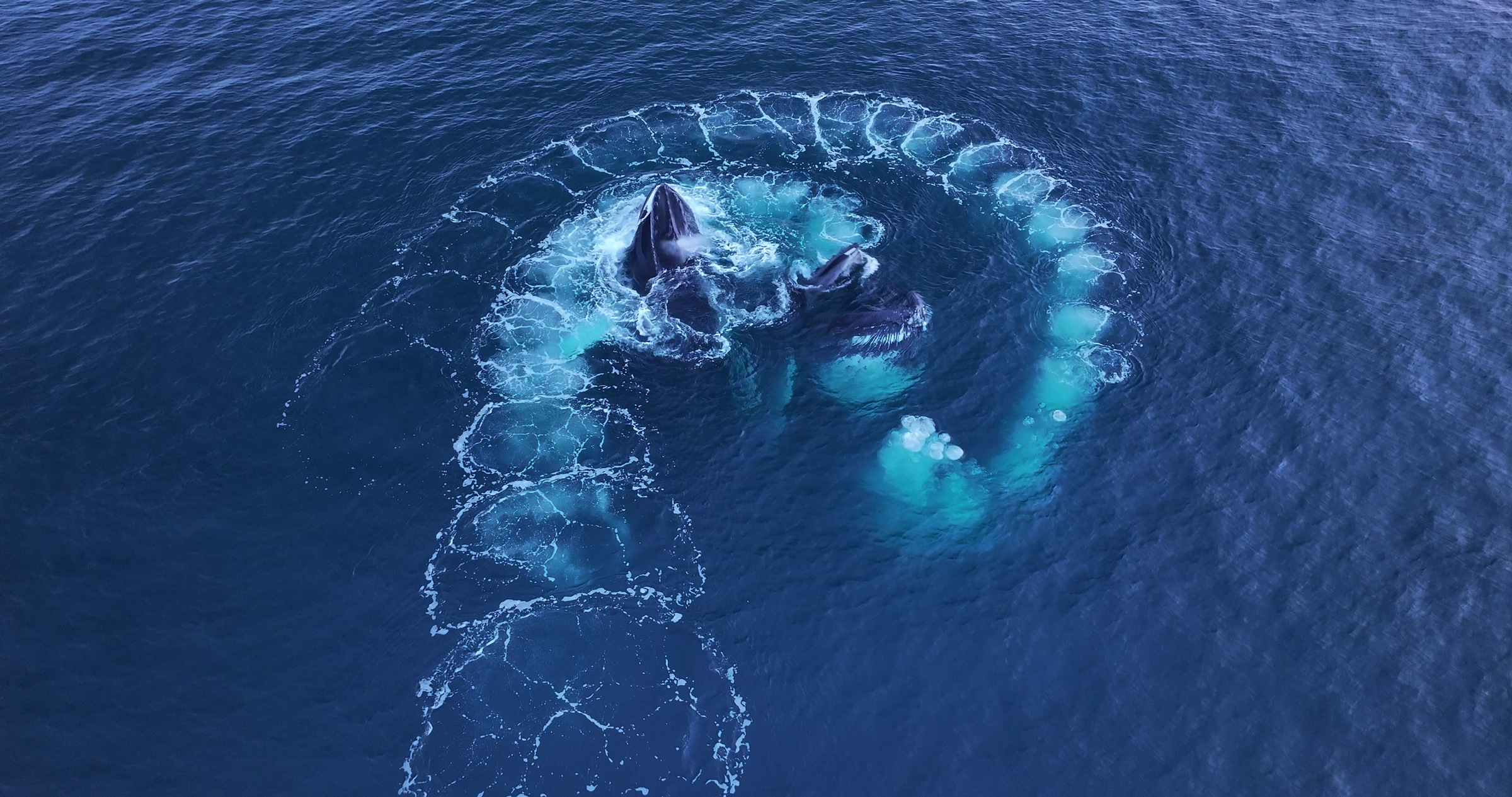
That really set the tone for the next two weeks, as we observed whales bubble-netting almost every day. Not all the whales produced bubble-nets, and mostly large whales were involved, but this was still far more frequent than we’ve observed in other parts of Iceland. We’re yet to discover why bubble-nets are used so much more in the far northeast but it’s likely determined by prey type and population connectivity. In other words, bubble-netting might be a more useful tactic for the types of prey that humpbacks are eating in the northeast, and they may have learned this behaviour from a distinct segment of the population.
Different sizes, different sighting histories
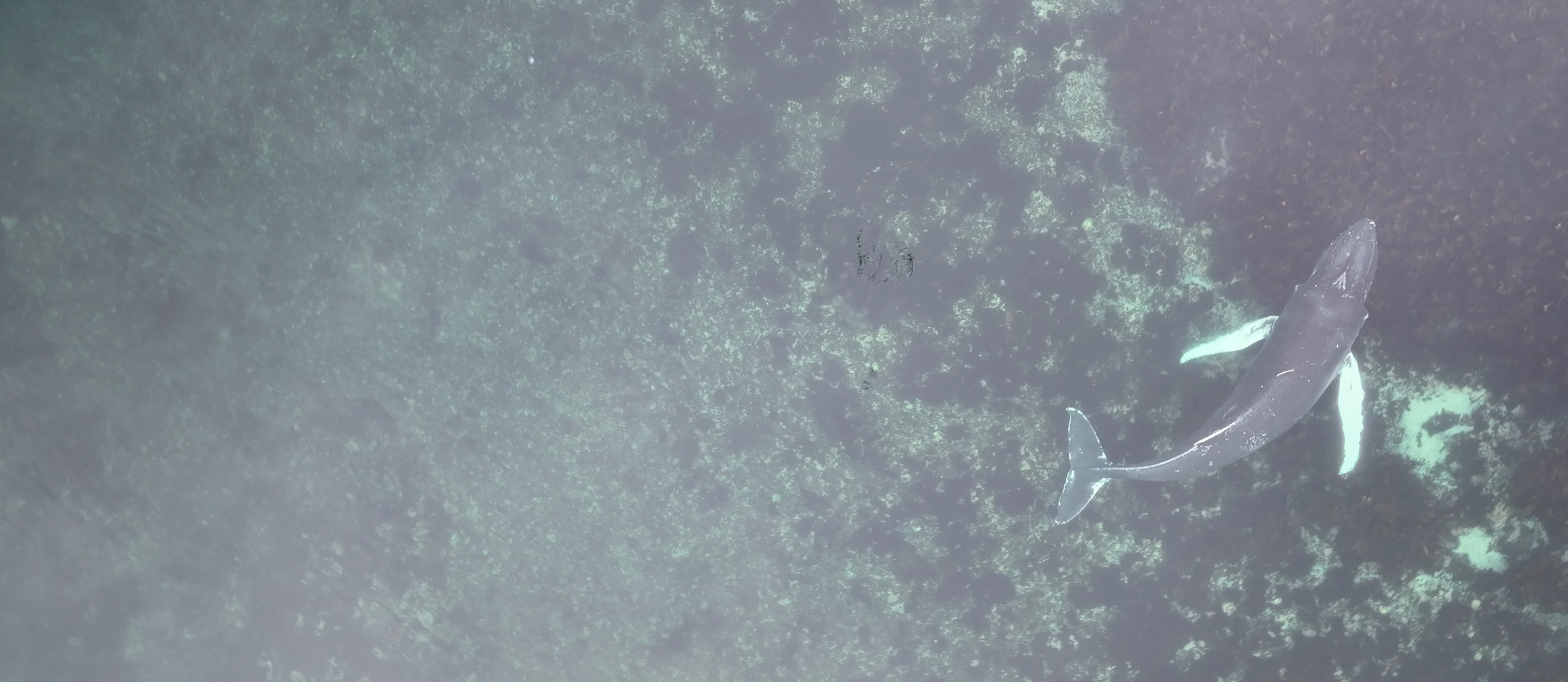
We observed humpbacks of a huge range of different sizes, from small juveniles up to some of the biggest humpbacks we’ve ever seen. We even observed a mother-calf pair, which is very rarely seen in Iceland.
Interestingly, these whales had a wide variety of sighting histories on Happywhale.com, which is an amazing global data base of individual humpbacks – I highly recommend you check out their website. Some whales had been seen for several years around different parts of Iceland, especially Skjálfandi Bay. However, plenty of whales had never been seen before, including big adults. This likely means they spend time in very remote areas with limited survey effort. And most of these whales weren’t present in April 2025, suggesting that the total number of whales that visit the area could be very high.
Stars of the season
We were ecstatic to see each and every humpback in Bakkaflói, but a few really stood out to us.
Loreleï
To us, it was clear that Loreleï was the ruler of Bakkaflói. This big humpback interacted with several other whales throughout the two weeks and was the main bubble-netter, employing this amazing feeding tactic most of the time. They LOVED to fluke in a really slow and dramatic way – even watching from 4 km away, you always knew it was Loreleï. This whale also moved A LOT, often circling the entire bay within a single day.
Björn
Björn means bear in Icelandic, and we named this whale after large scars that resembled claw marks on their fluke. Björn is a BIG whale and was very skinny in April, which likely means they had just returned from their long winter migration to tropical breeding grounds. I have never seen a whale take so long to fluke, which likely reflects their huge size. On one day, Björn seemed annoyed with a small whale which honestly looked like Björn’s calf due to the size difference. We later found out that the other whale was at least 6-7 years old – that tells you just how huge Björn is.

LeftX
One of my favourite parts of this field season was encountering an old friend, LeftX. This whale is a regular in the Westfjords, spending time in both Steingrímsfjörður and Ísafjarðardjúp. To see LeftX on the other side of Iceland was incredible and resulted in some very loud screams.
LeftX hung around for a few days before likely moving on. During this time, they were always with another whale and often fed close to shore, beneath dramatic bird cliffs.
Why do these findings matter?
We are providing the first baseline for whale occurrence, distribution, behaviour and identity in Bakkaflói . In order to understand this habitat and its importance for whales, we need to collect data over several years. Every year of fieldwork builds our understanding of whale populations in the area, and we will continue to monitor the region in future years.
In Finnafjörður, a large port may be built in the coming years, with potential negative impacts for whales that use this habitat. By building a robust data set on whales in the area, we can inform sustainable development that minimizes any impacts on local cetaceans. Without this data set, whales would remain invisible in the face of industrial development.

Wash Over Me
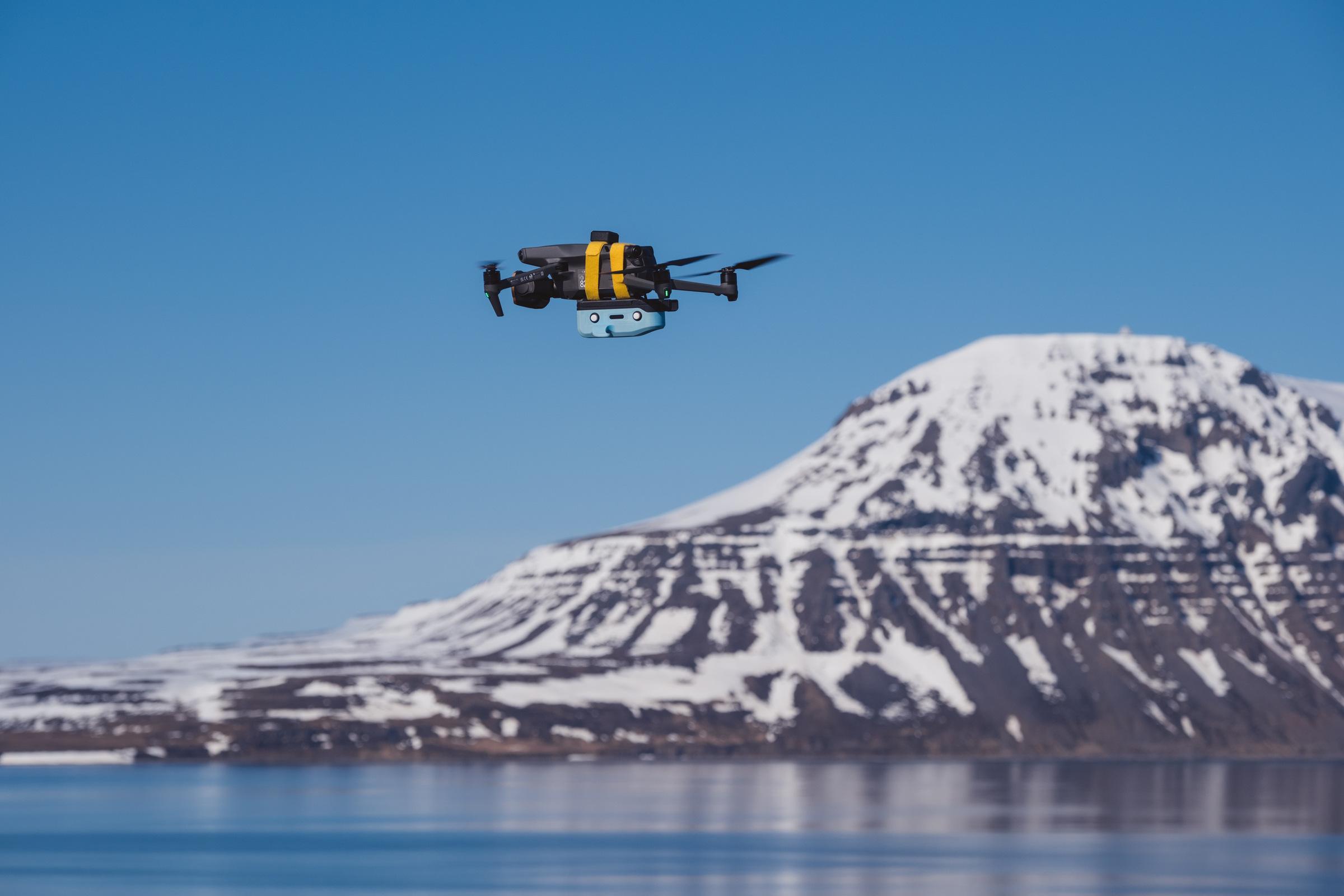
Over the past two months, we’ve been involved in an incredible project. Composer Hughie Gavin has produced an incredible charity single called Wash Over Me. Featuring the words and voices of the 140 members of the Social Singing Choir, this song is all about ocean connection.
I’m so excited to share that Wash Over Me will feature singing humpback whales from Finnafjörður in the depths of winter. We captured these song recordings during a year-long deployment of a hydrophone to listen for whales. Now, whales and humans will sing together in Wash Over Me. After a premiere in Margate on May 22nd, the single will be released on June 8th, World Ocean Day, with all proceeds being kindly donated to Whale Wise.
Pre-order Wash Over Me now and receive Drifting Ocean, a bonus track, mixing human voices and humpback whale song into an expansive soundscape. You’ll receive the single the moment it releases on World Ocean Day.
To support this project, our president Rebecca Douglas joined us for a week to visually document our fieldwork, the local area and the whales. During this time, Rebecca was even interviewed by the BBC about Wash Over Me – we’re really excited to see this beautiful song get so much attention. Rebecca is making a music video to accompany the single, also to be released on June 8th.
Thanks as always for following our journey – stay tuned for more exciting whale updates!
Support science for conservation
Our mission depends on your donations and advocacy. Here’s how you can uplift whale conservation efforts.
You can also follow us on social media and sign up to our newsletter. Thank you for supporting our mission.

Support science for conservation
Our mission depends on your donations and advocacy. Here’s how you can uplift whale conservation efforts.
You can also follow us on social media and sign up to our newsletter. Thank you for supporting our mission.