 Whale Wise

The humpback herd of Skötufjörður
Written by Tom Grove
I think that October 6th 2026 might remain in my memory for the rest of my life. A lucky day of fieldwork and witnessing the supreme power of whales from land.
A ‘normal’ morning
The day started as expected. We were living in the small village of Drangsnes and, with good weather forecast in the morning, we spent 1.5 hours conducting drone surveys over three humpback whales. We collected aerial images, IDs, sighting locations – success.
We returned to our cabin and anticipated doing computer work for the rest of the day – the forecast from earlier that morning didn’t look great at our other field sites. But for some reason, when we returned I felt a strong need to check the forecast again. This time it had changed, and the fjord system of Ísafjarðardjúp looked very promising indeed. We had been seeing large and increasing numbers of humpbacks in that fjord for a few weeks, so we threw our dog and research equipment into the car and drove over the mountain pass to the fjord.
Now I’ve seen some incredible whale sightings during my lifetime (8 years studying cetaceans and incredibly lucky), but nothing before could have prepared me for what we found.
A sea of blows
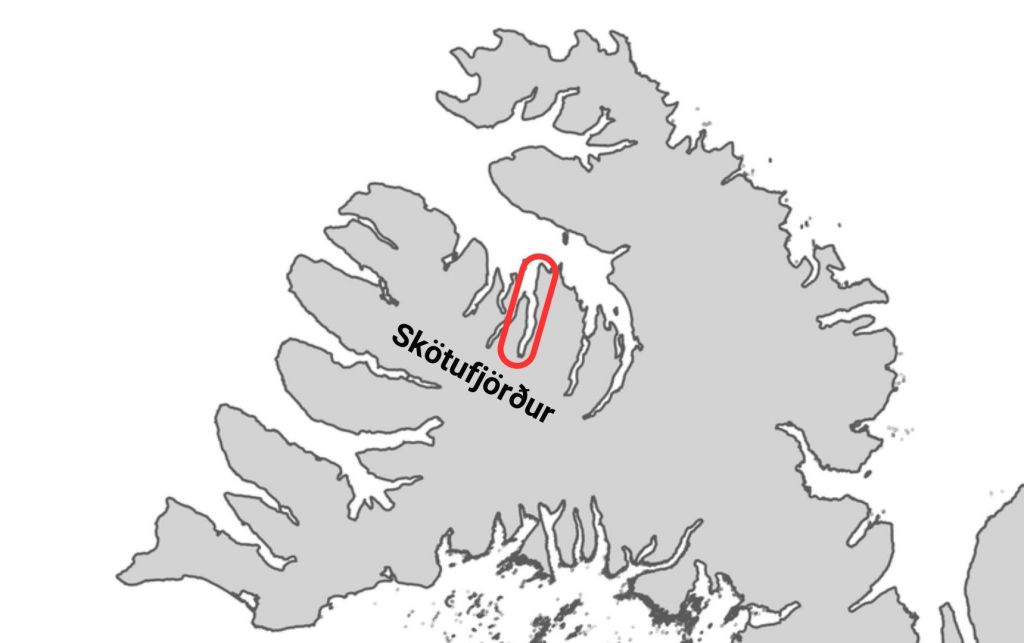
It started quietly, as we drove along the southern coast of Ísafjarðardjúp without seeing a single blow – not unusual since the whales move around within this large fjord system. As we neared the island of Vigur, however, that changed. We rounded the headland of Ögur, looking into the fjord of Skötufjörður. This is a very small, narrow fjord, branching off from the main channel. Despite its size, it’s actually very deep, possible the deepest point in the whole fjord system at >150 m. It’s sometimes known as ‘Whale Fjord’ because there are often a couple of humpbacks and you can see them very well from the road that lines the entire fjord. But it’s rarely more than 3-4 whales. Today was very, very different.
From the mouth of the fjord to its innermost depths, there were blows literally everywhere. In singles and groups, they were swimming farther and farther into the fjord. I’d never seen more than 12 humpbacks in the fjord (and that was mind-blowing), but on this day we identified at least 45 humpbacks using the drone. FORTY-FIVE humpbacks in one very small fjord. I’ve never heard of this in Iceland and I don’t expect to ever see it again.
A familiar herd
A few things made this even more remarkable. First was the way in which these whales were behaving. Judging by their dive time and movement, we presume that they were feeding – that’s why humpbacks come to Iceland and is the most plausible reason for why they would swim into this fjord. They were spread throughout the fjord but they seemed to move as a single pulse – driving farther and farther in, before moving out as a receding wave. By the time we left at 6 pm, they had nearly all left this tiny fjord. It was like tentacles of a jellyfish – distinct arms moving as one. We sort of see this behaviour out in the main channel (where we normally find whales), with loose aggregations moving in the same direction, but it was so much more pronounced when funnelled into this narrow space.
And who were the individuals that constituted this loose cetacean hive-mind? Well, nearly every single whale we had seen in the fjord system over the past few weeks was in Skötufjörður on this sunny afternoon. We saw the real regulars like Octopus, Butterfly and Pikachu. We saw recent arrivals such as Tattoo, Heartline and Squid. And we saw some true newcomers, including Giraffe and Stormur. The biggest shock was Snowcap – a whale we’ve seen since 2024, this was the first sighting of the year and, incredibly, she had a calf. Mother-calf pairs are very rarely sighted in Iceland, so this raised the already-out-of-control hysteria that Alyssa and I were experiencing to new heights.
A booming fjord
As the herd started leaving the fjord, they stopped for a while in the centre, apparently finding a good spot to feed. They had also found the acoustic optimum of the fjord – their blows were booming and echoed from one side of the fjord to the other. It was an orchestra of exhales and grunts, whales jostling for position in feeding groups to create the most incredible soundscape above the surface. The largest whales in the fjord, including Osprey and Tarantula, were right next to land, producing the loudest sounds.
Alyssa and I were brought to tears as our dog Laxi (our newest team member) was completely unimpressed by the whole thing. An unknown amphitheatre of basalt carved out by rivers of ice (this is the geological foundation of fjords).

What does this all mean?
We can’t know for sure why the whales all packed into Skötufjörður on this day, and why they don’t on other days, but this is definitely a very unusual occurrence and a special opportunity for data collection. We can’t say it’s unprecedented but, after years of studying whales here, we’ve never heard of anything like it.
As whale populations continue to rebound from industrial whaling, we may be starting to see social behaviours that were previously impossible at lower population densities. Perhaps this herd behaviour, roaming the fjords from one end to the other, was something that pre-whaling population exhibited in their hundreds. In fact, super-groups of humpbacks and other species are now regularly seen in areas such as South Africa and Antarctica. These could represent ancient practices that were destroyed with the near-extinction of large whales and are now returning to whale cultures. This is arguably a very ‘human’ way to describe an animal population but it’s simply a different way of describing social behaviours and cultures – phenomena which are by no means unique to our species.
So these sightings could reflect changing whale societies, but they are also important for human communities. Watching locals and tourists alike stop their cars and just watch in silent awe was absolutely incredible. Nature has the power to inspire pause and reflection, especially with a sight as incredible as this. That afternoon was also the ultimate advertisement for whale-watching from land – witnessing whales in peace, without them every knowing you’re there. For me, I can say that encounters such as these change me in some way – moments so powerful yet so precious and fragile that I want to commit my live to protecting them for the whales and for humans too.
This experience also taught me an important lesson – always check the weather forecast in case it changes for the better.