 Whale Wise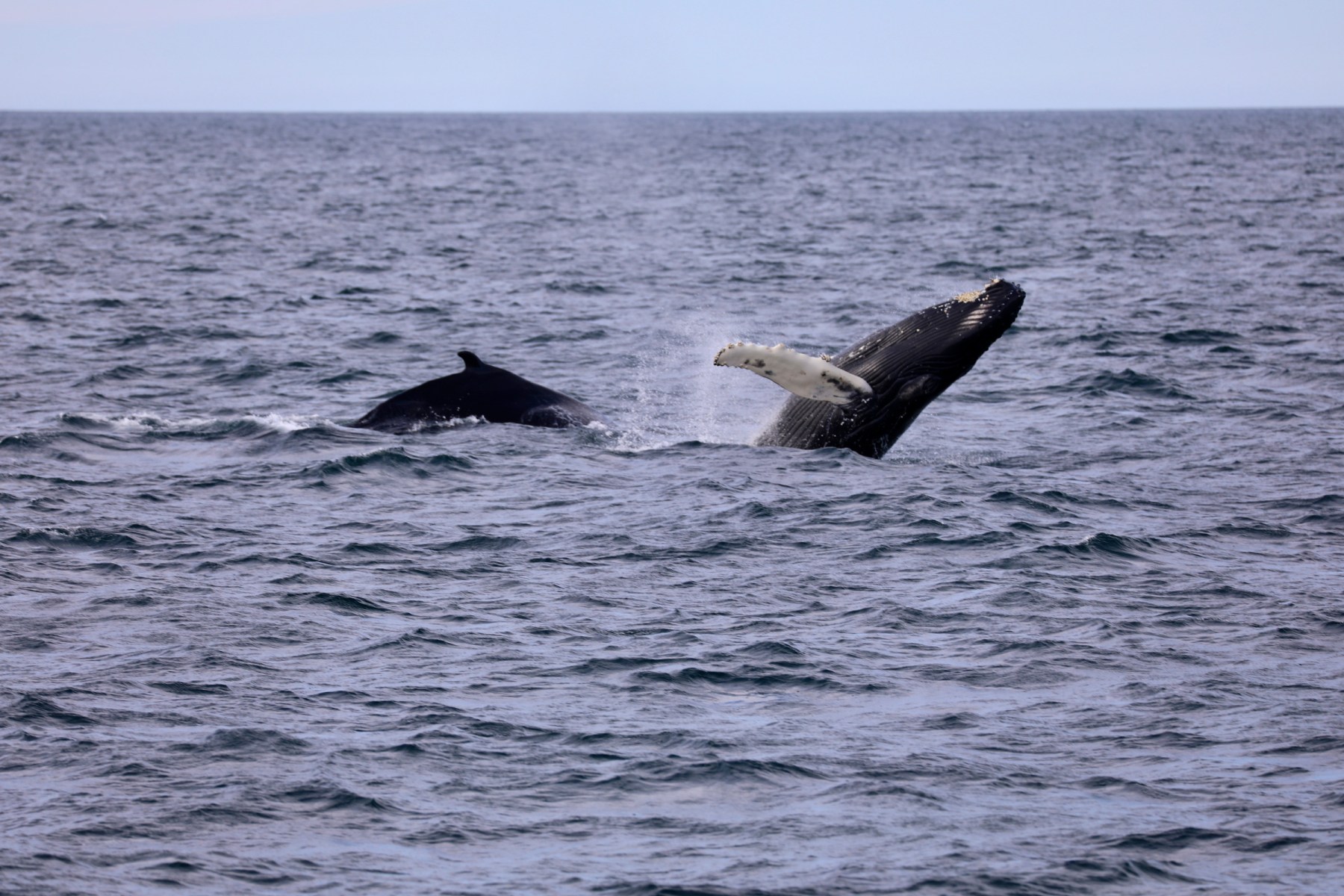
Whale-watching fieldwork: a day in the life
Written by Sophie McCallum-Spalaris
My name is Sophie and I am a graduate student working with Whale Wise on my thesis. I grew up by the Monterey Bay in California seeing whale blows from afar but it wasn’t until this year that I saw my first humpback whale from a boat. Now, I am obsessed and I am lucky enough to have completed 60 hours this summer onboard whale watching vessels observing humpbacks in Ísafjarðardjúp, Iceland.
I have lived in Ísafjörður for a year, where I am studying Coastal and Marine Resource Management at the University Centre of the Westfjords. This summer, I am collecting data on the spatiotemporal distribution of humpback whales in Ísafjarðardjúp for my thesis. The data I collect will be used for my research but it will also contribute to the long-term cetacean monitoring effort in the Westfjords by Whale Wise. This is my first time ever doing scientific fieldwork and it has been blowing my mind! So I want to share what a day in the life of my summer fieldwork looks like.
July 5th, 1500 whale-watching trip
14:30
I come early to the harbor to see if there’s room for me on the 15:00 whale watching trip. The trip is sold out but luckily two people don’t show up and so there is space for me as a researcher on the boat. We conduct our boat-based fieldwork on whale watching trips operated by the tour company Sjóferðir. Today we are on my favorite boat, Sjöfn, a fishing vessel repurposed for tourism.
15:00
As we leave the harbor, I begin recording a GPS trackline and I initiate a survey to record whale sightings and environmental conditions on the ORCA (Ocean Watchers) app. We don’t know where the whales are today but we saw the location of another whale watching boat towards the mouth of Jokulfirdir so we head that way.
15:30
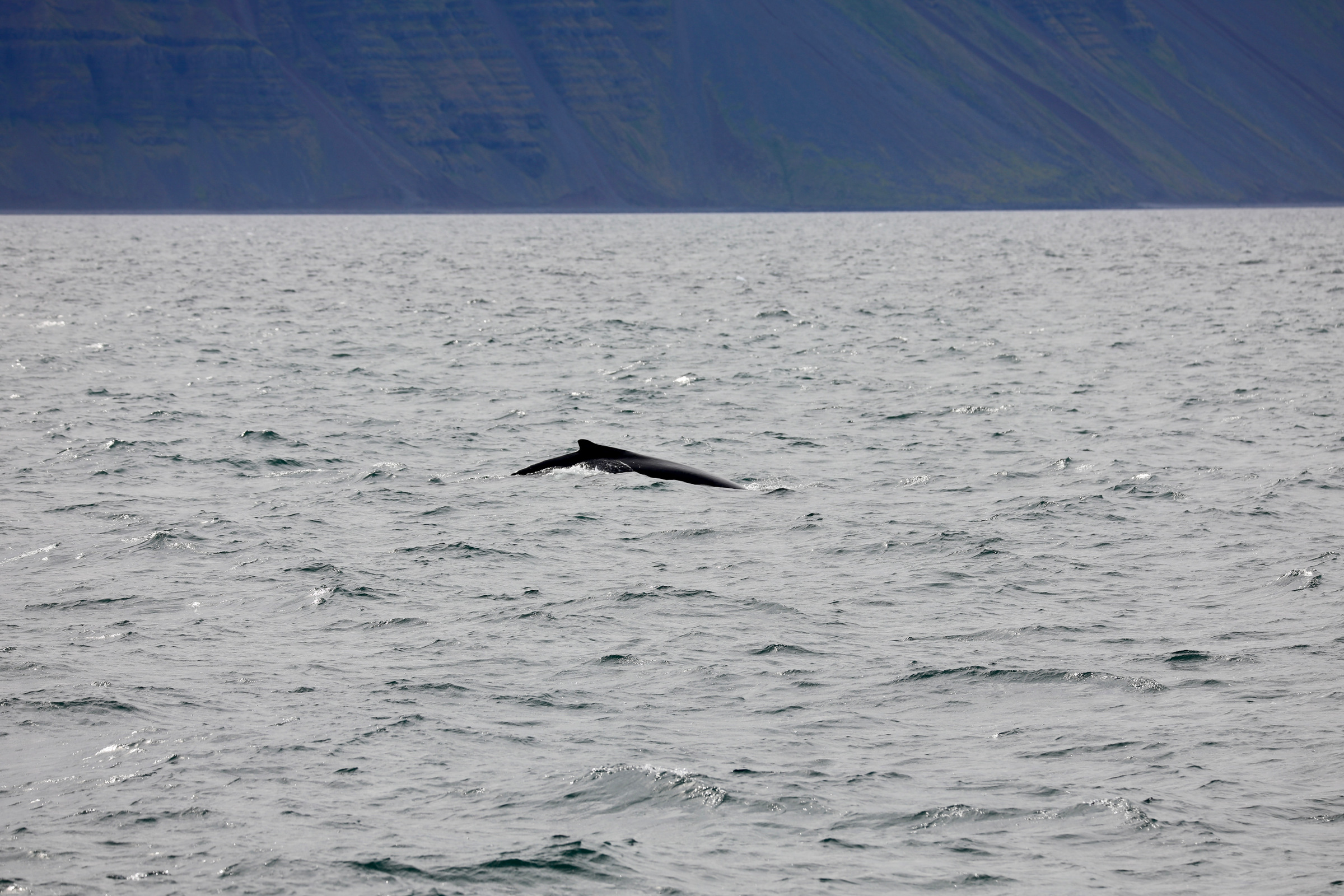
After 30 minutes I record the weather conditions, which I do every half hour during data collection. Weather conditions like rain, white caps, or large swells can affect visibility and make sighting whales more difficult. But today the weather is calm and we even have some blue sky. Then, we see our first whales! The most common way to spot a humpback is their bushy blow at the surface. If they are feeding on prey deep in the water column, they will blow several times and arch into a beautiful dive that exposes the unique underside of their tail. This fluke pattern is how we identify individual whales and are able to collect long-term data on them.
I record the location of the whales in ORCA and take photos of the fluke pattern to capture their identifying marks. We are quickly able to identify this pair as a mother, Mathsy, and her calf, Brot. Mathsy gets her name from markings on her tail that resemble mathematical symbols. Brot gets their name from the Icelandic word for fraction. We estimate Brot to be maybe around six to eight months old and will separate from Mathsy once they are around a year old. But now Brot is still learning how to forage and today is feeling very playful!


Brot breaches many times in a row which is amazing to watch. It’s amazing how the playfulness of a baby is obvious in a whale too.
16:00
After watching Mathsy and Brot for a while we move on to observe two other whales in the area. Based on their flukes and dorsal fins we are able to identify them as Bandit and Glacier. Since beginning fieldwork in June, I am now able to identify maybe ten whales based on their fluke pattern and dorsal fin shape. But I know others on the Whale Wise team can recognize hundreds!

16:45
After spending time watching Bandit and Glacier we head back to the harbor with a boat full of happy people and our data collected for the day. I feel grateful that I have been able to observe the whales all summer. It feels foundational to my research to spend time with the whales in Ísafjarðardjúp before working with them as data points on a map. The whales are not just subjects of my research, but individuals who I feel so excited to encounter on the water.
Thanks for joining me on a day of fieldwork!