Whale Wise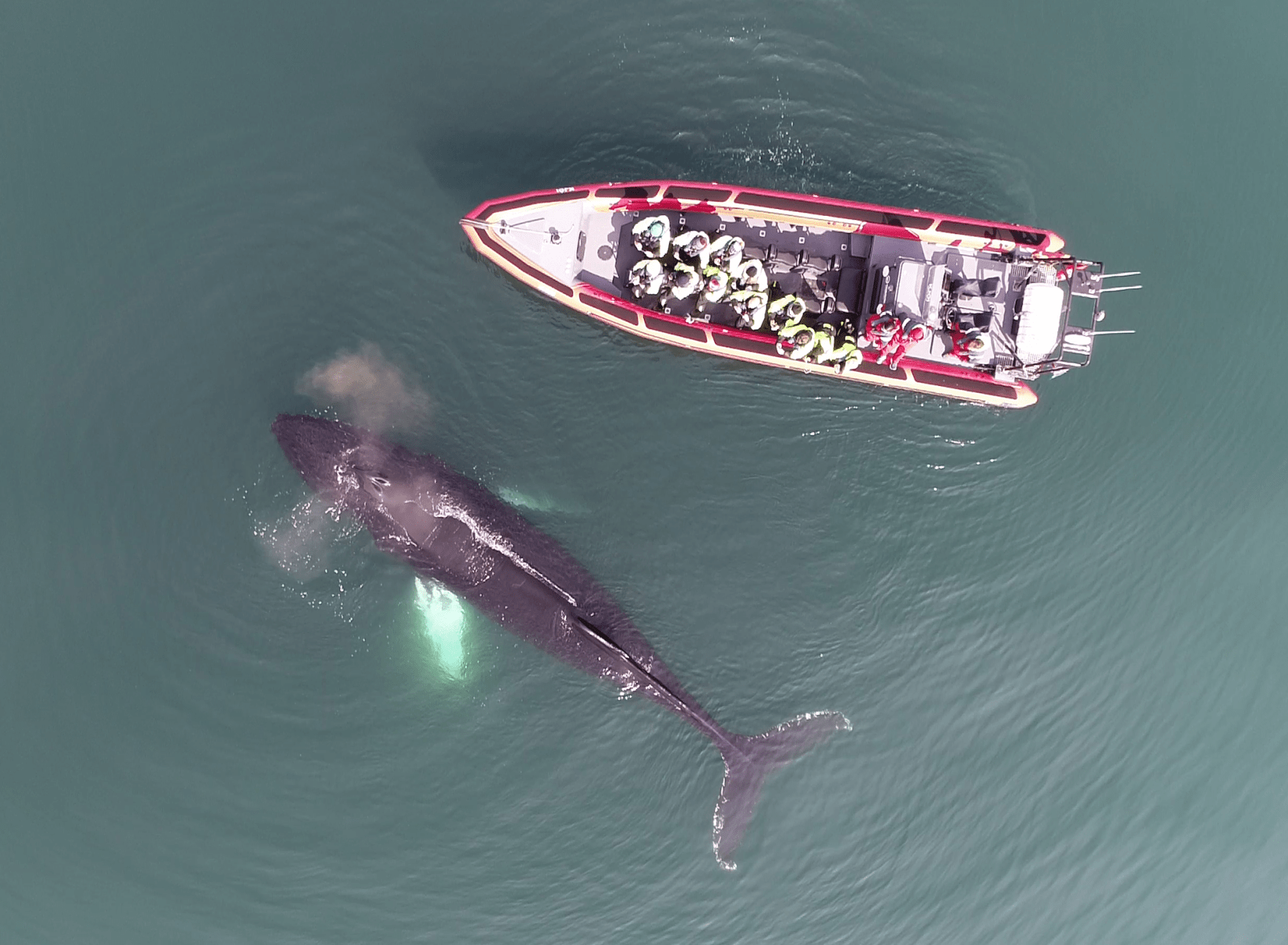
Watching whales, watching humans – a story from data analysis
by Malena Mogwitz
In today’s blog I want to share a story from data analysis with you, which I came across while assessing drone videos for the project Scars from Above (https://whalewise.org/scars-from-above/). It truly touched me, and reminded me once more of this incredible power and the emotions that whales are able to provoke in us. It also made me reflect once more about our human approaches towards them, the challenges they experience because of us, but also the potential power and magic of encountering them in their wild element.
When thinking about whale research and conservation, the first thing which comes to mind might be fieldwork and whale encounters. Ever since I got the opportunity to do this a few years ago, during an internship, the whales have deeply touched me in my heart and became a part of my life. I was lucky to join the Whale Wise team thanks to my master thesis, for which I started to participate in Scars from Above. Eventually I got into a more “invisible” part of research, spending time in front of my laptop screen for data analysis while spending the winter in North-East Iceland. While it was snowing outside, the sky colours changing from black to a lighter blue and pink, I was equipped with coffee and my laptop and assessed tons of drone videos, watching humpback whales float across my screen, while their relatives were just out in the bay.
The story that I would like to share here is about a humpback whale, known as HRC-Mn232, or unofficially White Cap (likely because of two white patches on the underside of his fluke). He has been encountered in several places across Iceland, beneath them in Steingrimsfjördur, the base for field work of Whale Wise. On this particular day in July 2023, Skjálfandi Bay, White Cap got captured on drone footage by the researcher Maria Glarou from the Húsavík Research Centre (University of Iceland, thanks Maria for letting me share your footage! :)). The video shows him approaching a whale watching vessel, coming incredibly close.
Now, I have to say that I feel very torn when thinking about whale watching. In the past I have seen individuals being approached, and even chased, when they showed clear signs of avoidance (change of direction, less time spent at the surface, shorter breath cycles, and higher swimming speed). Just like anything, whale watching has several sides: Being a platform for research and environmental education, allowing people to experience animals in real life which are usually difficult to have access to otherwise, generating sources of income for local economies, and stressing the value of living whales as an alternative to whaling. On the other hand, we know that whale watching, similar to other forms of wildlife tourism, can have negative consequences for these animals. Being acoustic animals, underwater noise from vessels can have negative impact on whales and even change their communication behaviour. Getting too close and chasing individuals for a close view can also lead to changes in diving, swimming, breathing and feeding patterns, meaning potential higher expenses of energy and stress, of which the long-term impacts have not yet been fully understood.
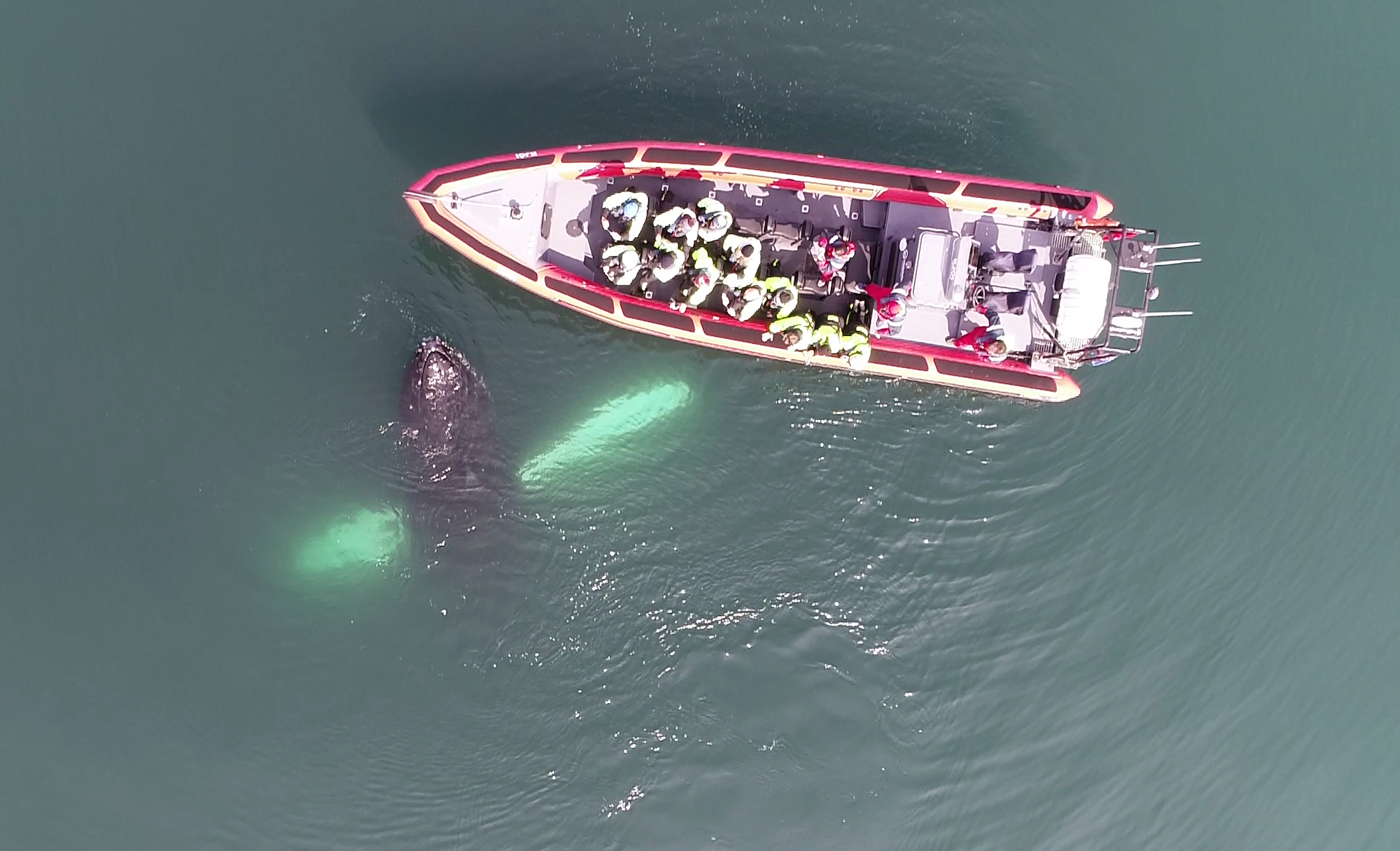
However, in the case of White Cap here, the situation is a different one: The humpback whale clearly chooses to approach the boat himself, which is not moving at all. At first, he is breathing close to the boat, which measures about his own size. Then, little by little, he cautiously manoeuvres closer to the boat by gently moving his pectoral fins and fluke, sticking his nose out of the water (known as a spy hop, a sign of curiosity) nearly in reach of the boat. Just look at how huge his body is compared to the RIB boat and humans. Especially drone images allow us to become aware of the real size of these animals (around 15 meters for adult humpbacks), as well as their overall body condition, making them important for research.
There is something very powerful in grasping the size of these animals when being very close to them, the power of their breath when they surface. White Cap starts to dive beneath the boat. Not too deep, you can still see his white pectoral fins and fluke. Lingering just below, maybe even slightly touching the boat, it becomes even clearer that this approach is intentional. While the drone follows the whale, the passengers of the boat change from side to side as he reappears on the other side of the boat, and then disappearing out of their view again, being completely hidden under the vessel.
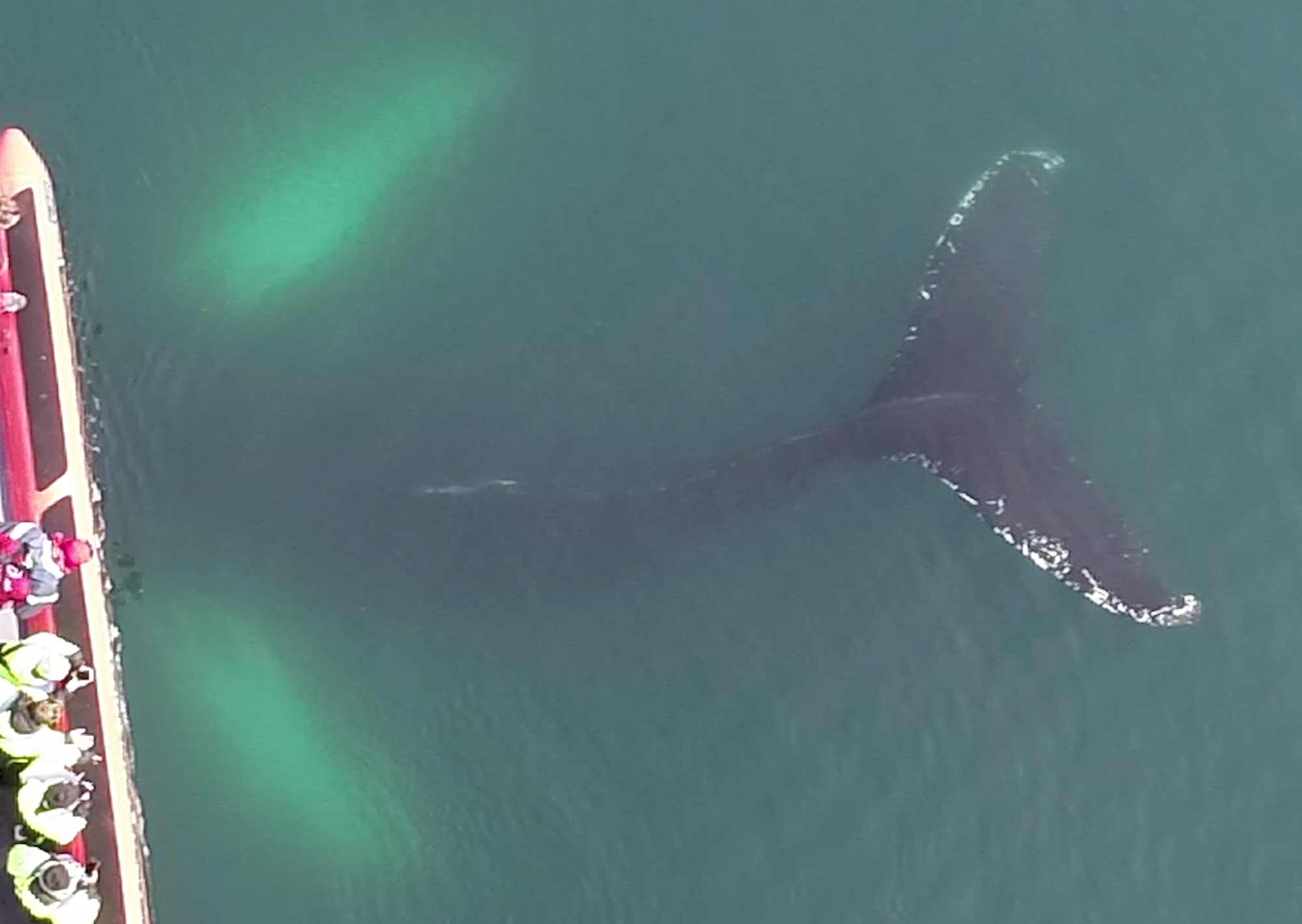
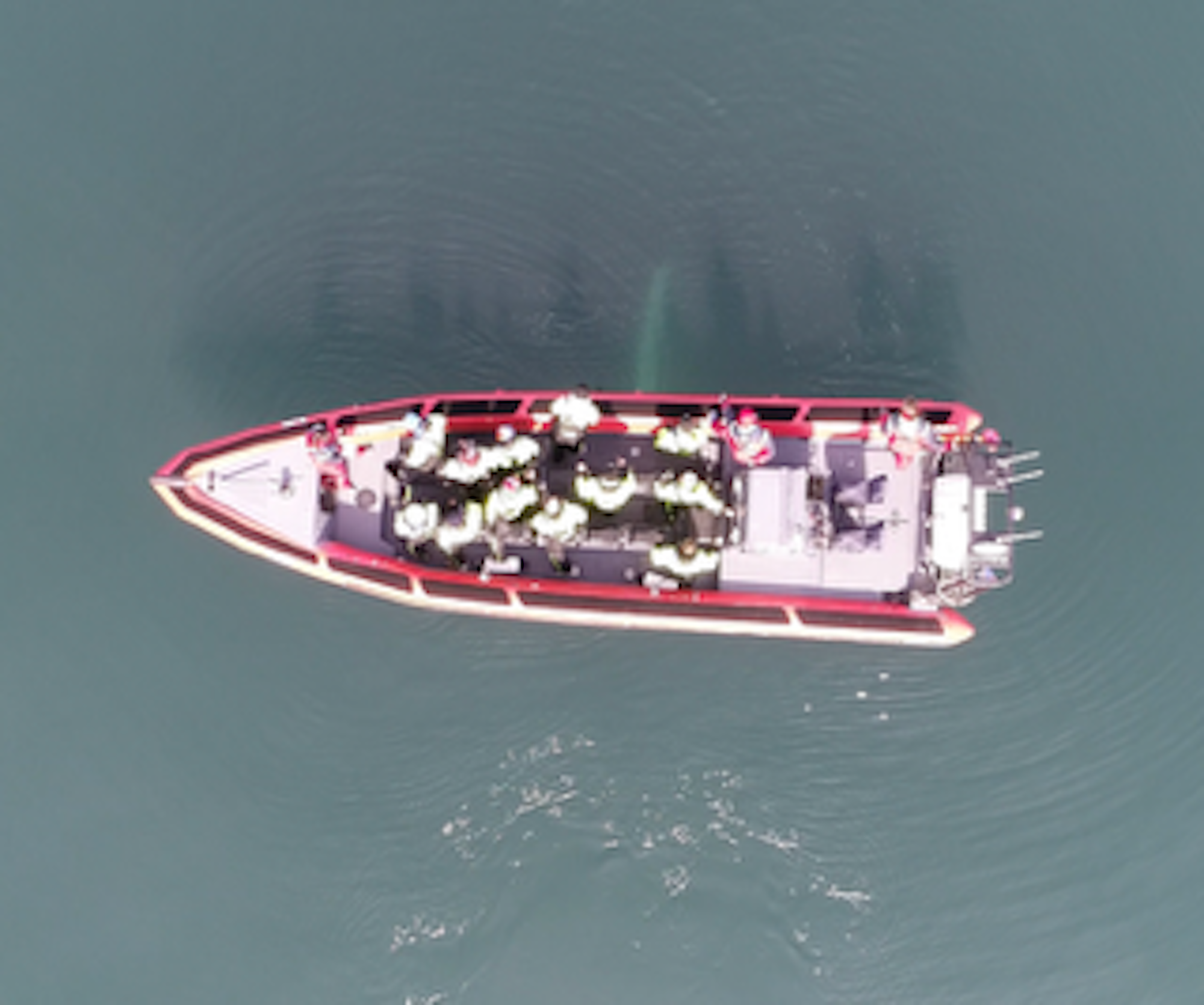
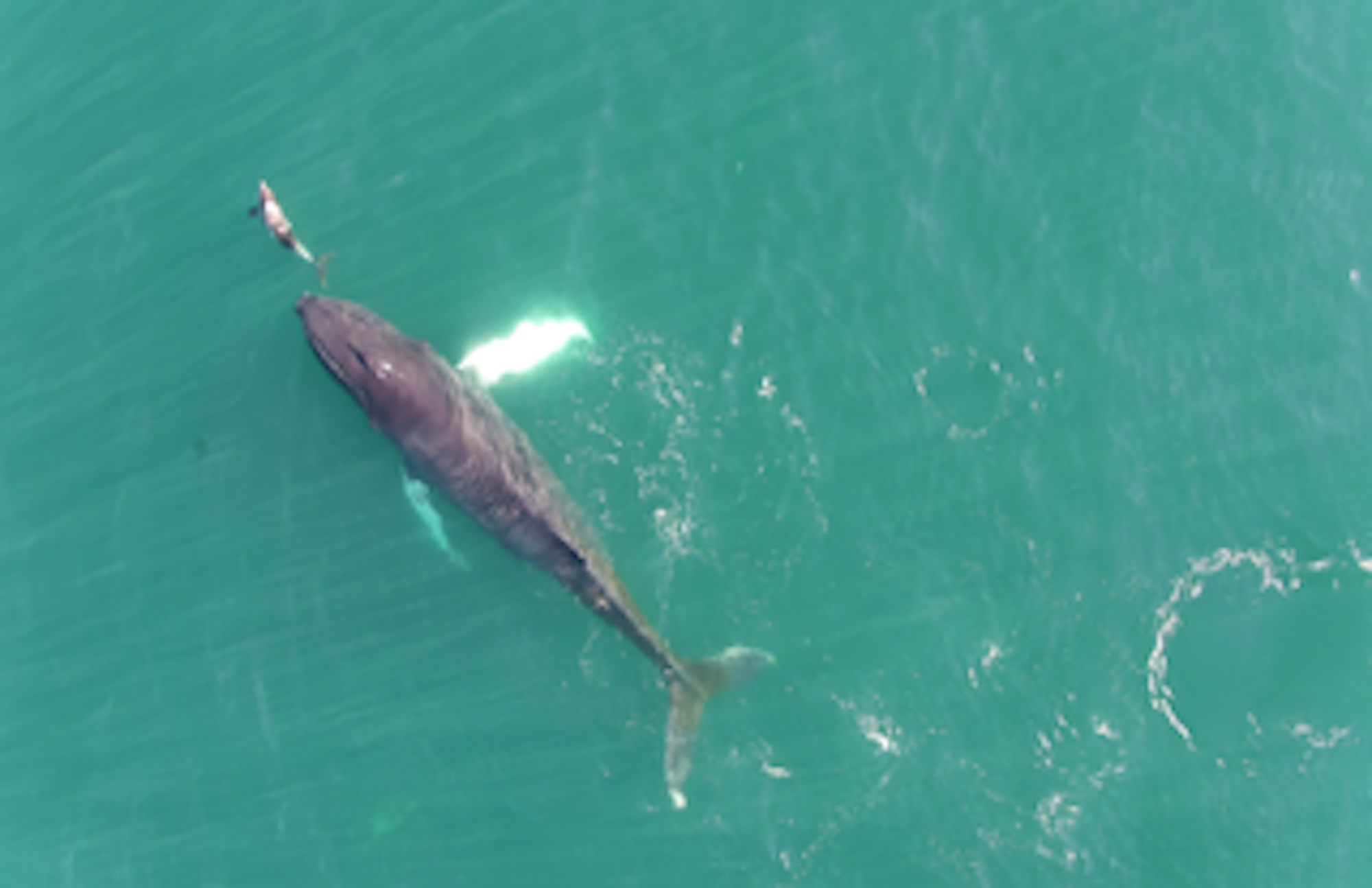
This image, of a whale as long as the boat itself, lingering underneath, changing sides, surprising the humans and sending them from one side to the other, the boat tilting under every step, has something extremely humbling to me. Imagine the force of this one animal, and the impact it could have on the boat, if it wanted to. Yet, he knows exactly how close he can get, and his behaviour displays perfectly why humpbacks are sometimes called gentle giants. Personally this is what especially touches me in humpback whales: their size and power, combined with moments of curiosity, gentleness, and awareness. Humpbacks are known to approach boats, as well as to interact with other species through playful behaviour. Have a look at Maria’s image of this humpback whale playing with white-beaked dolphins in Skjálfandi.
This explains why I tend to feel angry and sad when observing disrespectful behaviour of us humans towards these beings. There appears to exist a huge dilemma in whale watching: if experiencing whales from close, encountering them, made me love them, want to protect them and contribute to research, how could I want to deny anyone else having this experience? Our human way of functioning seems to make us care about what we directly experience or feel close to. For most of us humans, whale watching is the only way to experience a whale encounter, if at all. Many non-profits, including Whale Wise, collaborate directly with whale watching operators and get access to data thanks to them. But then, how can we possibly respect whales and have no impact on them, if whale watching is tied to a economic system like the one we live in currently, which pressures you to make a living and keep happy clients. Clients who get the expected close-up encounter are crucial to secure income.
As I am rewatching the footage for this blog, I feel such a deep love for this whale who is checking out the boats. Checking out the humans, who sometimes also mean harm to their species and others. And this also gives me hope, hope that a balance between watching whales and protecting, respecting them, can exist. This example of White Cap shows that whales can choose to approach and encounter us, which I have also experienced numerous times personally. How we approach them in return then might be crucial for respecting them. After all, WE are the ones who come into THEIR living rooms. Picture some kind of band (a music genre which is not your favourite!) setting up their stage right in front of your house, peeking into your windows while being extremely loud. Most of them even taking photos. What would we think if they would say: “Well, if the inhabitants really feel disturbed, they could just leave”?
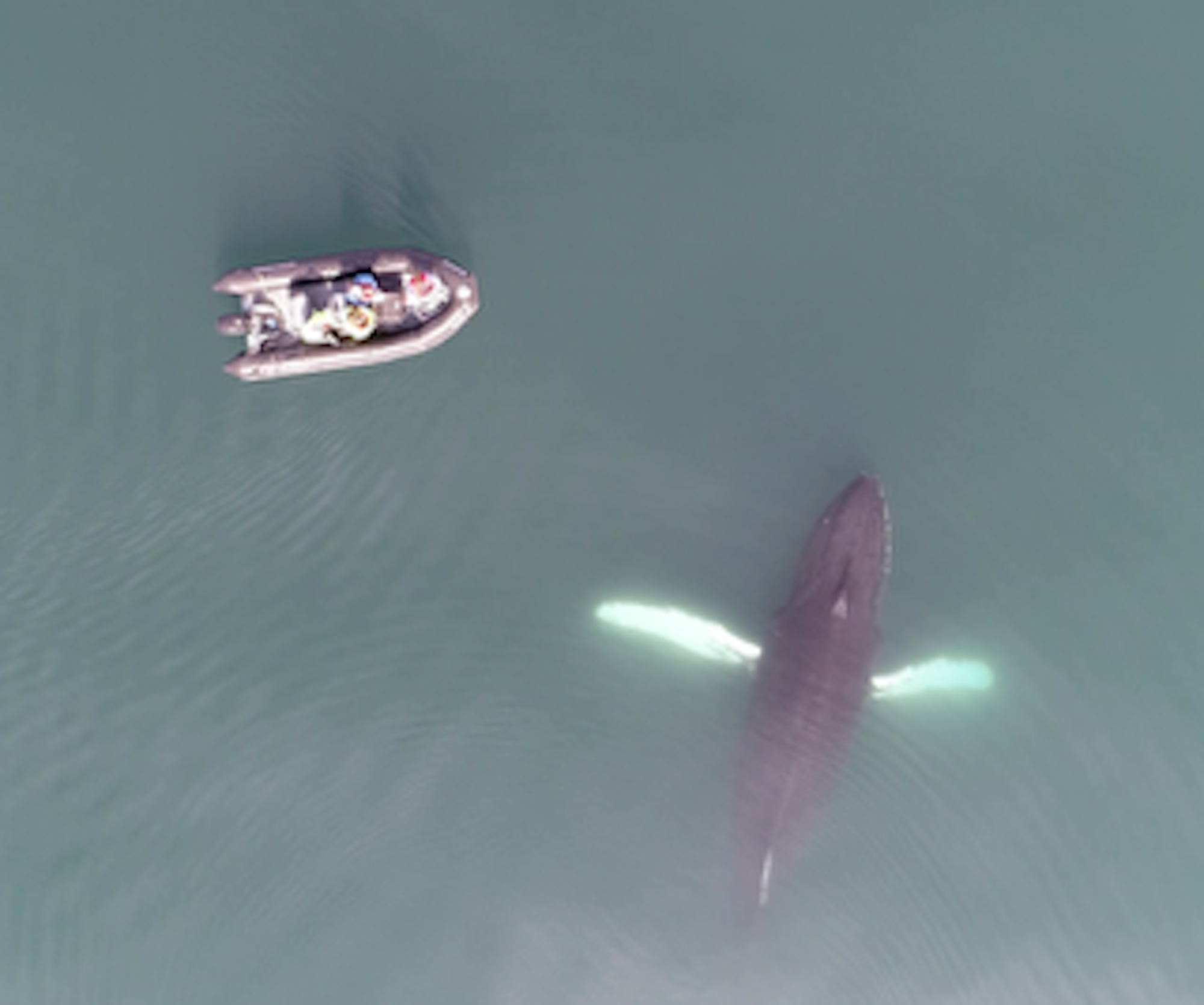
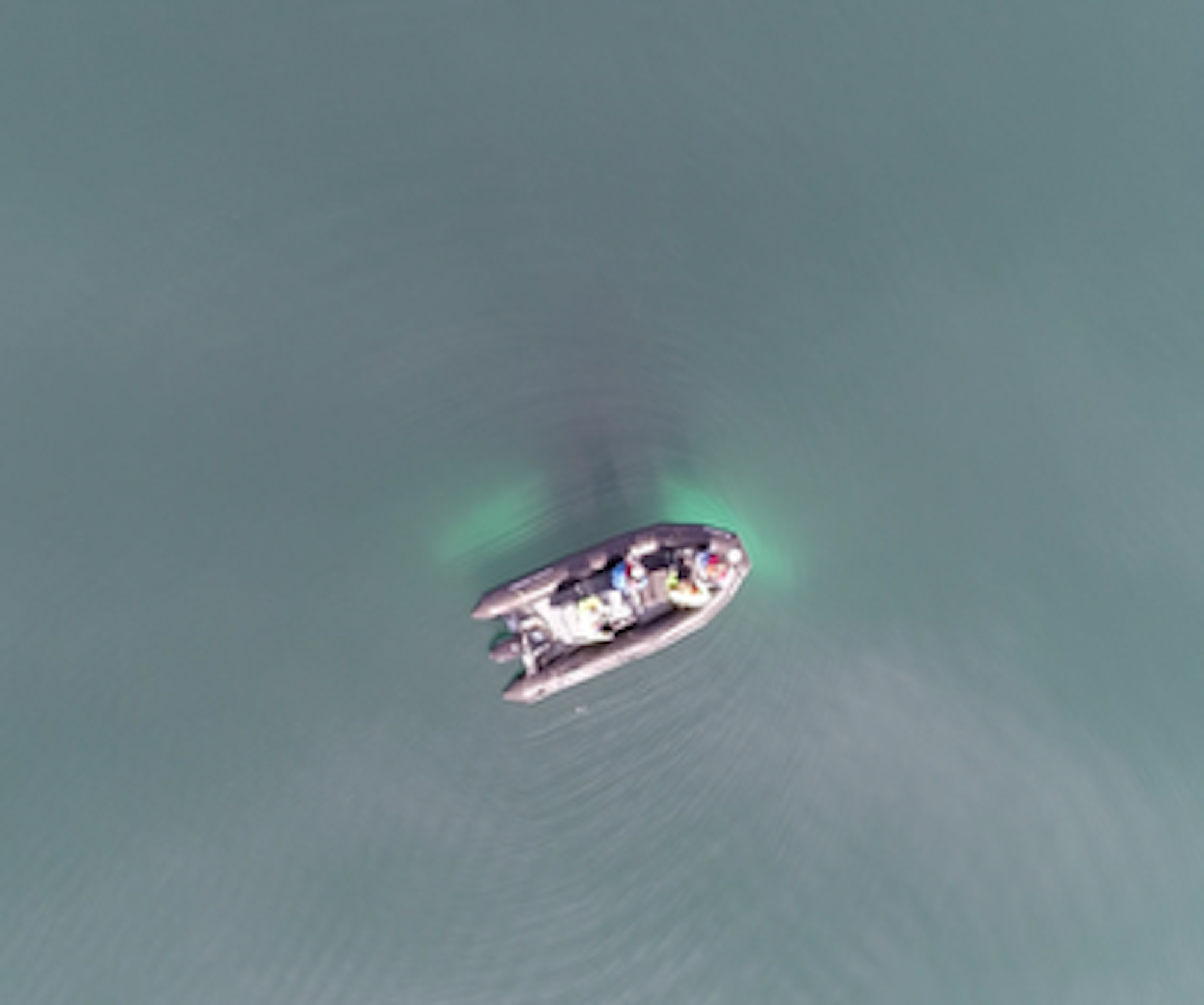
Maybe whale watching, which already implies an act of consumption (picture watching animals in a zoo, a movie,…do you meet up with friends to WATCH them?), could be reframed and named into a sort of Interspecies Meet & Greet, relieving this activity from expectation and pressure. Just like you take off your shoes when visiting someone else’s house, we could let the whales choose whether they want to be approached – and leave them alone if they signal a no. In my experience, a whale-encounter feels so much more precious and valuable when the whale chooses to come closer, an encounter on a voluntary basis.
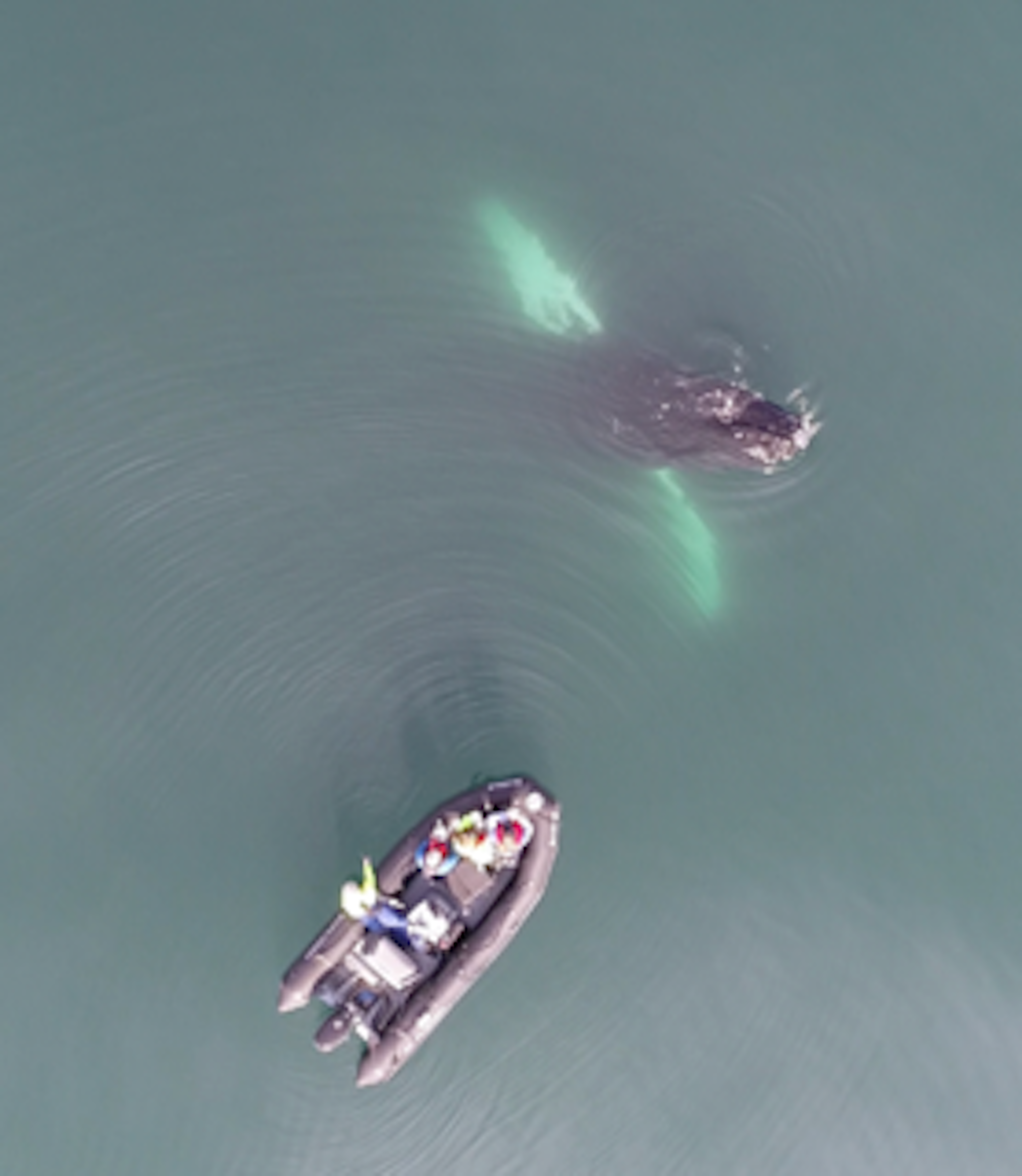
Eventually, White Cap surfaces again and then is off to approach the next vessel – a smaller zodiac, the research boat from which Maria is capturing these images. Same procedure, surrounding the boat, diving underneath, while gently moving his pectorals, slightly turning onto his side. And then White Cap goes for a deep dive, lifting his fluke out of the water, disappears, to do his whale stuff. You couldn’t even tell that he has just been there before, but the people who just encountered him will remember for sure. And maybe, hopefully, this memory makes them want to protect White Cap, his relatives, and other creatures, where ever they go on this planet.