 Whale Wise
 Drone noise

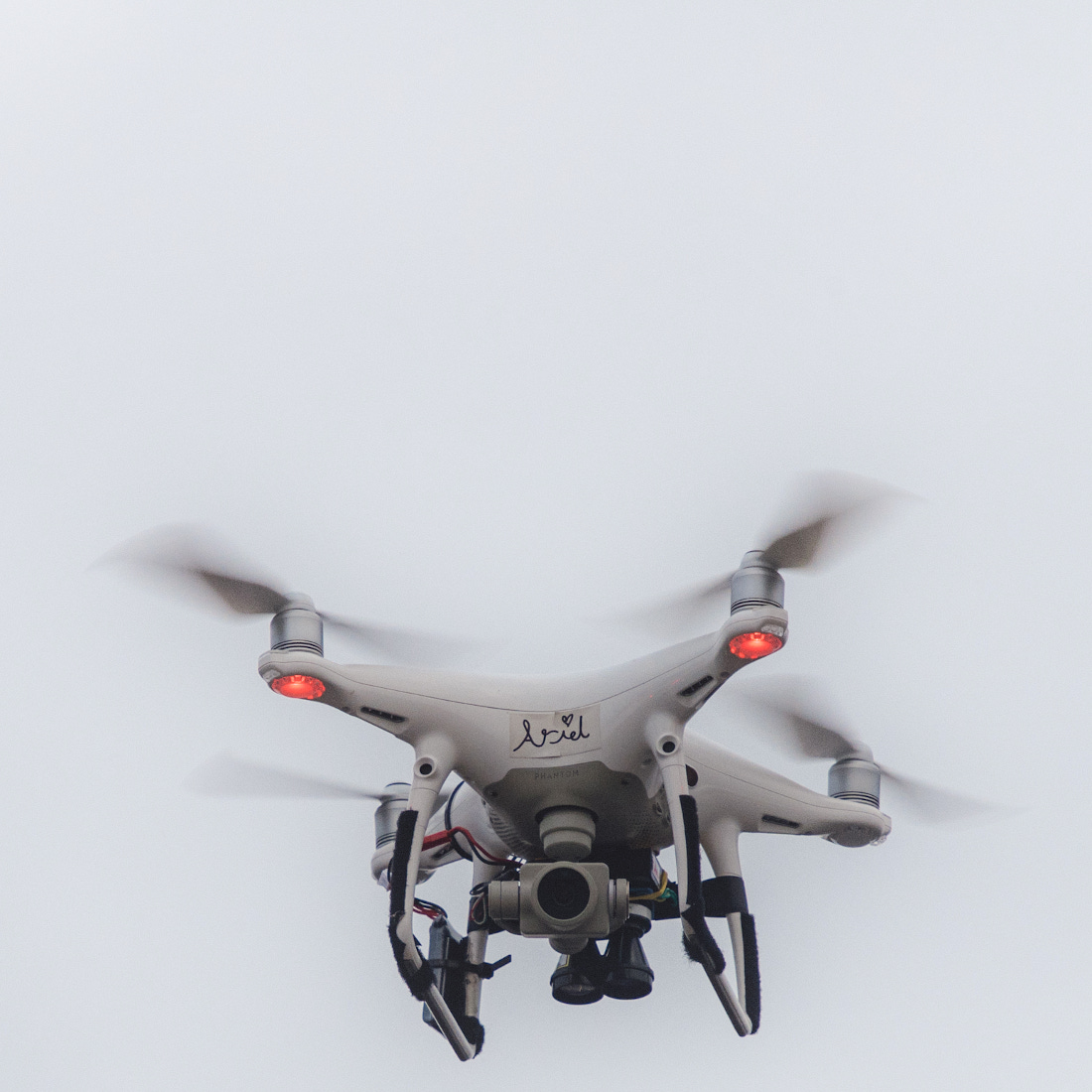
Characterising the underwater noise of different drone models, at different positions, to inform responsible practices
In recent years, drones have become a key tool for studying and filming a variety of marine animals, including whales. Drones are typically seen as a less intrusive alternative to platforms such as vessels, but they still have the potential to disturb marine life. To better understand this potential, we characterised the underwater noise of widely used drone models at different positions using a hydrophone, in collaboration the University of Iceland and Sound Science Research Collective. Our results can inform responsible drone practices worldwide to minimise potential impacts on marine life.
Background
Drones have revolutionised whale research. Whale Wise has used drones to collect blow samples and aerial images, and they are now used by research groups worldwide, to study not only whales but also other marine animals (e.g., turtles, sharks and seals). Drones are also used recreationally and for media purposes to film marine life. Drones allow remote observation of marine life, preventing the need to make close approaches with louder vessels (when motorised). However, drones are still visible and produce sound, with the potential to disturb animals. Perceived negative responses to drones have been observed for a variety of cetaceans.

Animal disturbance could be due to the underwater noise produced by drones. However, there has been limited research on the sounds that drones produce underwater and whether these sounds vary between different drone models or with varying distances from the animal. This information could guide responsible drone practices, allowing us to view animals from above with minimal disturbance.
Aims
To address these knowledge gaps, the drone noise project had three research questions.
- In our study system, can we detect drone noise using a hydrophone (underwater microphone)? If so, how does it sound?
- Does underwater noise differ between commercially available drone models?
- How does underwater noise vary with varying horizontal distance and vertical altitude?


Project details
In 2021, we conducted a series of experiments in Skjálfandi Bay to measure the noise levels of drones underwater, in collaboration with the University of Iceland and Sound Science Research Collective. To achieve this, we placed a hydrophone (underwater microphone) 1 m under the water’s surface and flew drones over the hydrophone.

We measured the noise levels of three commercially available DJI drones that are commonly used in whale research: Mavic 1, Phantom 4 Pro and Inspire 1. We flew each drone at positions of varying vertical altitude and horizontal distance from the hydrophone to test whether drone position influenced received sound levels. We then investigated differences in sound levels at different frequencies.


This research was published in the Journal of the Acoustical Society of America in 2023 – you can read the abstract here and download the full paper here. In brief, there were three key results:
- We could hear drones underwater using the hydrophone, but noise levels were always low – far lower than a small motor boat that passed 1.4 km from our hydrophone.
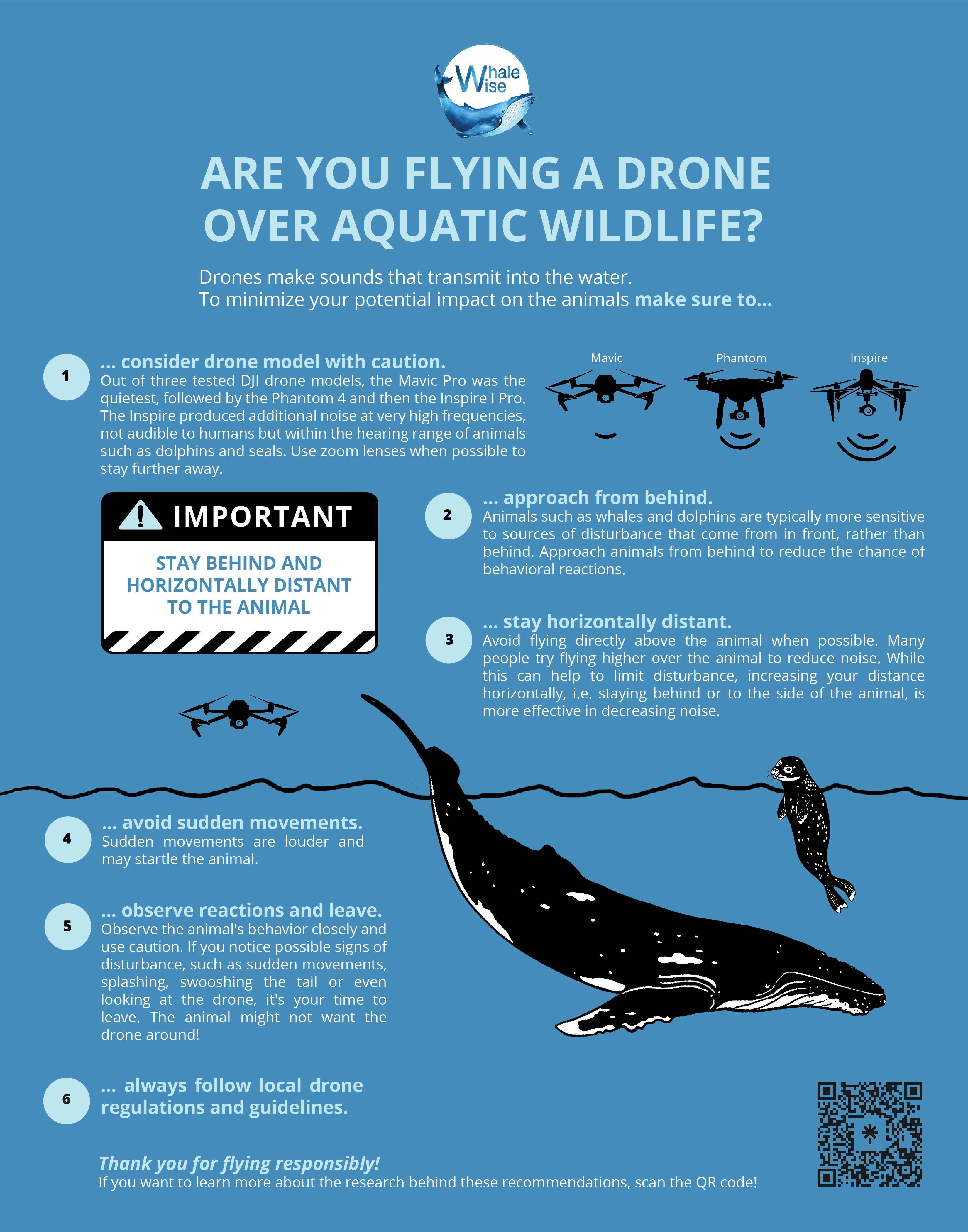
- The Inspire (largest drone) was the loudest, followed by the Phantom, then the Mavic (smallest drone).
- Unlike the other models, the Inspire produced significant noise at higher frequencies, above 30 kHz – far beyond the hearing range of humans but audible to marine mammals including many toothed whales.
- Noise levels decreased much faster with horizontal distance than vertical distance. In other words, to reduce noise disturbance, stay well behind, not high above!
We then used these results and other studies to produce a set of guidelines for responsible drone operation around aquatic life. The infographic was produced by Connelli Designs (team member Rosemary Connelli), and you can access the infographic and original studies at linktr.ee/dronesoverwater. If you’d like to learn more about the story of the research, check out this blog post!

Project updates
For now, we have completed the research component of the drone noise project. Following the publication of these results and the production of guidelines for responsible drone operation, our priority is to share these guidelines (in the form of an infographic) with relevant groups, both online and in person. Stay tuned!