 Whale Wise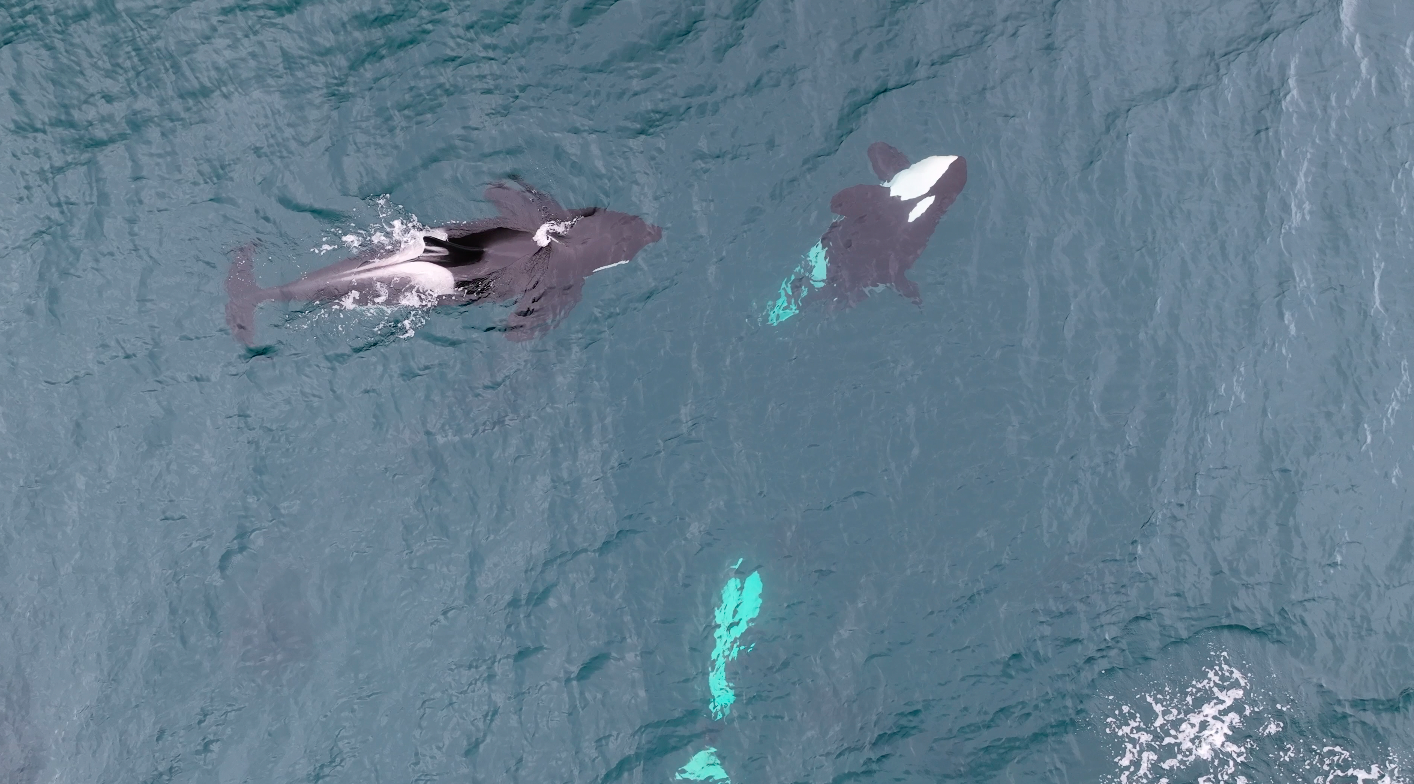
The Wolves of the Sea and Their Ways in The Wild
by Jessica Ward
“I could never have dreamed I would have seen something like that in my life.” The day we spent with orcas in Steingrímsfjörður.
At the start of this month, our current field research team were utterly blown away and lost for words for how the day unfolded. We started with humpbacks (our study species) so we knew it would be a good day. We collected some data and we got to spend time with whales; perfect, and all in a morning’s work.
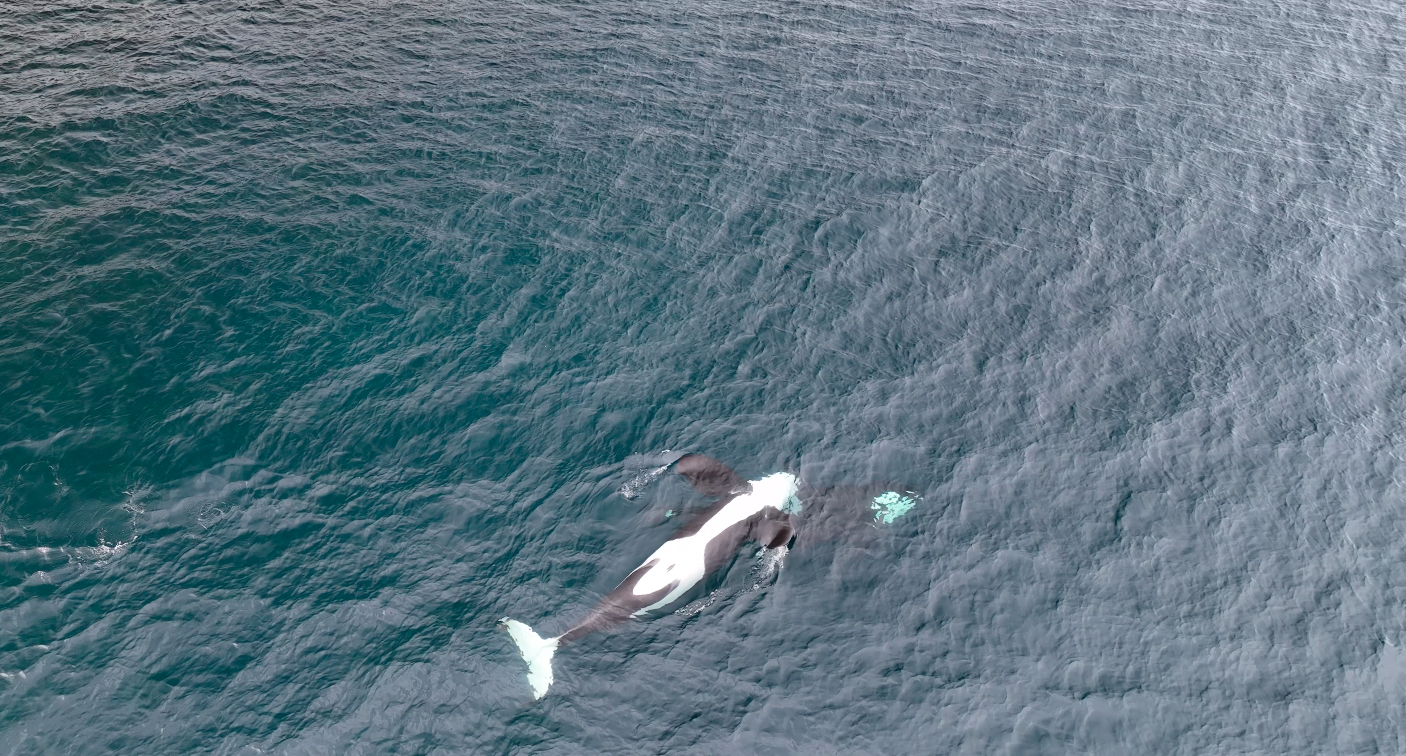
It was when we were back in our van, driving along the coast that we discovered a different species: orcas! Orcas, commonly known as the wolves of the sea, swimming next to the coastline. We couldn’t believe it. Orcas are very rarely seen in our area in the Westfjords. The rest of the day took us following these beautiful and powerful animals all the way up the coast. We had some extremely special and close encounters, as well as being able to fly our drone to capture footage of some incredible and unique behaviours.
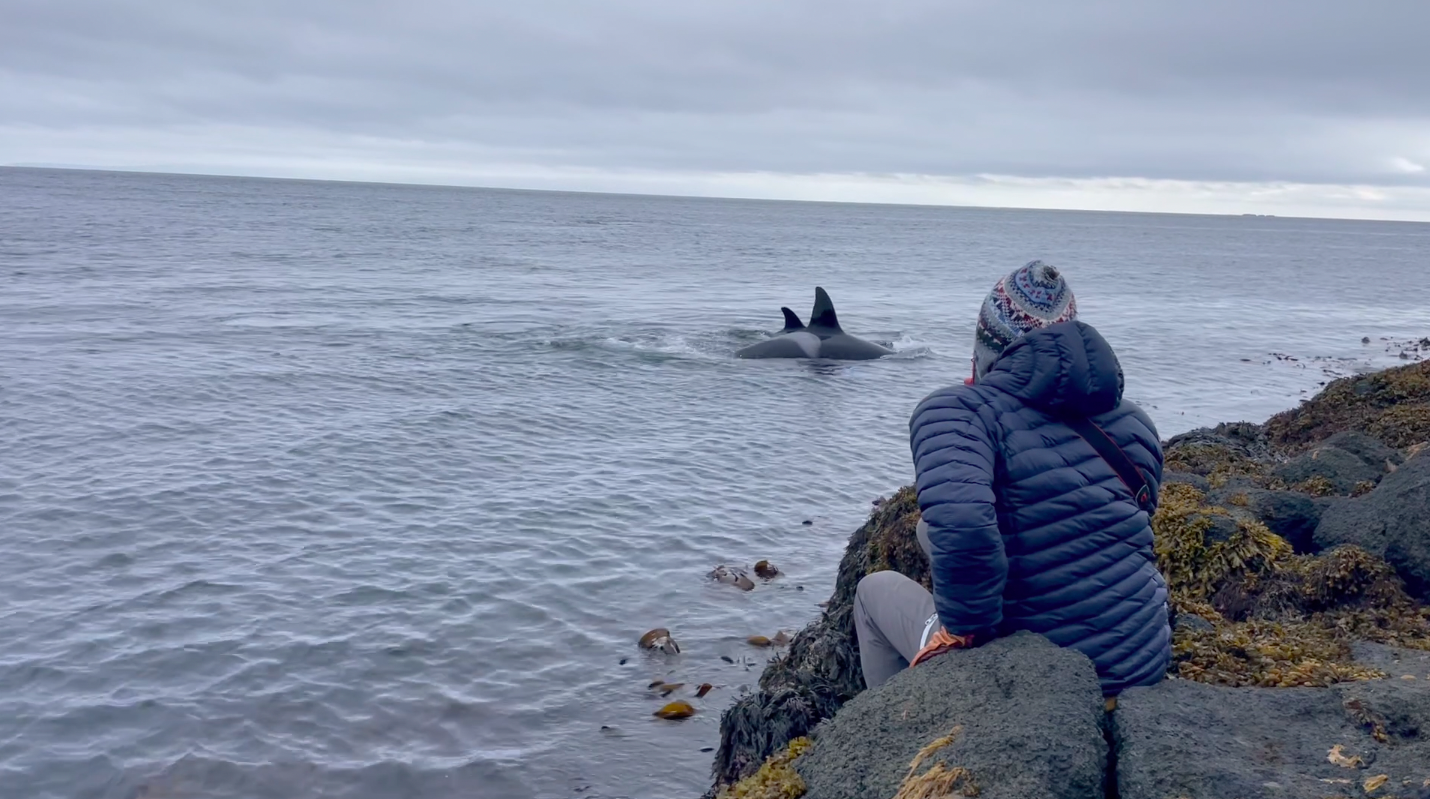
We know from our friend and colleague Filipa Samarra who studies the orcas in Iceland and runs the Icelandic Orca Project, that this pod of orcas are in fact well known in Iceland. In Filipa’s catalogue the pod is labelled as the IS090s (IS standing for Ísland/ Iceland). Orca pods are matrilineal: they are matriarchal families, led by the oldest and wisest female, the grandmother of the family who will pass her knowledge and wisdom on. It was so interesting to see how the members of this family interacted with each other and how the leading female orchestrated her family. We recognised the leading female of this pod. Her name is Sakkara and it is not the first time we have seen her!
Unlike the baleen whales, so the humpbacks for example, in toothed whales (including the orcas, also known as killer whales) the males are larger than the females. Sakkara was travelling with five other individuals, one of which was a very large male. Male orcas have very tall and pointy dorsal fins. This particular male is not believed to be part of this matriline, but has been seen together with them on many occasions. He has also been spotted alone in Scotland. Orca pods are very tight knit families; orcas naturally remain with their mothers throughout their lives, though of course there are some exceptions. Unfortunately pods might get separated for a number of reasons: individuals might lose their family as a result of anthropogenic disruption, illness or even intervention by humans (captive orcas are normally individuals from different pods). Additionally, males will leave their pods to mate elsewhere, and this is maybe the reason that this large adult male was with Sakkara’s pod: to mate. From our perspective, it definitely seemed that the male was interacting a lot with the entire pod, and playing around and having fun with the younger individuals too.
Sakkara and her pod are known to spend most of their coastal time in Iceland in Snæfellsnes: the long and narrow peninsula north of Reykjavík. This year they spent all of July in the Vestmann Islands, off the south coast of Iceland, catching seals and ducks. Sakkara and her pod have also ventured to the Westfjords periodically, including of course the day we saw them in Steingrímsfjörður, travelling next to the little town where we live. As mentioned above, we have also seen Sakkara here at least twice before, and off the coast of Ísafjörður (the largest town in the Westfjords) last year during early summer where we saw Sakkara kill a porpoise! Orcas have a diverse diet and different orca populations can feed on fish and squid or larger mammals like seals and other whale species (including sometimes humpback whale calves). On this day, we were very surprised to see Sakkara and her pod catching the eider ducks!
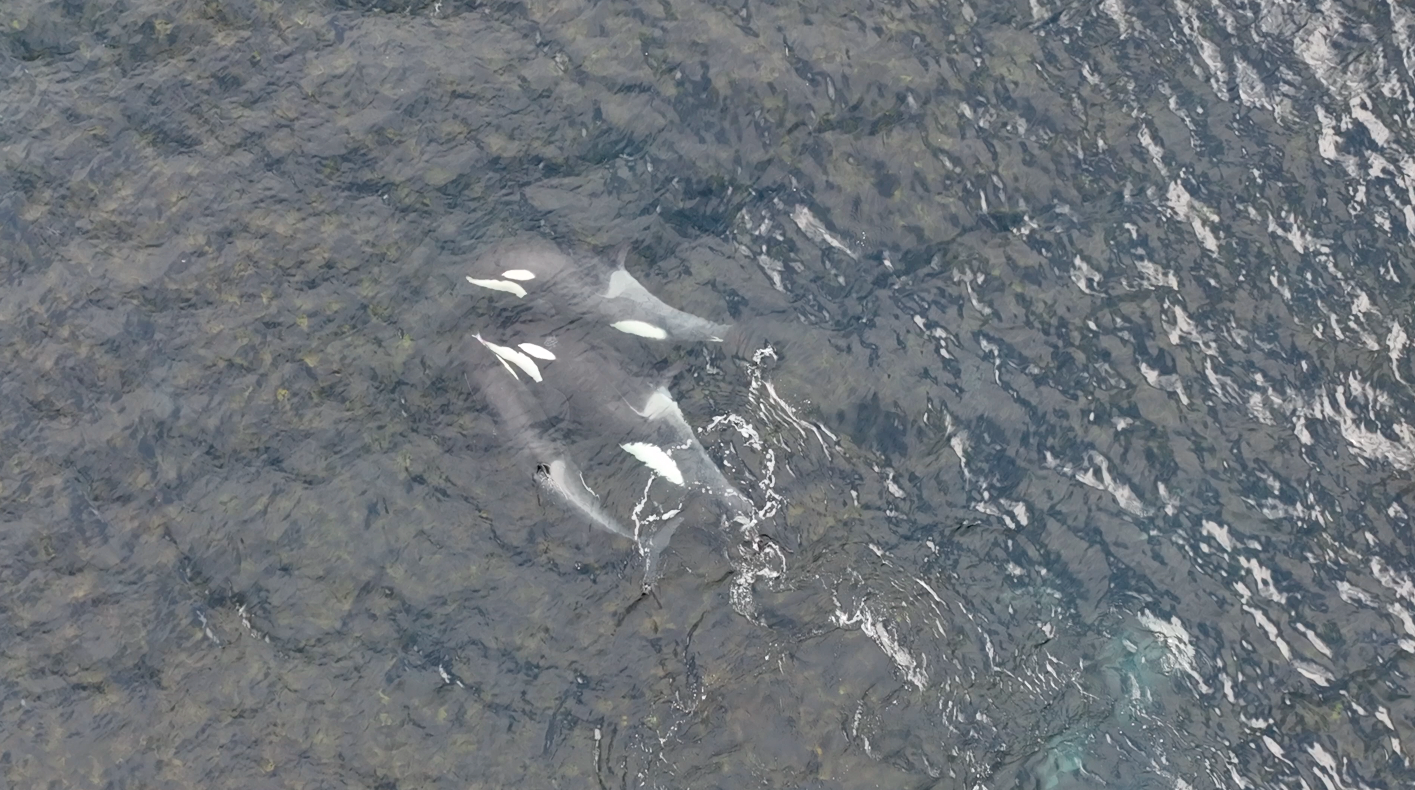
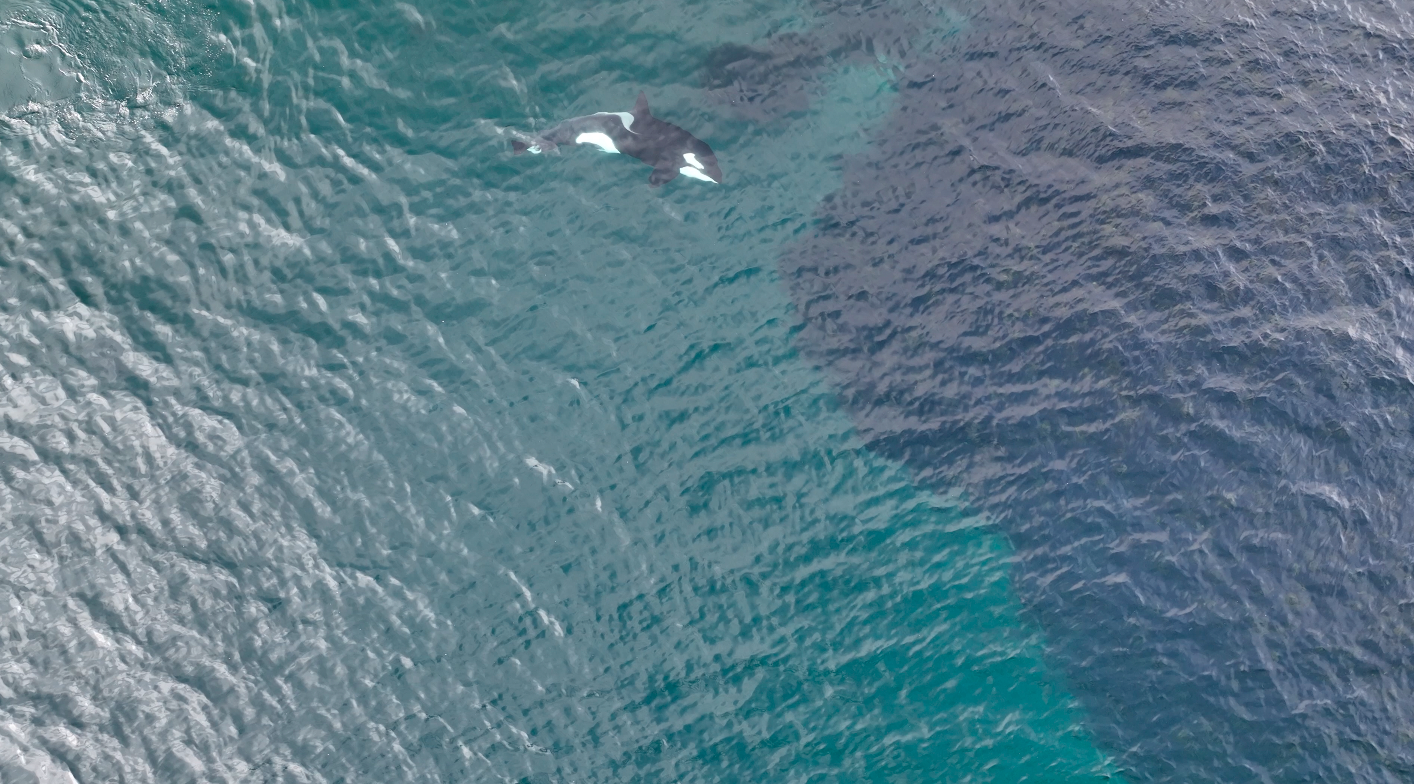
The many hours that we, unexpectedly, got to spend with the orcas allowed us to closely observe their behaviors, their movements and their interactions. We could speculate as to what it meant and although we do not understand it all, for example exactly why they were in Steingrímsfjörður and what exactly the male was doing there, how long they might stay, how long he might stay etc… lets talk about what we saw! A particularly surprising behavior was, as mentioned above, their interactions with the eider ducks. We noticed that it was usually the adult orcas catching the birds and seemingly injuring them so that then the younger orcas could ‘have a go’. Perhaps this was a way for the younger orcas to practice hunting? We don’t know whether birds are typically part of the orca diet. We didn’t actually see the orcas eat the birds, but the younger ones were definitely sharing and ripping the flesh. Another noticeable interaction was that we saw the adult male ‘flirting’ with another female in the pod. They had been swimming in very close connection, almost with their bellies touching, but not quite. There was one moment when these two were separated from the rest, and one younger orca was guided away from them by Sakkara. Sakkara and this younger whale swam just meters from the coastline, meanwhile we even saw the penis of the adult male… so it definitely seemed reasonable enough for the younger one to stay away for this! At this point in time, we really could not believe our eyes! We had seen it all.


Being able to see orcas in the wild is an extreme privilege. These fascinating, hugely intelligent and infamous apex predators (hence the wolves of the sea) are capable of igniting so much curiosity, compassion and excitement. Knowing the history (and in many cases the current lived experiences) of these animals in captivity, made this encounter that bit more meaningful to us. Knowing how social and close these animals are in their pods and how they can travel such great distances over time (in the case of Sakkara and her pod being spotted in many different locations around coastal Iceland), it is hard to believe that these animals in captivity are confined to a small tank, stripped of their complex wild lives, their autonomy and their families. In 1985 in SeaWorld Orlando Kalina, also known as “baby Shamu”, became the first killer whale calf to be successfully born and raised in captivity. Her mother Katina was an Icelandic killer whale who mated in captivity with a Southern resident killer whale named Winston. 4 years later, Kalina was separated from her mother, Katina, and that night Katina showed extremely obvious signs of grief, anger and upset (this is not the only example of this sort of behaviour being seen when captive orcas have been separated). Katina spent the following night in the corner of the pool and she was recorded making extremely long-distance vocalisations in search for her lost baby. Sadly, Kalina was moved to SeaWorld Ohio, so despite being possible in the wild, these calls would not reunite the mother with her baby. Kalina went on to live until 25 years old (her lifespan in the wild could have been double this) and during this time she lived in four different SeaWorlds and gave birth five times, including unfortunately yet unsurprisingly to one stillborn. Thankfully, our experience with Sakkara and her pod was nothing but special and very humbling. They took control of our emotions, albeit for just one day, and not the other way round.
We were in complete awe of these animals: how they navigate such deeply complex lives in the sea. Perhaps a story we will never fully understand, yet one we should not exploit. There are a total of 55 orcas left in captivity worldwide, 33 of which were captive-born. 18 of these animals live in the three remaining SeaWorld parks in the US. In 2016, SeaWorld announced that they were ending their killer whale breeding programme. Thankfully there will no longer be killer whales born to a life in captivity in SeaWorld like Kalina. The orcas who currently live there will be the last generation. Unfortunately this is not the case for other marine park companies, yet. May the future bring positive change, and learn from their ways in the wild, just like Sakkara and her pod. These orcas were free and we could observe them interacting with each other in ways we couldn’t imagine. May Sakkara and her pod continue to do so and continue to capture people as they caught us that day: completely and utterly mind blown.
Read more about the story of Kalina and Katina in captivity, and others like it, here:
https://missionblue.org/2013/08/blackfish-a-killer-documentary/
https://killerwhales.fandom.com/wiki/Katina
https://www.sciencedirect.com/science/article/abs/pii/S1558787819300164
One of the most amazing encounters, I am so envious!! But so grateful you were there to witness it and share this story with us!!
What an incredible experience that must have been! As such clearly cognitively developed species, I hope soon we can put an end to exploiting their intelligence and keeping them in captive away from their tight knit pods. Very well written Jess!