 Whale Wise
 Whales of Ísa
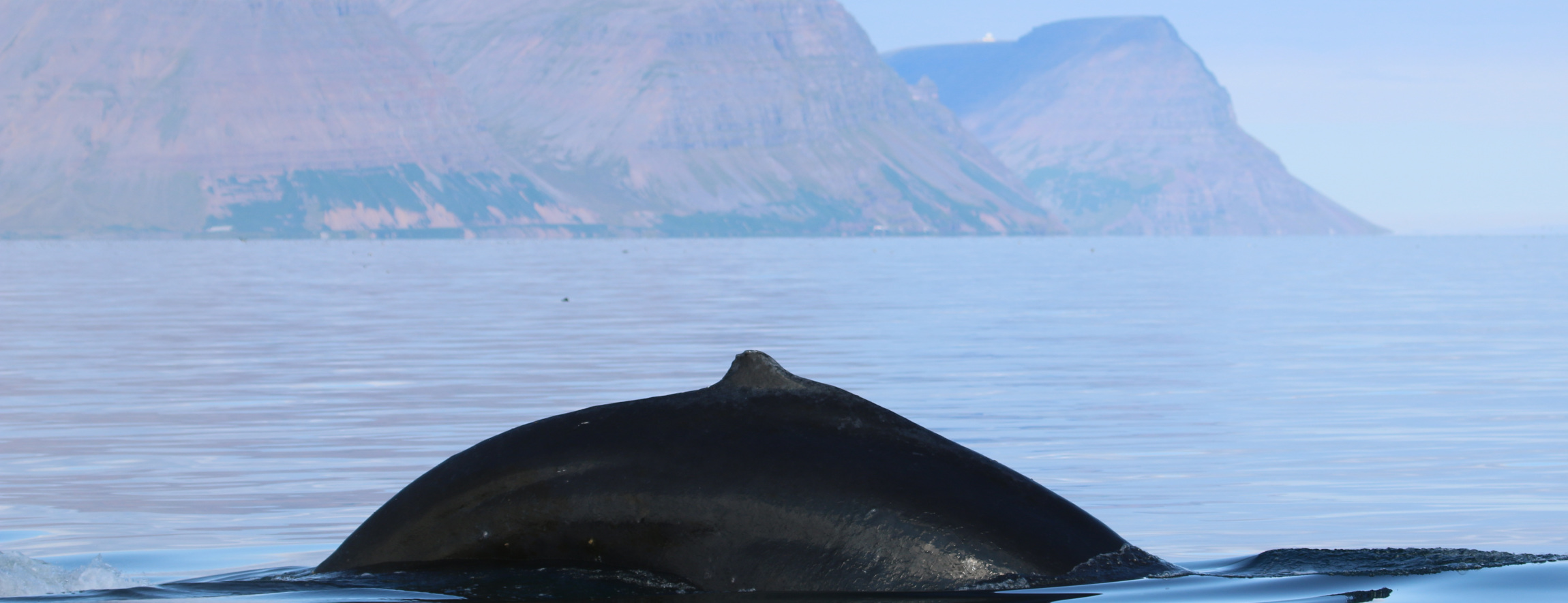

An extensive collaborative effort to study and protect whales in Ísafjarðardjúp
The Westfjords might be one of the most important coastal feeding grounds for Icelandic humpback whales. However, information is lacking about regional abundance and habitat use. This limits our ability to protect these whales from increasing levels of human activity, including vessel traffic and aquaculture, particularly in the large fjord system of Ísafjarðardjúp. We are collaborating with whale-watching company Sjóferðir, as well as the University Centre of the Westfjords and the University of Iceland, to establish long-term monitoring in the area, providing a critical baseline understanding of whale ecology. We are also very fortunate and grateful to use the ORCA sightings application to collect distribution data on the whales. This will form the basis for future management recommendations in order to minimise regional human disturbance of cetaceans.
Background
Ísafjarðardjúp is the largest fjord system in the Westfjords, Northwest Iceland, and human activity in the region is locally elevated and rapidly expanding. Vessel traffic is centred around the port of Ísafjörður, a key regional center for trade and tourism, with large numbers of cruise ships (187 in 2023, carrying 185,000 passengers) and cargo ships. Meanwhile, aquaculture activities have increased dramatically in the area, such that Ísafjarðardjúp is now the epicenter of open-net salmon farming in Iceland. In line with national plans to expand the industry, farming capacity is likely to increase under the region’s current marine spatial plan, with many licensed sites yet to be developed. In addition, widespread seabed dredging (to harvest maerl) and commercial krill fishing are currently being considered for the region. These expanding industries are likely to lead to a general increase in vessel traffic in Ísafjarðardjúp.

The predicted growth of local industry is of ecological concern due to the region’s apparently increasing foraging importance for cetacean species such as humpback whales. Anecdotal reports and limited scientific research indicate that increasing numbers of whales inhabit the fjord system, particularly in summer and autumn, leading to the development of a small whale watching industry. The area is also incredible for seeing whales from land. As cetaceans are highly reliant on sound for communication, navigation and foraging, high volumes of vessel traffic could disrupt critical whale activities in Ísafjarðardjúp. Meanwhile, large-scale aquaculture could physically remove important foraging habitats throughout the fjord system and vessel collision is also a potential threat to whales. These impacts could be mitigated, for example by excluding vessel traffic from core foraging areas, but this requires a comprehensive understanding of whale distribution and habitat use, which is almost entirely lacking in Ísafjarðardjúp. As such, whales have not been considered in regional marine spatial plans.
Aims
Working with local partners, Whales of Ísa aims to provide key baseline information on whale occurrence and habitat use in Ísafjarðardjúp. Specifically, we ask:
- How important is the region for humpback whales and other cetaceans, particularly as foraging habitat?
- Where are the most critical foraging habitats in the fjord system?
- How can we manage regional human activity to minimise potential impacts on whales?


Project details
We are using a range of methods to study the whales of Ísafjarðardjúp. Visual surveys from land and sea will enable us to map seasonal whale distribution, to identify critical habitats. Photo-identification of humpback whales (taking photos of their tail flukes) will reveal individual variation in habitat use as well as long-distance migration patterns around the North Atlantic. We will also continue to capture aerial images of humpback whales using drones (work which we started in the Westfjords in 2021) to measure whale length and body condition.

Local collaborators are at the heart of this project, which arose from conversations with people living and working around Ísafjarðardjúp. Master’s students from the University Centre of the Westfjords in Ísafjörður will take part in research for their thesis projects, collecting and analysing data sets. We are working directly with Brack Hale, academic director of the Coastal and Marine Management master’s programme, to select students. The students will be supervised by Tom Grove and Alyssa Stoller from Whale Wise, along with Dr Filipa Samarra and Prof. Marianne Rasmussen from the University of Iceland. Meanwhile, two whale-watching companies – Sjóferðir and Borea Adventures – are providing essential, opportunistic vessel platforms for visual surveys and photo-identification.
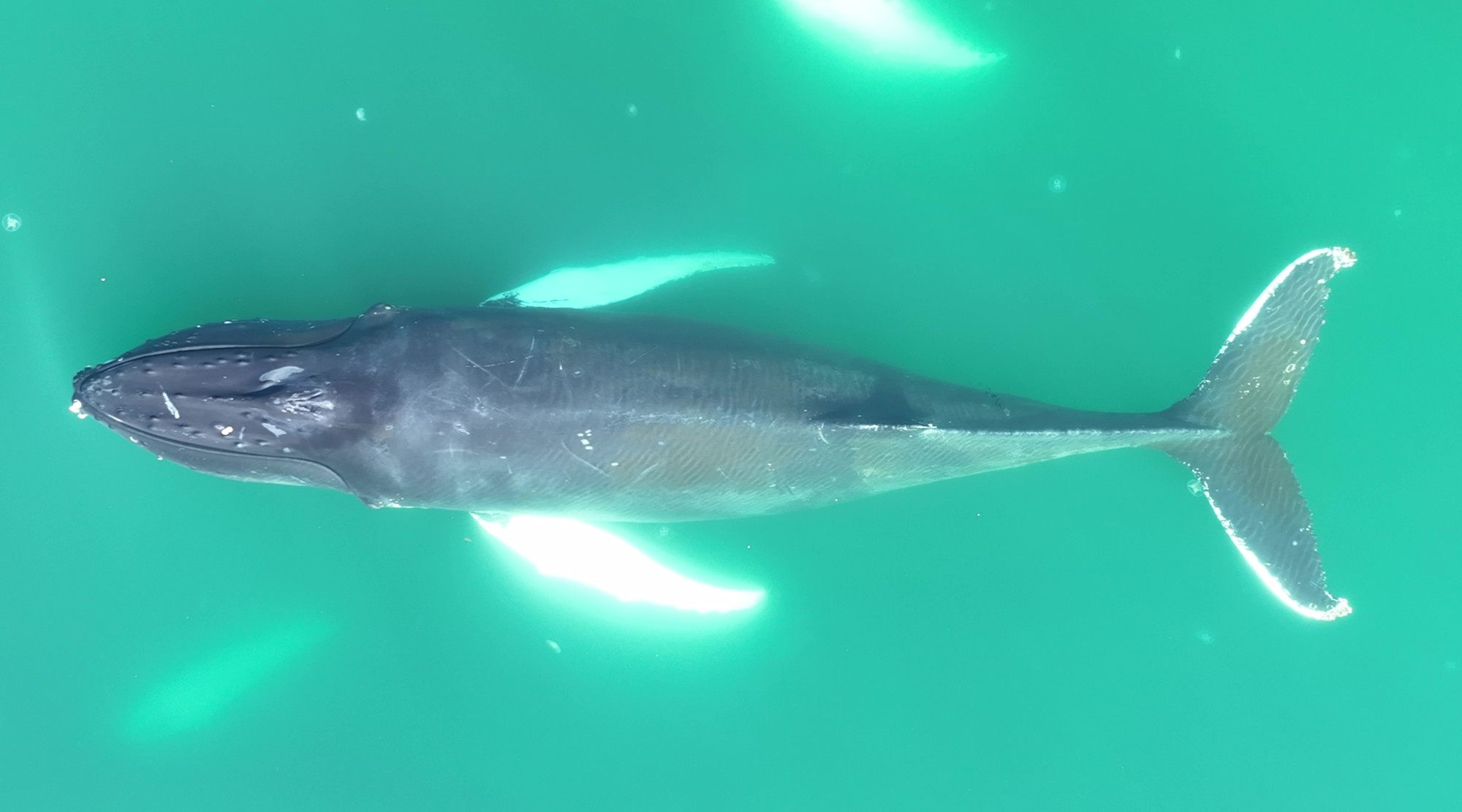


Once we have collected and analysed our data, we intend to share our results with the Icelandic government and local business and residents to stimulate discussion on regional whale conservation and inform future management plans.

Project updates
Whilst we have collected aerial images in the region since 2021, 2024 is the first year of research dedicated to understanding the importance of Ísafjarðardjúp. We are working with two master’s students, Laura Lyall and Benedek Regoczi, who collected data onboard Sjóferðir and Borea Adventures whale-watching boats during summer and autumn 2024. Combined with land-based drone data collected by the Whale Wise team, this will form the basis for long-term monitoring into the future.