 Whale Wise
 Whale-watching response

Assessing the potential impacts of whale-watching vessels on humpback whales to inform a responsible industry
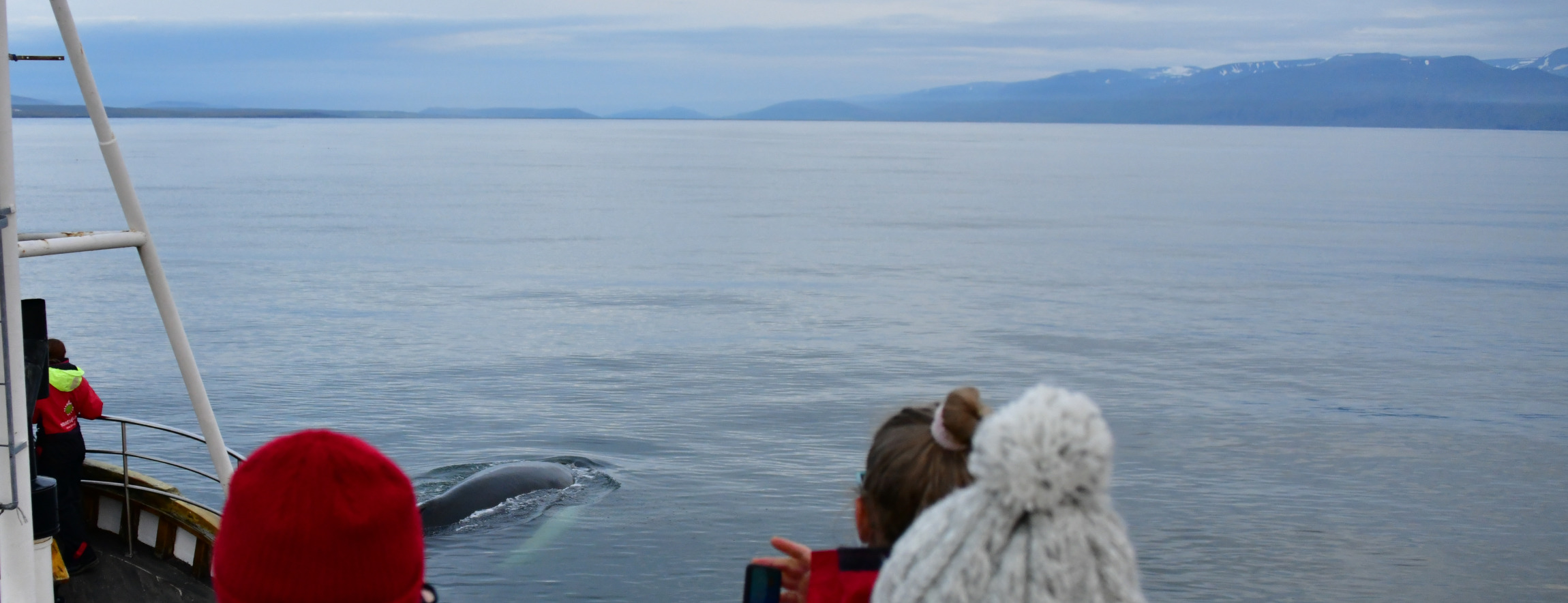
The whale-watching industry harnesses the value of living whales and can be a powerful advocate for marine conservation. However, vessels also have the potential to disturb whales, with potential impacts on behaviour and fitness. As the research project that started Whale Wise, we are assessing the responses of whales to whale-watching vessels to inform more sustainable practices. Crucially, whale-watching companies have supported this work by allowing us to collect data onboard their vessels (primarily North Sailing). This project is in collaboration with the University of Edinburgh and University of Iceland.
Background
Whale-watching can benefit whale populations and coastal communities. In Iceland, whale-watching started as the antithesis to whaling, placing direct value on living, thriving whales. Since then, the industry has grown into a major source of income for the Icelandic economy and generated $2.1 billion USD globally in 2008. Whale-watching can promote conservation initiatives, provide crucial education to the public and is now an integral part of the identity of coastal communities worldwide, including in Iceland.


However, whale-watching vessels also have the potential to negatively impact whales through disturbance. Vessels can disrupt feeding and resting behaviour, increase energy expenditure and alter diving and breathing patterns. If this disturbance persists, long-term impacts on health and fitness may ensue. Whale-watching impacts vary between species and locations, so it’s critical to conduct local assessments to inform responsible vessel practices, such as codes of conduct.
Aims
Focusing on humpback whales in North Iceland (and Skjálfandi Bay in particular), our primary aims were to:
- Determine the behavioural responses of whales to whale-watching vessels
- Attempt to detect a physiological response to vessels, using blow sampling
- Consider whether future changes in whale distribution could alter whale-watching impacts


Project details
We are assessing whale-watching impacts in North Iceland, with a focus on Skjálfandi Bay and the port of Húsavík (known as the whale-watching capital of Iceland). This project started in 2018 (when Whale Wise was first formed!) and was primarily conducted as part of Tom Grove’s PhD at the University of Edinburgh, which was completed in 2023.

We use a variety of methods to assess whale-watching impacts, namely:
- Behavioural observation: we record whale behaviour from whale-watching boats to assess the influence of vessel practices (such as distance to whale, speed and the numbers of boat) on feeding, diving and breathing patterns. In other words, which vessel practices cause the least behavioural disturbance?
- Blow sampling: we have explored the method of using drones to collect samples of exhaled breath (blow) to measure the levels of stress-related hormones, such as cortisol. This is an exploratory study to assess the feasibility of this method.
- Distribution modelling: using sightings data from Iceland’s Marine Freshwater Research Institute to assess the environmental drivers of humpback whale distribution, in order to consider changes in habitat use over time. We can use this to assess whether the proportion of whales being exposed to whale-watching is changing.
We are also assessing the potential acoustic impact of vessel presence on whale communication through our COVID-19 acoustics project.


major aim of this work is to inform the existing IceWhale code of conduct for responsible whale-watching in Iceland. The majority of national whale-watching operators subscribe to this code but, owing to a lack of whale-watching research in Iceland, its guidelines are largely informed by research from other parts of the world. Therefore, updating the code with local evidence could help to further minimise potential negative impacts on whale behaviour and fitness.

Project updates
We have now completed data collection and analysis for the whale-watching response project, and Tom completed his PhD in 2023. We are now in conservation with IceWhale to discuss potential changes to the code of conduct and in the process of publishing this work in scientific peer-reviewed journals.